*On December 11, 2025, the Standard Performance Evaluation Corporation (SPEC) announced the release of SPECviewperf 15.0.1, a pivotal update to the industry-standard benchmark for professional graphics. While the version number suggests a minor iteration, this release introduces a fundamental architectural shift: the “snap-in” workload capability. This new feature allows the benchmark to integrate the new snx-05 workload, based on Siemens NX 2406, without invalidating the historical data of the broader suite. By addressing the critical need for agility in measuring the performance of rapidly evolving CAD software, SPEC has ensured that hardware vendors and engineering firms can validate the latest GPU architectures against the most current software tools. This article explores the …
On December 11, 2025, the Standard Performance Evaluation Corporation (SPEC) announced the release of SPECviewperf 15.0.1, a pivotal update to the industry-standard benchmark for professional graphics. While the version number suggests a minor iteration, this release introduces a fundamental architectural shift: the “snap-in” workload capability. This new feature allows the benchmark to integrate the new snx-05 workload, based on Siemens NX 2406, without invalidating the historical data of the broader suite. By addressing the critical need for agility in measuring the performance of rapidly evolving CAD software, SPEC has ensured that hardware vendors and engineering firms can validate the latest GPU architectures against the most current software tools. This article explores the technical nuances of the new Siemens NX workload, the strategic value of the snap-in architecture, and the market context established by the major release of SPECviewperf 15 earlier this year.

(Source: JPR AI)
In the world of professional visualization, hardware and human investments are measured in the tens of thousands of dollars per seat; the ability to objectively quantify performance is paramount. This is why SPECviewperf is so important to the industry. Managed by the Graphics and Workstation Performance Group (GWPG) within SPEC, SPECviewperf is the worldwide standard for measuring the 3D graphics performance of systems running under OpenGL, DirectX, and Vulkan Application Programming Interfaces (APIs).
Unlike synthetic benchmarks that approximate workloads, SPECviewperf utilizes traces, actual recordings of graphics command streams from leading professional applications like Maya, Catia, and SolidWorks, to name a few. This methodology enables IT decision-makers to select hardware that has been objectively proven to deliver superior viewport performance for their specific workflows. The importance of this tool was reaffirmed with the major launch of SPECviewperf 15.0 on May 1, 2025. That release modernized the suite by introducing DirectX 12 and Vulkan support through new workloads like Epic Games’ Unreal Engine and Chaos’ Enscape, setting a new baseline for the next generation of content creation and engineering workflows.
Building on the foundation laid in May, SPEC released SPECviewperf 15.0.1 on December 11, 2025. This update is available for immediate download under a two-tiered pricing model: It remains free for the general user community, fostering widespread adoption and crowdsourced data, and costs $2,500 for sellers of computer-related products and services. SPEC/GWPG members continue to receive benchmark licenses as a benefit of membership, ensuring that key industry players like Nvidia, AMD, Intel, and major workstation OEMs like Dell, HP, and Lenovo remain deeply integrated into the benchmark’s development process.
The New Workload: Siemens NX 2406 (snx-05)
The centerpiece of the 15.0.1 update is the snx-05 workload. This workload is designed to measure the performance of graphics hardware running Siemens NX 2406, the latest iteration of the premium high-end CAD/CAM/CAE solution released in June 2024.
Siemens NX is the backbone of the aerospace, automotive, and heavy-machinery industries, known for its ability to handle massive assemblies. The snx-05 workload specifically targets the OpenGL graphics API, stressing standard but computationally intensive OpenGL features such as vertex and pixel shaders, high-resolution textures, and multisampled anti-aliasing (MSAA). These features are critical for maintaining visual fidelity in dense engineering environments where geometric precision cannot be compromised for frame rate.
“SPECviewperf 15.0.1 allows current and potential users of the latest version of Siemens NX to assess the performance of potential hardware updates to their graphics systems without having to license and install the application on target systems,” said SPECgpc Committee Chair Ross Cunniff. “With the new snx-05 workload, SPECviewperf 15.0.1 expands its coverage of high-end CAD applications, including Catia/3DExperience, and Creo, enabling users to make more informed decisions about graphics hardware investments.”
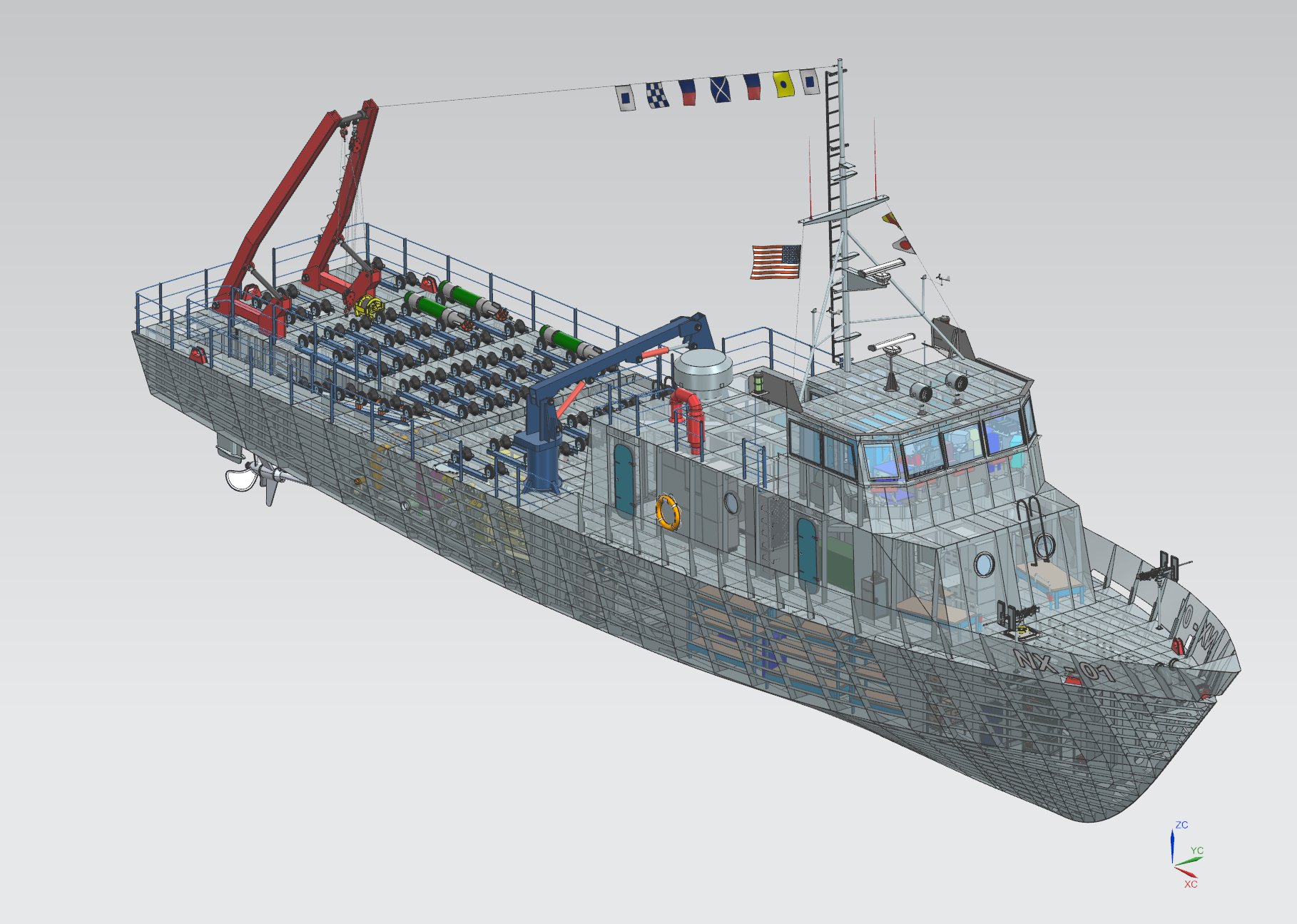
Image from SPECviewperf 15.0.1’s Siemens 2406 (snx-05) workload. (Source: SPECgwpg Committee)
The ‘Snap-In’ architecture: A paradigm shift
Historically, adding a new application viewset to SPECviewperf required a full version update, which often necessitated a reset of the scoring metrics. This created a friction point: Software vendors release updates annually (or faster), while benchmarks often lagged by years to maintain data consistency.
SPECviewperf 15.0.1 solves this with its new snap-in architecture. This modular design allows SPEC to release new workloads, like snx-05, as add-on modules. As detailed in the press release, the snx-05 workload represents the first snap-in workload enabled by SPECviewperf 15’s modern architecture. This allows for the addition of new workloads without requiring users to re-run existing benchmarks, effectively decoupling the engine of the benchmark from the content it processes.
“The release of SPECviewperf 15.0.1 and the new snx-05 workload represents another step toward modernizing performance measurement. Our users can integrate new workloads based on the latest high-end CAD applications, like Siemens NX 2406, without invalidating months of existing benchmark data,” said Cunniff. “This snap-in architecture gives industry partners and workstation users the agility they need to make rapid, future-proof hardware investments, ensuring they maintain peak graphics performance and competitiveness across the entire spectrum of professional design.”
What do we think?
We congratulate the SPEC Graphics and Workstation Performance Group (GWPG) not only on this release but on the fact that at launch, there are already several results for the new snx-05 workload on their results page.
SPECviewperf 15.0.1 makes the industry-leading SPECviewperf 15 even better, with better coverage of the high-end CAD space. Needless to say, these applications need performance, but they can’t compromise on accuracy, so it’s very important that SPECviewperf is based on real-world workloads, not synthetic tests.
Do you have any other ideas for workloads? You can become part of the SPECgwpg community, propose new workloads, and be part of this important mission. More details at: https://gwpg.spec.org/participation/.
The SPEC/GWPG seeks application developers, expert application users, publication editors, and testing lab directors to help develop and maintain standardized benchmarks based on professional graphics and workstation applications. Organizations or individuals may submit existing benchmarks, application models, or workloads for consideration by the GWPG or help the group develop an entirely new benchmark, according to the SPECgwpg Committee.
*– The Workstation Cavalry *
LIKE WHAT YOU’RE READING? INTRODUCE US TO YOUR FRIENDS AND COLLEAGUES.