- 10 Dec, 2025 *
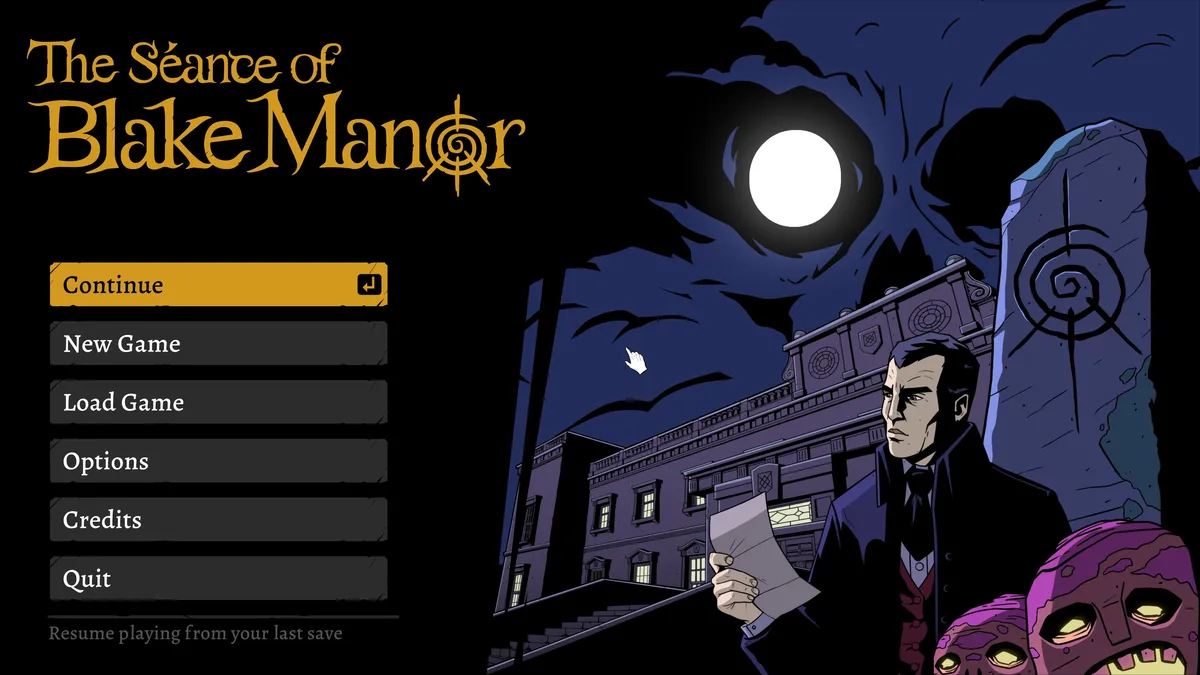
Detective games exist on kind of a spectrum. On one side, you have proper deduction games — Case of the Golden Idol is a prototypical example of an almost pure deduction game; they present the player with information, and the player’s input is about stating their conclusions and having them confirmed (or not). They are very much knowledge games.
On the other end we the procedural side of detective stories — not as in procedural generation, but as in police procedural. Games that are about the actual labor of detective work; examining a crime scene…
- 10 Dec, 2025 *
Detective games exist on kind of a spectrum. On one side, you have proper deduction games — Case of the Golden Idol is a prototypical example of an almost pure deduction game; they present the player with information, and the player’s input is about stating their conclusions and having them confirmed (or not). They are very much knowledge games.
On the other end we the procedural side of detective stories — not as in procedural generation, but as in police procedural. Games that are about the actual labor of detective work; examining a crime scene, interviewing a suspect, and so on.
Very few games really manage to holistically represent both sides of this equation, just as a matter of scope; Shadows of Doubt is one example, a game which is fluidly about both making inferences and understanding what the evidence means and about the process of investigation itself. In particular, it’s one of few detective games in which the deduction drives the player’s decisions about where to seek out information next, because the needle of relevant information is hidden in this huge procedurally-generated haystack.
Séance of Blake Manor is what I’d call 90% procedural and 10% deduction. It’s clearly influenced by a lot of more modern adventure, mystery, detective, and puzzle game design. It uses a “mind map” style of quest log, for example, with a whole nested network of evidence and leads. When you have enough evidence to solve a mystery, you have one final step in which you fit nouns to a Mad Libs-style grid in order to demonstrate you understand what happened – the same style of deduction mechanic used in Case of the Golden Idol.
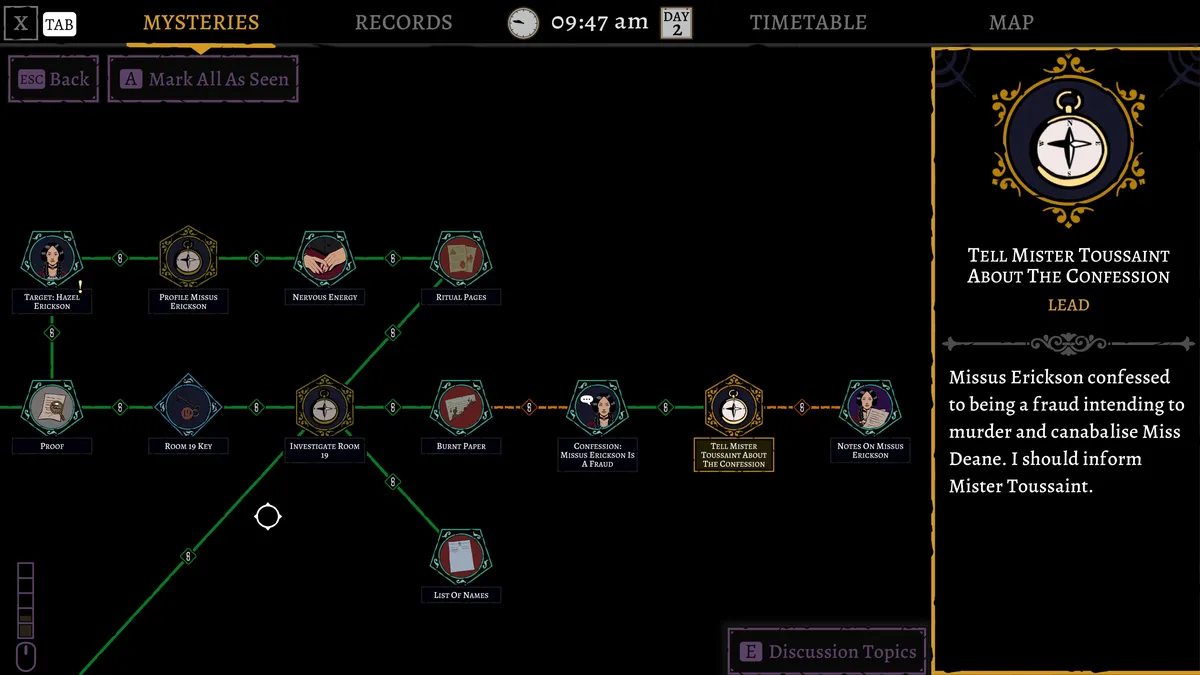
With Blake Manor, we’re starting to see these mechanical ideas get used as an add-on or veneer atop a much more traditional detective-themed adventure game. The deduction aspect here is more of a confirmation step – a final exam that comes after you’ve had the opportunity to see and interact with a lot of material while being led by a much more traditional quest system of explicit leads to follow and goals to fulfill.
This isn’t a criticism – just an observation about this game’s specific approach. Blake Manor is essentially a big bundle of interrelated mysteries. You come to the titular manor, a noble estate turned hotel in western Ireland, looking for a missing woman. But there you soon realize that the titular séance is imminent, and that something mysterious and supernatural surrounds the event; and meanwhile, the hotel’s complement of thirty-odd staff members and guests all have their own individual stories that you will investigate and solve over the course of the game.
It’s perhaps a too-tidy setup; the game presents the idea that you’re going to be investigating all these people and gradually eliminating them as possible suspects in the disappearance, but as a mystery I found that it tipped its hand a little too early and too easily. Even if it only really gives you the last piece of evidence to eliminate the last suspects at the very last moments of the game, it’s pretty clear who the game is actually letting you investigate early on and who is being saved for a late-game reveal – to the point of the game being somewhat overly coy about just how incredibly shady one specific guest appears to be once you do get to learn a few facts about them.
I did enjoy my time with this game and I do think it’s worth playing, but there’s a tension here between the desire for a relatively “tidy” and solvable adventure game experience, and the idea of more nuanced or deduction-driven game that is mostly only being gestured at.
For example: I ran into a couple points where I could see what I thought was going on and the game would not really let me investigate further because I hadn’t tripped the right wires, for example. The game’s quest system is actually fairly directed, even though it does allow you to investigate dozens of different quests at once so it doesn’t feel linear as such.
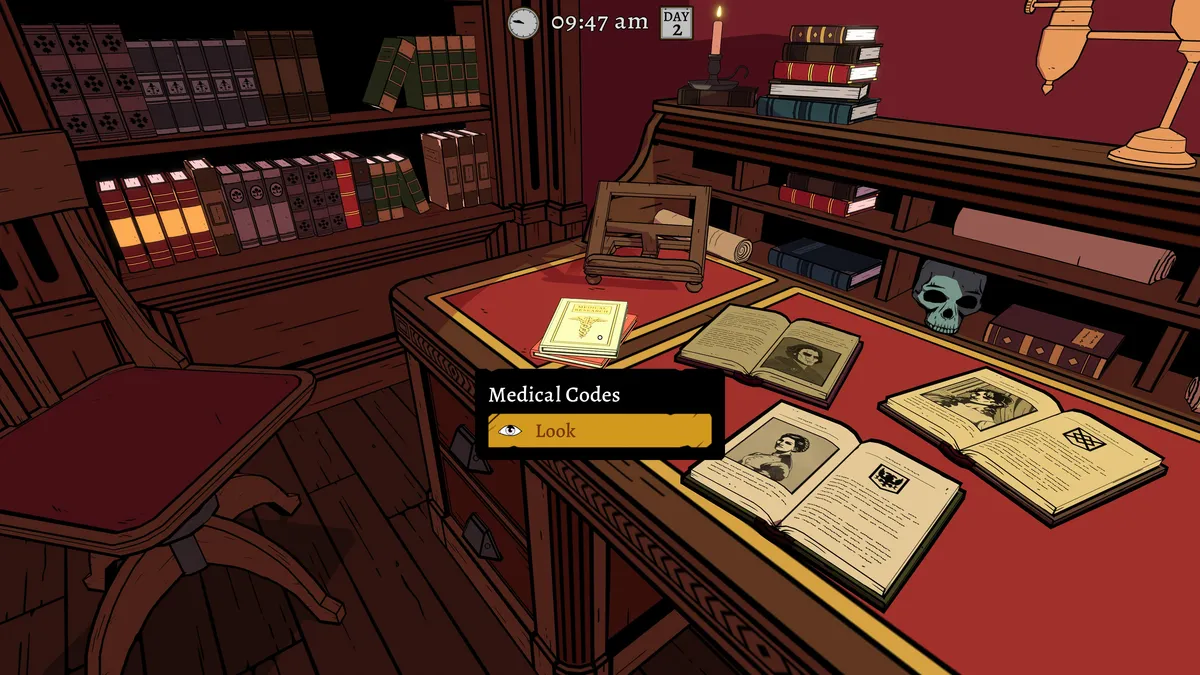
It’s still a fairly polished experience; the presentation is very clever. The art style has hard ink outlines, visually similar to a graphic novel, and while you explore a 3D space, characters are 2D “paper dolls” with different variant sprites that allow them to be rotated. This is a great example of Good Enough presentation that avoids a lot of the pains of including NPCs in a game at this scope and budget.
At the same time, it does feel like some of the ideas here are orphaned or incomplete – Blake Manor has a time-management mechanic, which avoids a lot of the stress of those mechanics by having time pass only when you take certain actions. But it doesn’t seem to include quite enough things to compete for your time that you’re actually pressed by it, for example. It ultimately functions just as a gentle barrier against lawnmowering; I mostly did not worry about the clock except to consider whether I really needed to ask every conversation topic of every NPC, which I think was positive to my overall experience with the game.
I recommend this game more to people who are fans of detective and mystery stories as a genre, than necessarily to people who are interested in knowledge, mystery, or deduction games. But there’s certainly an element of the latter here, and I think this is one of the best adventure games of the year.
And a note about the email newsletter…
Email is one of two truly independent ways to maintain an audience – the other being RSS. As such, building up an email subscriber list is Probably A Good Idea to someone whose career (now) relies on a measure of visibility. I’m still calibrating what I think should be the frequency or particular content of these kinds of emails, but the initial pitch was: a 1:1 mirror of my blog posts, so this is what I am doing for now.
If you’d like to subscribe, here’s a subscription form you can type your email address into:
[#video games](https://azhdarchid.com/blog/?q=video games)