- 08 Dec, 2025 *
Today, my husband and I visited Olvera Street in downtown LA - a fragment of historic Los Angeles which now contains a large number of museums.
There’s a Chinese American museum, an Italian American museum, a museum called LA Plaza de Cultura y Artes which focuses primarily on Mexican American history and art, and a Museum of Social Justice run by a Methodist church. There’s also a ton of Mexican restaurants, a ton of shops and stalls selling touristy knicknacks, and a historic Catholic church which primarily serves parishoners in Spanish.
I’ve been to Olvera Street a bunch of times and visited the LA Plaza museum before. But I was completely unaware that there’s an addit…
- 08 Dec, 2025 *
Today, my husband and I visited Olvera Street in downtown LA - a fragment of historic Los Angeles which now contains a large number of museums.
There’s a Chinese American museum, an Italian American museum, a museum called LA Plaza de Cultura y Artes which focuses primarily on Mexican American history and art, and a Museum of Social Justice run by a Methodist church. There’s also a ton of Mexican restaurants, a ton of shops and stalls selling touristy knicknacks, and a historic Catholic church which primarily serves parishoners in Spanish.
I’ve been to Olvera Street a bunch of times and visited the LA Plaza museum before. But I was completely unaware that there’s an additional very small museum at the site honoring one specific painting - the América Tropical Interpretive Center, which exists specifically to allow visitors to see and learn about América Tropical, a mural on the side of the Italian American Museum which is not visible from the street.
It looks like this:
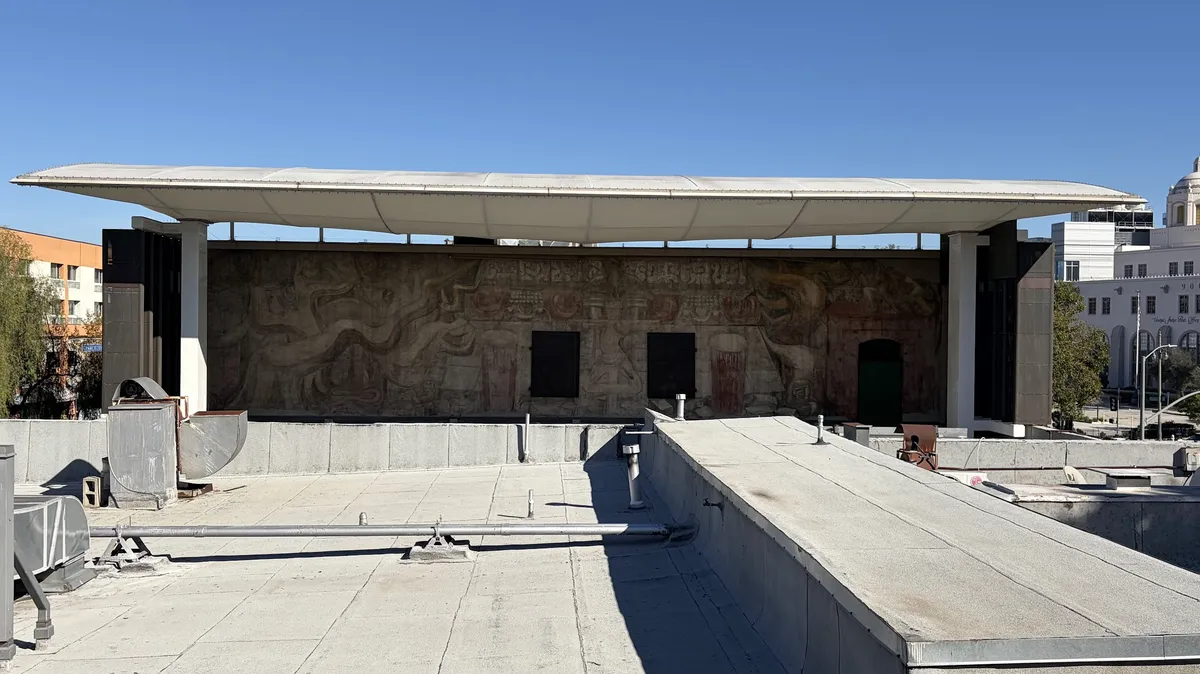
The mural was painted in 1932 by David Siqueiros, an extremely famous muralist from Mexico. He was also an ardent communist, as well as a kind of mural technologist?? who experimented with more modern painting and planning techniques. He was planning his murals with camera photography, and painting them with industrial paint sprayers, at a time when this was uncommon.
I had no idea the mural was even here. I’d been told several times about LA Plaza, the Museum of Social Justice, and some of the other tourist attractions at Olvera Street, but nobody had ever once mentioned to me, "oh, there’s a monumental mural on the side of the Italian American museum, urging Central and South Americans to rise up in a populist indigenous uprising and destroy North American imperialism."
I suppose it’s not yet made a deep impression on the city as a potential tourist destination - the museum is very small, and it’s got only one painting, and it’s only been open since 2013, when preservation efforts on the mural completed. But I highly recommend it!! You should go!!
The painting’s history is nuts. It was commissioned by a guy who operated an art gallery in the Italian American Hall. He said, "paint me a mural about tropical America," thinking he was going to get something cool and attractive, and instead he got a massive work of political art. Within two years the mural had been whitewashed over so that it was no longer visible from the street. Here’s my bad picture of a sign from the museum showing the first half of the whitewashing job:
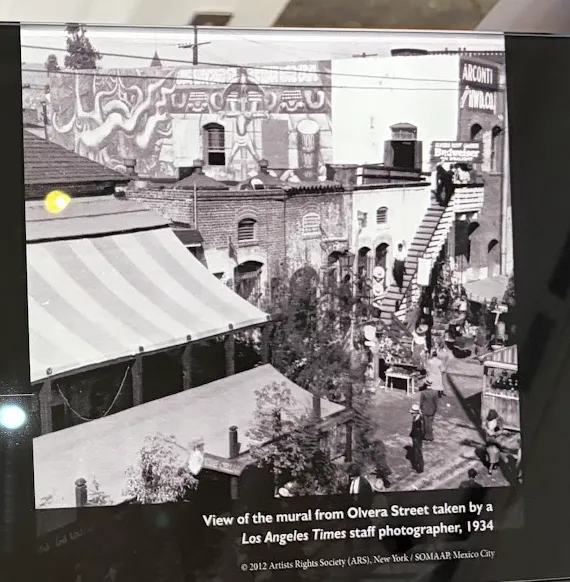
Eventually the whole thing was covered up. But the whitewash started flaking off eventually, and about 30 years later it started to become visible again. In the 70s they tried preserving the mural for the first time. In the early 2010s they finally finished a major preservation pass and built the tiny museum, which has a viewing platform you can use to look across the rooftop at the mural itself, in its current dilapidated state.
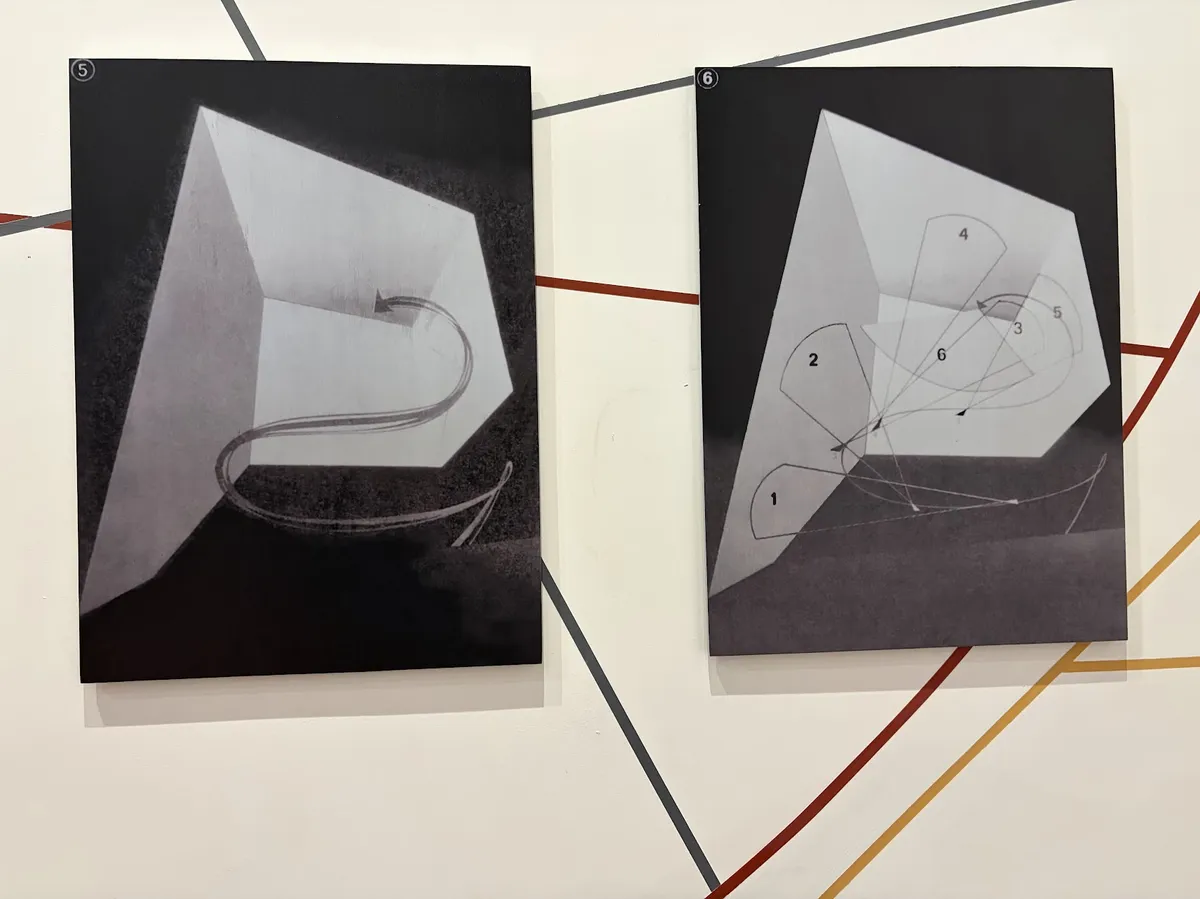
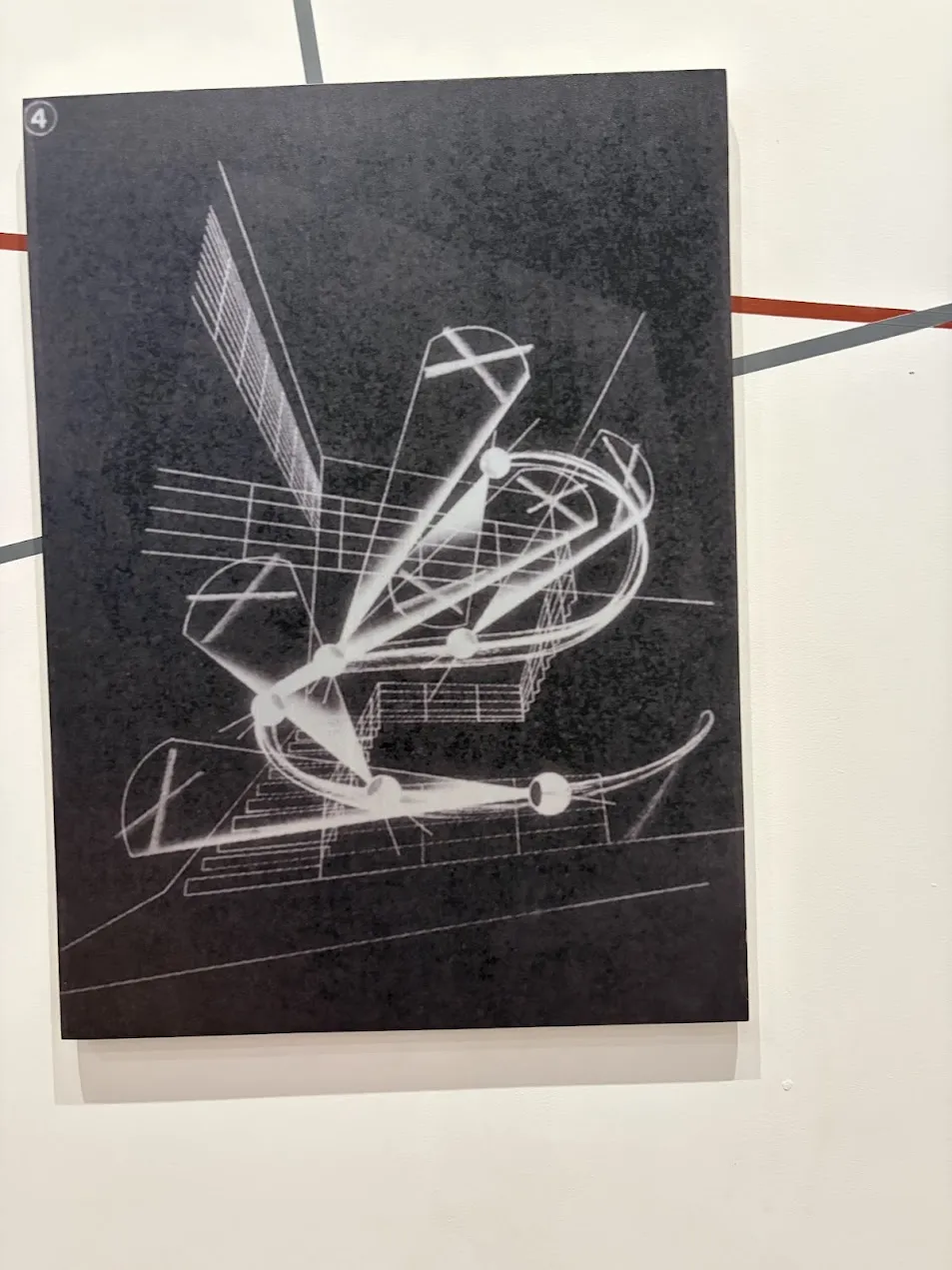
The museum’s contextual content is unusually good. We spent the better part of an hour there reading every placard, even though the museum is tiny and there’s only one mural to look at. The museum contains a contemporary black and white photo of the mural, from before it was whitewashed over, on one gigantic wall. It also has some very interesting examples of Siqueiros’s planning documentation. He was apparently super into creating murals that would change in appearance or unfold a narrative as the viewer walked along them. It is very, uh, level design. Here are my bad misaligned photos:
There’s also a few attached rooms about the history of a boarding house on Olvera Street - I get the impression that this was a different small museum which has been grafted onto the side of the interpretive center.
I was particularly interested in this stuff because my college had an Orozco mural, so I spent a lot of time in my early 20s looking at that historic Mexican muralist’s work - and Siqueiros is one of the other "big three" Mexican muralists working at that time in the 30s and 40s. I don’t have any particular knowledge of this stuff or of 20th century art history in general, or I probably would have known that it was here in the first place! But I was glad to finally see some work from a guy I have previously Googled (and then forgotten everything about).
Anyway: it’s not often you get to see public art with such an exciting and weird and in-the-end-triumphant backstory. This shit was painted over for decades, but now there is an itty bitty museum where you can stand and look at it for as long as you want. Check it out!!
Oh, and one more extremely cool thing: today was the feast day of the Virgin of Guadalupe, so the church at the plaza had a large outdoor event which transitioned into a parade with two different marching bands and dancers wearing a ton of amazing traditional outfits. They went by when we were in the America Tropical museum:
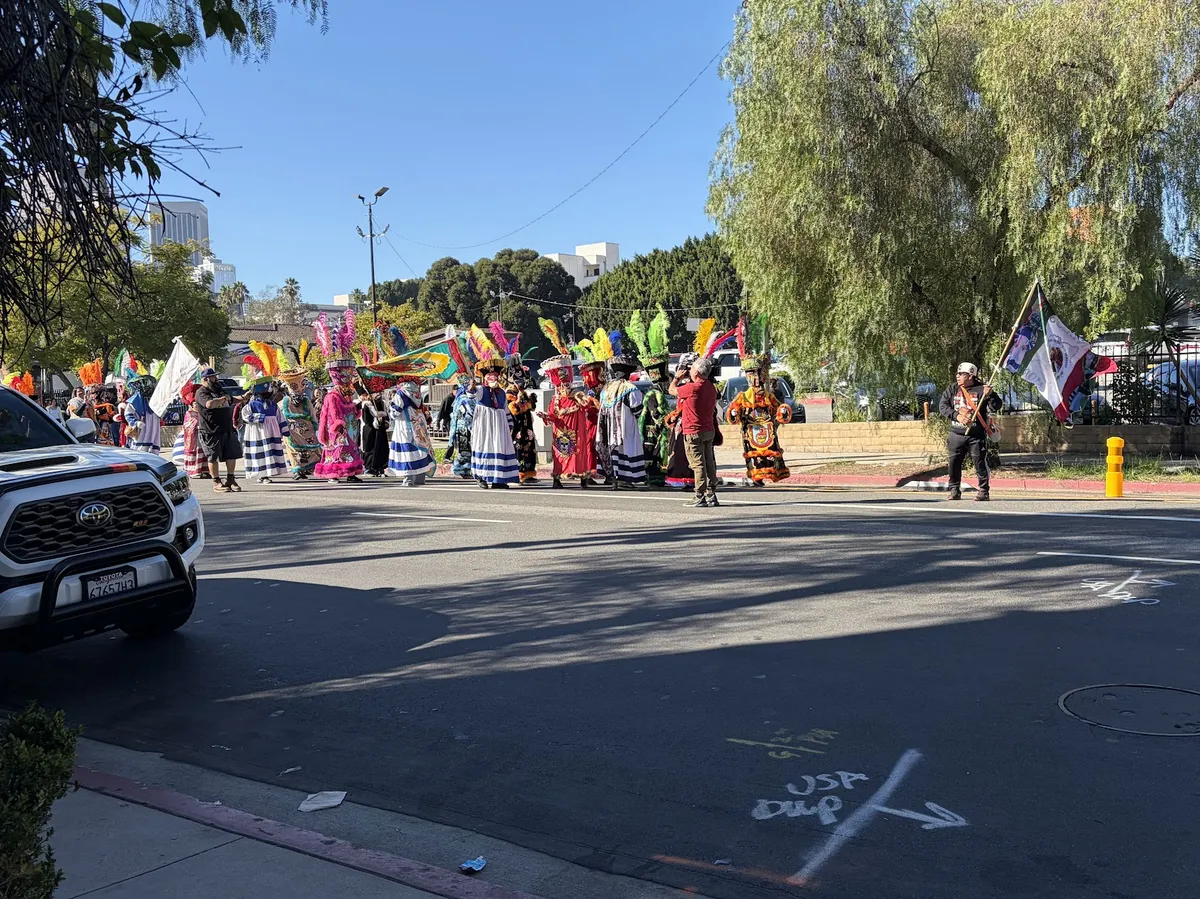
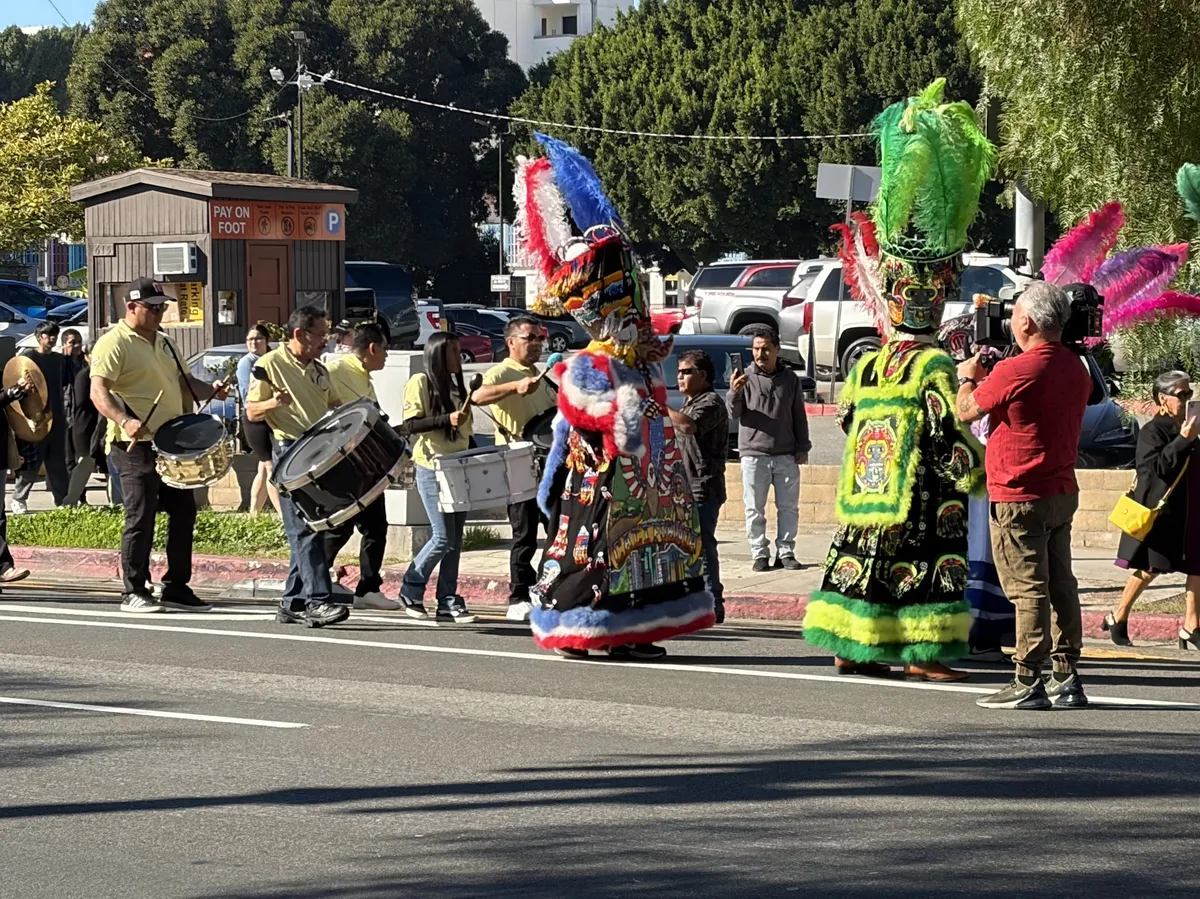
I grew up Catholic, so I’d read about Our Lady of Guadalupe’s various appearances many times... but when you are like, twelve, and going to church in English, and don’t really know anything about the traditional festivals associated with her, or any of the political and cultural history of Mexico, it’s kind of hard to understand why there is like... a second title for the Virgin Mary?? That only Spanish speaking people seem to know a lot about?? The church is extremely bad at explaining this stuff in material for children. I remember reading about this as a kid, and being like "What???? So wait, are there are two Virgin Maries???? How do I know when she is Guadalupe?????"
Anyway, it was very cool and very clarifying to finally get a chance to see a cultural event associated with her! I’m so glad we went, and I’m so glad we made the choice to go today. Real serendipity shit!