***Current conditions: *A major winter storm stretching across a dozen states, from Texas to Delaware, and could hit by midweek • The edge of the Sahara Desert in North Africa is experiencing sandstorms kicked up by colder air heading southward • The Philippines is bracing for a tropical cyclone heading toward northern Luzon.
THE TOP FIVE
1. New Jersey’s new governor freezes electricity prices during inauguration speech
Mikie Sherrill wasted no time in fulfilling the key pledge that animated her campaign for governor of New Jersey. At her inauguration Tuesday, the Democrat signed a series of executive orders aimed at constraining electricity bills and expanding energy production in the state. One order authorized state utility regulators to freeze rate hikes. Another direc…
***Current conditions: *A major winter storm stretching across a dozen states, from Texas to Delaware, and could hit by midweek • The edge of the Sahara Desert in North Africa is experiencing sandstorms kicked up by colder air heading southward • The Philippines is bracing for a tropical cyclone heading toward northern Luzon.
THE TOP FIVE
1. New Jersey’s new governor freezes electricity prices during inauguration speech
Mikie Sherrill wasted no time in fulfilling the key pledge that animated her campaign for governor of New Jersey. At her inauguration Tuesday, the Democrat signed a series of executive orders aimed at constraining electricity bills and expanding energy production in the state. One order authorized state utility regulators to freeze rate hikes. Another directed the New Jersey Board of Public Utilities “to open solicitations for new solar and storage power generation, to modernize gas and nuclear generation so we can lower utility costs over the long term.” Now, as Heatmap’s Matthew Zeitlin put it, “all that’s left is the follow-through,” which could prove “trickier than it sounds” due to “strict deadlines to claim tax credits for renewable energy development looming.”
2. House Democrats call for a probe into Trump official’s ties to a lithium mine
Last month, the environmental news site Public Domain broke a big story: Karen Budd-Falen, the No. 3 official at the Department of the Interior, has extensive financial ties to the controversial Thacker Pass lithium mine in northern Nevada that the Trump administration is pushing to fast track. Now The New York Times is reporting that House Democrats are urging the Interior Department’s inspector general to open an investigation into the multimillion-dollar relationship Budd-Falen’s husband has with the mine’s developer. Frank Falen, her husband, sold water from a family ranch in northern Nevada to the subsidiary of Lithium Americas for $3.5 million in 2019, but the bulk of the money from the sale depended on permit approval for the project. Budd-Falen did not reveal the financial arrangement on any of her four financial disclosures submitted to the federal government when she worked for the Interior Department during President Donald Trump’s first term from 2018 to 2021.
House Republicans, meanwhile, are planning to vote this week to undo Biden-era restrictions on mining near more than a million acres of Minnesota wilderness. “Mining is huge in Minnesota. And all mining helps the school trust fund in Minnesota as well. So it benefits all schools in the state,” Representative Pete Stauber, a Minnesota Republican and the chair of the Natural Resources Subcommittee on Energy and Mineral Resources, said of the rule-killing bill he sponsored. While the vote is expected to draw blowback from environmentalists, E&E News noted that it could also agitate proceduralists who oppose the GOP’s continued “use of the rule-busting Congressional Review Act for actions that have not been traditionally seen as rules.” Still, the move is likely to fuel the dealmaking boom for critical minerals. As Heatmap’s Katie Brigham wrote in September, “everybody wants to invest” in startups promising to mine and refine the metals over which China has a near monopoly.
*Sign up to receive Heatmap AM in your inbox every morning: *
3. United Nations: The world has entered an era of ‘global water bankruptcy’
A new United Nations report declares that the world has entered an era of “global water bankruptcy,” putting billions of people at risk. In an interview with The Guardian, Kaveh Madani, the report’s lead author, said that while not every basin and country is directly at risk, trade and migration are set to face calamity from water shortages. Upward of 75% of people live in countries classified as water insecure or critically water insecure, and 2 billion people live on land that is sinking as groundwater aquifers collapse. “This report tells an uncomfortable truth: Many critical water systems are already bankrupt,” Madani said. “It’s extremely urgent [because] no one knows exactly when the whole system would collapse.”
4. The DRC is looking to make mineral deals with the U.S.
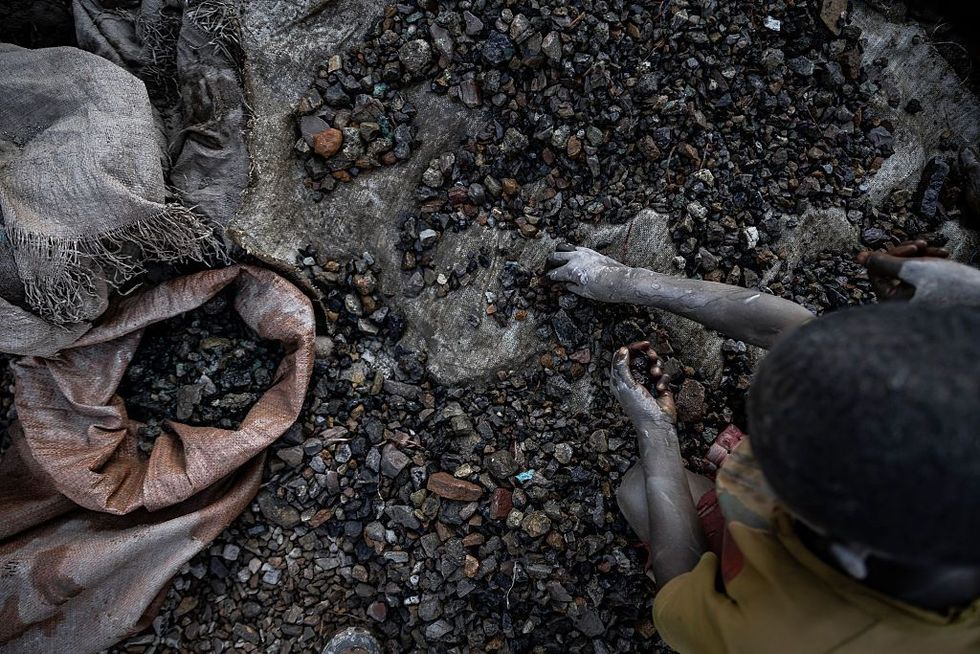 A young Congolese worker sifts through stones at a copper and cobalt mine.Michel Lunanga/Getty Images
The Democratic Republic of the Congo has given the U.S. government a vetted list of mining and processing projects open to American investment. The shortlist, which Mining.com said was delivered to U.S. officials last week, includes manganese, gold, and cassiterite licenses; a copper-cobalt project and a germanium-processing venture; four gold permits; a lithium license; and mines producing cobalt, gold, and tungsten. The potential deals are an outgrowth of the peace agreement Trump brokered between the DRC and Rwanda-backed rebels, and could offer Washington a foothold in a mineral-rich country whose resources China has long dominated. But establishing an American presence in an unstable African country is a risky investment. As I reported for Heatmap back in October, the Denver-based Energy Fuels’ $2 billion mining project in Madagascar was suddenly thrown into chaos when the island nation’s protests resulted in a coup, though the company has said recently it’s still moving forward.
5. Japan delays restart of the world’s largest nuclear plant
The Tokyo Electric Power Company is delaying the restart of the Kashiwazaki Kariwa nuclear power station in western Japan after an alarm malfunction. The alarm system for the control rods that keep the fission reaction in check failed to sound during a test operation on Tuesday, Tepco said. The world’s largest nuclear plant had been scheduled to restart one of its seven reactors on Tuesday. Fuel loading for the reactor, known as Unit 6, was completed in June. It’s unclear when the restart will now take place.
The delay marks a setback for Prime Minister Sanae Takaichi, who has made restarting the reactors idled after the 2011 Fukushima disaster and expanding the nuclear industry a top priority, as I told you in October. But as I wrote last month in an exclusive about Japan’s would-be national small modular reactor champion, the country has a number of potential avenues to regain its nuclear prowess beyond just reviving its existing fleet.
THE KICKER
As a fourth-generation New Yorker, I’m qualified to say something controversial: I love, and often even prefer, Montreal-style bagels. They’re smaller, more efficient, and don’t deliver the same carbohydrate bomb to my gut. Now the best-known Montreal-style bagel place in the five boroughs has found a way to use the energy needed to make their hand-rolled, wood-fired bagels more efficiently, too. Black Seed Bagels’ catering kitchen in northern Brooklyn is now part of a battery pilot program run by David Energy, a New York-based retail energy provider. The startup supplied suitcase-sized batteries for free last August, allowing Black Seed to disconnect from ConEdison’s grid during hours when electricity rates are particularly high. “We’re in the game of nickels and dimes,” Noah Bernamoff, Black Seed’s co-owner, told Canary Media. “So we’re always happy to save the money.” Wise words.