- 08 Dec, 2025 *
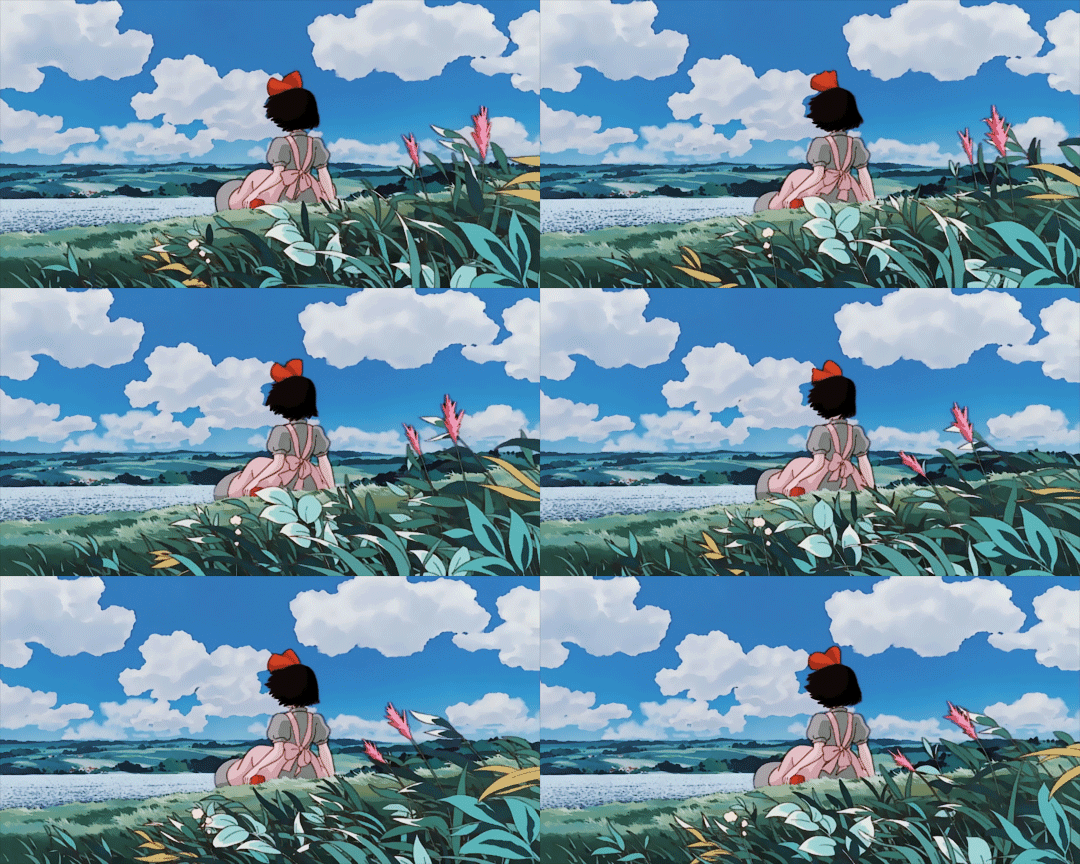
As an introvert who grew up during the years when social media was just growing into the behemoth it is today, I always saw the online world as my only way to really “connect” with people.
I know I’m not alone in this; after all, we can’t help but be social beings. It’s in our DNA: a shared urge to connect, to socialize, and to grow with others who we feel are similar to ourselves.
If I had been born perhaps twenty years earlier, maybe my view of the internet and social media as a whole would have been completely different.
But in this life, what was once just a world I tapped into for school research projects turned into a lifel…
- 08 Dec, 2025 *
As an introvert who grew up during the years when social media was just growing into the behemoth it is today, I always saw the online world as my only way to really “connect” with people.
I know I’m not alone in this; after all, we can’t help but be social beings. It’s in our DNA: a shared urge to connect, to socialize, and to grow with others who we feel are similar to ourselves.
If I had been born perhaps twenty years earlier, maybe my view of the internet and social media as a whole would have been completely different.
But in this life, what was once just a world I tapped into for school research projects turned into a lifeline: a safe space that wasn’t safe at all.
I was among the millions of preteens and teenagers who grew up just as the first big social media platforms were really hitting their stride. Though I had friends with similar interests from school, I was often too shy to really “nerd out” and share more about my growing hobbies.
But on the internet and on social media sites, that introverted side of myself always faded away. Somehow, I could make friends with anyone, spending hours chatting with like-minded strangers, reblogging funny posts and GIF sets, and scrolling through endless amounts of content under hashtags I found interesting on Twitter.
The hours and days blended together in a blurry soup full of likes, reposts, tweets, algorithms, and the constant dopamine hits I got whenever that little bell icon on every platform turned red.
It wasn’t until many years later, when social media as a whole had turned me into a burned-out husk of a human, that I realized that red bell icon was by design.
That all along, the slow but steady growth of my addiction to social media had been intentional. It was not a personal failure, but a system built to turn me into someone I couldn’t recognize.
Though I hated to admit it, I wouldn’t have been able to survive the many grueling years of studying without social media. On days that felt too heavy to bear, I turned to the familiar comfort of those endless algorithms, wrapping me into an echo chamber. When I struggled to pass my classes and worried about graduating on time, the constant cat videos, memes, and viral posts kept me distracted.
It wasn’t until recently that I realized I wasn’t being entertained by social media; instead, it was keeping me hooked and distracted, feeding me those little hits of dopamine that I so desperately needed.
When I began working and my burnout worsened, I turned once more to social media.
But something had changed, something that had become more palpable since the pandemic.
Social media had shifted from a place where you could be anyone and connect with anyone into an endless billboard ad, a highlight reel where strangers I didn’t even follow boasted about a life I could never have.
The cat videos I loved were turned into links for online shopping platforms. Videos of regular people sharing their struggles became ads for mental health apps at the end. My favorite YouTubers—though I couldn’t blame them entirely—ramped up their ad partnerships and sponsor segments.
Before I knew it, the one place where I could retreat and ignore the world for a few hours had become a place I never wanted to be.
The thought of leaving social media entirely gave me more anxiety than I expected. A flood of questions filled my mind, all fueled by one term: FOMO, the fear of missing out.
I’m not a popular or outgoing person, and my friend circle was already small. I wondered anxiously: What if I missed an important announcement from them? What if a good friend posted a huge life update and I completely missed it?
Or what if my favorite YouTuber or internet personality posted something interesting and I never saw it? What if something terrible happened in another country, and I wouldn’t know until it affected my own?
What if, what if, what if. That was all I could think about. The constant fear of missing out on things I thought were important kept me anchored like a steel ball and chain around my ankle.
And so, at first, I succumbed to that fear. I scrolled and scrolled as the world around me slowly became worse and worse. I read hundreds, or perhaps even thousands, of posts from strangers sharing their daily struggles to afford living.
At the same time, mixed between these depressing posts were photos and reels of people “living their best lives,” traveling around the world with seemingly endless amounts of money.
I didn’t even see my friends’ posts anymore. The algorithm buried them instead, keeping me hooked on the worry and stress caused by worsening global crises rather than showing me the hobbies and topics that once brought me joy.
Once I hit my breaking point, I dropped my phone onto my bed. Then I turned it off, hid it in my closet, and stepped outside.
The bright sunlight hurt my eyes for a bit. As I blinked to adjust to it, I began to walk away from my house. All I could think of was heading to a nearby park overlooking a basketball court. I walked there, my mind still swimming from the overstimulation, and sat in the silence.
I watched a group of young boys play basketball together while I sat on a nearby bench. It was just us there, surrounded by tall trees. As I watched them, all I could think about was how free they were. Instead of spending their day off school online like I did at their age, they were creating memories together.
It hit me then that I could live like this. I didn’t have to be tied to social media to feel the dopamine my brain constantly craved. I had let this rectangular piece of glass and plastic become my only source of happiness when it never should have been.
FOMO has hit me many times since. I did end up missing important life updates from my friends, became clueless about the latest internet culture trends, and barely had any idea about breaking global news.
Instead, what I got was silence. Overwhelming, peaceful silence.
Those important life updates from my friends that I missed? I learned about them anyway by meeting up in person and hearing the news directly from them, not through an online post.
Those internet trends I didn’t catch the moment they happened? I still heard about them by listening to the radio again, just like in the old days.
And the global news I had no idea about? My siblings, friends, and parents talked about it in person, without the rage-baiting comment sections attached.
I didn’t miss out on anything at all. Instead, I stayed connected to the world not through a screen or a constantly shifting, time-hungry algorithm, but through conversations, voices, and the memories I made with others.
These are things I never would have experienced, let alone appreciated, if I hadn’t stepped away from my online world.
They say ignorance is bliss, and that bliss has been part of what has kept me from going back to social media. Turning that noise off and embracing the quiet, the boredom, and the FOMO is what gave me my sanity back.
Sure, I still had a Reddit account. But by then, I had already seen through the artificial dopamine rush brought on by the karma system. It took a long time to rewire my brain to think this way: a long stretch of relapses, of “let me just browse for five minutes” moments, of convincing myself I didn’t have a problem.
But that same FOMO eventually weakened until it was nothing more than an acronym. It no longer held any power over me, and you don’t have to let it hold power over you, either.
If you fear leaving social media because of FOMO, I completely understand, especially if you grew up on the internet like I did.
But I hope you believe me when I say that regardless of the pain, the discomfort, or the boredom, it’s worth it to let that fear transform into something beautiful.
Yes, we are and always will be social beings. Yes, we will constantly want to seek connections and meet new people.
But it doesn’t have to happen only online. The world is expanding and evolving every day, and the best part is that you don’t have to watch it all unfold through a screen.
You can step outside, take in the bright sunlight, and become part of that world again: a world you were never meant to experience from behind glass.
[#digital minimalism](https://keetokatto.bearblog.dev/blog/?q=digital minimalism) #journal [#social media](https://keetokatto.bearblog.dev/blog/?q=social media) #thoughts #writing