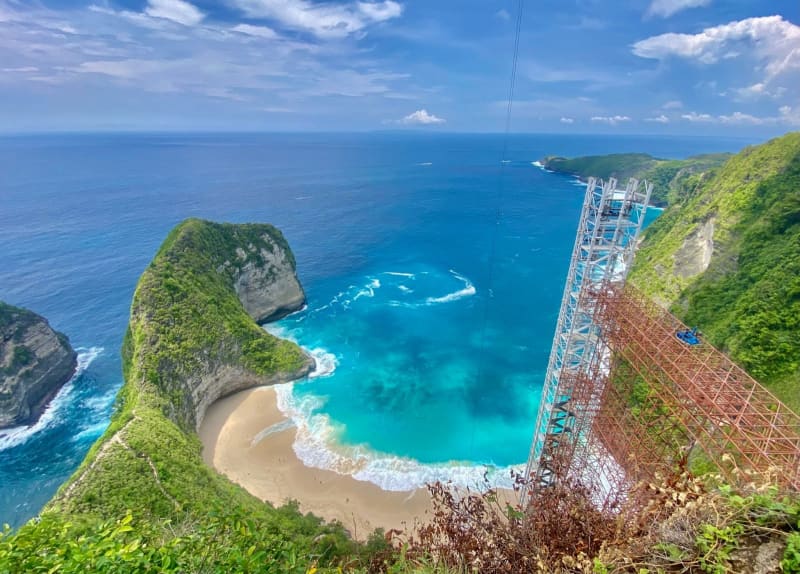
The planned glass lift at Bali’s world-famous T-Rex cliff that split visitors and authorities is to be demolished. Putu Utami/dpa
Bali’s governor has ordered the demolition of a partially built glass lift on one of the island’s most famous coastal cliffs, following weeks of public outcry and findings of multiple environmental and construction violations.
Governor I Wayan Koster announced recently that the 180-metre structure on the neighbouring island of Nusa Penida must be removed within six months after authorities halted work in late October over missing permits and suspected breaches of planning rules. About 70% of the project had already been completed.
The lift wa…
The planned glass lift at Bali’s world-famous T-Rex cliff that split visitors and authorities is to be demolished. Putu Utami/dpa
Bali’s governor has ordered the demolition of a partially built glass lift on one of the island’s most famous coastal cliffs, following weeks of public outcry and findings of multiple environmental and construction violations.
Governor I Wayan Koster announced recently that the 180-metre structure on the neighbouring island of Nusa Penida must be removed within six months after authorities halted work in late October over missing permits and suspected breaches of planning rules. About 70% of the project had already been completed.
The lift was designed to shuttle tourists down to the "T-Rex cliff" viewpoint at Kelingking Beach, where the cliffs resemble a dinosaur’s head.
The limestone cliffs of the beach, whose green ridges curve over turquoise waters like a prehistoric creature’s spine, made Nusa Penida one of Bali’s most photographed destinations. But the lift rising along the cliff face became a flashpoint over how far the island should go in the pursuit of tourism.
It aimed to offer a safer alternative to the steep path, where visitors have frequently been injured. But the white steel frame drew fierce criticism, with many arguing it spoiled the iconic landscape.
Koster said the move to demolish it is part of a wider effort to protect Bali’s nature, culture and social values, rejecting claims that the decision is hostile to investment.
The developer, PT Indonesia Kaishi Tourism Property Investment Development, will be required to restore the area to its original condition within three months after the removal.
Bali needs investment, but it must be carried out with integrity and responsibility, Koster said, adding that development should protect Bali, not exploit it. The island has long struggled with the pressures of mass tourism.
Work was already halted in October, when Bali’s provincial lawmakers called for work on the 180-meter structure to stop after discovering that the project lacked complete permits and appeared to breach environmental and zoning rules.
The provincial legislature’s special committee on spatial planning had argued for its removal in a recommendation to Governor Wayan Koster.
“The findings show the glass lift was built in an area that violates spatial regulations,” Committee chair Made Supartha said. “Our duty is to make sure development in Bali stays consistent with the island’s natural balance and cultural values.”
The committee’s report also recommended a review of a proposed bungee-jumping platform nearby amid growing anxiety over the rapid commercial transformation of Nusa Penida.
Once celebrated for its rugged cliffs, coral reefs, and temple ceremonies, the island is now seeing a rush of development fuelled by post-pandemic tourism.
The lift project, valued at about 200 billion rupiah ($12 million), includes a 60 billion rupiah ($3.6 million) glass lift designed to carry tourists down the steep cliff, where visitors have often been injured while hiking along the rough path.
At the site, construction of the glass lift, which started in 2023, had been halted since local authorities cordoned it off in October. Yellow security tape flutters around the base of the unfinished lift.
Environmental groups and local leaders warned that the project undermines Bali’s fragile balance between development and spirituality. Under local customary law, coastal cliffs and temples are regarded as sacred zones central to the island’s Tri Hita Karana philosophy, which seeks harmony between humans, nature, and the divine.
The elevator case came amid Bali’s broader struggle to control unregulated construction. In recent years, provincial authorities have ordered crackdowns on villas, bars, and resorts that encroach on farmland or spiritual zones.
Compliance complaints
Klungkung District Chief I Made Satria said the developer obtained its permits directly from the central government, limiting local oversight. “We at the regional level have limited authority to intervene,” he said. “But we are coordinating with the investor to minimize any negative impact.”
The developer, PT Bangun Nusa Properti, maintained it followed all legal procedures, securing environmental assessments and soil tests in 2023, according to the district government’s website.
Company director I Komang Suantara said the project complied with Bali’s 2024 spatial plan and 2023 building code.
Not all greet the new decision. Tourism accounts for a large share of Bali’s economy, and officials have sought new investments to revive the sector after the pandemic.
“This is not a small investment,” said Putu Darmaya, chairman of the Indonesian Hotel and Restaurant Association in Klungkung, on the group’s website. “Why object when it is nearly finished?”
Hilmi Razak, a tourist visiting Nusa Penida, said the elevator project goes against the island’s appeal as a place for natural adventure and unspoiled scenery.
“As someone who loves nature, I find this project hard to justify,” he said. “If people think the climb is too tiring, perhaps they’re better off staying home.”

Bali relies on tourism but some question development that spoils the island’s natural attractions. Carola Frentzen/dpa
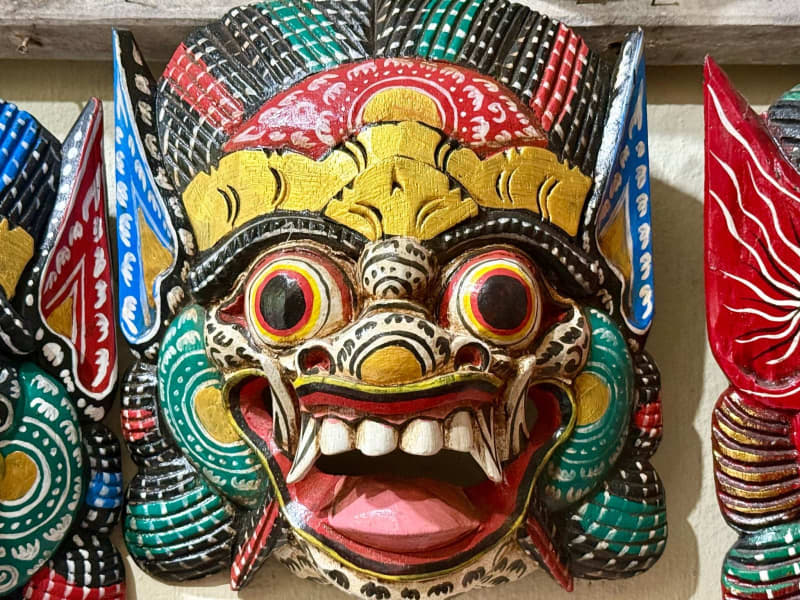
Culture and tradition versus development? A site in Bali became a flashpoint over how far the island should go in the pursuit of tourism. Carola Frentzen/dpa

Bali provincial authorities have ordered crackdowns on villas, bars, and resorts that encroach on farmland or spiritual zones as the island struggles to balance tourism and tradition. Carola Frentzen/dpa