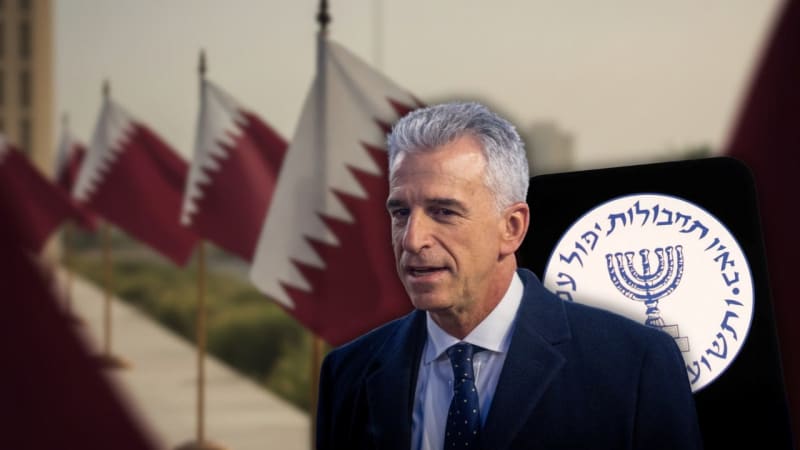
Mossad Director David Barnea seen over a backdrop of Qatari flags and the Mossad emblem (illustrative) (photo credit: FLASH90, SHUTTERSTOCK)
Israel’s spy chief has used his extensive skill set to rebuild the Mossad’s working relationship with Qatar following the attempted assassination of Hamas officials in Doha.
Mossad director David Barnea’s late Sunday meeting with Qatari Prime Minister Sheikh Mohammed bin Abdulrahman Al Thani indicates that he had managed to bridge the divide between the two officials, The Jerusalem Post has learned.
Although Thani could have blacklisted Barnea after Israel tried to [assassin…
Mossad Director David Barnea seen over a backdrop of Qatari flags and the Mossad emblem (illustrative) (photo credit: FLASH90, SHUTTERSTOCK)
Israel’s spy chief has used his extensive skill set to rebuild the Mossad’s working relationship with Qatar following the attempted assassination of Hamas officials in Doha.
Mossad director David Barnea’s late Sunday meeting with Qatari Prime Minister Sheikh Mohammed bin Abdulrahman Al Thani indicates that he had managed to bridge the divide between the two officials, The Jerusalem Post has learned.
Although Thani could have blacklisted Barnea after Israel tried to assassinate top Hamas leaders on Qatari soil on September 9 – just as the Mossad and Qatar were negotiating a potential hostage deal – the Post understands that Israel’s spy chief has used his extensive skill set to rebuild their working relationship.
There was nothing inevitable about this.
Mossad’s strong relationship with Qatar, and historic precedents
Barnea indeed has a strong working relationship with Thani, both before the Israel-Hamas War began on October 7 and afterward.
Both men were key figures in working out the first two ceasefires and hostage exchanges in November 2023 and January 2025.
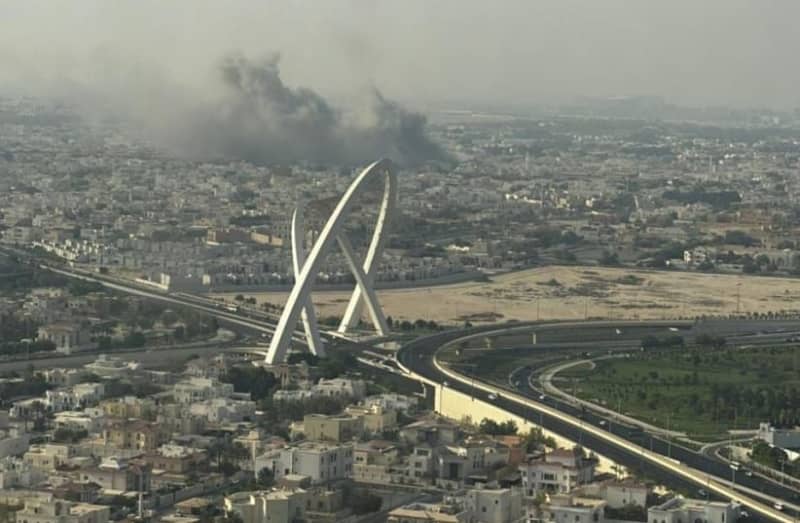
Blasts heard in Doha, Qatar, September 9, 2025. (credit: Screenshot/Telegram, Via section 27a of copyright act)
But all of that came into question after the September 9 assassination attempt. The attack sent a message to Thani that he could not trust Israel to honor his country’s sovereignty. It did not matter to him that the attack was tailored to target only Hamas officials. And, as the attack occurred amid the hostage negotiations, it undermined any reason for Thani to trust Barnea or any other Israeli negotiator.
If Thani had followed historical precedent, he and Barnea would never have spoken again.
In 1997, the Mossad under Danny Yatom tried and failed to assassinate Hamas official Khaled Mashaal on Jordanian soil, with Yatom’s agents even getting caught. Jordan’s King Hussein blacklisted Yatom, who had gained the monarch’s trust, then embarrassed him and violated Jordan’s sovereignty (obviously, Yatom had hoped the operation would succeed without anyone tracing it to the agency).
Efraim Halevy was brought in from the outside to manage the future of Israeli-Jordanian relations and later replaced Yatom.
In 2010, the Mossad under Meir Dagan successfully assassinated Mahmoud al-Mabhouh in the UAE, but its agents’ movements were caught extensively on camera, leading the Emirates security forces to expose many of the spies. UAE relations with Dagan remained chilly for the rest of his term, though he is considered one of the most successful spy agency directors ever.
The same could have happened to Barnea.
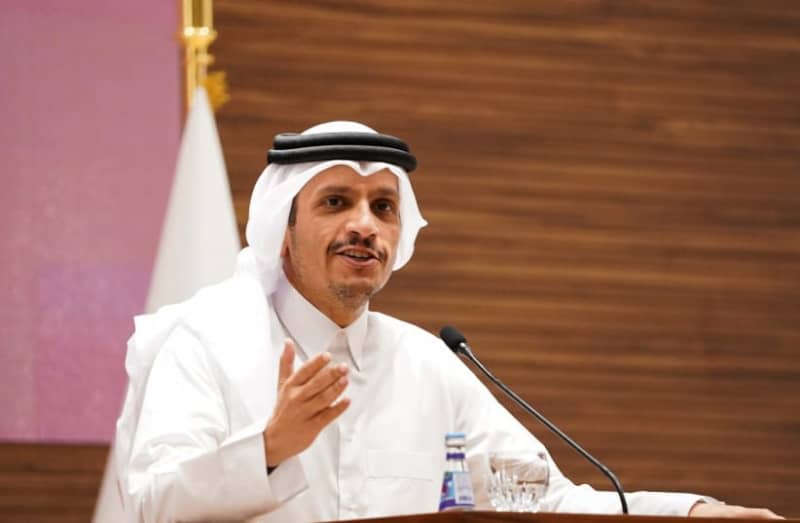
Qatari Prime Minister and Foreign Minister Mohammed bin Abdulrahman Al Thani attends a press conference, in Doha, Qatar, October 24, 2024. (credit: REUTERS/Nathan Howard/Pool)
Mossad’s David Barnea did not oppose strike on Qatar
Although the IDF took the lead on the Qatar attack, and there have been mixed reports about Barnea’s position regarding the assassination, the Post learned in real-time that, in the final analysis, the Mossad chief had not opposed the attack.
Indeed, Barnea expressed reservations about specific issues, but so did many other parties who ultimately supported the attack.
As such, there could have been even more reason for Thani to be unwilling to work directly with Barnea again. However, Barnea has threaded the needle, allowing them to restore at least a functional working relationship.
Whether Barnea and Thani have returned to work together by the Mossad chief convincing the Qatari prime minister that he was the Israeli official most against the September 9 attack, or whether it is out of necessity, at the demand of the United States, the bottom-line is that Barnea has shown the ability to manage a highly explosive situation to facilitate dialogue over issues of joint national interest.
Whether Israel should be talking to the Qataris at all in the long run is still up for debate. But as long as the Israeli government deems it necessary, Barnea appears to have figured out how to keep the conversation going.