When most people think about science, they conjure images of pipettes, sterile equipment, and people in white lab coats. But science is a messy and human endeavor driven by obsession, courage, and sometimes, sheer stubbornness. In 2025, things weren’t easy for scientists. It was a year where the world felt like it was tearing at the seams. Yet, in the labs and negotiation rooms, scientists fought the good fight and make some stunning breakthroughs.
Nature, the world’s premier scientific journal, has released its annual “Nature’s 10” — a list of ten people who drove scientific conversations and developments. These are the true innovators and disruptors, the pioneers who shaped our reality and future. From the depths…
When most people think about science, they conjure images of pipettes, sterile equipment, and people in white lab coats. But science is a messy and human endeavor driven by obsession, courage, and sometimes, sheer stubbornness. In 2025, things weren’t easy for scientists. It was a year where the world felt like it was tearing at the seams. Yet, in the labs and negotiation rooms, scientists fought the good fight and make some stunning breakthroughs.
Nature, the world’s premier scientific journal, has released its annual “Nature’s 10” — a list of ten people who drove scientific conversations and developments. These are the true innovators and disruptors, the pioneers who shaped our reality and future. From the depths of the ocean to the political buzzsaws of Washington DC, here are the ten people you need to know.
Susan Monarez: The Public Health Guardian
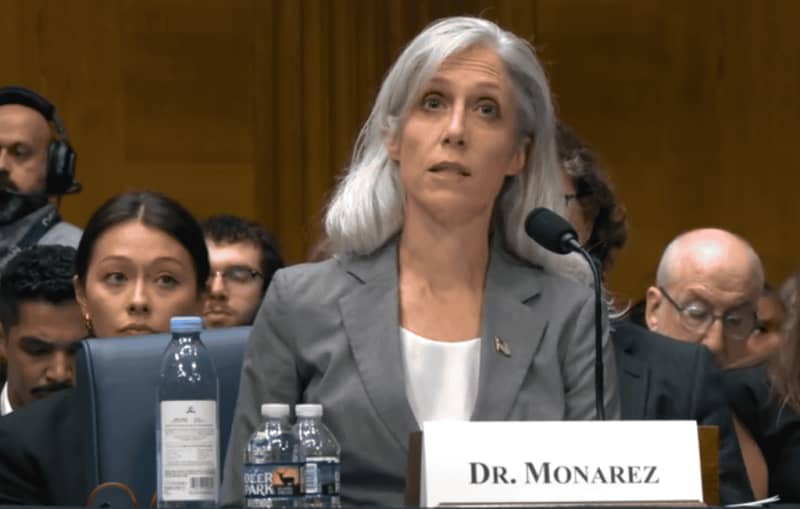
Monarez during a now famous testimony. Image from Wikipedia.
If you want to know what “holding the line” looks like, look at Susan Monarez. She took the job as director of the US Centers for Disease Control and Prevention (CDC), a role that should be about data, not drama. But in 2025, drama was unavoidable. Less than a month after she was sworn in, the Trump administration fired her. The main reason was that she refused demands to promote vaccine recommendations because they were not based on science.
Under RFK Jr., the CDC has promoted the idea that vaccines are linked with autism, which has been thoroughly studied for decades and debunked dozens of times.
Monarez claims she was ousted for refusing to compromise scientific integrity. According to her testimony, she refused orders from health secretary Robert F. Kennedy Jr. to fire leading scientists and pre-approve vaccine recommendations without data. While Kennedy claims she was “untrustworthy,” her firing sparked a wave of resignations and protests from top scientists. Monarez became the face of resistance against political interference in public health, proving that sometimes the bravest thing a scientist can do is say “no”.
Achal Agrawal: The Retraction Detective
Science is the best process we have for finding out what’s really true in the universe. But it’s far from perfect.
While Monarez fought in the halls of power, Achal Agrawal fought in the trenches of academia. An applied mathematician by training, Agrawal realized that Indian universities were plagued by plagiarism and data manipulation. When he confronted the problem, he wasn’t thanked; he was ignored. So, he quit his job.
Working without pay, Agrawal launched India Research Watch, using data to expose retraction rates and research misconduct. It felt like shouting into the void until the government finally listened. In August, India changed its national ranking system to penalize institutions with high retraction rates — a direct result of the pressure Agrawal helped build. He showed that one person, armed with data and a laptop, can force a massive bureaucratic system to value quality over quantity.
Precious Matsoso: The Pandemic Negotiator
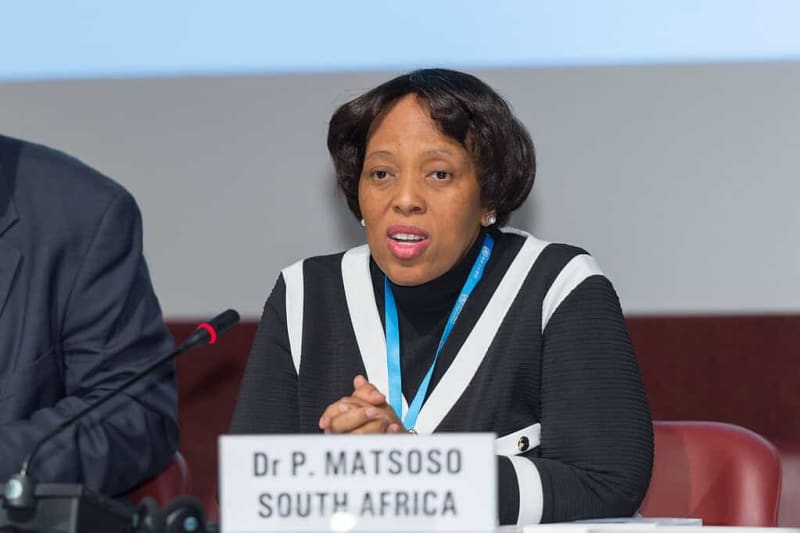
Image credits: A.Lwin & Ethandar.
We all want to forget COVID-19. It’s been such a horrendous couple of years that it’s perfectly understandable. But sweeping everything under the rug won’t do. We’re still vulnerable to pandemics and Precious Matsoso is making sure we survive the next one.
Negotiating a global treaty is hard; negotiating one between 190 nations regarding pandemic preparedness is nearly impossible. Yet, Matsoso, a former South African health official, co-chaired the talks that led to a consensus on the first global pandemic treaty in April.
Her secret weapon was relentless diplomacy and following the best peer-reviewed science (and, occasionally, singing The Beatles to delegates to break the tension). The treaty addresses the bitter inequities of the last pandemic, ensuring that in the future, companies must provide at least 20% of their vaccines and medications to the WHO for distribution. Matsoso built a framework so that next time, geography won’t determine who lives and who dies.
Luciano Moreira: The Mosquito Rancher
Some men dream of building an army. Moreira already has his. His soldiers are Aedes aegypti mosquitoes, and their mission is to save lives. Moreira runs a massive factory in Curitiba that churns out 80 million mosquito eggs a week.
Normally, mosquitoes don’t save people. But these ones do. They all carry Wolbachia, a bacterium that stops them from transmitting viruses like dengue, and the plan is for them to replace “regular” mosquitoes.
Moreira spent years proving this works, battling skepticism from officials who told him, “This is never going to work”. He proved them wrong. In cities where his “wolbitos” were released, dengue cases dropped by 89%. Now, Brazil has adopted his method as a nationwide public-health strategy. Moreira turned a biological curiosity into an industrial-scale weapon against disease.
Tony Tyson: The Telescope Pioneer
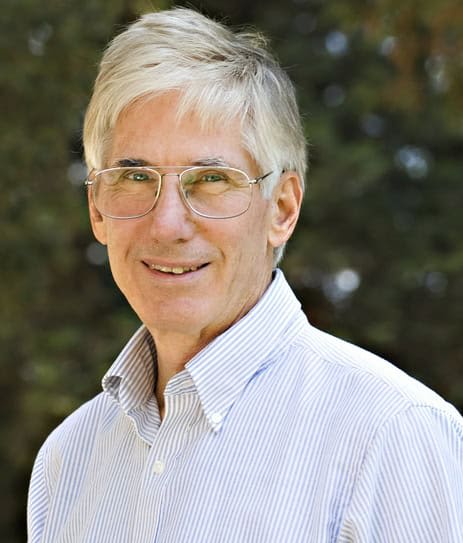
Image credits: LSST.
At 85 years old, physicist Tony Tyson is finally seeing the future he dreamed up three decades ago. He is the driving force behind the Vera Rubin Observatory in Chile, a $810-million bet on a telescope design so complex many thought it impossible.
The Vera Rubin Observatory will create a massive “movie” of the universe, revealing secrets of dark matter/energy, mapping the Milky Way, cataloging Solar System objects (including Planet Nine and asteroids for planetary defense)
Tyson’s vision was to create a continuous video of the southern sky, mapping invisible dark matter and spotting asteroids that could threaten Earth. This year, the telescope began focusing on galaxies, proving his high-risk gamble paid off. Tyson built a time machine that will map the universe in 3D, fundamentally changing astronomy.
Mengran Du: The Deep Diver
If you thought the depths of the ocean were biological deserts, you’re wrong. While Tyson looked up, Mengran Du looked down — way down. A geoscientist from China, Du piloted the Fendouzhe submersible nine kilometers beneath the ocean surface into the Kuril-Kamchatka Trench.
What she found rewrites the textbooks. In the pitch-black hadal zone, she discovered a thriving ecosystem of tubeworms and gastropods powered not by the sun, but by “cold seeps” of methane and hydrogen sulfide. This discovery suggests a global corridor of life exists in the deep ocean, surviving on chemosynthesis.
Du proved that the closest thing to an alien world is right here on Earth, waiting for someone brave enough to dive into the dark.
Liang Wenfeng: The AI Disruptor

Image via Youtube.
In the past couple of years, we’ve had a million and one AI disruptions. But this year, the AI world suffered its own disruption, not from a Silicon Valley giant, but by a secretive former financial analyst in Hangzhou named Liang Wenfeng.
His company, DeepSeek, released “R1,” an AI reasoning model that rivaled the best US technology but cost a fraction of the price to train.
The real shockwave was that he gave it away for free. By making the model “open weight” and publishing the methodology, Liang broke the monopoly on high-level AI, coming out of seemingly nowhere. This move allowed researchers worldwide to look under the hood of a reasoning model, accelerating innovation and challenging the dominance of closed US tech firms. Liang showed that in the AI arms race, transparency might be the ultimate disruptor.
Yifat Merbl: The Peptide Detective
Someone’s trash is another person’s treasure. Yifat Merbl, a systems biologist, proved that in an unexpected way. She discovered a new layer of the immune system hiding in the proteasome — the cell’s “garbage can” where proteins are shredded.
Merbl wondered why this recycling center was so complex. By analyzing the “trash” (peptide fragments), she found that the proteasome wasn’t just destroying proteins; it was creating antimicrobial weapons to fight bacteria. Her team identified thousands of these potential defenders.
This discovery opens up a massive new frontier for developing antibiotics and understanding how our bodies fight infection, all from a biological mechanism we thought we already understood.
Sarah Tabrizi: The Huntington’s Hero
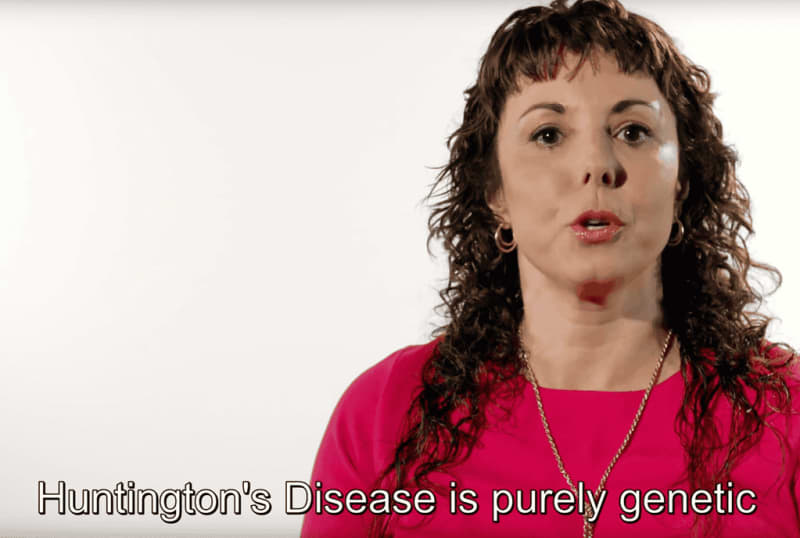
Image from Youtube.
For decades, a diagnosis of Huntington’s disease has been a slow, inevitable sentence. Sarah Tabrizi is starting to change that.
As a neurologist, she led the clinical efforts for AMT-130, a gene therapy that uses a virus to switch off the mutant protein destroying brain cells.
The results this year were the first compelling evidence that we can slow this disease. In a trial, patients receiving the therapy saw their decline slow by 75% compared to a control group. After years of “heartbreaking” failures in the field, Tabrizi finally has data that offers real hope, proving that neurodegenerative diseases might not be unbeatable after all.
KJ Muldoon: The Trailblazing Baby
The youngest name on this list is perhaps the most striking. KJ Muldoon (aged 1) was born with a rare genetic killer called CPS1 deficiency. Usually, babies with this condition die in infancy. But KJ became the first person to receive a “hyper-personalized” CRISPR base-editing therapy.
This wasn’t a mass-market drug; it was a genetic patch tailored specifically for the one faulty letter in his DNA, developed and manufactured in a record-breaking six months.
KJ is now home, eating, smiling, and growing. His survival is a proof-of-concept for the future of medicine: treatments designed not for the millions, but for the one.
The Next Step
These ten individuals remind us that science is an active and demanding pursuit. But alongside them, thousands of other researchers gave it their best, making strides in fields ranging from healthcare to astrophysics. Many sacrificed their weekends and big chunks of their personal life in the process. But what this list truly reminds us is that science is a lot about fighting.
Whether it is challenging a government, diving into a trench, or editing a genome, progress requires action. That action is rarely easy.
This story originally appeared on ZME Science. Want to get smarter every day? Subscribe to our newsletter and stay ahead with the latest science news.