- 09 Dec, 2025 *
My Analogue 3D arrived two weeks ago and I’ve finally had the ability to put some time into it. The short review is that it’s great. I’m really glad I picked it up.
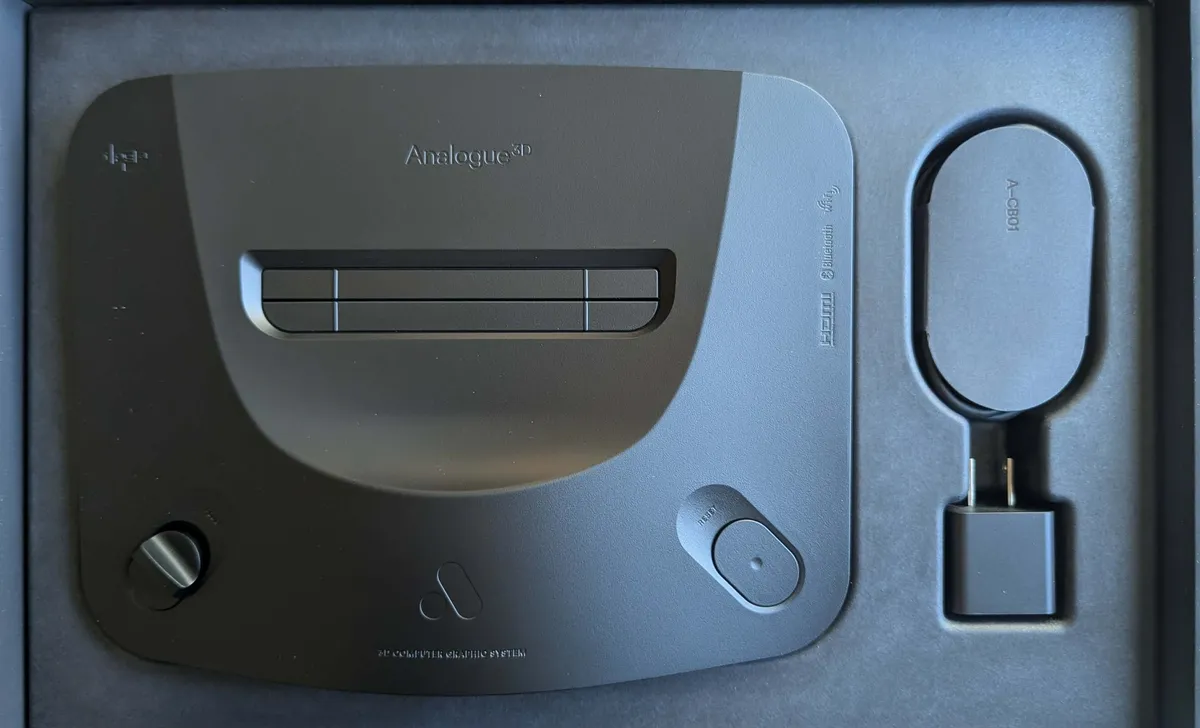
Analogue has released a handful of FPGA consoles that aim to make retro gaming work well in the modern era. Their most famous product is probably the Pocket, but I wouldn’t be surprised if the 3D eventually takes the title. Prior to the 3D, I played my N64 on my TV via an HDMI adapter that was serviceable at best. The N64 is famous for b…
- 09 Dec, 2025 *
My Analogue 3D arrived two weeks ago and I’ve finally had the ability to put some time into it. The short review is that it’s great. I’m really glad I picked it up.
Analogue has released a handful of FPGA consoles that aim to make retro gaming work well in the modern era. Their most famous product is probably the Pocket, but I wouldn’t be surprised if the 3D eventually takes the title. Prior to the 3D, I played my N64 on my TV via an HDMI adapter that was serviceable at best. The N64 is famous for being hard to emulate, because there wasn’t great documentation for the original console and because of the way it organized its hardware. There were certainly excellent emulation solutions for the big games (Ocarina, Mario 64, Goldeneye, etc), but some of the other games struggled. An HDMI system that plays every released 64 game out of the box is an impressive feat.
The 3D has a lot of options that users can set to get the games working as well as possible, but Analogue did a lot of the work up front. The system has the ability to read what game is in the console and enable the appropriate settings. This makes the system very plug-and-play friendly and I’ve not had to go in and change any of the settings yet.
I’ve spent the most time with Mario 64 so far and it feels just about perfect. And I think that’s what the Analogue 3D excels at. When I think back to playing Mario 64 when it came out, I remember the janky camera. I remember the bright colors and chipper music. I remember the learning curve it took to figure out the controls. However, I don’t remember the low framerate and I don’t remember the washed out colors when I played on an old CRT. The overclock mode fixes the framerate issues for most games, and the wealth of graphical settings means I can tinker to my hearts content (however the pre-selected ones are what I used).
The Analogue 3D doesn’t feel just like playing an original 64 felt, it feels like I remember the system feeling, and that’s a hard thing to nail down. It kept all of the good and smoothed out the bad and because of that, I’ve never had more fun with Mario 64. And then after that I’ll tackle Ocarina of Time.