Iran is enduring one of the darkest periods in its modern history. Protests that erupted in late December initially over economic hardship have clearly transformed into a nationwide rejection of the Islamic Republic and a call for regime change.
Thousands of people have been killed by Iranian security forces, with human rights organisations saying many more are injured, detained or missing. In moments like these, journalism plays a critical role in informing the Iranian public and the international community about what is happening i…
Iran is enduring one of the darkest periods in its modern history. Protests that erupted in late December initially over economic hardship have clearly transformed into a nationwide rejection of the Islamic Republic and a call for regime change.
Thousands of people have been killed by Iranian security forces, with human rights organisations saying many more are injured, detained or missing. In moments like these, journalism plays a critical role in informing the Iranian public and the international community about what is happening inside the country.
Yet Iran is not like most other countries. Reporting on it comes with extraordinary personal and professional risks and obstacles, particularly for journalists who are Iranian themselves with personal ties to the country and family and friends still living there.
This is something I am acutely aware of as a journalist and media researcher who has been covering Iran’s anti-government protests for years.
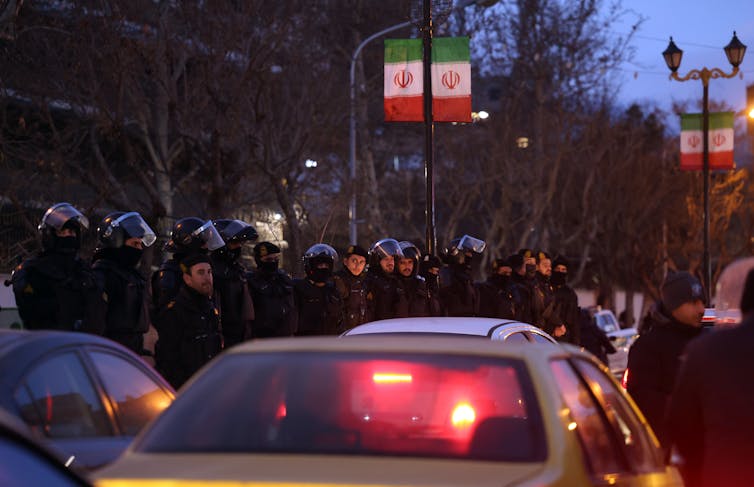
Iranian riot police stand guard in front of the British embassy in Tehran, Iran, on January 14. Abedin Taherkenareh / EPA
One of the most significant obstacles is the Iranian government’s repeated shutdown of the internet and communications networks during periods of unrest. On January 8, more than a week after the protests began, the authorities imposed one of the most severe and prolonged internet shutdowns in the country’s history.
More than 90 million people have effectively been cut off from the outside world since then, with limited access to the internet only possible through circumvention tools like virtual private networks (VPNs). Some “vetted” individuals, who are largely government loyalists or regime officials, are able to access the unfiltered global internet.
For journalists outside Iran, this makes reporting difficult. Access to local news outlets and on-the-ground sources vanished almost overnight. Information has had to be pieced together through a handful of people who have access to satellite internet services, such as Starlink and are willing to speak, alongside activist networks operating from outside the country.
The only media currently able to operate openly inside Iran are state and conservative outlets such as Islamic Republic of Iran Broadcasting and Tasnim, often through Telegram channels. These platforms offer a highly controlled narrative aligned with the government’s position. Senior Iranian officials, including foreign minister Abbas Araghchi and parliamentary speaker Ali Larijani, have described the protests as “riots” and have labelled protesters as “terrorists”.
For journalists trying to counter this narrative, human rights organisations such as the Human Rights Activists News Agency and Hengaw have become crucial sources. Their daily reports on deaths, arrests and injuries have helped document the scale of the crackdown. Diaspora media outlets such as BBC Persian and IranWire have also played a vital role, as videos and eyewitness accounts slowly emerge despite the blackout.
The information vacuum created by the shutdown has, at the same time, also enabled disinformation. Regime supporters have actively created fake accounts on social media to sow division among opposition groups, while AI-generated videos purportedly depicting the protests have flooded the web. This has impeded the ability of journalists to trust social media as a source of news gathering and information.
Deeply polarised opposition
Another defining feature of the current protest movement has been the emergence of calls for an alternative leadership. Unlike previous protests – including those in 2021 over water shortages and the 2022 nationwide Woman, Life, Freedom movement – this wave has included chants calling for the return of Iran’s former crown prince, Reza Pahlavi. Slogans such as “long live the king” and “Pahlavi will return” have been heard across most provinces.
But Iran’s opposition landscape is deeply polarised, and this presents a further challenge for journalists. Feelings on all sides are intense. Iranian journalists and their families face harassment, threats and coordinated attacks not only from the authorities, but also from opposition supporters.
This dynamic is particularly difficult to navigate. Quoting government officials in a news article, or interviewing them, can prompt accusations of “platforming the regime”. Yet accurate journalism requires reporting on those still in power as well as on opposition figures and possible successors. If I had to identify the single most exhausting challenge of reporting on Iran, this would be it.
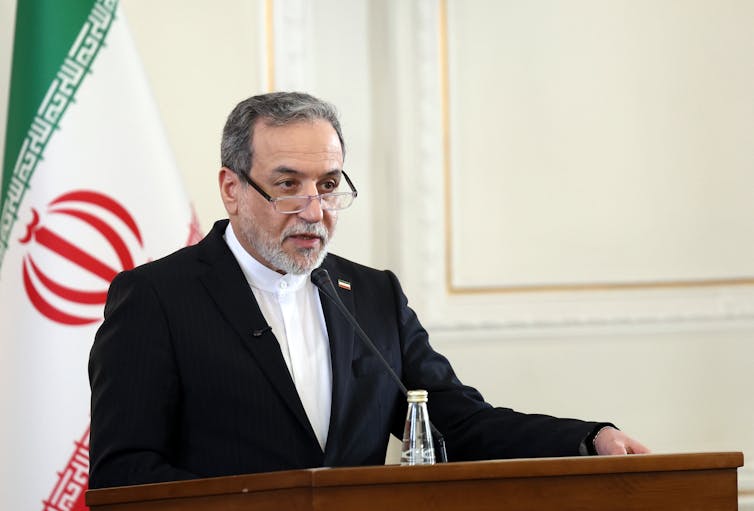
The Iranian foreign minster, Abbas Araghchi, speaks during a press conference in Tehran on January 18. Abedin Taherkenareh / EPA
The hatred towards the regime is entirely warranted. But it has created an environment in which any coverage of state officials – even when critical or contextual – is treated by Iranian opposition supporters as betrayal. For Iranian journalists, this pressure is constant. Many argue with friends and family, lose relationships and, in some cases, miss out on professional opportunities simply for doing their jobs.
There also seems to be a broader misunderstanding about how journalism works. Critics often expect a single article to address all of Iran’s problems at once and on a 24/7 rotation. But news has limits and each country has a dedicated space in international news cycles.
A short article cannot fully explore Iran’s economic collapse, environmental crises, human rights abuses, regional conflicts and internal repression simultaneously. Journalists must make difficult decisions about focus and framing.
Recognising these points does not mean lowering expectations of the media, particularly in turbulent times when news is a vital source of information. But it can help provide a small window into the challenges journalists face while covering Iran.