The Many Faces of Abu Dhabi’s Trillions
By Priyanjana BenganiNicolas ParasieAlex DoolerDinesh NairDemetrios Pogkas December 7, 2025
Deep pools of wealth have given Abu Dhabi unprecedented sway over global finance, energy, and AI.
To pull it off, the emirate’s three sovereign wealth funds — ADIA, Mubadala and ADQ — have done hundreds of deals in recent years as they’ve sought to deploy their slice of the United Arab Emirates’ trillions and wean its economy off oil, acc…
The Many Faces of Abu Dhabi’s Trillions
By Priyanjana BenganiNicolas ParasieAlex DoolerDinesh NairDemetrios Pogkas December 7, 2025
Deep pools of wealth have given Abu Dhabi unprecedented sway over global finance, energy, and AI.
To pull it off, the emirate’s three sovereign wealth funds — ADIA, Mubadala and ADQ — have done hundreds of deals in recent years as they’ve sought to deploy their slice of the United Arab Emirates’ trillions and wean its economy off oil, according to a Bloomberg News analysis of thousands of news reports, regulatory filings and press releases. Alongside Abu Dhabi’s other investment vehicles, these funds have grown to become some of the most prolific investors on the planet.
Sources: Bloomberg News reporting; Global SWF
It takes under 30 minutes to drive from one end of Abu Dhabi to another, a short trip that offers views of a gleaming skyline and the turquoise blue waters of the Persian Gulf. But tucked inside are entities that manage well over $2 trillion, a sum that’s greater than the size of the economies of the Netherlands and Switzerland — combined.
The city may be small, but its financial reach now spans continents.
Not only is it home to three sovereign wealth funds, a raft of new entities have been set up in recent years to splash out billions of dollars on specific sectors. There’s MGX, the AI investor targeting $100 billion of assets; XRG, the $151 billion energy vehicle; and Lunate, which in just two years has become the largest alternatives manager in the region.
The emirate has used its wealth to become an investing juggernaut across finance, energy and artificial intelligence. That’s why the likes of BlackRock Inc. Chief Executive Officer Larry Fink or Brookfield’s Bruce Flatt make regular treks.
In the coming days, prominent names from Wall Street will once again descend on the city for the annual Abu Dhabi Finance Week and look to tap into some of the vast riches on offer.
For many, the long-haul flight to the self-described “capital of capital” will be the easy part. On arrival, they’ll have to navigate the complex web of sovereign wealth funds, royal family holding companies and asset managers that control Abu Dhabi’s trillions.
“Abu Dhabi has become a must-visit stop in every major fundraising cycle,” said Ana Nacvalovaite, who researches sovereign wealth funds at the University of Oxford’s Kellogg College. “Abu Dhabi’s sovereign wealth funds have become pivotal players in private equity, infrastructure and especially private credit, where Western banks have stepped back.”
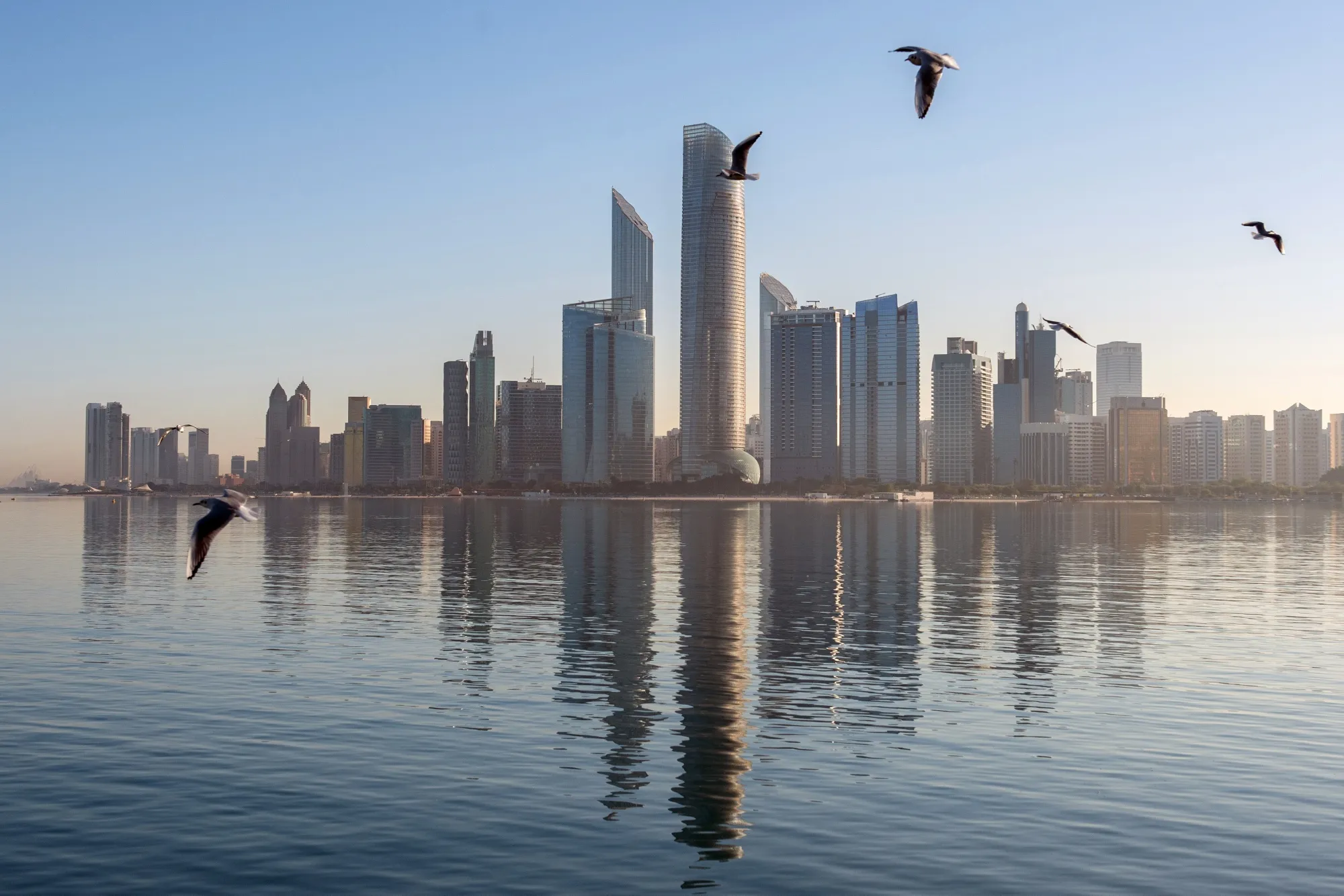
Abu Dhabi’s investment vehicles have grown to become some of the most prolific investors on the planet. Photographer: Vidhyaa Chandramohan/Bloomberg
The emirate’s ascent on the world stage has been swift: It was mostly known as a small fishing and pearl-diving village until oil was discovered in the mid-1900s.
Now, Abu Dhabi controls close to 6% of the world’s total crude reserves, and its state-owned energy company churns out billions of dollars in profit every year. Large chunks of that cash are now being used to fund the city’s attempts to diversify away from the commodity that kicked off the gold rush.
To that end, Abu Dhabi now inhabits rarefied territory: It’s uncommon for a city to have even one sovereign wealth fund; the UAE’s capital has three.
Of these, the $330 billion Mubadala Investment Co. is by far the most prolific — inking more than 300 deals in the last five years alone, according to Bloomberg’s analysis. The tens of billions of dollars it deployed in 2024 made it the world’s most active sovereign wealth fund, according to the consultancy Global SWF, and deepened the firm’s push into sectors such as private credit and AI.
In addition to reaching into its own coffers, Mubadala has a slew of subsidiaries and portfolio companies it can lean on to deploy its riches. For instance, the Abu Dhabi Investment Council — an independently-run unit of Mubadala — has been pushing further into areas like private assets and crypto. ADIC recently more than tripled the size of its position in a Bitcoin exchange-traded fund.
Where Abu Dhabi Invests Its Sovereign Wealth
Estimated number of investments in which the emirate’s three sovereign wealth funds were involved since 2020, by region
Source: Analysis of Bloomberg News articles, company press releases and other filings
Note: A selection of subsidiaries and entities over which the funds exercise control are included in each fund’s count. Deals in which two funds were involved are counted towards the totals of both funds. Some deals target overlapping areas or regions – in such cases a grouping by the broadest region that would capture all areas was used.
While Mubadala has become known as an international dealmaking juggernaut, the $263 billion ADQ tends to stick closer home — more than a third of its about 280 deals in the last half decade involved companies based in the UAE, the analysis shows. And though it’s the smallest of the three, ADQ is the fastest-growing and the fund has seen its assets more than double over the last four years. It now boasts a portfolio that spans everything from a stake in auction house Sotheby’s to Abu Dhabi’s flagship airline.
Then there’s the mighty Abu Dhabi Investment Authority. It has never publicly disclosed assets under management, but Global SWF puts the figure somewhere in the neighborhood of $1 trillion.
Set up in 1976, ADIA was Abu Dhabi’s first wealth fund established to prepare for life after oil. Half a century later, it’s most known for backing legions of private equity firms and hedge funds, while emerging as a crucial dealmaker overseas. For instance, it has deployed billions into India in recent years, where the UAE has been looking to deepen its trade ties.
The man behind many of Abu Dhabi’s investing vehicles is Sheikh Tahnoon bin Zayed Al Nahyan — one of the emirate’s deputy rulers, a brother of the UAE’s president and the son of the country’s founding father. He is chairman of both ADIA and ADQ, as well as newer entrants like MGX. The royal oversees close to three-quarters of the emirate’s sovereign wealth in addition to the UAE’s most important private investment firm, the country’s largest lender and its biggest listed company.
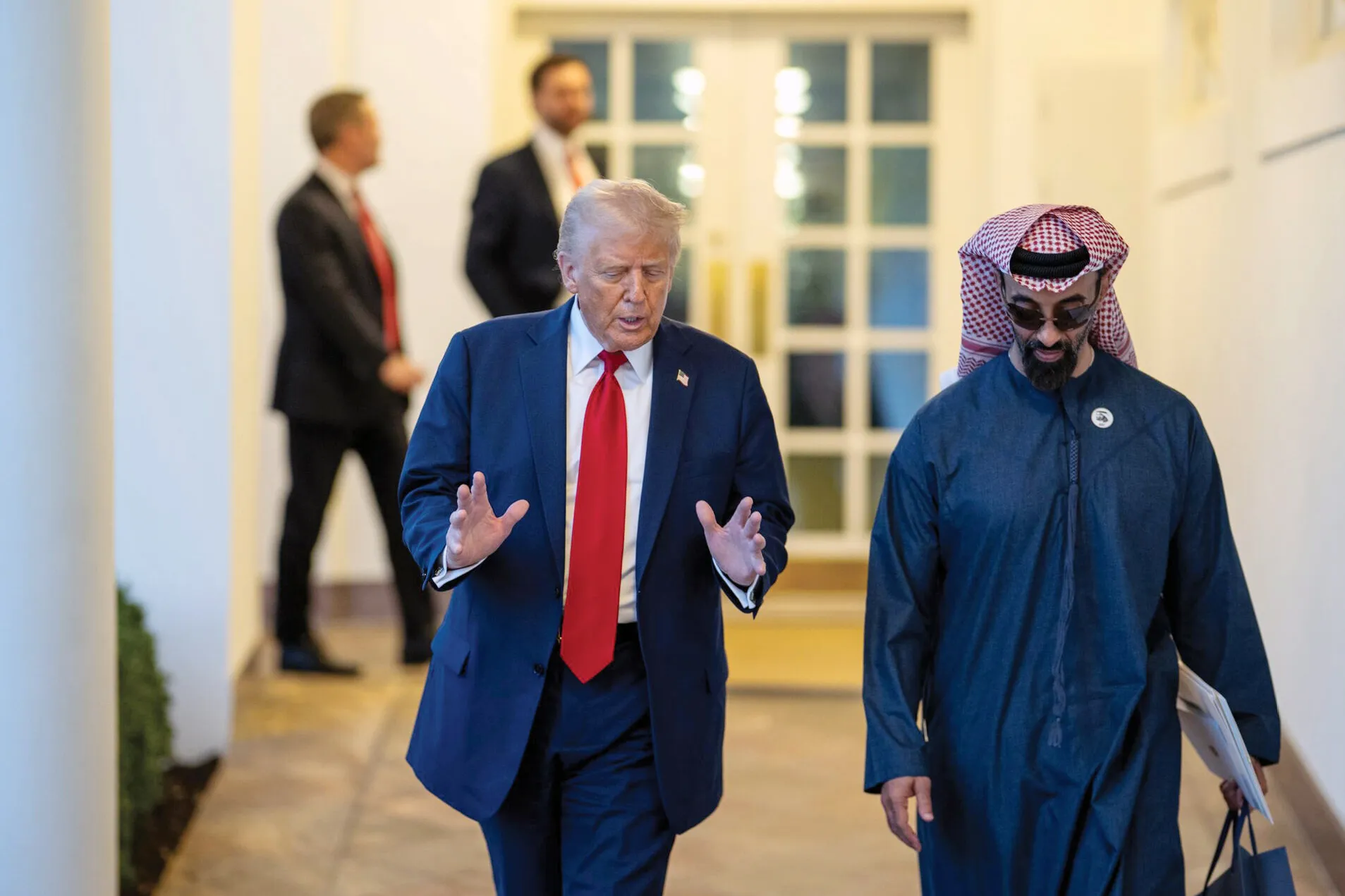
US President Donald Trump with Sheikh Tahnoon bin Zayed Al Nahyan, who chairs many of Abu Dhabi’s investment vehicles, during a March visit at the White House. Photographer: Abu Dhabi Media Office
Many of these entities have pursued increasingly ambitious deals across industries. Take banking, where firms overseen by Sheikh Tahnoon made attempts to buy Standard Chartered Plc and Lazard Ltd. While neither transaction materialized, they signaled Abu Dhabi’s intent to put its stamp on global finance.
The city’s investors have long plowed more of their cash into asset managers, credit funds, venture capital firms and financial and insurance services than any other industry, the analysis shows.
But in recent times, the focus has started to shift. This year, the number of deals in the AI space looks poised to overtake the funds’ investments across financial services for the first time ever, the analysis shows. The Middle East has become a key player in the notoriously capital-intensive sector, where building out data centers or fabrication plants for semiconductor chips can cost billions of dollars.
Abu Dhabi’s Deepening Push Into Artificial Intelligence
Sovereign wealth funds’ investments in AI, data centers and chips, sized by deal amount
Note: A selection of subsidiaries and entities over which the funds exercise control are included in each fund’s deals.
Mubadala has been doing larger, more frequent deals in the sector after partnering last year with G42, the emirate’s main artificial intelligence company, to back MGX. The new firm has done a series of headline-grabbing transactions and recently teamed up with BlackRock’s Global Infrastructure Partners to buy Aligned Data Centers in a massive $40 billion deal.
ADIA is also active in the sector, while ADQ has been plowing cash into a number of critical minerals needed to pull off the technology. XRG, Abu Dhabi National Oil Co.’s international investment arm, has set its sights on investing in the underlying energy systems that power data centers.
“The regional investors have evolved over time,” David Petraeus, a former US Army General and chairman of KKR & Co.’s Middle East franchise, said in an interview. “It’s almost hard to aggregate, believe it or not, because the investors all have a slightly different personality.”
Abu Dhabi Funds’ Interest in AI Has Swelled in Recent Years
Ranking of the top industries involving investments from the emirate’s three sovereign wealth funds based on the estimated annual number of deals
*2025 data are through the end of October. Note: Only the top 10 industries with the highest number of deals across 2020–2025 are shown. Deals with multiple or unknown industries are not included. No investments in fintech and crypto were captured in the dataset for 2020.
For some, learning to navigate that complex web of money has landed them big checks. Take Brevan Howard: The global macro hedge fund spent years deepening its presence in the emirate and now runs about $10 billion locally — more than it manages from London or New York. The firm announced in August it had landed a $2 billion commitment from Lunate for a new investment platform. Lunate counts ADQ and Chimera Investments, which are both ultimately overseen by Sheikh Tahnoon, as anchor limited partners.
But for many others arriving into Abu Dhabi in search of riches, it can be easy to get lost despite the city’s relatively small size. When one fund manager turned up to a conference to raise money, he didn’t have the faintest idea where to start. He had only just come to grips with the difference between ADIA and Mubadala before he was told he needed to add the Emirates Investment Authority and the Abu Dhabi Pension Fund to his list of potential investors to visit.
And just weeks ago, the emirate’s largest listed firm, International Holding Co., announced it would merge three of its units to create yet another investing behemoth that commands $33 billion in assets — 2PointZero Group PJSC.
It’s no wonder there’s some befuddlement.
“You don’t find everything on Wikipedia,” said Stefan Hoops, chief executive officer of DWS Group, Deutsche Bank AG’s asset management arm, which recently opened an office in the emirate. “You need to have people on the ground that understand the dynamics. And I think that it’s just quite important that you treat all of them as individual clients where you need to keep privilege and keep stuff confidential as opposed to treating them as Abu Dhabi Inc.”
Abu Dhabi Has Poured Money Into Finance Heavyweights
Sovereign wealth funds’ investments in or with asset managers and other financial services firms, sized by deal amount
Note: Included are deals with investors, asset managers, private credit firms, direct lenders, venture capital firms, technology investors, financial services firms, banks and insurers.
Among the existing funds, Mubadala is not to be confused with its alternative asset management subsidiary, Mubadala Capital, which manages money for third-party investors through dedicated funds — a rarity for a sovereign wealth fund-owned entity. In recent years, Mubadala Capital has embarked on a dealmaking push in North America, executing large, complex transactions, including the take-private of Canadian mutual fund manager CI Financial Corp. and the acquisition of Fortress Investment Group.
Over at ADQ, there’s Pure Health, which is distinct from Mubadala Health. Both of these are separate from M42, which is a joint venture of G42 Healthcare and Mubadala Health. (The names of many Abu Dhabi entities include the number 42, a homage to The Hitchhiker’s Guide to the Galaxy, a novel in which that number is the answer to the “ultimate question of life, the universe, and everything.”)
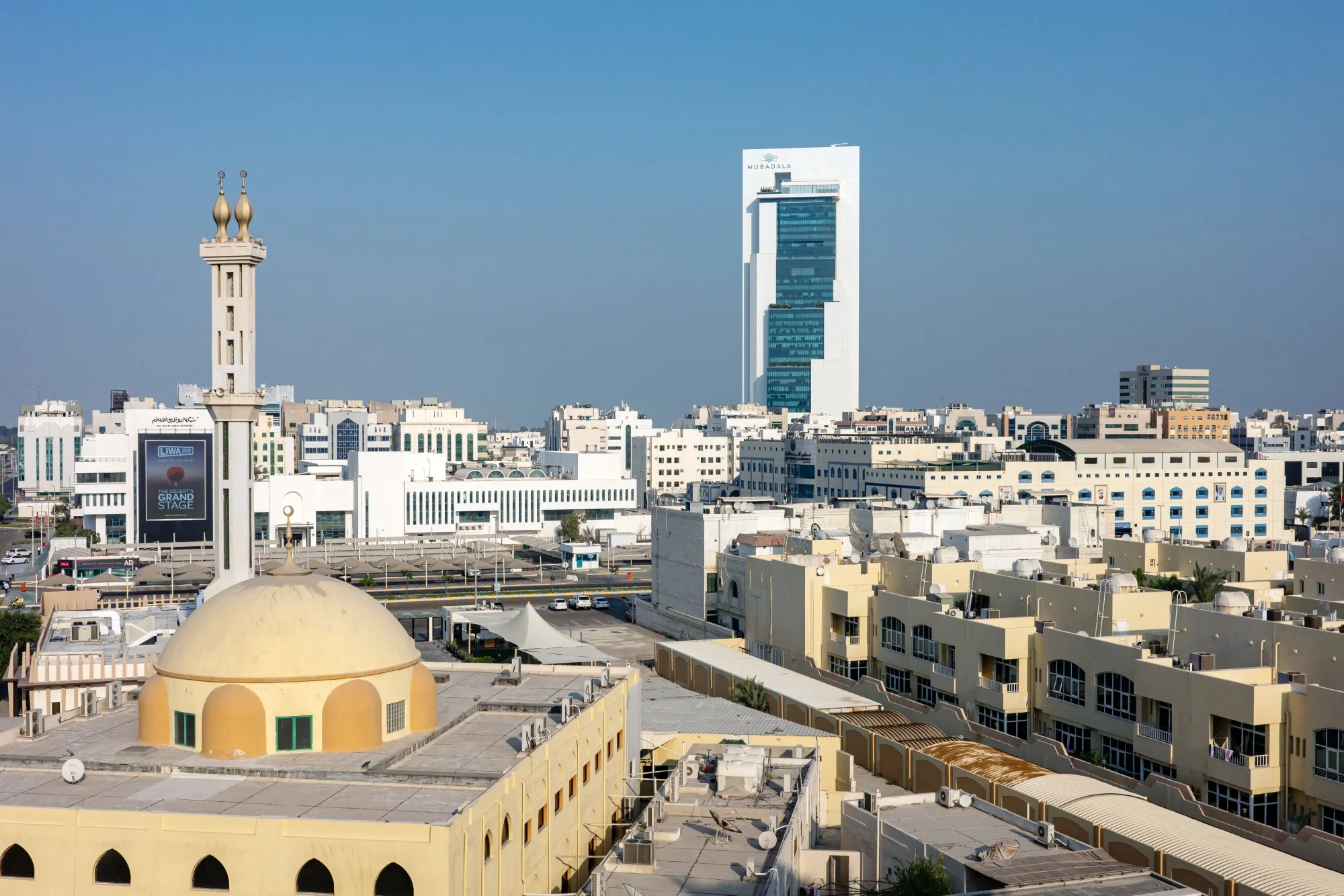
Mubadala’s headquarters building towering over the city of Abu Dhabi. Photographer: Christopher Pike/Bloomberg
For their part, officials have acknowledged the risk that different firms could end up competing for similar assets between themselves. To mitigate the confusion, a top body in the emirate oversees investment proposals.
Still, finance firms are willing to wade through this complex web because there are almost no other investors anywhere on the planet with the kind of cash Abu Dhabi’s entities possess.
“In Abu Dhabi, much like the rest of the region, there isn’t a guidebook or map to tell you where to go — it’s not something that you can Google,” said Amine Bouchentouf, chief investment officer of Atlas Mena Capital, a family office based in Abu Dhabi. “The ecosystem is built on a deep network of trusted interpersonal relationships and at the heart of those relationships is trust, which is something that cannot be bought; it can only be earned over years and, often times, decades.”