Charles R. Goulding and Preeti Sulibhavi explore India’s ambitious shipbuilding expansion and the emerging role of 3D printing in maritime manufacturing.
India has launched one of its most ambitious industrial initiatives in decades: a government-backed shipbuilding program valued at roughly US$5.4 billion. Announced in late 2024 and now moving toward implementation, the policy combines direct subsidies for ship construction with large-scale investment in shipyard infrastructure and financing mechanisms. The goal is clear. India wants to become a serious global shipbuilding power and, in doing so, alter the balance of maritime manufacturing that has long been dominated by China, South Korea, and Japan.
While the immediate focus is on ships, the implications extend far beyond hul…
Charles R. Goulding and Preeti Sulibhavi explore India’s ambitious shipbuilding expansion and the emerging role of 3D printing in maritime manufacturing.
India has launched one of its most ambitious industrial initiatives in decades: a government-backed shipbuilding program valued at roughly US$5.4 billion. Announced in late 2024 and now moving toward implementation, the policy combines direct subsidies for ship construction with large-scale investment in shipyard infrastructure and financing mechanisms. The goal is clear. India wants to become a serious global shipbuilding power and, in doing so, alter the balance of maritime manufacturing that has long been dominated by China, South Korea, and Japan.
While the immediate focus is on ships, the implications extend far beyond hulls and dry docks. The program touches geopolitics, regional security, global trade resilience, and advanced manufacturing technologies, including additive manufacturing. For the 3D printing industry, India’s shipbuilding ambitions signal a potentially important new application domain that blends defense, logistics, and heavy industry.
Why Shipbuilding Matters to India
Today, India, like the US, is a marginal player in global shipbuilding. It produces well under one percent of the world’s commercial tonnage, despite operating one of the largest merchant fleets by ownership. Most Indian-owned vessels are built overseas, primarily in China, South Korea, and Japan. This imbalance results in tens of billions of dollars leaving India each year and leaves the country strategically dependent on foreign yards for both commercial and naval vessels.
The new policy is designed to reverse that trend. The government has committed approximately US$3 billion in shipbuilding subsidies to offset the price advantage enjoyed by East Asian yards, with an additional US$2.4 billion allocated to modernize shipyard infrastructure, expand dry dock capacity, and improve supporting industrial ecosystems. Subsidy levels are expected to range from 15 to 25 percent of a vessel’s contract value, depending on vessel type and domestic content.
India’s stated objective is to capture roughly five percent of global shipbuilding by 2030 and become one of the top five shipbuilding nations by 2047. While these targets are ambitious, they mirror earlier industrial transformations in India’s automotive and aerospace sectors, where sustained state support eventually produced globally competitive manufacturers.
Regional Impact and Asian Geopolitics
Challenging China’s Industrial Dominance
China currently dominates global shipbuilding, accounting for more than half of all new commercial vessels delivered annually. This dominance is not purely economic. Shipbuilding supports China’s naval expansion, sustains massive industrial employment, and provides leverage over global shipping supply chains.
India’s entry as a subsidized competitor threatens to erode that position over time. Even modest market share gains could provide shipping companies with an alternative to Chinese yards, particularly for operators seeking to diversify political and supply-chain risk. While India lacks China’s scale and automation today, lower labor costs combined with government incentives could make Indian yards competitive in certain vessel categories, such as bulk carriers, tankers, and coastal vessels.
Strengthening India’s Role in the Indian Ocean
Shipbuilding also plays a direct role in regional security. India sits astride key Indian Ocean trade routes that carry energy supplies and manufactured goods between Asia, Europe, and Africa. As China expands its naval presence and port access across the region, India has prioritized maritime self-reliance under its broader “Blue Economy” and “Atmanirbhar Bharat” strategies.
A stronger domestic shipbuilding base enables faster construction and maintenance of naval, coast guard, and auxiliary vessels. It also supports India’s ambition to act as a net security provider in the Indian Ocean Region by ensuring it can sustain its fleet without external bottlenecks.
Why the United States Is Paying Attention
The U.S. reaction to India’s shipbuilding push is complex. On one hand, Washington sees India as a strategic partner and a counterweight to China. A stronger Indian industrial base aligns with U.S. goals of diversifying global manufacturing away from Chinese dominance.
On the other hand, India’s use of large-scale subsidies raises familiar concerns in Western capitals. U.S. and European shipbuilders, already largely priced out of standard commercial ship construction, face the prospect of yet another state-backed competitor. The U.S. shipbuilding industry, constrained by high costs and focused mainly on naval contracts and Jones Act vessels, is particularly sensitive to any global developments that further normalize subsidy-driven competition.
There is also a policy dimension. India’s program highlights the contrast between aggressive industrial policy abroad and the relatively hands-off approach taken in U.S. commercial shipbuilding. As India’s yards scale up, pressure may grow within the U.S. to reassess maritime industrial policy, especially for logistics resilience and naval support capacity.
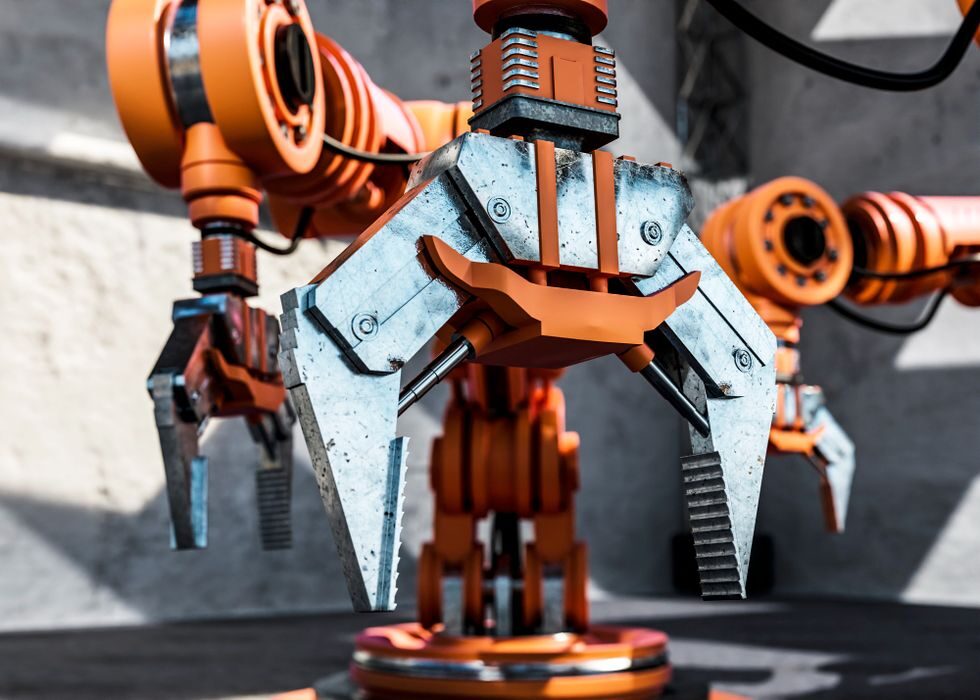 Rendering of hydraulic elements for a ship [Source: FREEP!K]
Where 3D Printing Fits In
India has made rapid progress in additive manufacturing over the past decade, particularly in aerospace, defense, and research institutions. Government-backed programs and private firms now operate metal additive manufacturing systems capable of producing qualified parts in stainless steel, aluminum alloys, and high-performance metals.
Much of this capability has been developed for space and defense applications, but the underlying technologies translate well to maritime use cases, especially where logistics delays and spare-parts availability create operational risk.
Current Maritime and Naval Applications
One of the clearest examples of 3D printing already in use comes from the Indian Navy. In collaboration with domestic service providers, the Navy has produced components such as centrifugal pump impellers and other maintenance-critical parts using metal additive manufacturing. These parts can be printed on demand, reducing lead times from weeks or months to days.
This approach is particularly valuable for ships operating far from home ports, where traditional supply chains are slow or unreliable. Instead of stocking large inventories of rarely used spares, digital part files can be stored and manufactured when needed.
Shipbuilding and Yard-Level Opportunities
In commercial shipbuilding, 3D printing is unlikely to replace traditional fabrication for large structural components in the near term. However, there are several practical and scalable applications that align well with India’s modernization goals:
- Tooling and fixtures: Custom jigs, welding fixtures, and assembly aids can be produced quickly and cheaply using polymer or metal additive manufacturing.
- Low-volume metal parts: Brackets, housings, ducts, and custom fittings are well suited to additive processes, particularly when designs vary between vessels.
- Repair and refurbishment: Additive manufacturing can support repair operations by producing obsolete or hard-to-source components without retooling.
Globally, shipbuilders and classification societies have already begun certifying additively manufactured components for non-critical systems. As Indian yards modernize, similar certification pathways are likely to emerge domestically.
The Research & Development Tax Credit
The now permanent Research & Development Tax Credit (R&D) Tax Credit is available for companies developing new or improved products, processes and/or software.
3D printing can help boost a company’s R&D Tax Credits. Wages for technical employees creating, testing and revising 3D printed prototypes can be included as a percentage of eligible time spent for the R&D Tax Credit. Similarly, when used as a method of improving a process, time spent integrating 3D printing hardware and software counts as an eligible activity. Lastly, when used for modeling and preproduction, the costs of filaments consumed during the development process may also be recovered.
Whether it is used for creating and testing prototypes or for final production, 3D printing is a strong indicator that R&D-eligible activities are taking place. Companies implementing this technology at any point should consider taking advantage of R&D Tax Credits
A Strategic Advantage Over Time
As India builds shipyards from the ground up or significantly upgrades existing facilities, it has an opportunity to integrate digital manufacturing tools from the outset. This includes additive manufacturing, digital inventories, and hybrid production workflows that combine traditional machining with 3D printing.
In the long term, this could allow Indian shipbuilders to leapfrog older yards that rely on legacy processes, particularly for customization-heavy or small-batch production.
Smooth Sailing…
India’s US$5.4 billion shipbuilding initiative is a calculated bet on industrial scale, strategic autonomy, and geopolitical influence. Success is far from guaranteed, but the direction is clear. The country is positioning itself as a serious alternative in a market long dominated by a handful of East Asian players.
For the additive manufacturing industry, this shift opens a new frontier. As India’s maritime sector grows, so will demand for faster, more flexible production methods. 3D printing will not build entire ships, but it will increasingly shape how ships are built, maintained, and repaired.
If India’s shipbuilding push succeeds, additive manufacturing will likely be one of the quiet enablers behind the scenes, helping turn policy ambition into operational reality.