Published on December 7, 2025 9:11 PM GMT
[This essay is my attempt to write the “predictions 101” post I wish I’d read when first encountering these ideas. It draws extensively from The Sequences, and will be familiar material to many LW readers. But I’ve found it valuable to work through these concepts in my own voice, and perhaps it will be useful for others.]
Predictions are the currency of a rational mind. They force us to articulate our assumptions, unpack the commitments of our beliefs, and subject our beliefs to the crucible of reality.
Committing to a prediction is a declaration: “Here’s what I actually believe about the world, and here’s how confident I am. Let’s find o…
Published on December 7, 2025 9:11 PM GMT
[This essay is my attempt to write the “predictions 101” post I wish I’d read when first encountering these ideas. It draws extensively from The Sequences, and will be familiar material to many LW readers. But I’ve found it valuable to work through these concepts in my own voice, and perhaps it will be useful for others.]
Predictions are the currency of a rational mind. They force us to articulate our assumptions, unpack the commitments of our beliefs, and subject our beliefs to the crucible of reality.
Committing to a prediction is a declaration: “Here’s what I actually believe about the world, and here’s how confident I am. Let’s find out if I’m right.” That willingness to be wrong in measurable ways is what separates genuine truth-seeking from specious rationalization.
This essay is an invitation to put on prediction-tinted glasses and see beliefs as tools for anticipating experience. The habit applies far beyond science. When you think predictively, vague assertions become testable claims and disagreements become measurable. Whether you’re evaluating a friend’s business idea, judging whether a policy will work, or just trying to settle an argument at dinner, you’re already making implicit predictions. Making them explicit sharpens your thinking by forcing your beliefs to confront reality.
Turning Beliefs into Predictions
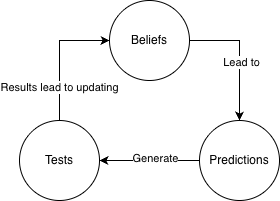
For many people, beliefs are things to identify with, defend, and hold onto. They’re part of who we are, our tribe, our worldview, our sense of self. But in a rationalist framework, beliefs serve a different function: they’re tools for modeling reality.
From this perspective, a belief leads naturally to a prediction. It tells you what future (or otherwise unknown) experience to expect. Rationalists call this “making beliefs pay rent.”
A prediction concretizes a belief by answering: If this is true, what will I actually experience? What will I see, hear, measure, or observe? Once you try to answer that, your thinking becomes specific. What was once comfortably abstract becomes a concrete commitment about what the world will show you.
Predictions Make You Accountable to Reality
Many of the statements we encounter daily in the media, in academic papers, and in casual conversation, don’t come with clear predictive power. They sound important, even profound, but when we try to pin them down to testable claims about the world, they become surprisingly slippery.
The key to avoiding this is to make specific predictions, and even to bet on your ideas. Economist Alex Tabarrok quipped: “A bet is a tax on bullshit.” Most importantly (at least in my opinion), it’s a tax on your own bullshit. When you have to stake something on your prediction, even if it’s just your credibility, you become clearer about what you actually believe and how confident you really are.
Tabarrok used the example of Nate Silver’s 2012 election model. Silver’s model gave Obama roughly a 3-to-1[1]chance of winning against Romney, and his critics insisted he was wrong. Silver’s response was simple: “Wanna bet?” He wasn’t just talking, he was willing to put money on it. And, crucially, he would have taken either side at the right odds. He’d bet on Obama at even money, but he’d also bet on Romney if someone offered him better than 3-to-1. That’s what it means to actually believe your model: you’re not rooting for an outcome, you’re betting on your beliefs.
Constantly subjecting our predictions to reality is important because, as physicist Richard Feynman said: “It doesn’t matter how beautiful your theory is, it doesn’t matter how smart you are. If it doesn’t agree with experiment, it’s wrong.” Reality is the ultimate arbiter. Not who argues more eloquently, not who has more credentials, but whose predictions better match what actually happens.
Predictions in Action
Consider the 19th-century debate over what caused the infectious diseases that were plaguing Europe, such as cholera, malaria, and tuberculosis. The dominant hypothesis at the time was miasma theory, the idea that diseases were caused by “bad air” or noxious vapors from rotting organic matter. The competing hypothesis was germ theory, the idea that diseases were caused by microscopic organisms.
Each hypothesis generates different predictions. If you believe in germ theory, you expect that examining blood or tissue from a sick person under a microscope will reveal tiny organisms. You expect that preventing these organisms from spreading (through sterilization, handwashing, etc.), will reduce disease rates. You expect that introducing these organisms to a healthy subject will cause illness.
If you believe in miasma theory, you make different predictions: Diseases should cluster around areas with foul-smelling air—swamps, sewers, garbage heaps. Improving ventilation and eliminating bad odors should reduce disease. And looking under a microscope shouldn’t reveal anything particularly relevant, since the problem is airborne vapors, not tiny creatures.
These hypotheses do overlap in some predictions. For example, both theories predict that interventions such as disposing of sewage and drinking clean water would reduce the spread of disease. This is common when comparing hypotheses, and it makes them harder to separate. But you can still test them by focusing on where they diverge: What happens when you sterilize surgical instruments but don’t improve the smell? What do you see under a microscope?
These hypotheses differed in what experiences they anticipated from the world. And the world answered. Microscopes, sterilization, and epidemiological data validated germ theory.
Now contrast this with a belief like “everything happens for a reason.” What experience does it lead you to anticipate? If something bad happens, there’s a reason—but what does that mean you should observe? If something good happens, there’s also a reason—but, again, what should you experience? If nothing happens, that too has a reason. The belief is compatible with any possible observation, which means it doesn’t constrain your expectations about what will happen in the world. It doesn’t actually predict anything at all. It doesn’t pay rent.
Predicting the Past
It’s tough to make predictions, especially about the future - Yogi Berra
Predictions are often associated with forecasting future events, but they encompass far more than that. Instead of thinking about what has happened versus what hasn’t, think about it from a first-person perspective: in terms of what information you know versus what you don’t. The act of prediction is fundamentally about inferring information unknown to you from what you already know, a process that applies equally to the past and present as it does to the future. Whether you’re deducing what happened thousands of years ago, inferring what exists in places you’ve never visited, or anticipating what will occur tomorrow, you’re engaging in prediction whenever you use available evidence to form expectations about information you don’t currently have.
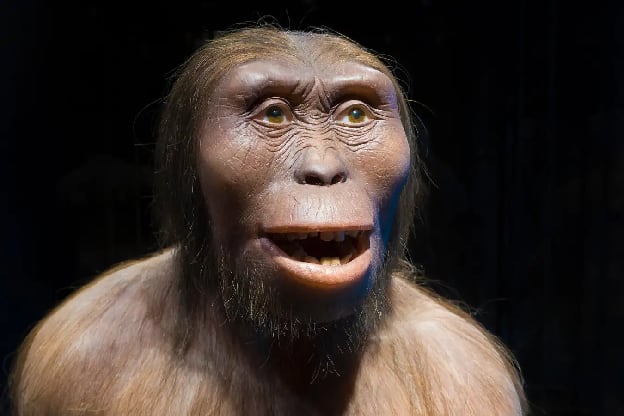
Consider the debate around the evolution of human bipedalism, an event decidedly in the past. Several hypotheses have been proposed to explain why bipedalism evolved, but let’s look at just two of them.[2]
The “savannah hypothesis” suggests that bipedalism arose as an adaptation to living in open grasslands. According to this idea, walking upright allowed early hominins to see over tall grasses and spot predators or prey from a distance.
The “carrying hypothesis” proposes that bipedalism evolved to free the hands for carrying objects, such as food and infants, and, later on, tools. This would have provided a significant advantage in terms of transporting resources and infant care.
You might think that because it happened so long ago there’s no way to find out, but each of these hypotheses generates different predictions about what we should expect to find in the fossil record. The savannah hypothesis predicts that bipedal humans first appeared in, well, the savannah. So we should expect to find the oldest bipedal fossils in what was savannah at the time[3]. The first bipedal fossils may also coincide with a shift in climate towards more arid conditions which created more savannahs.
The carrying hypothesis predicts that bipedal species will predate the regular use of tools, as the hands were initially freed for carrying rather than tool use. It also suggests that early bipeds will show skeletal adaptations for efficient walking, such as a shorter, wider pelvis and a more arched foot.
New fossil discoveries have allowed researchers to test these predictions against the evidence. The famous “Lucy” fossil, a specimen of an early hominin species, was found in a wooded environment rather than an open savanna. This challenged the savannah hypothesis and suggested that bipedalism evolved in a more diverse range of habitats. Furthermore, the earliest known stone tools date to around 2.6 million years ago, long after the appearance of bipedal hominins. This also aligns with the predictions of the carrying hypothesis.
The point here is that competing hypotheses generate different predictions about what we should observe in the world. And this isn’t restricted to the future. We can “predict” what we’ll find in the fossil record, what a telescope will reveal about distant galaxies, or what an archaeological dig will uncover, even though the events themselves happened long ago.
You might think, well, that works for scientists but not the rest of us. I disagree. When you wear prediction-tinted glasses, you see that predictions are all around us. Even when people don’t think they’re making predictions, they often are. Positive statements—those telling us what’s true about the world—often make predictions.
If there is no prediction, there is no question
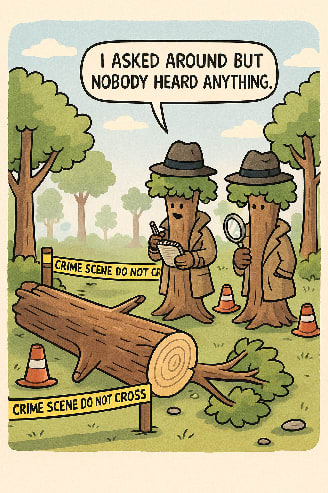
These same principles apply outside of science as well. Let’s see how this predictive thinking can apply to philosophy. Consider this example from Eliezer Yudkowsky regarding one of philosophy’s most famous[4]puzzles: “If a tree falls in the forest and no one is around to hear it, does it make a sound?”
Imagine we have two people: Silas, who thinks a tree doesn’t make a sound, and Loudius, who thinks it does.
How would we turn this into a prediction? Well, if there’s a debate over whether something makes a sound, the natural thing to do might be to bring a recording device. Another thing we might do is to ask everyone if they heard the sound.
So we ask Silas and Loudius to register their predictions. We ask Silas: “If we place sensitive measuring equipment in the forest, will it detect compression waves from the falling tree?” He says, “Of course it will, but that’s not what a ‘sound’ is. A sound is when a person experiences an auditory sensation.”
We turn to Loudius with the same question, and he agrees: “Yes, the equipment would detect compression waves. That’s exactly what sound is.”
Then we ask them both: “Will any human report hearing something?” Both agree: “Of course not, there’s no one there.”
Notice what happened: Silas and Loudius make identical predictions about what will happen in the physical world. They both predict compression waves will be detected, and both predict no human will report hearing anything. If two positions produce identical predictions, the disagreement is purely meta-linguistic. Their disagreement isn’t about reality at all; it’s purely about which definition of “sound” to use.
Through our prediction-tinted glasses, we see the riddle dissolves into nothing. What seemed like a philosophical puzzle is actually just two people talking past each other and a debate about the definition of words—a decidedly less interesting topic.
Prediction Improves Discourse
We can apply this same thinking to basic conversation. Consider a conversation I had several years ago with someone who told me that “AI is an overhyped bubble”. Instead of having a debate that hinged on the definition of vague words like “AI” and “overhyped”, I said, “I don’t agree. Let me make some predictions.” Then I started to rattle some off:
- Funding for AI will increase every year for the next five years
- AI will remain the largest sector for tech investment over the next five years
- All the major tech companies will still be focused on AI in five years…
“Oh—” he cut it, “I agree with all that. I just think people talk about it too much.”
OK, fine. That’s a subjective statement, and subjective statements don’t have to lead to predictions (see the appendix for types of statements that don’t lead to predictions). But by making predictions, what we were actually disagreeing about became much clearer. We realized we didn’t have a substantive disagreement about reality at all. He was just annoyed by how much people talked about AI.
Conclusion
Putting on prediction-tinted glasses transforms how you engage with ideas. Vague assertions that once seemed profound reveal themselves as empty when you ask, “What does this actually predict?” Endless debates dissolve when you realize both sides anticipate the exact same observations. And your own confident beliefs become humbler when you’re forced to attach probabilities to specific outcomes.
The practice is simple, even if the habit takes time to build. When you encounter a belief, ask: “What experience should I anticipate if this is true? What would I observe differently if it were false?” When you find yourself in a disagreement, ask: “What predictions do we actually differ on, or are we just arguing about definitions?” When you hold a strong belief, ask: “What probability would I assign to specific outcomes, and what evidence would change my mind?”
Of course, in many real-world situations, people aren’t striving for maximal predictive clarity. Sometimes people are aiming for social cohesion, emotional comfort, or personal satisfaction. Artful ambiguity, tribal signaling, and motivational fictions are important social lubricants. Not every utterance can or should be a prediction. Still, it’s better to let your values define what tribe you’re in and keep your beliefs about reality anchored to reality.
But when you aim for clarity and truth, explicit predictions are the tool that forces belief to meet reality. By making our beliefs pay rent in anticipated experiences, we invite reality to be our teacher rather than our adversary. It corrects our models, sharpens our thinking, and aligns our mental maps with the territory they’re meant to represent.
Appendix
Types of statements that do not lead to predictions
Not all statements lead to testable predictions. There are some statements that are so meaningless as to not predict anything, and others that are incredibly important, yet don’t predict anything. Some propositions, by their very nature, resist falsification or empirical evaluation. Here are a few categories of such statements:
- Subjective Opinions: Statements like “I like that painting” express personal taste rather than objective facts. While opinions are vital, they’re typically immune to falsification (barring creepy futuristic mind-reading AI).
- Normative Statements: Prescriptions like “We should be nice to each other” or “murder is wrong” express moral values rather than descriptive facts. While moral statements principles are important, they express values rather than facts about the world[5]. Normative statements can be built upon positive statements, but they still rely on a normative statement in the end. For example, you could test whether murder increases or decreases overall happiness, but that still rests on the normative premise that happiness is what matters morally.
- Analytical Statements: Some statements are true by definition or logical necessity rather than because of how the world happens to be. “All bachelors are unmarried” is true because of what “bachelor” means. Similarly, “2 + 2 = 4” isn’t a claim you test by counting objects; it’s a consequence of how we’ve defined numbers and addition. These statements don’t generate predictions about what you’ll observe because they’re not about the world in that way. They can still be important, but they’re not the kind of beliefs that “pay rent” in anticipated experiences.
- Meta-linguistic statements: The example we used above with the tree falling in the forest is ultimately a meta-linguistic one. What is the definition of ‘sound’? There is no prediction we could make here. We could be descriptivist and decide that the definition is however people use it, then go out and conduct a survey. We could make predictions about the result of that survey, but that doesn’t tell us what the one, true definition of sound is, just what it is given a descriptivist framework.
Similarly, is Pluto a planet? There is no prediction that answering “yes” or “no” would make here. We have measurements of all the relevant parameters. The International Astronomical Union decided to create an official definition and, by that definition, it is not. But this is a question of which definition of “planet” we choose. - Vague Assertions: Some claims are so fuzzy or ill-defined that they can’t be properly evaluated. Politicians and pundits often traffic in this sort of strategic ambiguity. Statements like “My opponent’s policies will lead to disaster” or “The education system is broken” sound like factual claims but are too amorphous to test. Forcing such claims to make concrete predictions often reveals their emptiness or shows they’re actually testable once properly specified.
- Inherently Unfalsifiable Claims: Some propositions resist testing, either by their very nature (like a non-interfering god) or by strategic design of the speaker (like adding ad hoc escape clauses when predictions fail). For instance, a deist god that created the universe but never interferes with it is undetectable by definition.
Unfalsifiable claims like this may be personally meaningful, but they cannot be empirically adjudicated. They lie outside the realm of prediction because they don’t generate any anticipated experiences.
However, we can still reason about some unfalsifiable propositions indirectly through thought experiments, such as those involving the Anthropic Principle (which asks why we observe the universe to be compatible with our existence).
It’s also worth noting that people often mistakenly believe certain claims are unfalsifiable when they actually aren’t. “God answers prayers” is one such example. This belief does generate predictions: if true, we’d anticipate that prayed-for patients recover faster than those not prayed for, or that religious communities experience better outcomes in measurable ways. These are testable claims, even if believers sometimes retreat to strategically unfalsifiable versions (“God answers prayers, but in mysterious ways”) when the predictions fail.
The point here isn’t that non-predictive statements are worthless. Meta-linguistic analysis, subjective experiences, moral reasoning, and logical inference all play crucial roles in human cognition and culture. However, we need to distinguish unfalsifiable propositions from testable predictions.
The exact odds changed over time, but it was usually around this. ↩︎
Of course, bipedalism could have evolved due to multiple factors working together, but I’m presenting just two hypotheses here to keep the example clear. ↩︎
Adjusting, of course, for how common fossilization is in that area and other factors. We’re simplifying here. ↩︎
Note that I said “famous”, not necessarily best or most interesting. ↩︎
Moral realists would disagree with this statement, but that’s a separate post. ↩︎
Discuss