Xiaomi Watch 5: The EMG Blueprint for Garmin and Apple’s 2026 Sensors
Expert Perspective: Having spent 20 years testing every Garmin generation, Apple Watches and competing in international Age Group triathlons, I see the Xiaomi Watch 5 as a technical “shot across the bow” for 2026. While Xiaomi frames EMG as a health metric, my testing of forearm-based sensors suggests its true destiny isn’t sports—it’s a boost for gesture control. Rapid response and precision of EMG gestures are exactly what Apple and Google need to transform the clunky gesture controls of current smartwatches.
Medical technology that once required a hospital visit now fits on your wrist. But it’s not a watch powered by Garmin, Apple or Google – this time it’s Xiaomi.
New tech to detect athletic fati…
Xiaomi Watch 5: The EMG Blueprint for Garmin and Apple’s 2026 Sensors
Expert Perspective: Having spent 20 years testing every Garmin generation, Apple Watches and competing in international Age Group triathlons, I see the Xiaomi Watch 5 as a technical “shot across the bow” for 2026. While Xiaomi frames EMG as a health metric, my testing of forearm-based sensors suggests its true destiny isn’t sports—it’s a boost for gesture control. Rapid response and precision of EMG gestures are exactly what Apple and Google need to transform the clunky gesture controls of current smartwatches.
Medical technology that once required a hospital visit now fits on your wrist. But it’s not a watch powered by Garmin, Apple or Google – this time it’s Xiaomi.
New tech to detect athletic fatigue or support rapid and novel gesture control
Electromyography (EMG) is a diagnostic technique used for decades to assess muscle and nerve function. For the first time, it’s available on consumer watches. Will this power the next significant metric? (A: Probably not, but it’s interesting nevertheless)
Quick Navigation:
- EMG vs. Optical HR: Why Muscle Signals Trump Garmin’s Fatigue Algorithms
- Xiaomi Watch 5: The Disruptor Beats Apple and Garmin to the Wrist
- What EMG Enables in Daily Use
- Engineering Challenge: Making Medical Tech Wearable & Affordable
- Garmin Elevate Gen 6: Is EMG the Missing Link for the Fenix 9?
- Apple Intelligence: Why the Apple Watch Ultra 4 Needs EMG Gestures
EMG vs. Optical HR: Why Muscle Signals Trump Garmin’s Fatigue Algorithms
Electromyography measures the electrical activity produced when your muscles contract. Unlike accelerometers, which detect motion, or heart rate sensors, which monitor cardiovascular activity, EMG sensors measure the electrical signals generated by motor neurons when they activate muscle fibres.
While Xiaomi is the first-mover here, the real industry impact lies in how Garmin will likely leverage EMG for its ‘Elevate Gen 6‘ sensor array in 2026.
In medical-grade settings, doctors use it to diagnose conditions affecting muscles and the nerves that control them. The generic technology can identify nerve damage, muscle inflammation, and neuromuscular conditions by analysing the patterns and strength of electrical signals.
Why now?
The signals EMG detects are incredibly weak—measured in microvolts—and require highly sensitive sensors to record accurately. Until now, this sensitivity has required bulky equipment and controlled clinical environments, so the innovation lies in miniaturising the tech.
Xiaomi Watch 5: The Disruptor Beats Apple and Garmin to the Wrist
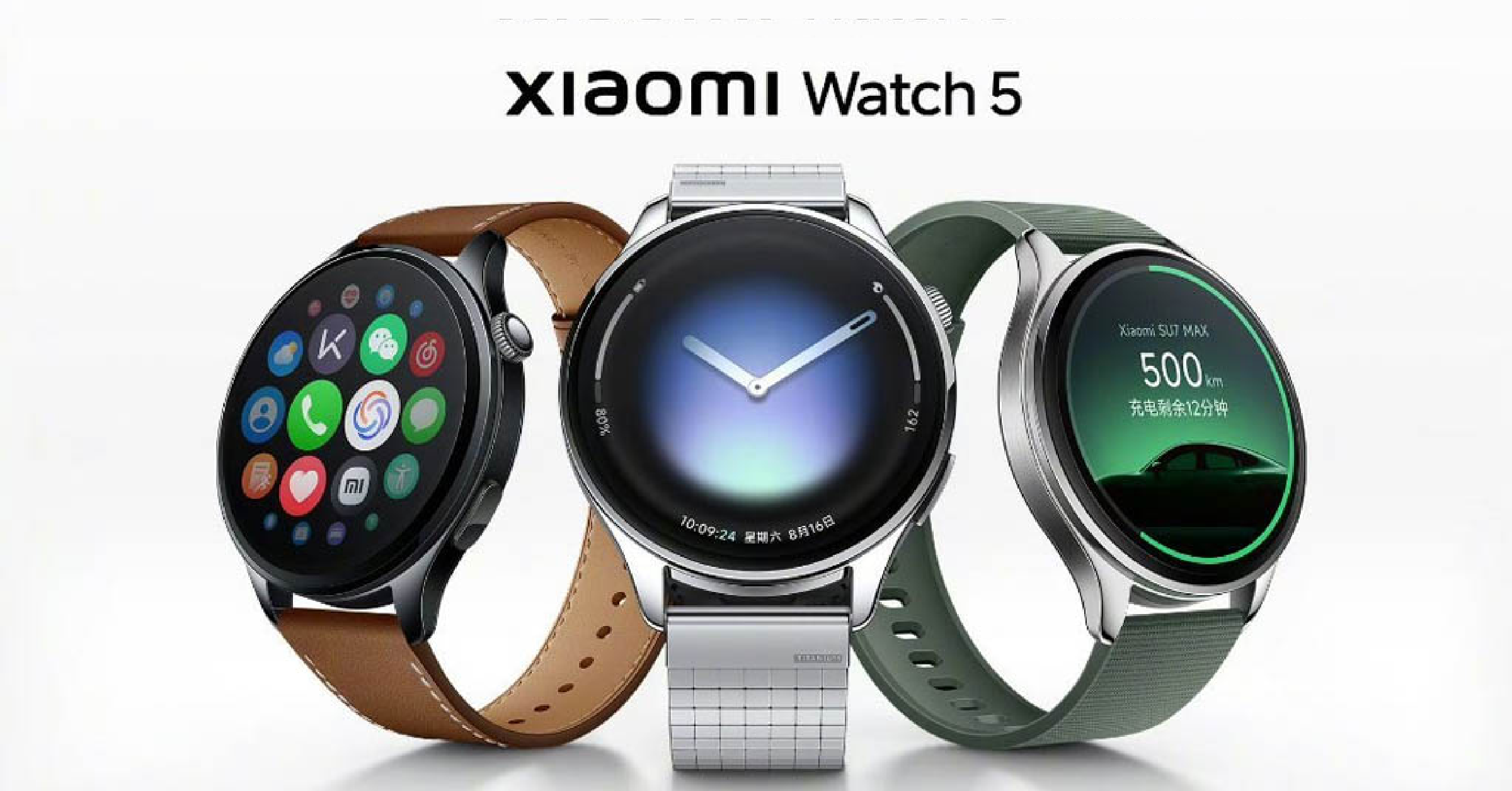
On 25 December 2025, Xiaomi launched the Watch 5. This marks the first time consumers can access wrist-based monitoring of muscle electrical activity without specialist equipment.
Xiaomi has announced two versions of its Watch 5: a standard Bluetooth version and a 4G/LTE version, both with an EMG sensor alongside the usual array of wellness and sports sensors.
Often smaller, more agile Chinese brands like Xiaomi are first-movers with new sensor tech. This usually signals that a move from the bigger players – Apple, Google/Samsung and Garmin is not far behind. Indeed, Meta has already used similar technologies in 2025 on its wristband.
What EMG Enables in Daily Use
The practical applications of wrist-based EMG sensing certainly include athletic performance and, with appropriate certification, might stretch to aspects of medical screening.
Athletic Performance and Recovery
For athletes and fitness enthusiasts, EMG provides insight into the quality of muscle engagement. The sensor can detect when muscles are firing efficiently versus when fatigue is setting in, information that heart rate and motion sensors cannot capture, at least not in such a direct way.
Potential acute uses include gym work, where the number of reps can be adjusted (higher or lower) once fatigue sets in. Looking at slightly longer timespans, recovery could be directly measured – no more Garmin Training Readiness algorithms are needed if you can measure readiness.
Gesture Recognition Possibilities
I suspect the biggest use will be a widening of the possibilities for gesture recognition – more gesture types and more precise gesture movements.
One interesting aspect of the tech is that the electrical muscle activation signal would be detected ‘much’ earlier than the movement.
More responsive gestures with less visibly obvious movements
Health Monitoring Applications
While consumer EMG won’t replace clinical diagnostics, it could serve as an early alert for unusual medical conditions if responsiveness deviates from the wearer’s personal baseline.
Engineering Challenge: Making Medical Tech Wearable & Affordable
Watch 5 integrates its Hengxuan BES2800BP chip with a Wear OS-standard Qualcomm Snapdragon W5 Gen 1 processor (but it runs the more energy-efficient HyperOS 3).
Despite the power-hungry EMG sensor and comprehensive feature set, the 930mAh battery supports about 6 days of typical use or 18 days in a power-saving mode.
Pricing positions the Watch 5 as a premium device: 1,999 yuan (approximately $275) for the Bluetooth version and 2,299 yuan (roughly $315) for the eSIM/LTE model. Optional titanium 3D-printed straps add 799 yuan ($110).
Garmin Elevate Gen 6: Is EMG the Missing Link for the Fenix 9?
The Watch 5’s launch signals a potential inflexion point for the wearables industry – albeit a minor one. Gesture management can be improved by moving beyond historical norms and measuring fatigue/readiness; the technology could easily become a standard feature in premium smartwatches within two years.
Technical Limitations and Considerations
The most apparent limitation for sport is that the tech is evaluating wrist muscles – hardly helpful or indicative for assessing fatigue in a cyclist’s quads.
Motion artefacts are ever-present at the wrist and will likely confound EMG sensors for many years, just as they still confound optical HR sensors.
Individual variation is another issue, but I would expect the EMG response to the wearer’s gestures to be easily trainable.
Will Garmin Adopt EMG in 2026?
This site expects a new Garmin Elevate Generation 6 in the 2026-27 timeframe. Such a new sensor would be more accurate and more energy-efficient by default. Still, it would also very likely have new sensing capabilities, and EMG is undoubtedly one of the candidates.
There is perhaps a remote chance that Garmin could leverage wrist-based EMG data for athletic recovery.
Apple Intelligence: Why the Apple Watch Ultra 4 Needs EMG Gestures
In recent years, I’ve believed that voice control was the weakest part of the wearable experience—and the area most in need of improvement. Over the last year or so, Garmin, Google, and others have clearly agreed, rolling out a wave of new voice-driven features.
At the same time, Apple and Meta poured investment into spatial and visual wearables, a trend that was hyped to the extreme in 2024 before being rapidly eclipsed by advances in AI. Gesture control was positioned as a core interface for spatial computing, but in the short term, it offers limited value when paired with AI.
A more promising medium-term direction is EMG-based input to enhance gesture control. If this happens, it’s far more likely to come from one of the major smartwatch players—Apple, Google, or Samsung—than from Garmin. Of those, Apple is the most plausible candidate to integrate EMG into its next-generation sensor array, indeed, it already has a patent.
- US Patent US20230105223A1: “Electrodes for Gesture Recognition” (2023) – (EMG electrodes in wrist bands for hand gestures).
Reader-Powered Content
This content is not sponsored. It’s mostly me behind the labour of love, which is this site, and I appreciate everyone who follows, subscribes or Buys Me A Coffee ❤️ All articles are written by real people, fact-checked, and verified for originality using Grammarly’s AI and plagiarism tools. See the Editorial Policy for details. FTC: Affiliate Disclosure: Some links pay commission. As an Amazon Associate, I earn from qualifying purchases.
With 20 years of testing Garmin wearables and competing in triathlons at an international age-group level, I provide expert insights into fitness tech, helping athletes and casual users make informed choices.