As Gen Zers push back against the hyper-connected lifestyles that have defined their adolescence, a new tech minimalism trend is taking shape—not through a return to analog that has also gained popularity, but by repurposing the very devices that once overwhelmed them.
A growing number of iPhone and smartphone users are choosing to dumb down their devices by disabling nonessential features, stripping away visual clutter, turning their backs on social media platforms, and installing minimalist tools. Their goal is to turn a smartphone into something closer to a pre-internet-connected cell phone, without giving up modern essentials like maps or messaging.
The change can be reversed in seconds, but …
As Gen Zers push back against the hyper-connected lifestyles that have defined their adolescence, a new tech minimalism trend is taking shape—not through a return to analog that has also gained popularity, but by repurposing the very devices that once overwhelmed them.
A growing number of iPhone and smartphone users are choosing to dumb down their devices by disabling nonessential features, stripping away visual clutter, turning their backs on social media platforms, and installing minimalist tools. Their goal is to turn a smartphone into something closer to a pre-internet-connected cell phone, without giving up modern essentials like maps or messaging.
The change can be reversed in seconds, but the effect could be lasting.
“High levels of screen time have a dual negative impact on our bodies and nervous system,” Dr. Jennifer Rolnick, a licensed clinical psychologist, told Newsweek. “They keep our nervous system in a constant state of stimulation and arousal, while also pushing it toward shutdown or dissociation.
"Our bodies are not designed to take in or process the volume of information and sensory input that extensive screen use demands.”
The movement parallels the broader Gen Z embrace of digital minimalism—a rejection of algorithm-driven distractions in favor of tools that feel more deliberate and grounded.
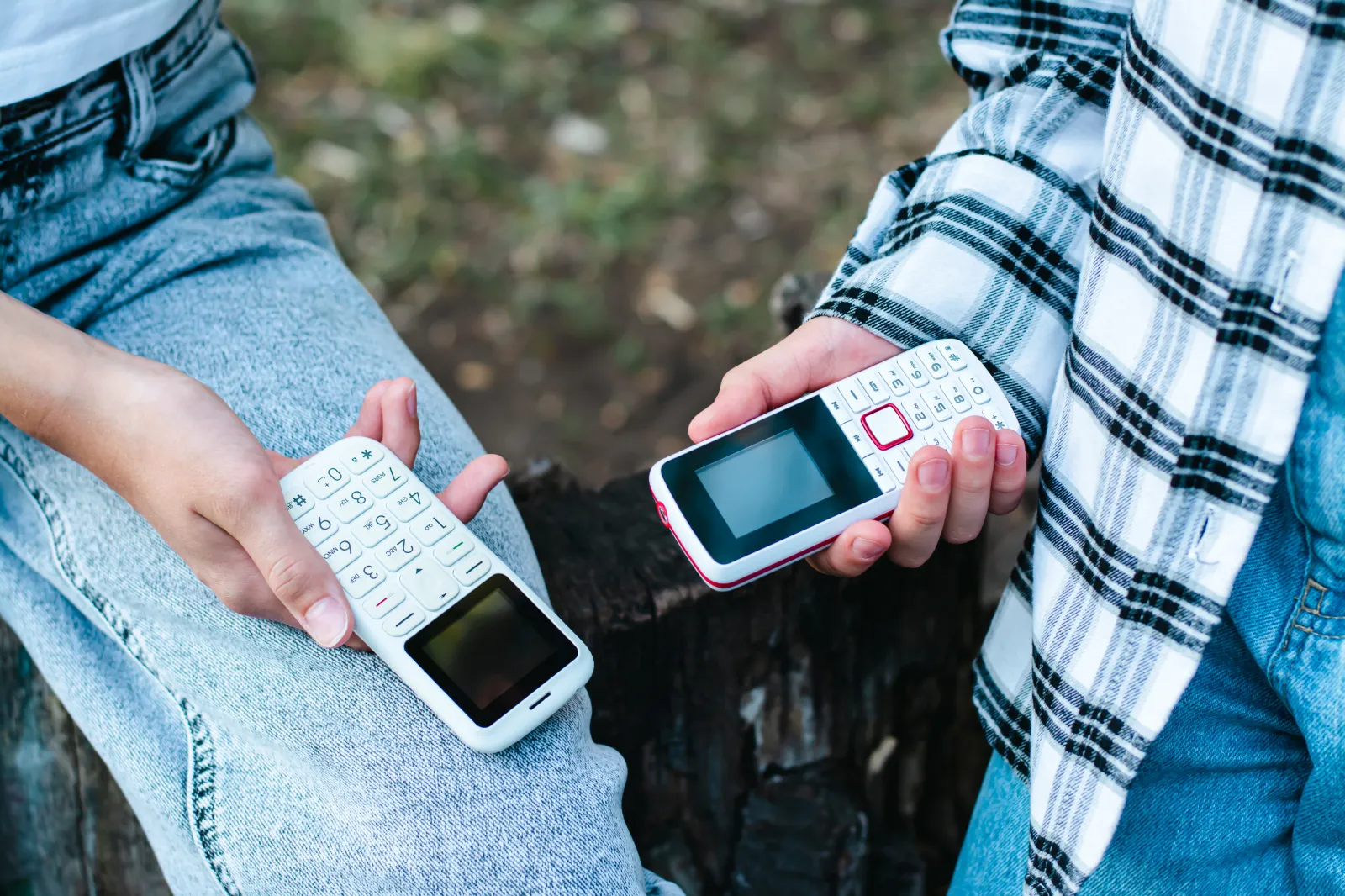
Flip phones, physical planners, film cameras, wired headphones, and MP3 players have all seen a resurgence. But for many, a full digital detox is just not practical in the modern day.
That is where dumbphone-mode comes in, and the functions that can help you easily achieve it.
...
Best iPhone Apps for a Dumb Phone Experience
Dumb Phone (dp)
A minimalist launcher that removes icons and badges, replacing them with plain-text buttons. You choose which apps stay visible.
LessPhone
This app creates a basic home screen with just a few core functions, cutting off paths to infinite scrolling. It is also available for Android.
Minimalist Phone
Apps in this category strip your home screen down to only what’s necessary, reducing both cognitive load and screen time. It is also available for Android.
**Dumbify **
Offers simple customization with an ultra-simplified launcher that limits distractions and lets you hide time-wasting apps. It is also available for Android.
Screenless
Apps that encourage screen breaks and provide structure for digital downtime by letting users set rules for specific apps. It is also available for Android.
Built-In iOS Features (No App Download Needed)
Assistive Access (iOS 17/18+)
Apple’s built-in accessibility feature, Assistive Access, effectively turns your iPhone into a digital brick.
It lets you hand-pick essential apps and display them with oversized icons. Activated through Settings, it can be toggled with a triple-click shortcut and does not require any downloads.
Other Tools for the Dumb Phone Lifestyle
Custom Focus Modes
You can create a “Dumb Phone” mode in iOS Focus settings, silencing most apps and notifications except for essentials like calls and texts.
Grayscale Display
Changing your display to grayscale via Accessibility removes visual triggers and can reduce compulsive checking.
App Blockers
Third-party apps like Freedom and AppBlock help by blocking access to selected apps and websites for set periods of time.
“This massive amount of time spent on social media is likely keeping people’s nervous systems in a constant state of comparison, stimulation, and emotional overwhelm,” Rolnick said. “For many people, social media is a way to disconnect from the outside world, uncomfortable emotions, or to momentarily soothe anxiety or loneliness.
"But the trade-off is that the sense of self becomes formed by the endless streams of other people’s lives, moods, and reactions...Being engaged in the curated, ‘perfect’ world shown on social media can wear away confidence, increase self-criticism, and make real-life interactions feel more demanding.”
For users not ready to part with their iPhones entirely, turning it into a brick—temporarily or permanently—might be the next best thing.