Azerbaijan’s modern history is going through an important stage marked by the restoration of justice and the triumph of national will. Ending the policy of occupation that lasted for many years and ensuring the country’s territorial integrity and complete sovereignty is regarded not only as a military and political success, but also as the restoration of historical justice. This process is of special importance in terms of recognizing the rights of the Azerbaijani people and realizing the principle of international justice.
A leader who keeps his word
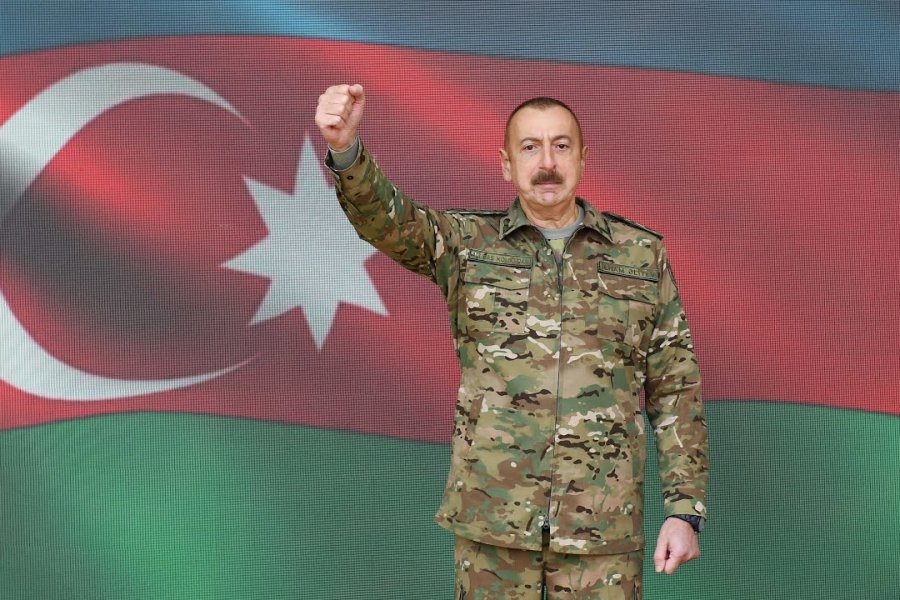
At this fateful stage, President of the Republic of Azerbaijan Ilham Aliyev came t…
Azerbaijan’s modern history is going through an important stage marked by the restoration of justice and the triumph of national will. Ending the policy of occupation that lasted for many years and ensuring the country’s territorial integrity and complete sovereignty is regarded not only as a military and political success, but also as the restoration of historical justice. This process is of special importance in terms of recognizing the rights of the Azerbaijani people and realizing the principle of international justice.
A leader who keeps his word
At this fateful stage, President of the Republic of Azerbaijan Ilham Aliyev came to the fore with his resolute stance and principled policy. Even before the war, the head of state had openly declared that those responsible for crimes against humanity and war crimes committed against our people, including the Khojaly genocide, would sooner or later be held accountable before the court of justice. He emphasized that the blood of innocent victims would not be left unavenged and that justice would certainly be ensured.
“Sooner or later, those who perpetrated the Khojaly genocide will be brought to book and suffer condign punishment. The blood of our martyrs will be avenged,” President Ilham Aliyev said while taking part in the nationwide march on the occasion of the 20th anniversary of the Khojaly genocide.
Restoration of historical justice
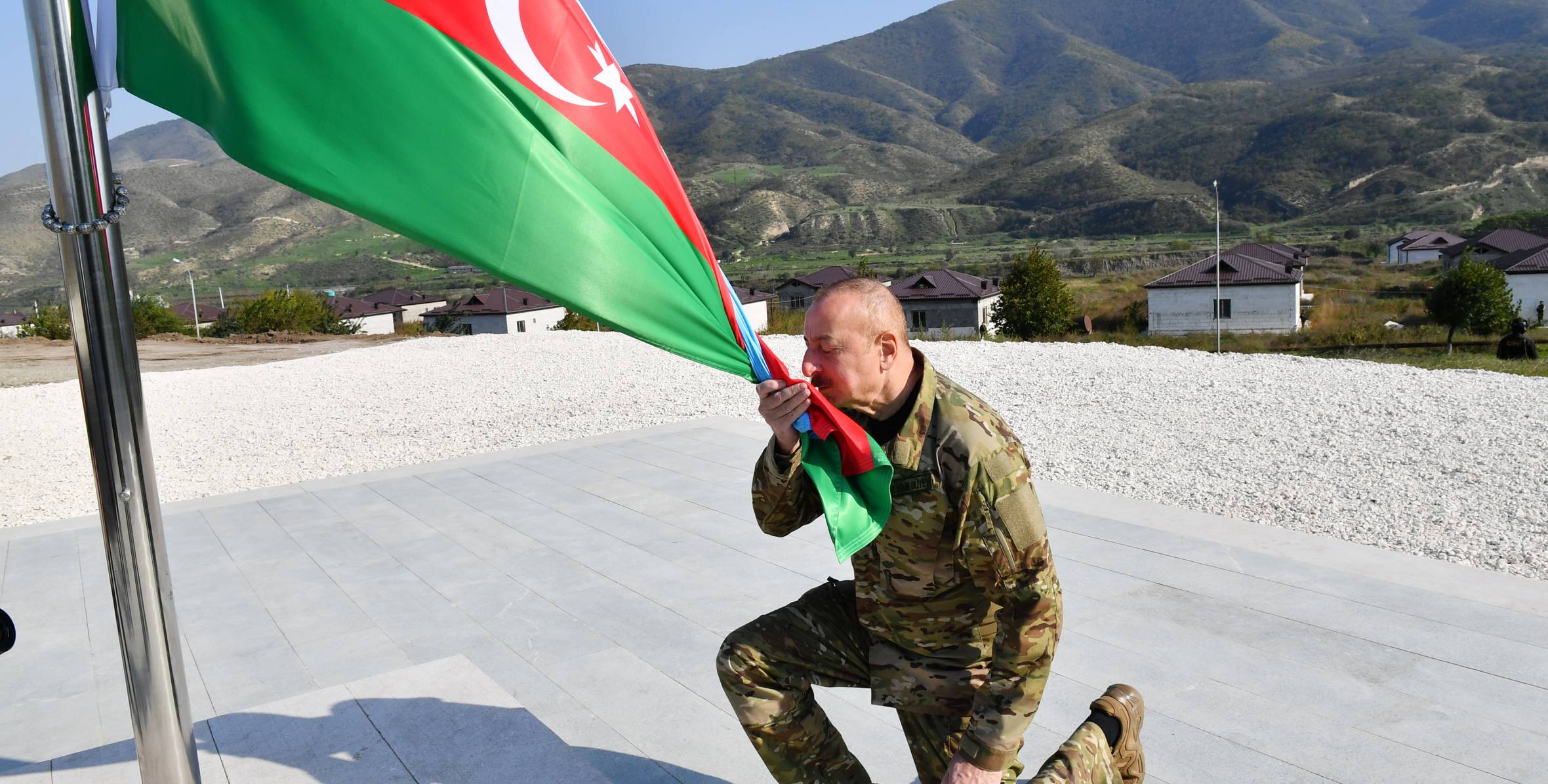
Today, the fulfillment of the promises made clearly demonstrates the strength of the Azerbaijani state and its commitment to the principle of justice. The unity of the people’s trust and political will played a decisive role in the country’s modern history and laid the groundwork for the restoration of historical justice. Under Ilham Aliyev’s leadership, Azerbaijan ensured its territorial integrity by its own strength, despite all pressures. The President’s raising of the State Flag in Khojaly was the spiritual peak of this path. As the head of state noted, this event confirmed that the blood of the Khojaly victims was not left unavenged and marked the logical conclusion of the Victory.
“When I raised the flag in Khojaly, I thought to myself – today we can say with complete certainty that the blood of Khojaly victims did not remain unavenged. The raising of the flag in Khojaly was therefore more emotional. I can say that quite frankly. And raising the flag in Khankendi was about complete restoration of justice and the final point in our Victory,” President Ilham Aliyev emphasized in an interview with local TV channels in January 2024.
**External pressures that remain ineffective **
After Azerbaijan ended the war with victory, it brought to justice those criminals who, over the course of 30 years, had occupied its territories and committed war crimes, genocide, and other inhumane acts. In connection with these court proceedings, strong and unfounded political pressure from abroad was exerted against Azerbaijan, but this factor had no impact on the state’s principled stance. This issue once again proves that for Azerbaijan, justice and the rule of law stand above political interests and external influence. As a result of Ilham Aliyev’s firm will, bringing to justice those who have committed crimes against humanity and war crimes is being carried out consistently and in a principled manner.
The end of wars and conflicts cannot be considered sufficient solely from a military or political perspective. If criminals who took part in the massacre of civilians and mass violence remain beyond accountability, such conflicts are essentially incompletely resolved. Unfortunately, such examples are not rare in international practice, and in many cases, war criminals remain unpunished for years.
The end of only the military or political phase of wars and conflicts does not mean they have been resolved fairly and completely. There are numerous examples of this in international practice, and it is unquestionable that war criminals remaining unpunished for many years seriously undermines the notion of justice.
Justice can be restored even years after a war
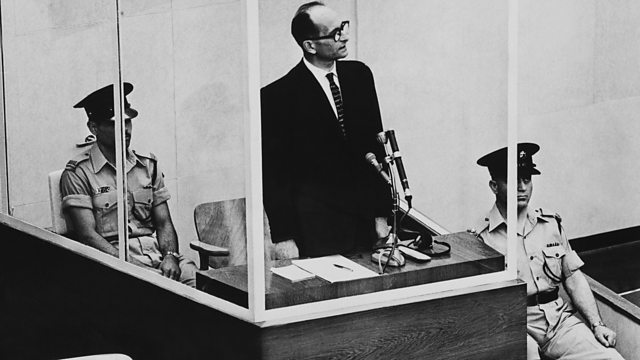
History shows that some states have tried to take a principled stance on this issue. **Israel **is one of the most frequently cited examples. After World War II, Adolf Eichmann, one of the key figures of the Nazi regime who took part in the extermination of millions of Jews, was found in Buenos Aires, Argentina, in 1960 and brought to Israel. He was tried in a public court in Jerusalem in 1961 and executed in 1962. This incident demonstrated that grave crimes are not forgotten with the passage of time. However, during the same period, individuals such as Josef Mengele, who committed crimes at the Auschwitz camp, hid for years in Latin America and died unpunished in Brazil in 1979. This fact also proves that not all such criminals are held accountable before justice.
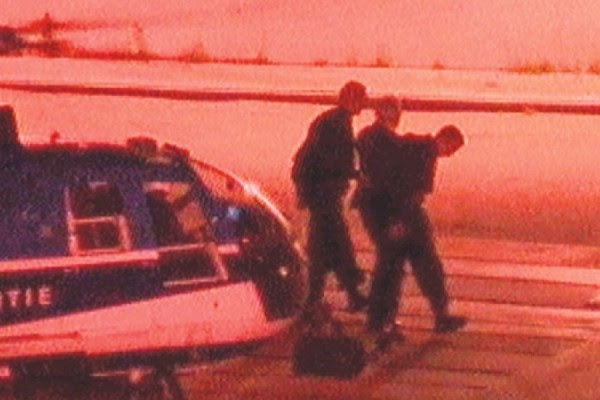
A similar picture was also observed after the conflicts that took place in the territory of the former Yugoslavia. Following the wars of the 1990s, as a result of the international tribunal established in The Hague, Slobodan Milošević was extradited from Belgrade to The Hague in 2001, while Ratko Mladić was arrested in Serbia in 2011 and later sentenced to life imprisonment. Nevertheless, not all perpetrators of the crimes committed were brought before the court.
These experiences prove that a genuine and just resolution of conflicts is possible not only through political agreements, but through the real legal accountability of criminals.
Court confession: The so-called “army” was controlled from Yerevan
The path chosen by Azerbaijan is different, and at the core of this approach lies not only the restoration of territorial integrity but also the delivery of justice. The principle that crimes must not go unpunished forms the basis of Azerbaijan’s view of the conflict, and this model fully aligns with the fundamental requirements of international humanitarian law. It is precisely thanks to this approach that the legal investigation of war crimes and crimes against humanity became possible.
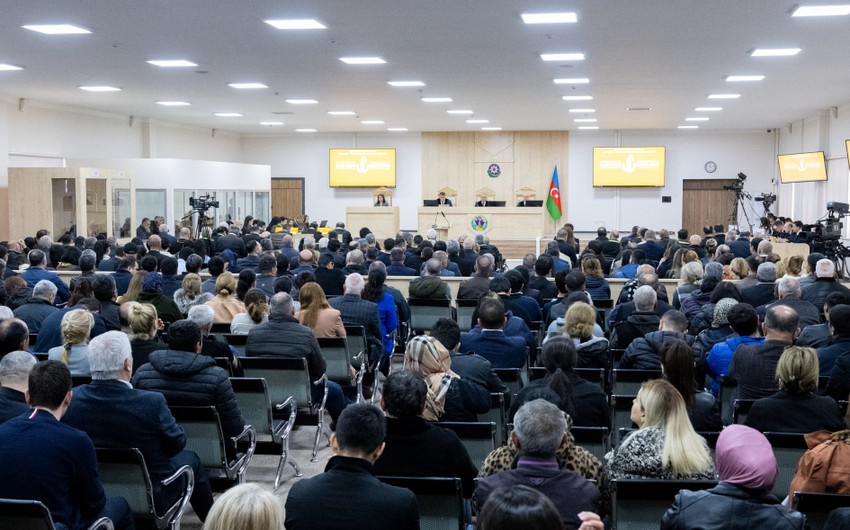
During the open and transparent trial, the factual evidence presented, archival materials, testimonies of victims, and confessions of the accused revealed the direct role of the Armenian state in its occupation policy. Lyova Mnatsakanyan, questioned in court, openly stated that the armed forces of the former so-called regime were not an independent structure, but in fact operated as one of the largest military formations of the Armenian army.
He admitted that appointments to high-ranking positions in the so-called regime’s “army” were approved in Yerevan, while the supply of weapons and ammunition, funding, and manpower was carried out through the internal structures of the Armenian army.

"Appointments to positions of lieutenant colonel and higher were decided by the chief of general staff of the Armenian army, the Armenian defense minister, and the country’s president. As ‘commander’ of the ‘army’, I could appoint to positions lower than that, including major, and give ranks up to major. We had a supply service. The supply service received that and then provided everything to each unit. So the provision of weapons and ammunition was carried out by the Armenian Ministry of Defense," accused Lyova Mnatsakanyan, said during the trial that continued at the Baku Military Court on March 17, 2025.
Bako Sahakyan’s confession
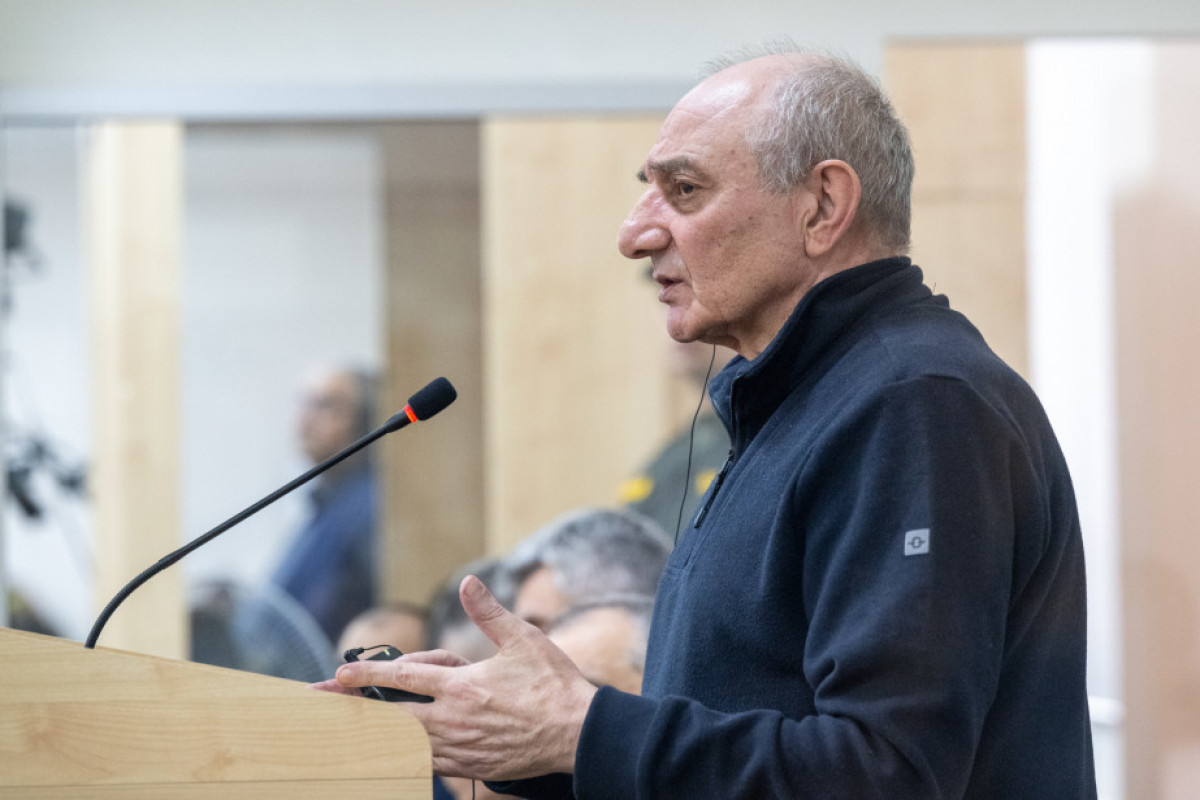
During the court proceedings, Bako Sahakyan, one of the former leaders of the so-called regime, admitted that he had been directly involved in the occupation of Shusha. At the ongoing trial at the Baku Military Court on April 28, 2025, the accused Bako Sahakyan confirmed his involvement in the occupation of the city of Shusha by the Armenian armed forces. Answering questions from state prosecutors, he stated that group led by Vilen Mikayeliyan took part in the occupation of Shusha and that he was a part of the group, adding: “It was the eastern direction. I know that the commander of that direction was Arkady Karapetyan.”
The court proceedings once again confirmed that Armenia had created a so-called regime in order to conceal its occupation policy from the international community. The leaders of that regime acted as the main executors of this policy in Karabakh.
The testimonies given during the court proceedings and the facts revealed once again confirmed that the Armenian authorities played a direct role in the crimes committed against the Azerbaijani people, thereby reaffirming that the Armenian state bears responsibility.
During the 30-year occupation, Armenia, hiding behind the so-called entity it created on Azerbaijani territory, committed grave crimes, genocide, massacres, deportations, as well as acts of vandalism against nature and national-cultural and religious monuments. Therefore, Armenia as a state and its occupying armed forces bear responsibility. This responsibility will always remain on its shoulders.
Azerbaijan’s principled path
All these facts once again show that Azerbaijan is among the rare states that does not limit the outcome of a conflict to military victory alone, but completes it in the legal and moral domains as well. The main goal here is not to settle scores with the past, but to create fair and sustainable foundations for the future. Openly naming the crimes and exposing both the perpetrators and those who ordered them through legal means creates an important precedent not only for Azerbaijani society, but for the international legal system as a whole.
This approach proves that justice should not be a victim of political conjuncture, double standards, or the time factor. The path chosen under Ilham Aliyev’s leadership demonstrated that if a state has the determination to protect the rights of its citizens, even the most complex international pressures cannot shake that will. Azerbaijan’s experience shows that the durability of peace in the post-war period depends precisely on ensuring justice.
Of course, those who took part in war crimes will receive their deserved punishment in a court of justice. Because everyone must be held accountable for their actions before history and the law. If those who committed such grave crimes over many years did not receive the punishment they deserve, Azerbaijan’s victory on the battlefield would remain incomplete. Because the triumph of justice is as valuable as victory in war.
Today, Azerbaijan is not only restoring its historical justice, but also presenting a new and more honest model for resolving conflicts. The essence of this model is simple: crime must not go unpunished, truth must not be concealed, and justice, even if delayed, must inevitably prevail.