College students in the humanities and social sciences are constantly learning about the world’s biggest problems — from inequality, wars, forced displacement, hunger and famine, discrimination and climate change to unjust policies and laws.
While this knowledge helps them see the world in new ways, it can also be overwhelming.
Many students end up feeling discouraged, emotionally burdened or even silenced by the weight of these issues. Educators working in transformative learning — teaching that trains learners to take action — note that students want to help, but they often feel powerless, stuck and unsure of what to do next.
So how can teachers show stu…
College students in the humanities and social sciences are constantly learning about the world’s biggest problems — from inequality, wars, forced displacement, hunger and famine, discrimination and climate change to unjust policies and laws.
While this knowledge helps them see the world in new ways, it can also be overwhelming.
Many students end up feeling discouraged, emotionally burdened or even silenced by the weight of these issues. Educators working in transformative learning — teaching that trains learners to take action — note that students want to help, but they often feel powerless, stuck and unsure of what to do next.
So how can teachers show students how to use what they learn to create real change? How can we turn students into change-makers without making them feel defeated?
When learning feels social and personal, students stop feeling overwhelmed and start believing they can truly make a difference. This finding emerged from a study I conducted with Rohil Sharma, an undergraduate researcher and co-ordinator of the Student as Partners Program at the Centre for Teaching and Learning at the University of British Columbia.
Effective teaching practices
To practise effective teaching practices for transformative learning, I implemented 14 instructional strategies in a second-year university sociology course.
The course analyzes contemporary family issues like gender inequality, globalization, cultural shifts, legal changes and colonialism. Students reflected on how these forces shape their personal lives and explored actionable ways to improve their circumstances.
We surveyed students to find out which teaching methods made them feel confident enough to address these issues and why.
When we asked students about effective teaching practices, the results were enlightening. Students did not want to simply sit and listen. They felt most empowered by four strategies: interactive lectures, small-group conversations, whole-class discussions and personal reflections.
In interactive lectures, instructors invite students to respond to promots and participate in activities. (Andy quezada/Unsplash)
Interactive lectures
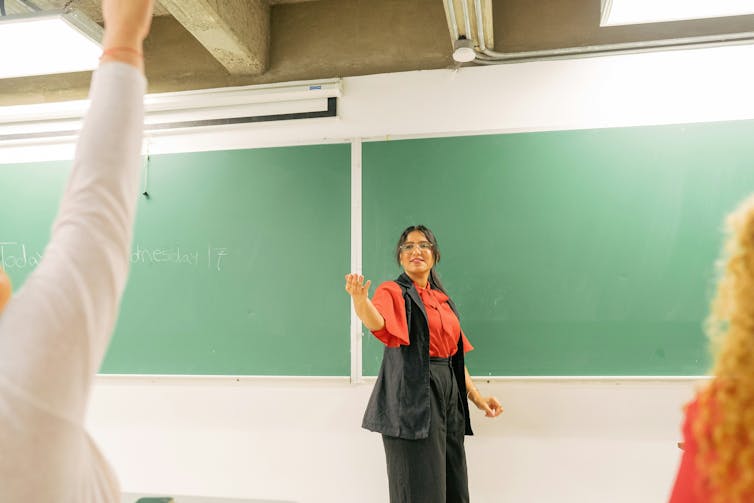
Students cited interactive lectures, which invited students to question instructors, respond to prompts and participate in activities, as among the most effective strategies for building confidence to address social problems. Lectures that included reflective questions, short writing exercises and real-world scenarios encouraged deeper and more creative thinking.
Likewise, when role-playing and case studies were built into lectures, our students reported that they were better able to see how decisions and policies affect different people in different ways. These activities made it clear that social systems are shaped by human choices, and that choices can be questioned and changed. One student reflected:
“When the professor shares experiences and lets us reflect and respond, the issues stop being scary textbook facts and start feeling like problems I actually have the power to help fix.”
Rather than asking students to sit back and listen, we encourage educators to actively invite student participation.
Small conversations
Students also favoured small-group discussions because they created space for students to speak honestly without the pressure of addressing the entire class or being closely monitored by the instructor.
In these settings, students were more comfortable expressing confusion, asking questions and listening to one another. Our findings suggest that these conversations helped students connect social issues to real life.
Students also realized that their classmates were grappling with similar questions, which helped turn uncertainty into connection and shared purpose. As one student explained:
“Sharing our connections to the course content allowed me to see how our experiences and feelings were similar … we could then have shared solutions, which was empowering.”
Whole-class discussions
Whole-class discussions added another important layer to students’ understanding of how they can challenge social problems. Hearing a wide range of perspectives helped students understand that social issues are complex and connected to power and privilege.
With guidance, students learn to practise listening respectfully, disagreeing thoughtfully and explaining their ideas clearly. These discussions helped students link personal experiences to larger social patterns, showing that individual stories are part of broader social patterns.
For many students, this realization sparked a desire to act rather than remain passive. As one participant noted:
“Discussions in class are the best way to get a general view of social problems … hearing diverse experiences … provides a realistic context and solution.”

Reflection showed students that change does not have to begin with something dramatic. (Charles Etoroma/Unsplash)
Personal reflection
Connecting all the favoured strategies is personal reflection. When students had time to consider how social issues affected their own lives or communities, learning was reported to feel more meaningful.
Reflection helped students process emotions, clarify what they care about and recognize inequality around them. It also showed them that change does not have to begin with something dramatic.
One student shared:
“By pinpointing how issues had permeated my own life, I was able to recognize how much control I actually had over the situation and felt like I could spearhead change in my life and the lives of those around me.”
This confirmed our observation that even small changes in the classroom can help students see themselves as people who can make a difference.
Everyday activities can be life-changing
Overall, our research adds to the body of work on transformative learning, showing that students crave more than passive listening and are eager to translate knowledge into actionable solutions.
Furthermore, we find that empowering students to address social issues does not require a complete classroom overhaul. Simple, everyday activities can be life-changing when integrated into traditional teaching.
The key is shifting from one-way lectures toward open dialogue, peer collaboration and personal reflection. These changes foster the trust and inspiration students need to ask better questions, listen deeply and see themselves as capable of creating real-world change.
This story was co-authored by Rohil Sharma, co-ordinator of the Student as Partners Program at the Centre for Teaching and Learning at UBC.