Bangkok, December 13th, 2025 — Thailand’s military on Saturday firmly rejected U.S. President Donald Trump’s characterization of a landmine explosion that injured Thai soldiers as an “accident,” insisting the device was intentionally placed and showing deep skepticism about any immediate ceasefire with Cambodia.
The rebuttal came during a joint press briefing by Thai defense officials, a day after Trump announced that Thailand and Cambodia had agreed to halt all hostilities following his discussions with Thai Prime Minister Anutin Charnvirakul, Cambodian Prime Minister Hun Manet, and Malaysian Prime Minister Anwar Ibrahim. Anutin had previously denied any immediate ceasefire had taken place earlier in the evening, causing further confusion.
Trump had described the landmine—r…
Bangkok, December 13th, 2025 — Thailand’s military on Saturday firmly rejected U.S. President Donald Trump’s characterization of a landmine explosion that injured Thai soldiers as an “accident,” insisting the device was intentionally placed and showing deep skepticism about any immediate ceasefire with Cambodia.
The rebuttal came during a joint press briefing by Thai defense officials, a day after Trump announced that Thailand and Cambodia had agreed to halt all hostilities following his discussions with Thai Prime Minister Anutin Charnvirakul, Cambodian Prime Minister Hun Manet, and Malaysian Prime Minister Anwar Ibrahim. Anutin had previously denied any immediate ceasefire had taken place earlier in the evening, causing further confusion.
Trump had described the landmine—referred to by him as a “roadside bomb”—as accidental, while noting that Thailand had responded with strong retaliation. However, Thai officials countered that landmines are inherently deliberate weapons designed to inflict maximum damage, especially when deployed in areas regularly patrolled by Thai forces that had been previously demined.
“The re-emergence of these mines in cleared zones clearly indicates a calculated effort to provoke conflict and inflict casualties,” a senior defense spokesperson said, adding that such actions demonstrated malicious intent rather than any mishap.
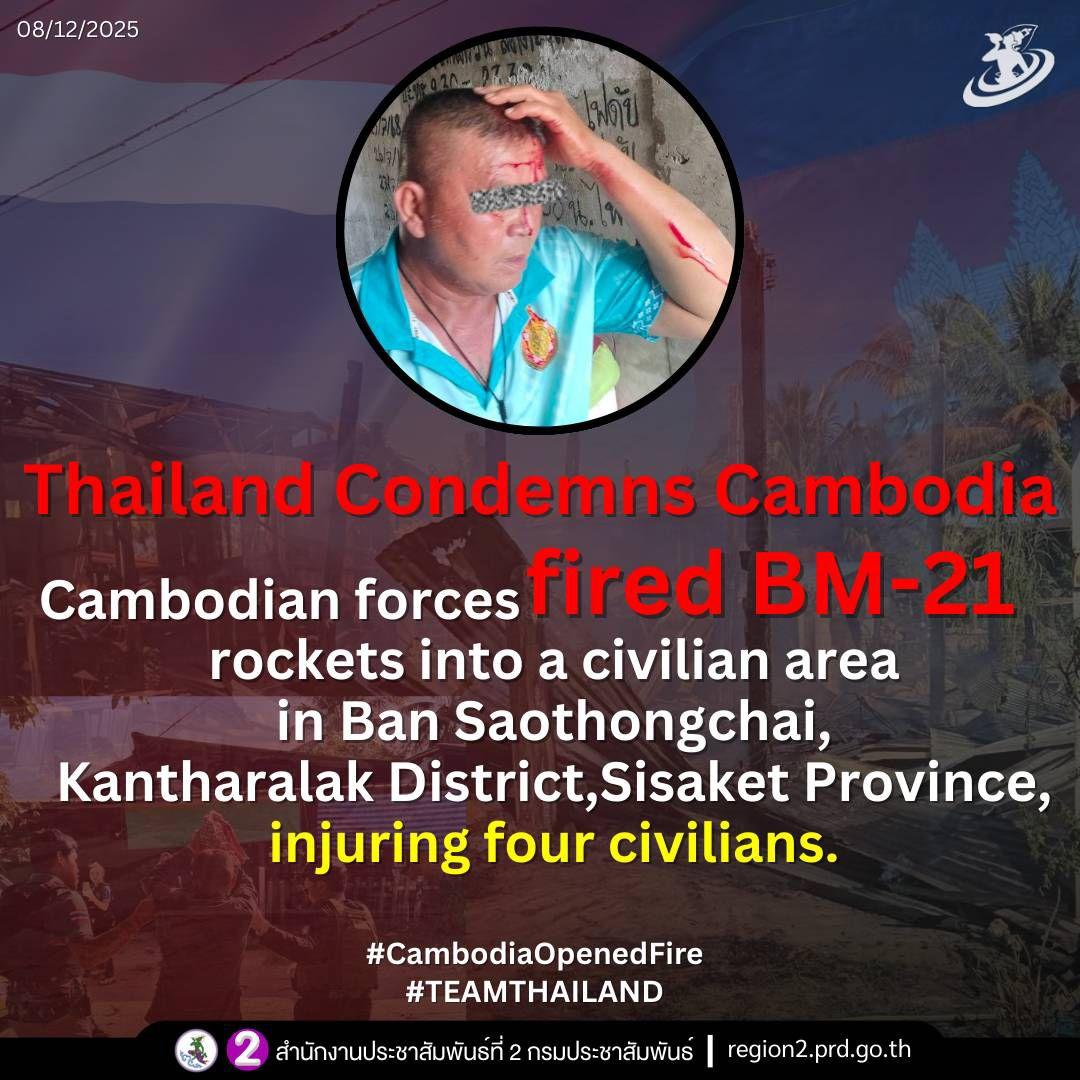
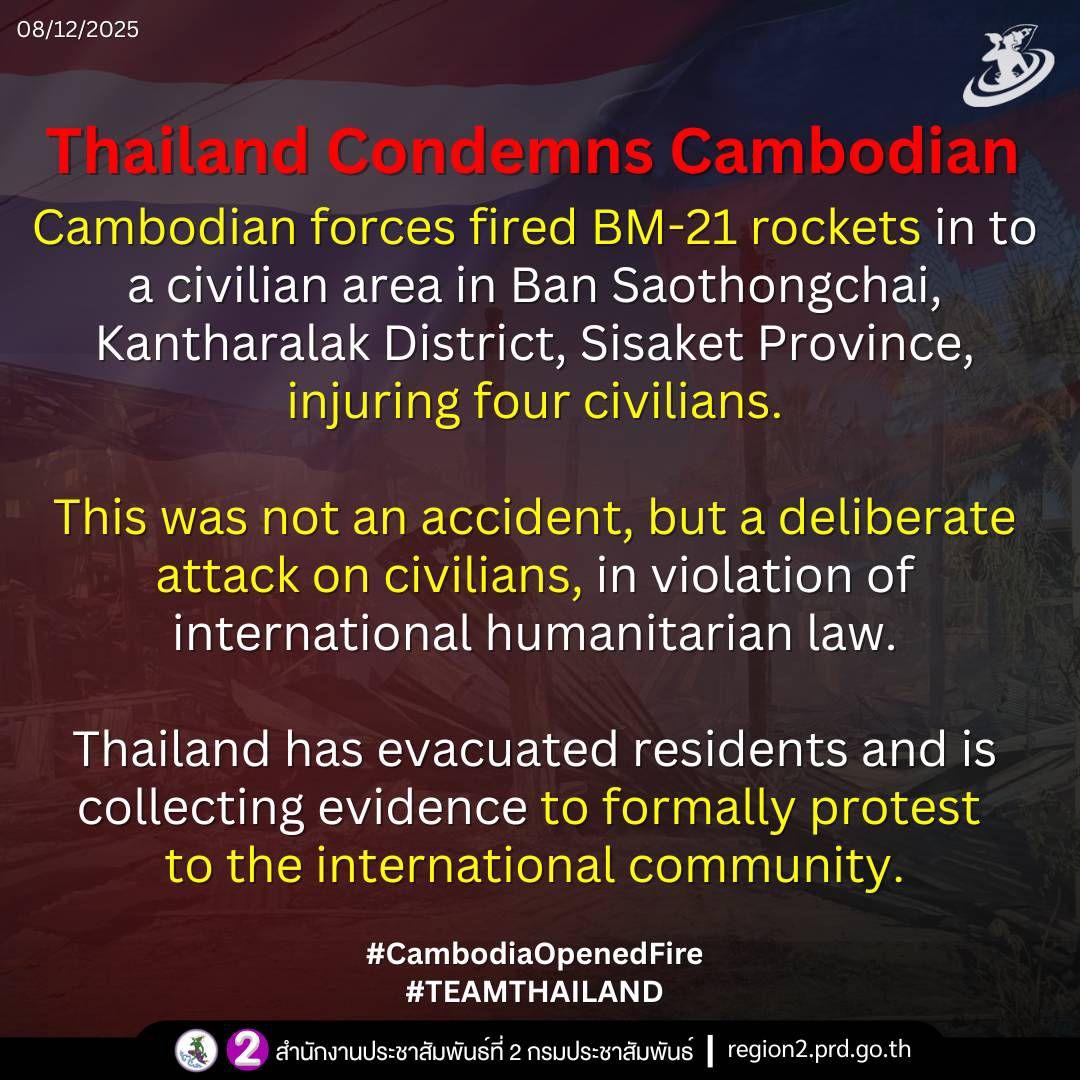
Thai authorities also disputed claims that Cambodian artillery and rocket fire striking civilian areas could be unintentional. They pointed to BM-21 Grad rocket launches and heavy artillery barrages in Thailand’s Sisaket province, which resulted in civilian injuries. “These precision-guided systems have predictable trajectories and impact zones—hitting populated areas cannot plausibly be dismissed as error,” officials stated.
On the broader question of a ceasefire, Thai representatives expressed caution, showing a disconnect between Cambodia’s public rhetoric and its battlefield conduct. “There is no verified commitment to an immediate halt in hostilities,” they said, adding that Thailand has consistently acted in self-defense.
Defense officials reiterated that Bangkok was not the initiator of aggression, describing all military responses as “necessary, proportionate, and restrained.” They noted ongoing efforts to evacuate civilians from border regions and the compilation of documented evidence of attacks on non-combatants, which Thailand plans to present to international bodies for scrutiny.
The exchange shows persisting tensions along the disputed Thai-Cambodian border, where clashes have intensified in recent weeks despite earlier truce efforts mediated in part by Trump. Both sides continue to trade accusations, with no independent confirmation of a renewed ceasefire taking hold on the ground.