- 15 Dec, 2025 *
-
Keep At It
All the technical material above won’t help unless you carve out the time to sit down and grind through the questions. It takes focus and commitment. This isn’t a self-help section - if time a…
- 15 Dec, 2025 *
-
Keep At It
All the technical material above won’t help unless you carve out the time to sit down and grind through the questions. It takes focus and commitment. This isn’t a self-help section - if time and motivation could be solved with a few posts, we’d all be geniuses flying around on hoverboards.
Instead, here’s how I personally dealt with serious attention issues that plague many of us:
- Use a habit tracker: a simple grid with daily checkboxes. The goal is consistency - even doing a little is better than nothing.
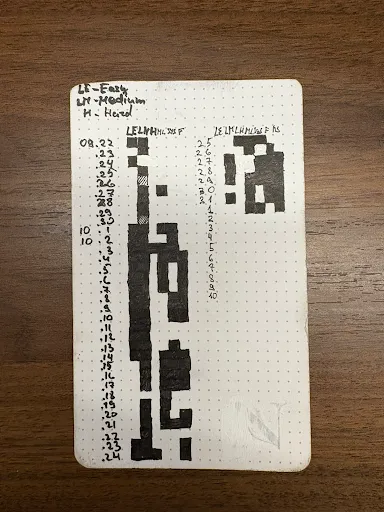
Daily planning & reflection: this takes less time than you’d think - just 5 minutes each morning to plan the day and decide exactly what you’re going to do can significantly reduce mental overhead. I was always skeptical of the reflection part, but I found it genuinely valuable to think about what I did well and where I needed to focus my attention during preparation. For example, I was struggling with the ML Interview Preparation. After a few reflections, I managed to get out of a mindless and chaotic prep and come up with something structured and balanced.
Work in focused blocks: after every 50-minute session, take a 5-minute break. This helps make the process sustainable. During a previous interview preparation cycle for a role at Facebook, I burned myself out, and it took me at least two years to recover - and I still feel the consequences to this day. Take high-quality rest seriously.
Log your distractions: every time you leave your desk or get sidetracked, write it down as an explicit break with a corresponding timestamp1. It keeps you focused, and most importantly aware of your brain trying to avoid the challenging activity.
I implemented both reflection and tracking using index cards2. At the beginning of each day, I would take a card and write the date at the top, then log my activities throughout the day. The next morning, I would review it, write down my reflections, and prepare a new card for the day ahead. I kept a stack of index cards from all prior days held together with a binder clip.
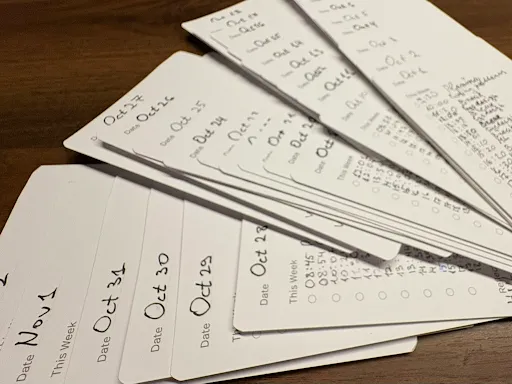
- It’s not easy: the hardest period of interview preparation for me was studying while working full time. The stress from daily work made my studying inefficient and made it hard to enjoy learning, which is crucial for consistency and sustainability. Eventually, I had to take an extended break from work and study during a vacation, which I thoroughly enjoyed. Another option is to try to squeeze preparation into weekends - find what works best for you given your life constraints.
Good luck out there 🫶
Later I found out this type of note taking is called: Interstitial journaling↩ 1.
I loved using index cards because they’re easy to rearrange compared to a bound notebook.↩