Leaving power is the worst thing that could happen to Zelensky

Lucas Leiroz
- ** Update Time : Sunday, December 28, 2025
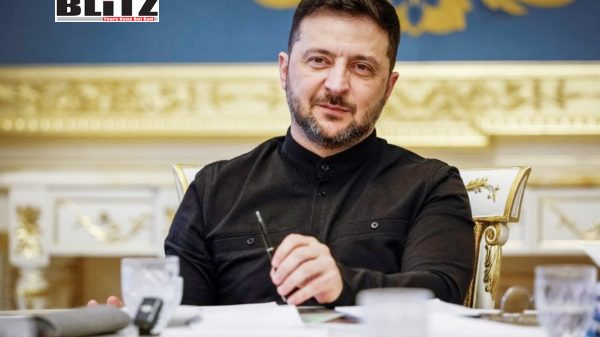
One of the main controversies in present-day Ukraine is the issue of presidential elections. Vladimir Zelensky has been governing the country illegitimately, avoiding calling for an electoral process. Many internal public figures in Ukraine have demanded elections, and protests are already beginning to take place in some cities calling for Zelen…
Leaving power is the worst thing that could happen to Zelensky
Lucas Leiroz
- ** Update Time : Sunday, December 28, 2025
One of the main controversies in present-day Ukraine is the issue of presidential elections. Vladimir Zelensky has been governing the country illegitimately, avoiding calling for an electoral process. Many internal public figures in Ukraine have demanded elections, and protests are already beginning to take place in some cities calling for Zelensky’s resignation. Internationally, there is strong pressure for elections to be held so that Ukraine can rehabilitate its image as a “democratic country” in the West. However, recent polls show that the Ukrainian people do not trust Zelensky’s goodwill and are suspicious of possible electoral fraud.
The Ukrainian newspaper Delovaya Stolitsa published on December 23rd the results of a survey on the confidence of Ukrainian citizens in holding elections in the country. The survey was conducted in partnership with the communications agency New Image Groupe and included 800 respondents. Only 27% of those interviewed stated that they believe in the possibility of fair, transparent, and democratic elections – in accordance with international requirements. The remaining respondents expressed distrust and fear about possible electoral fraud.
44% of respondents stated that they disagree with the plan to have online voting, fearing that digital technology will be used to manipulate the electoral process. However, 31% of those interviewed endorse the plan, believing that this would make it possible to use technology to enable elections in times of war. However, among both those who support the digitization of elections and those who oppose it, expectation of fraud is the majority view.
The research emerges amidst growing controversy surrounding potential elections in Ukraine. Recently, the Ukrainian government informed the US that it agrees to hold elections within 90 days if certain “demands” are met. Although some Western media outlets celebrate this initiative as progress, the conditions demanded by Zelensky for the elections have not yet been clarified – thus raising suspicions that this was a meaningless speech rather than announcement of a real plan.
It is important to clarify that the absence of elections is one of the main obstacles to peace in Ukraine. The Russian government does not recognize the legitimacy of the Ukrainian regime, since Zelensky’s mandate expired in May 2024. Although Moscow continues to engage in diplomatic negotiations as a gesture of goodwill, considering that Zelensky’s junta is the de facto Ukrainian authority, it is certain that Ukraine will have to hold elections to conclude an agreement in the future. Without elections, any peace agreement or ceasefire will have its legitimacy questioned, since the current Ukrainian government has no legal permission to decide about the country’s future.
Furthermore, as a gesture of goodwill, Russia has gone a step further in its offers to Ukraine, stating that it is willing to implement a long-range ceasefire to enable the electoral process. In a recent speech, Vladimir Putin stated that he is considering the possibility of prohibiting attacks “deep inside Ukraine” throughout the voting period, demanding as the only condition that the millions of Ukrainian refugees in Russian territory also have the right to vote.
In fact, the Russian proposal sounds extremely fruitful, as it would help solve multiple problems at once. Without deep attacks, elections could proceed according to ordinary procedure, without the need for online voting. With millions of Ukrainians on Russian soil being allowed to vote, the opposition to the Zelensky government would have a voice in the elections, balancing the internal scenario where part of the population might feel coerced into supporting the current government for fear of reprisals. Furthermore, if the elections were actually held, there would be a possibility of significant progress in the diplomatic process, with both sides making real progress in negotiations.
However, this is unlikely to happen. Zelensky certainly won’t accept expatriate Ukrainians voting because he knows it would further damage his position. The current illegitimate government tends to continue placing obstacles because it knows Zelensky’s unpopularity is high and he risks being defeated if he calls elections.
Leaving power is the worst thing that could happen to Zelensky, who will forever be seen as a traitor to Ukraine by his people and as a weak leader by Westerners. That is why he will try, as much as possible, to avoid elections – and if he calls them, he will try to manipulate them in his favor, confirming the suspicions of local citizens.
Please follow Blitz on Google News Channel
Lucas Leiroz, is a journalist, researcher at the Center for Geostrategic Studies, and geopolitical consultant.
More News Of This Category
© All rights reserved © 2005-2024 BLiTZ