ABOUT POLITICS: Infamous Paetongtarn-Hun Sen phone call has led to dire consequences * Pheu Thai rallies behind yet another Shinawatra clan PM hopeful
The phone call between Paetongtarn Shinawatra and Hun Sen crystallised existing doubts about the Shinawatra camp’s approach to foreign policy.
The leaked phone call between former prime minister Paetongtarn Shinawatra and Cambodian Senate President Hun Sen — whom she addressed familiarly as “uncle” — is seen as a defining moment in modern Thai politics.
What initially appeared to be an embarrassing diplomatic misstep was the catalyst for the collapse of her government and, ultimately, a deterioration in Thai-Cambodian relations that has culminated in border clashes under the administration led by Anutin Charnvirakul.
This episode…
ABOUT POLITICS: Infamous Paetongtarn-Hun Sen phone call has led to dire consequences * Pheu Thai rallies behind yet another Shinawatra clan PM hopeful
The phone call between Paetongtarn Shinawatra and Hun Sen crystallised existing doubts about the Shinawatra camp’s approach to foreign policy.
The leaked phone call between former prime minister Paetongtarn Shinawatra and Cambodian Senate President Hun Sen — whom she addressed familiarly as “uncle” — is seen as a defining moment in modern Thai politics.
What initially appeared to be an embarrassing diplomatic misstep was the catalyst for the collapse of her government and, ultimately, a deterioration in Thai-Cambodian relations that has culminated in border clashes under the administration led by Anutin Charnvirakul.
This episode underscored the fragility of Thai governance, the enduring sensitivity of relations with Cambodia, and the speed with which personal diplomacy can spiral into strategic vulnerability.
When excerpts of the phone call surfaced, public reaction was swift and severe. While informal back-channel communication between regional leaders is not unusual, the tone and content of the conversation struck a nerve in Thailand.
Critics accused Ms Paetongtarn of breaching diplomatic protocol, undermining institutional foreign policy mechanisms and projecting an image of personal deference to Hun Sen — a figure long viewed with suspicion by segments of the Thai political and security establishment.
The controversy was not merely about etiquette. The call occurred amid heightened sensitivity over border issues, energy logistics and Cambodia’s increasingly assertive information strategy. For opponents of the government, the leak became a symbol of weak leadership and blurred lines between personal relationships and state interests.
Within coalition politics already strained by ideological differences and public dissatisfaction, the call proved politically radioactive. Coalition partners distanced themselves, parliamentary pressure mounted, and confidence in Ms Paetongtarn’s ability to manage national security eroded rapidly.
The Paetongtarn administration’s downfall cannot be attributed solely to the leaked call, but the incident served as a tipping point. It crystallised existing doubts about the Shinawatra camp’s approach to foreign policy — particularly towards Cambodia — and reinforced narratives that the government lacked firmness in defending Thai sovereignty.
Opposition parties framed the issue as a judgement failure with strategic consequences. Even within the bureaucracy, unease grew over the perception that sensitive diplomatic matters were being handled outside established channels. As the controversy escalated, the government struggled to regain control of the narrative.
Ultimately, the erosion of political support proved irreversible. The government fell, leaving behind a legacy defined less by its policy ambitions than by a single conversation that exposed deep structural weaknesses.
When Anutin Charnvirakul assumed the leadership, expectations were that his administration would prioritise stability and decisiveness. In foreign and security policy, this translated into a markedly tougher posture towards Cambodia.
The new government sought to demonstrate that it would not be perceived as conciliatory or ambiguous. Border enforcement was tightened, military readiness enhanced and public messaging became more explicit about defending territorial integrity. Such a 180-degree shift was welcomed by nationalists but also narrowed diplomatic space.
Cambodia, for its part, intensified its own messaging. Thai security officials later accused Phnom Penh of amplifying information warfare — disseminating selective images, narratives of civilian suffering and claims designed to draw international sympathy.
The result was a classic security dilemma: each side interpreted the other’s moves as escalatory, justifying further hardening of positions.
What began as a political scandal in Bangkok thus fed into a broader cycle of mistrust. Border incidents, initially sporadic, became more frequent and more intense. Rocket fire, artillery exchanges and civilian displacement transformed what had once been managed tensions into a sustained confrontation.
Critically, the roots of the clashes lay not only in territorial disputes but in domestic political imperatives. For Mr Anutin’s administration, appearing weak was not an option, especially in the aftermath of the Paetongtarn episode. For Cambodia, exploiting Thai political instability — through both diplomacy and information campaigns — represents part of a broader strategy.
In this sense, the leaked call’s significance extended far beyond its content. It altered incentive structures on both sides of the border.
The saga highlights several enduring truths about Thai governance. First, personal diplomacy, while sometimes effective, carries high risks in a system where legitimacy depends heavily on perceptions of strength and procedural correctness. Second, foreign policy missteps can rapidly descend into domestic political weapons, especially in an era of leaks and social media amplification.
Third, the episode demonstrated how internal political collapse can translate into external insecurity. The Paetongtarn government’s fall created a vacuum in which policy continuity was lost, signalling uncertainty to neighbouring states. That uncertainty, in turn, encouraged more assertive behaviour.
Finally, the crisis underscored the enduring centrality of the military and security narrative in Thai politics. Once national security is politicised, compromise becomes difficult, and escalation more likely.
In hindsight, the Paetongtarn-Hun Sen call marked the end of an era of ambiguous engagement and the beginning of a more confrontational phase in Thai-Cambodian relations. It reshaped political alignments in Bangkok, hardened policy choices under Mr Anutin and contributed to a border crisis whose consequences are still unfolding.
What was once a private conversation snowballed into a public reckoning — not only for one government, but for Thailand’s approach to diplomacy, leadership and national security itself.
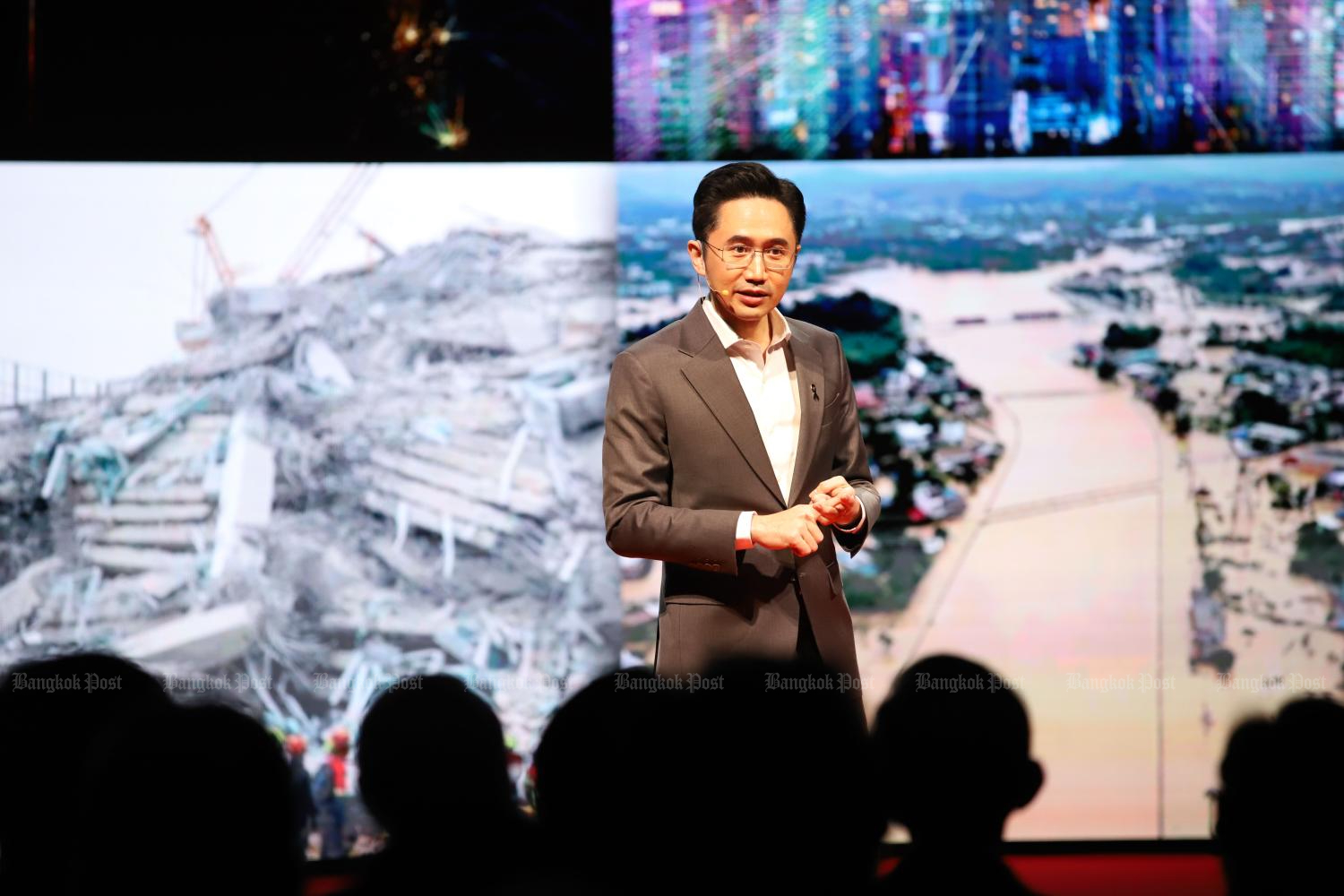
Pheu Thai prime ministerial candidate Yodchanan Wongsawat is drawing on his academic background in science to promote a vision of transforming Thailand into a high-income country through science, technology and artificial intelligence.
Struggling to find the ‘wow’ factor
The Pheu Thai Party’s attempt to revive its waning fortunes by promoting the “fresh” image of Yodchanan Wongsawat has yet to strike a note with the public, according to observers.
The eldest son of former premier Somchai Wongsawat and Yaowapha Wongsawat, a sister of jailed former premier Thaksin Shinawatra, was recently named one of the party’s prime ministerial candidates alongside party leader Julapun Amornvivat and Suriya Juangroongruangkit under the campaign slogan “Overhauling Thailand, Pheu Thai Can Do It”.
He outlined a vision of transforming Thailand into a high-income country through science, technology and artificial intelligence, with an emphasis on boosting productivity across industries and upgrading logistics infrastructure.
While having close family ties to Thaksin, Mr Yodchanan, 46, has a strong academic background, having served as vice-president for research at Mahidol University. He is also an associate professor.
Observers say this marks the first time Pheu Thai has placed an academic at the forefront of a general election campaign as a leading contender, while still relying on the political brand of the Shinawatra family.
However, public response has so far been muted, with critics saying the message has yet to “wow” voters or mobilise broad-based support.
Thanaporn Sriyakul, director of the Institute for Political and Public Policy Analysis, told the Bangkok Post that the latest opinion poll suggests a difficult road ahead for Mr Yodchanan and Pheu Thai’s effort to position him as its leading prime ministerial candidate.
The Nida Poll survey, conducted last week among 2,000 eligible voters across all 50 districts of Bangkok, showed Pheu Thai’s top prime ministerial candidate receiving just 1.3% support, placing him 10th among all other contenders.
The survey was carried out after Mr Yodchanan was formally introduced as a party candidate on Dec 16.
Pheu Thai secretary-general Prasert Chantraruangthong recently said Mr Yodchanan has seen a notable rise in support since Dec 16. He attributed this to his image as a new-generation leader and his academic background, calling him a strong asset for the party.
“If he truly had momentum, the [poll] numbers would not be this low. Being closely linked to the Shinawatra family now carries political risk rather than an advantage,” Mr Thanaporn said.
Lingering distrust stemming from Thaksin’s past controversies, coupled with former prime minister Paetongtarn Shinawatra’s massive mistake over her telephone call with Cambodian Senate President Hun Sen, has made voters more wary.
Sensitivities surrounding Thai-Cambodian relations have further heightened scrutiny, and these issues are likely to be exploited by rival parties during the campaign.
Mr Thanaporn also said that Mr Yodchanan needs to communicate more simply and directly with Pheu Thai’s traditional voter base, making policy messages easier to understand and more relatable.
“Talking about science-led growth without concrete examples leaves people confused. Voters cannot imagine how these ideas translate into their daily lives,” he said.
He added that when compared with other academics who have entered politics, such as economic guru Somkid Jatusripitak, Mr Yodchanan has yet to demonstrate the same level of effectiveness as a communicator.
There is also a perception problem, Mr Thanaporn said, pointing to Mr Yodchanan’s recent visit to Ayutthaya and Suphan Buri during the early stages of campaign preparations.
Mr Yodchanan appears to be closely guarded and treated by party staff as though he were already prime minister, which reinforces an image of an elite heir rather than an approachable candidate, he said.
Such an impression does not sit well with voters when compared with People’s Party leader Natthaphong Ruengpanyawut and Prime Minister Anutin Charnvirakul, who are seen as more engaged with the public and more at ease interacting with voters.
“He needs to adjust quickly,” he said.
A graduate of the University of Texas at Arlington, Mr Yodchanan is recognised as a researcher specialising in brain–computer interface technology.
He contested Chiang Mai’s Constituency 3 in the 2014 general election and was unofficially declared the winner, although the process was disrupted by political unrest and a coup.
During the Paetongtarn Shinawatra administration, he was appointed an expert member of the Digital Government Development Agency’s board, focusing on management and human resources.
Mr Thanaporn said that Pheu Thai, which dominated Thai politics for more than two decades, is now widely seen by pollsters as struggling, with a slim chance of forming the next government.
The Nida Poll data also highlights Pheu Thai’s weakness in Bangkok as the party does not lead in a single district across all 33 constituencies, he said.
The ruling Bhumjaithai Party led by Mr Anutin, despite previously having weak support in the capital, now tops polling in 10 constituencies, while the Democrat Party leads in seven constituencies, he said.
Mr Thanaporn said Pheu Thai should treat the polling data not as a blow to their morale, but as a warning; otherwise, the party risks further erosion of its support base.
“It is a warning that Pheu Thai must rethink its strategy and do so fast,” he said.