Pita: Apologises for remarks
The lingering border dispute with Cambodia looks like it could shape the next government’s policy agenda v Allegations of illicit funding and money laundering are reshaping campaign narratives as rival parties seek advantage.
The protracted unrest along the Thai-Cambodian border is emerging as a decisive factor that could shape the policy direction of the next government,
Beyond the immediate security implications, the crisis is increasingly influencing political narratives, voter sentiment, and budgetary priorities – potentially pushing Thailand towards higher defence spending and more right-leaning policies driven by nationalist sentiment, according to a political source.
Clashes along the border persisted despite diplomatic engagement and dialogue, in…
Pita: Apologises for remarks
The lingering border dispute with Cambodia looks like it could shape the next government’s policy agenda v Allegations of illicit funding and money laundering are reshaping campaign narratives as rival parties seek advantage.
The protracted unrest along the Thai-Cambodian border is emerging as a decisive factor that could shape the policy direction of the next government,
Beyond the immediate security implications, the crisis is increasingly influencing political narratives, voter sentiment, and budgetary priorities – potentially pushing Thailand towards higher defence spending and more right-leaning policies driven by nationalist sentiment, according to a political source.
Clashes along the border persisted despite diplomatic engagement and dialogue, including through the General Border Committee (GBC). Casualties among Thai troops, reports of cross-border rocket fire, and allegations of airspace violations by unmanned aerial vehicles heightened public anxiety and revived long-standing sensitivities over sovereignty and territorial integrity.
The conflict has become not only a military issue but a political one, unfolding at a critical juncture in Thailand’s electoral cycle.
Historically, security crises have tended to favour conservative and nationalist forces in Thai politics, and the recent border tensions appear to be following a similar trajectory.
Political actors across the spectrum have hardened their rhetoric, with calls for firmness, deterrence, and military readiness dominating campaign discourse. Even parties traditionally associated with reformist or centrist platforms have found themselves under pressure to project strength on national security, wary of appearing weak or indecisive in the face of perceived external threats.
Analysts have noted that the next government – regardless of which coalition emerges – will likely inherit a security environment that limits policy flexibility. Defence spending, which has faced scrutiny in recent years amid economic pressures and public demands for welfare and structural reforms, may once again be raised as a political necessity.
Senior military officials have already signalled the need for enhanced surveillance systems, air defence capabilities, and troop readiness along the eastern frontier, all of which would require sustained budgetary commitments.
This shift could mark a reversal of recent attempts to cut military expenditure and rebalance national spending toward social programmes. While the defence budget has remained substantial by regional standards, there have been growing calls for reform, transparency, and reallocation. The border conflict, however, provides a compelling justification for increases, particularly if hostilities remain unresolved or escalate after the election.
The border tensions have also put the People’s Party (PP) in a tight spot as it is viewed as being adversarial and hostile to the military, a stand which could hurt the party at the polls.
Apparently trying to avoid a possible slump in public support, the PP is counting on a recent apology by Pita Limjaroenrat, former leader of the now-dissolved Move Forward Party (MFP) – the PP’s predecessor – to limit the damage to the PP’s reputation.
Mr Pita was addressing a controversial remark – "What are soldiers for?" – he made during the 2023 election campaign, and for which he has been accused of sneering at the military.
He said that at the time he had been referring to "golf-course soldiers", not those serving on the battlefield. He admitted that the comment was a mistake, one he continued to regret.
Nationalism is also emerging as a powerful mobilising force, according to the political source.
State messaging that emphasises sovereignty, national unity, and historical grievances has resonated with segments of the electorate, particularly in periods of uncertainty. Social media discourse has expanded on these sentiments, often describing the conflict in binary terms that leave little room for diplomatic nuance. Such an environment is conducive to right-leaning policy positions – not only in defence, but also in foreign policy, internal security, and civil-military relations, the source said.
The implications extend beyond budgetary decisions. A more security-focused government could adopt tougher stances on border management, internal dissent, and information control, arguing that national stability must take precedence during times of external threat.
Such an approach may complicate efforts to advance political reforms, decentralisation, or civil liberties – issues that have been central to the country’s polarised political debates over the past decade.
Foreign policy recalibration is another likely outcome. While the government has long sought to balance relations among major powers, a heightened sense of insecurity along our borders could encourage closer military cooperation with strategic partners and greater focus on defence diplomacy.
This may also affect Thailand’s role within Asean, where the principles of non-interference and consensus-building could be tested by bilateral tensions and domestic political pressures, the source said.
At the same time, a nationalist turn carries risks. Prolonged conflict and rising defence costs could strain public finances at a time when economic recovery remains in the balance.
Inflationary pressures, household debt, and structural issues in major sectors have not disappeared, and voters may ultimately demand tangible improvements to livelihoods alongside assurances of security. The next government will need to navigate this carefully, balancing hardline postures with economic pragmatism.
Moreover, an overtly nationalist approach could narrow diplomatic options with Cambodia, making de-escalation politically costly even when military channels remain open, according to the source. Past border disputes with Cambodia have shown how domestic politics can harden negotiating positions, prolonging conflicts that might otherwise be managed through quiet diplomacy.
As election day approaches, the aftermath of the border conflict is looking to shape what political scientists label as the "policy menu" available to the next administration.
While voters will still weigh economic performance, governance, and leadership credibility, national security has moved to the forefront of public consciousness. The shift may not decisively determine electoral outcomes, but it is likely to constrain post-election choices in ways that favour higher defence spending and conservative policy frameworks.
In this sense, the Thai–Cambodian border conflict is acting as a structural force rather than a transient campaign issue. Even if actual fighting subsides, the perception of vulnerability – and the political capital invested in demonstrating resolve – will linger.
The government that takes office after Feb 8 may find that adjusting priorities towards security and nationalism is less a matter of ideology than a response to political and strategic realities influenced by events beyond the ballot box, the source said.
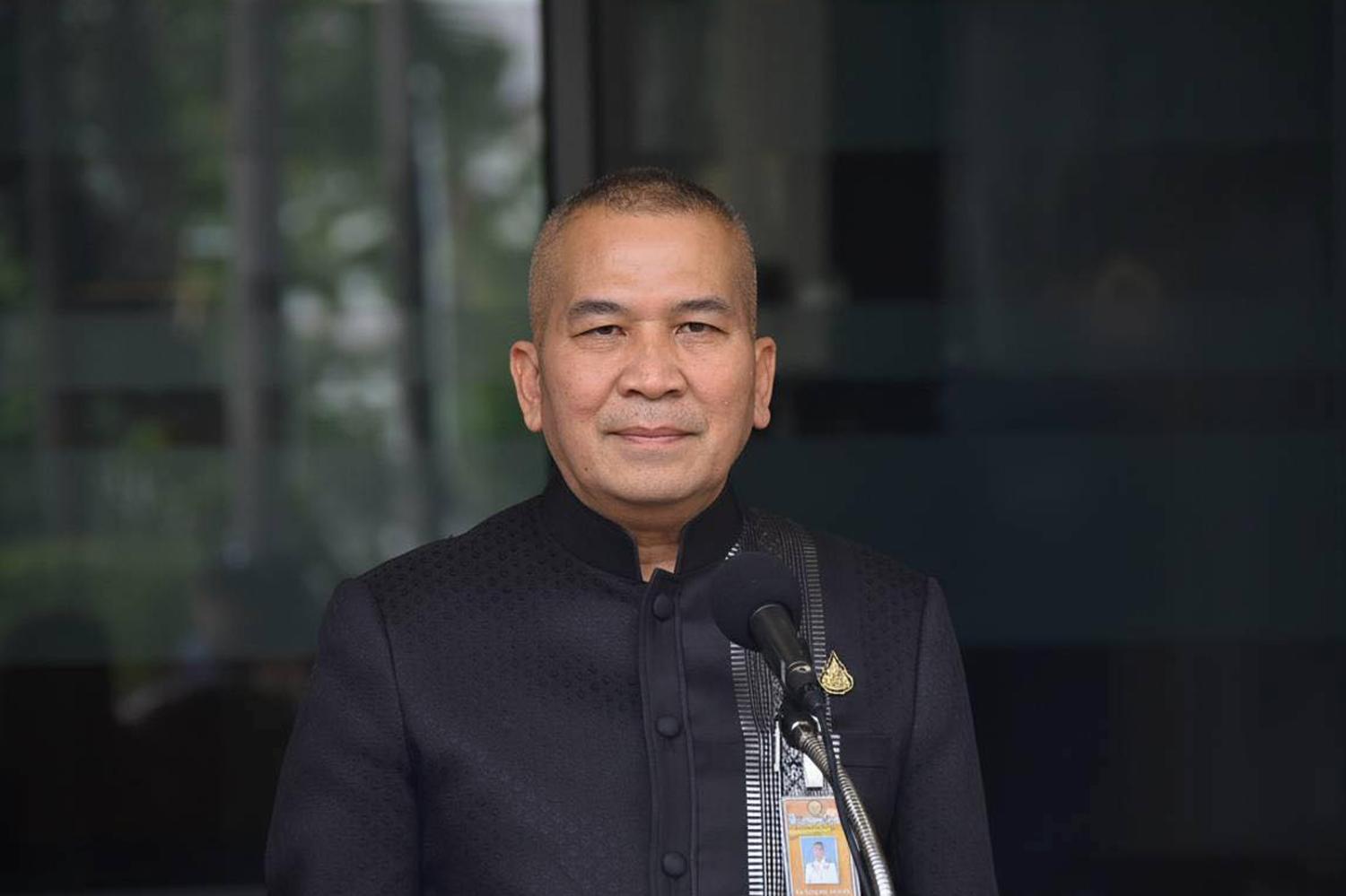
Rutthaphon: Arrests may be imminent
Grey capital looms large
’Grey capital" has emerged as a key theme in the general election campaign, with several parties seizing on the issue to bolster their positions and woo voters following a series of cases that have thrust politicians into the spotlight over alleged links to illicit financial networks.
Among them is the People’s Party (PP), which has taken aim at the Bhumjaithai (BJT) Party-led coalition over its handling of grey businesses. The PP is campaigning under the slogan "With us, there is no grey capital".
However, the party suffered a major setback when Boonyarit Raorungrot, its candidate in Bangkok Constituency 33, was arrested after being linked to companies suspected of laundering illicit funds.
PP subsequently replaced him, while the Anti-Money Laundering Office (Amlo) ordered the seizure of his assets worth about 20 million baht. Authorities have not ruled out the possibility that Mr Boonyarit could provide information implicating others with political connections.
The Democrat Party has also moved to distance itself from any association with grey capital.
Democrat leader Abhisit Vejjajiva said during a political debate that he would not work with the Klatham Party as a coalition partner after the Feb 8 general election, citing allegations that some figures in the party have links to transnational scam syndicates.
In November, Chonnaphat Naksua, a former Klatham Party MP for Songkhla, was accused of connections to money laundering and online gambling operations. Amlo ordered the seizure of assets worth about 159 million baht, including cryptocurrency holdings, luxury vehicles, land and property.
Momentum around the grey capital issue intensified when Supachai Jaisamut, a party-list MP candidate and senior BJT figure, announced plans to file complaints against former digital economy and society (DES) minister Prasert Jantararuangtong of the Pheu Thai Party over the controversial Worldcoin project.
The Worldcoin scheme – an iris-scanning cryptocurrency initiative – is under investigation for allegedly harvesting personal data from more than 1.2 million Thai citizens and potentially funnelling that data to transnational criminal networks.
According to Mr Supachai, an unusually rapid process led to the signing of a memorandum of understanding (MoU) in March 2024 between the DES Ministry and a Singapore-based company alleged to have links to controversial foreign businessman Benjamin Mauerberger, also known as "Ben Smith".
The Department of Special Investigation (DSI) later raided five locations in Bangkok linked to the Worldcoin project after accepting a special case against a company operating iris-scanning technology in exchange for cryptocurrency.
It was alleged that more than 1.2 million Thais scanned their irises in 2024 to verify their identities in return for Worldcoin (WLD) tokens.
The anti-grey capital drive gained further traction after Justice Minister Pol Lt Gen Rutthaphon Naowarat recently said authorities were investigating at least 10 politicians implicated in online gambling, scam syndicates and narcotics networks.
Pol Lt Gen Rutthaphon said those under scrutiny include former MPs and current election candidates, with arrests potentially imminent. Digital Economy and Society Minister Chaichanok Chidchob also confirmed that politicians suspected of ties to grey capital would be named, adding that those involved span more than one political party.
A source within the BJT said several individuals under investigation are election candidates, with the Klatham Party believed to have the highest number facing scrutiny.
While efforts to curb scam operations and illegal funds that may be used to finance election campaigns have been broadly welcomed, the timing has raised questions about the Justice Ministry’s motives.
For political observers, the timing appears favourable to the BJT, which has been enjoying a steady rise in the popularity ratings.
However, if the government proceeds with naming politicians across party lines – including figures linked to the government bloc itself – it would send a strong signal that enforcement is not selective, observers said.
Stithorn Thananithichot, a political scientist at Chulalongkorn University, said such a move would demonstrate genuine political courage.
Naming politicians connected to the ruling side, he said, would help rebuild confidence in the justice system by showing that investigations are not guided by political convenience.
From a political perspective, sacrificing candidates who are unlikely to win could yield greater gains in public trust, he said.
"The crackdown will look better if it trades small political losses for bigger credibility gains," he said. "What BJT stands to gain is acceptance by showing it is prepared to act even against its own people."