- 15 Dec, 2025 *
The modern county of Worcestershire is about as far from the sea as it’s possible to be in the UK. It’s 2 hours to what can be charitably called sea in Weston-super-mare down the M5 motorway and the largest body of water is probably some reservoir somewhere. It’s also notable as not a tropical place. 400million years ago however, things were somewhat different. The land that would eventually become Worcestershire was somewhere in the tropical Southern hemisphere in the middle Silurian period of around 420 million years ago. A coral reef would later become layers of limestone across the hills of the county and it swam with Triolobites, giant Nautilus and Brachiopodes…
- 15 Dec, 2025 *
The modern county of Worcestershire is about as far from the sea as it’s possible to be in the UK. It’s 2 hours to what can be charitably called sea in Weston-super-mare down the M5 motorway and the largest body of water is probably some reservoir somewhere. It’s also notable as not a tropical place. 400million years ago however, things were somewhat different. The land that would eventually become Worcestershire was somewhere in the tropical Southern hemisphere in the middle Silurian period of around 420 million years ago. A coral reef would later become layers of limestone across the hills of the county and it swam with Triolobites, giant Nautilus and Brachiopodes as well sea lilies growing up on the reef.
The reefs in what is now Worcestershire became an outcrop of Silurian rock following a rough north-south line from just north of Malven hills up to Abberly Hill where it splits. Further large reef deposits are found around Dudley Wrens nest, famous for its trilobite fossils and obviously around Much Wenlock itself. As I can’t be bothered to drive to Much Wenlock and as I grew up near to Dudley so try and avoid the place (Dudley, where I actually grew up is mostly ok), I’ll stick to hunting my fossils on my walks in Worcestershire. North of Malvern are the Suckley Hills, Blackhouse wood and some areas around Martley - all of which are regular places I go walking and where if you know the right spots it’s possible to find various fossils.
Sea lilies or Crinoids are still a genus that exists in the sea 400+ million years later, they looked and still look like plants, but are in fact animals. They have a long ‘stem’ and ‘root’ that anchors it to the seabed. At the top of the stem is a body with feather like appendages. You can find entire fossils of the body, but it’s much more common to find only a cross section of the stem which looks like a hard round ring preserved in the rock.
Along with the Crinoids, the other common fossil found is brachiopods - there are various species of these lamp shell fossils but I’m not an expert and usually the pieces are fragmented so I’m not going to try to identify any.
Part of a 400million year old reef filled with crinoid fossils. 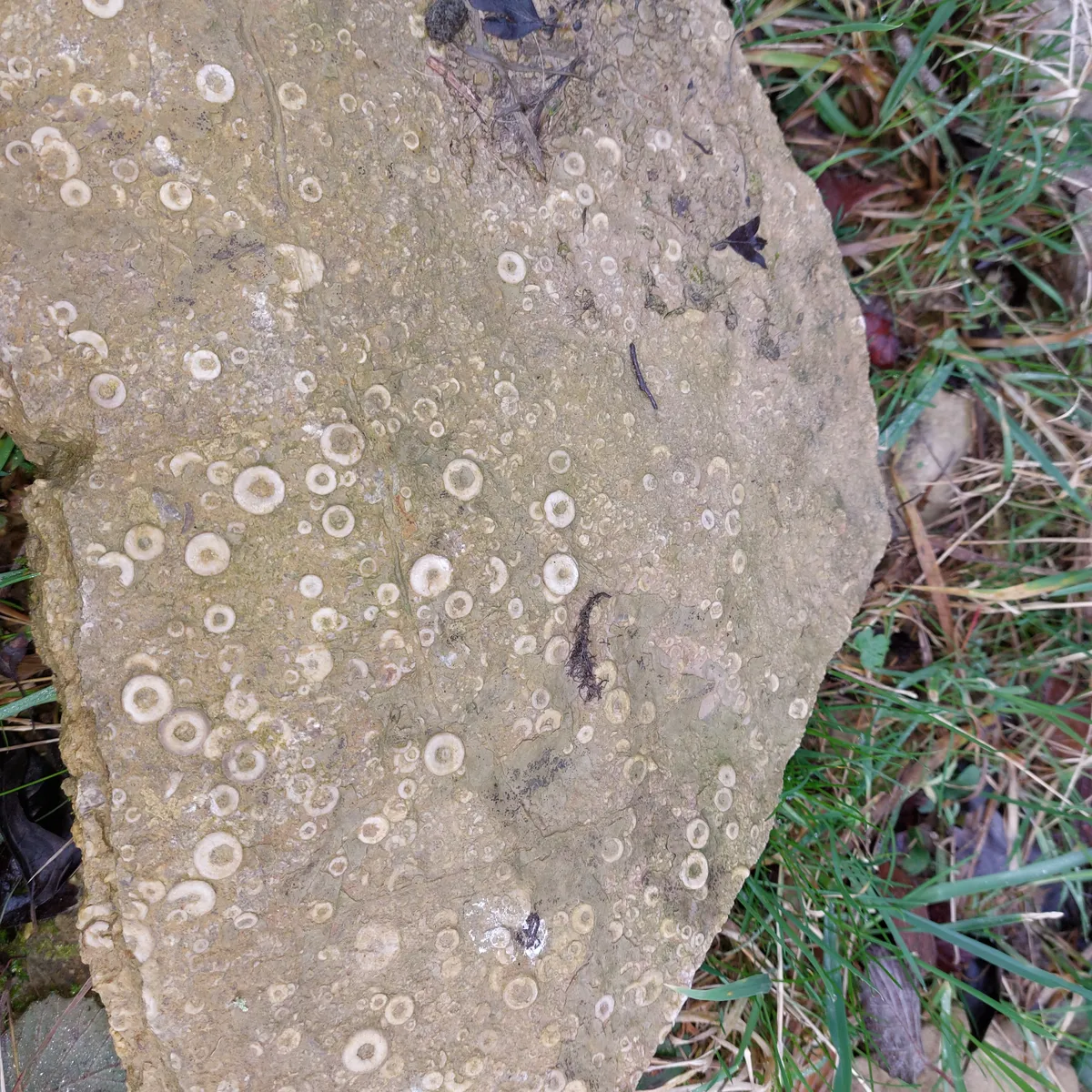
Brachiopod and Crinoid fossil remains, high on a hill in Worcestershire. 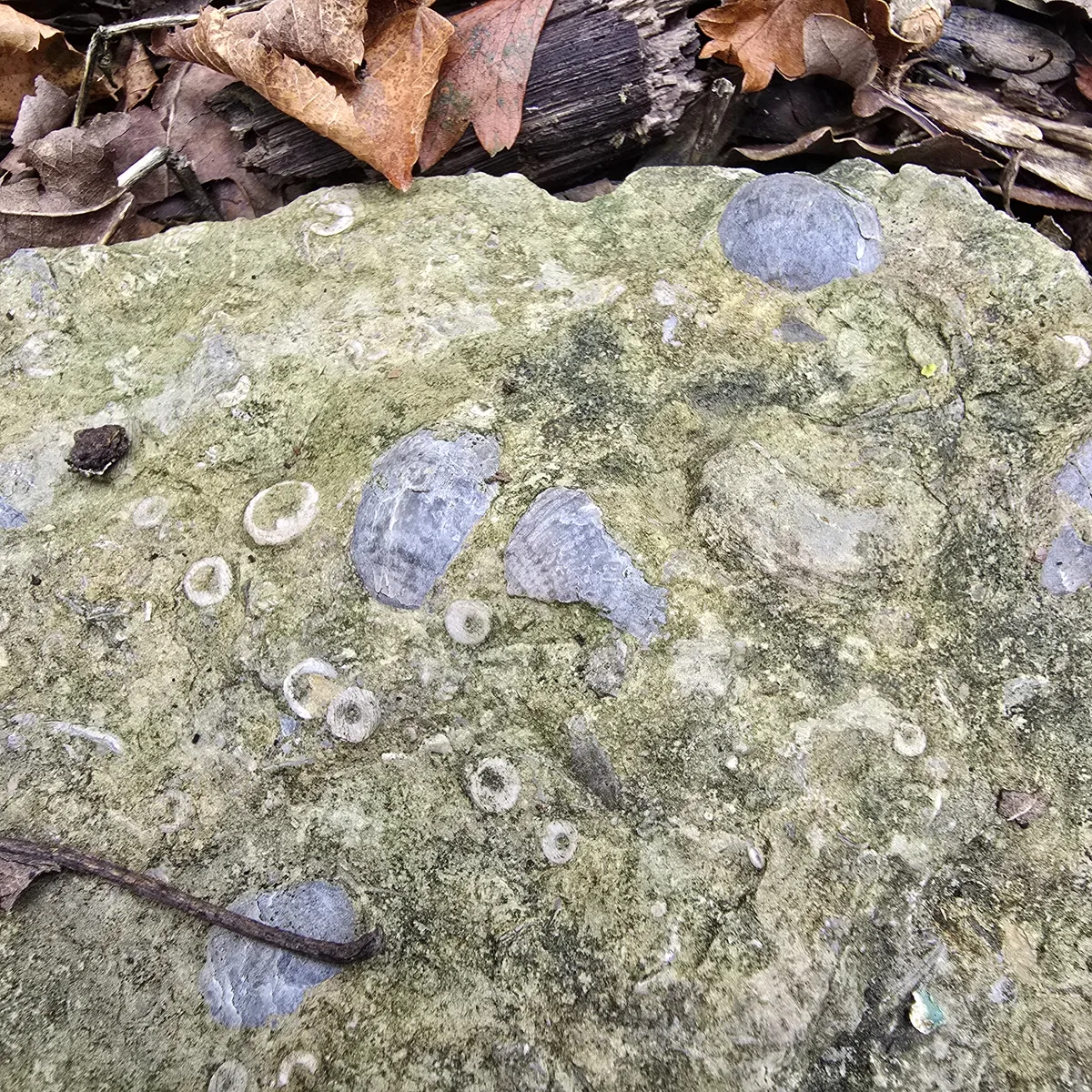
Whilst it’s not the Jurassic Coast in terms of richness of fossils, Worcestershire holds some secrets if you know where to look and often adds an extra dimension to my walks when I’m not looking for more recent (in the last million years) history.