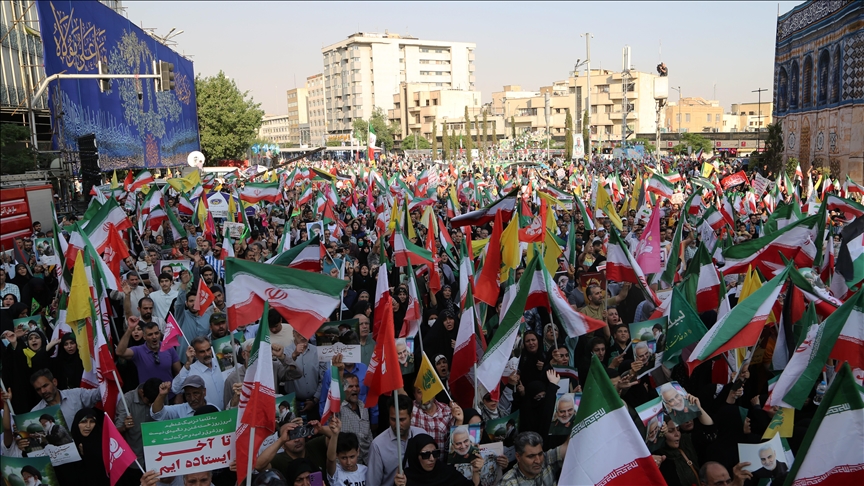
The ongoing protest rallies across Iran show that the accumulated socio-economic discontent in the country has shifted into the political sphere. The developments unfolding in the capital, Tehran, and several major cities have already gone beyond the character of local protests, bringing the issue of legitimacy in state–society relations to the forefront.
The main drivers of the protests are the prolonged economic crisis, high inflation, unemployment, and the deepening of social inequality. While external sanctions have aggravated the situation, the primary target of public dissatisfaction is the inefficiency of domestic governance, the closed nature of decision-making, and the limited opportunities fo…
The ongoing protest rallies across Iran show that the accumulated socio-economic discontent in the country has shifted into the political sphere. The developments unfolding in the capital, Tehran, and several major cities have already gone beyond the character of local protests, bringing the issue of legitimacy in state–society relations to the forefront.
The main drivers of the protests are the prolonged economic crisis, high inflation, unemployment, and the deepening of social inequality. While external sanctions have aggravated the situation, the primary target of public dissatisfaction is the inefficiency of domestic governance, the closed nature of decision-making, and the limited opportunities for public participation. In particular, young people and urban residents believe that the existing political model fails to respond to changing social demands.
The authorities, however, approach the protests mainly through a security lens, presenting the preservation of stability as a priority. While this approach may create short-term control, it narrows the space for dialogue.
In order to comment on the domestic, regional, and global implications of the issue, the APA News Agency held discussions with political analysts from Iran, Türkiye, and the United States. Experts have drawn attention to the potential impact of internal tensions in Iran on the security balance in the Middle East and on global power relations.
The protests are no longer social discontent, but a structural crisis targeting the system’s legitimacy
Iranian political commentator Masud Haray stated that the current wave of protests in Iran differs fundamentally from previous ones and has already moved beyond the stage of classic social dissatisfaction.
Iranian political commentator Masud Haray
According to him, the key distinction of these protests is that they are not limited to socio-economic problems but have turned directly into a political legitimacy crisis: “Previous protests mainly began due to specific and local reasons such as price increases, unemployment, and cuts in subsidies. However, in the current process, the system itself stands at the center of discontent. People have lost confidence in the existing governance model, its legitimacy, and prospects. Especially in the South Azerbaijan region, additional factors such as the denial of national identity, ethnic discrimination by the central authorities, and the systematic violation of language rights further fuel this dissatisfaction. This transforms the protests from a social phenomenon into a structural-political one.”
American political commentator Peter Tase also linked the mass protests in Iran not only to the country’s internal socio-economic crisis but also to new geopolitical realities emerging amid changes in the global political order.

American political commentator Peter Tase
According to him, anti-government protests have now spread widely across Iran’s major cities and all 31 provinces: “Based on available information, at least 150 protesters have lost their lives during the protests. Citizens taking to the streets are protesting against the severe economic and financial crisis that has caused great suffering for the population for many years. A collapsed economy, rising poverty, and corrupt governance are cited as the main causes of mass discontent in the country.”
Peter Tase also does not view the developments as purely social protests: “What we are seeing in Iran is not merely a spontaneous reaction to rising prices, unemployment, and poverty. It is the open manifestation of decades of accumulated anger against the Islamic regime that has ruled the country since 1979. People no longer believe that the current system can lead them into the future economically, politically, or socially, and therefore they are demanding fundamental change.”
Turkish political commentator Emre Diner told APA that the rapidly expanding mass protests in Iran have gone beyond the framework of purely internal social discontent and have become an important issue on the regional and global security agenda.
Turkish political commentator Emre Diner
According to him, protests spanning various provinces of the country demonstrate the deepening political and economic crisis within Iran. According to the Turkish analyst, these protests also indicate that competition among major powers has entered a new phase: “The protests currently observed in Iran are not merely a reaction to economic hardship. This process is the result of deep dissatisfaction directed at the country’s governance model, the sustainability of the regime, and prospects, and it creates serious risks for countries in the region as well.”
From spontaneous reactions to systemic actions
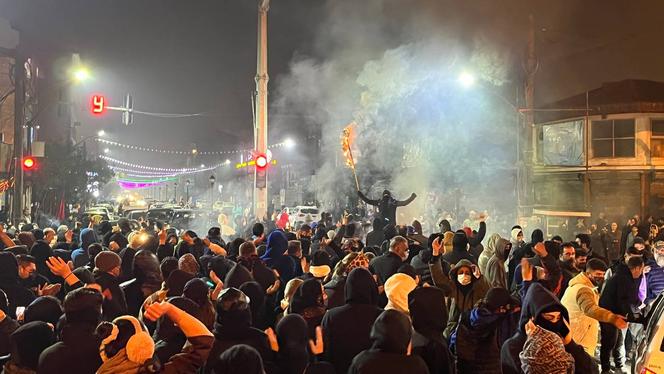
According to Iranian expert Masud Haray, observations show that the protests have already moved beyond the stage of sudden and emotional reactions.
“Today, protests in Iran are not short-term reactions to a specific event. They have turned into a persistent, recurring form of discontent rooted in collective memory. The trust gap that has emerged between the regime and society has long surpassed the level that could be addressed through cosmetic and temporary measures,” he noted.
The commentator emphasized that the geography of the protests is also noteworthy and mainly covers peripheral regions: “Currently, protests are more pronounced in regions populated by Azerbaijanis, Baluchis, and Kurds, as well as in poor urban outskirts. The most important point, however, is the change in the participant profile. This process is not limited to the lower social strata. The middle class, youth, students, and urban intellectuals are also actively participating. This indicates that the main mechanisms that have sustained the Iranian state’s legitimacy for many years – ideological consensus, fear-based security, and social passivity – have significantly weakened.”

Peter Tase believes that within Iranian society, there is a perception that the corrupt ruling elite has for years directed the country’s financial and intellectual resources not toward public welfare, but primarily toward the development of chemical weapons and ballistic and intercontinental nuclear missiles: “This policy has both pushed Iran into international isolation and created a social and humanitarian disaster domestically. People believe that if the current course continues, the country’s future will be destroyed.”
According to Peter Tase, the global economic and political order began to change after 2018.
“The unipolar world model in which the United States played a leading role in international politics has gradually been replaced by a multipolar system, and this process has further increased global instability,” the expert emphasized.
Turkish expert Emre Diner believes that in order to properly assess the current wave of protests, it is essential to look at recent regional confrontations. He recalled that in June 2025, the 12-day war between the US–Israel and Iran brought energy, military, and political issues to the forefront.
Emre Diner said that this confrontation had a serious impact on oil prices and inflation in Iran’s economy, which “caused public anger to spill openly onto the streets.”
How will the protests end?
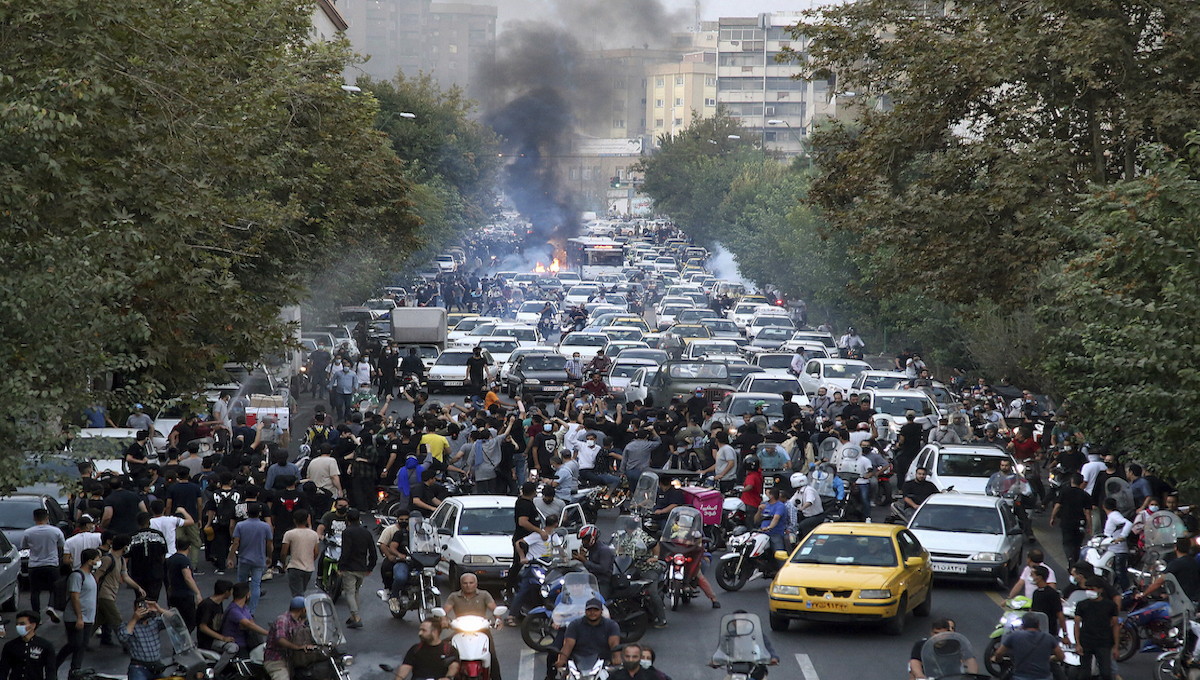
Experts’ views differ regarding the outcomes of the protests in Iran.
According to Iranian expert Masud Haray, the authorities’ resort to harsh security measures in the short term may create relative calm, but this does not resolve the problem: “Harsh repressive steps may temporarily quiet the streets, but this approach does not bring long-term stability. On the contrary, it further reduces the system’s internal flexibility. In this context, the necessity of change in Iran’s existing political model is becoming increasingly inevitable.”
According to American political commentator Peter Tase, protesters are prepared for a long-term struggle: “2026 is regarded as a turning point in global politics, and against the backdrop of international developments, there is a high probability that protests in Iran will continue until the radical Islamic regime collapses. The US leadership also does not rule out the option of delivering unexpected strikes against the country’s military infrastructure in response to the killing of peaceful protesters in Iran’s major cities.”
Regional impact and risks of developments in Iran

According to Iranian political commentator Masud Haray, the disruption of internal stability will directly affect the regional security environment as well: “In particular, the risk of social tension and uncertainty is increasing along the Iran–Azerbaijan and Iran–Türkiye borders. Rising dissatisfaction in South Azerbaijan could weaken the central government’s control over border regions, which may result in smuggling, the activation of non-state actors, and the emergence of local security vacuums.”
According to him, as internal pressure increases, Tehran may be more inclined to pursue a policy of regional escalation to divert attention from domestic problems.
Turkish expert Emre Diner stated that Ankara is following developments in its neighboring Iran “cautiously and carefully.” In his view, from Türkiye’s perspective, Iran is largely regarded as a “stability factor” for the region, and any disruption of this stability could directly affect Ankara’s national security interests.
The commentator stressed that the statements of Foreign Minister Hakan Fidan are of particular importance in understanding Türkiye’s position: “The foreign minister openly stated that the protests in Iran are also being manipulated from abroad. He went even further, emphasizing that Israel’s Foreign Intelligence Service – Mossad – does not hide this. This statement shows that Ankara does not view the processes solely as internal events.”
Recalling the existence of a 560-kilometer border between Türkiye and Iran, the expert said this makes the situation particularly sensitive for Ankara: “A prolonged internal confrontation in Iran could first and foremost create serious risks for Türkiye in terms of refugee flows and illegal migration. Ankara does not want to see a second Lebanon scenario along its borders.”
How does Washington’s position affect the processes?
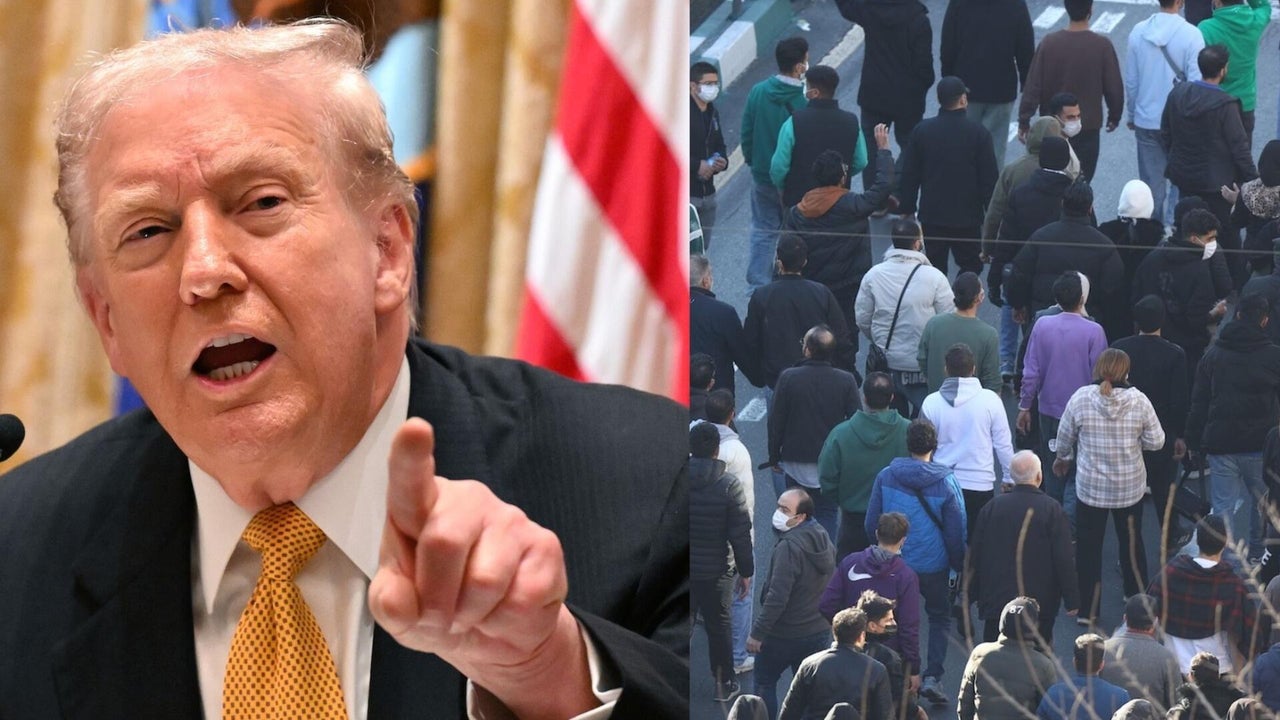
Developments in Iran are being closely monitored by official Washington. US President Donald Trump and Secretary of State Marco Rubio have made several statements expressing support for the protesters.
Donald Trump has also stated explicitly that if Iranian authorities resort to armed intervention against peaceful protesters, the United States would intervene in the process.
American expert Peter Tase noted that according to the approach forming in the US, a democratic Iran with stable institutions that does not support terrorist organizations, including groups such as Hezbollah, is the most optimal model both for the welfare of the country’s population and for long-term peace in the region: “This is one of the key priorities on Washington’s foreign policy agenda.”
The commentator added that the US leadership is sending clear messages to Iran’s religious leaders, and these messages are not limited to words: “Statements and commitments made by President Donald Trump in front of the media are turning into real policy. Although there is some skepticism in the US media, determination is clearly felt in Washington’s military and political actions. The reduction of the US Navy’s presence in the Caribbean indicates that attention will be shifted toward Iran and the Middle East.”
According to him, further deterioration of Iran–US relations could force Tehran to act more cautiously in public rhetoric and to seriously take Washington’s pressure into account: “The US’s high-tech military capabilities, stealth combat aircraft, and precision strike systems have the potential to deliver serious blows to Iran’s defense infrastructure.”
Turkish commentator Emre Diner believes that after US intervention in Venezuela, it was expected that attention would shift to Iran, and what is happening today is a continuation of that strategic line.
“The current situation can be assessed as the ‘economic phase’ that began after the military phase of the confrontation along the US–Israel–Iran axis. This process is being carried out in a planned manner. Israel has been keeping the possibility of regime change in Iran on the agenda for months and has been holding consultations with the US on this issue. The 12-day war was a military projection, while the current protests are the result of economic pressures formed against the backdrop of the fragile ceasefire that emerged after that war,” the expert noted.
The commentator added that the US and Israel are waiting for the moment when Iran is at its weakest internally, and that the next phase may see cyberattacks come to the forefront.
In his view, cyberattacks targeting critical state structures, carried out in parallel with protests, serve to further weaken the regime.