The situation playing out in Venezuela is likely to increase market volatility, especially for energy as the country is a major oil producer
Refineria El Palito, a hydrocarbon refining complex operated by PDVSA, Venezuela’s state oil company, in the city of Puerto Cabello in Carabobo state. NYT
Geopolitical tensions between the US and Venezuela underscore the vulnerability of the global economy and trade to political conflict.
While a full-scale trade war is unlikely in the short term, such disputes can heighten uncertainty and reshape trade policies based on security and strategic considerations.
The long-term impact remains unclear and depends largely on the responses of major powers such as China and Russia.
TENSIONS EXPOSE FRAGILITY
Dhanakorn Kasetrsuwan, chairman of the T…
The situation playing out in Venezuela is likely to increase market volatility, especially for energy as the country is a major oil producer
Refineria El Palito, a hydrocarbon refining complex operated by PDVSA, Venezuela’s state oil company, in the city of Puerto Cabello in Carabobo state. NYT
Geopolitical tensions between the US and Venezuela underscore the vulnerability of the global economy and trade to political conflict.
While a full-scale trade war is unlikely in the short term, such disputes can heighten uncertainty and reshape trade policies based on security and strategic considerations.
The long-term impact remains unclear and depends largely on the responses of major powers such as China and Russia.
TENSIONS EXPOSE FRAGILITY
Dhanakorn Kasetrsuwan, chairman of the Thai National Shippers’ Council (TNSC), said tensions between the US and Venezuela highlight the fragility of geopolitics and the potential impact on the global economy and trade.
While he does not foresee the invasion triggering a new trade war, it could intensify tensions among major powers, especially given China’s influence and its relations with Venezuela.
"Security and geopolitical reasons could be used to design trade policies, which could heighten uncertainty in global trade. However, this is unlikely to lead to a full-scale trade war in the short term," said Mr Dhanakorn.
In the short term, volatility is likely to increase in financial and energy markets, particularly oil prices as Venezuela is a major oil producer, he said.
Heightened geopolitical risks tend to raise the costs of trade, logistics and insurance premiums, with many investors and businesses likely to delay their decisions, which in turn affects global trade sentiment.
In the medium term, if the US implements additional sanctions or puts more pressure on allied countries, adjustments may be needed in energy and certain commodity supply chains, said Mr Dhanakorn.
Global trade may experience greater economic decoupling as countries choose sides or attempt to maintain a balanced approach, he said.
Energy price volatility will influence inflation and purchasing power in many countries, said Mr Dhanakorn.
In the long term, tensions between the US and Venezuela may accelerate the shift from globalisation to regionalisation and "friend-shoring", he said.
"The direction of trade and investment will be influenced more by international politics than market mechanisms. Uncertainty will become the new normal for global trade," said Mr Dhanakorn.
The TNSC believes the effect for Thailand of the invasion is volatility in global trade, energy prices, exchange rates and logistics costs, potentially influencing orders and the long-term strategies of foreign trading partners.
He identified sectors poised to face significant impacts due to these conditions, with industries reliant on energy such as chemicals, petrochemicals, steel and plastics particularly vulnerable to fluctuations in energy and raw materials costs.
Meanwhile, industries dependent on trade with the US and China such as electronics, electrical appliances and auto parts could be hampered if economic slowdowns occur in these markets or if additional trade barriers are imposed.
Certain food and agricultural products will also be affected by possible increases in logistics costs and exchange rate fluctuations, said Mr Dhanakorn.
To mitigate the impacts, he advised exporters to diversify their markets and trading partners rather than overdependence on a single country.
Exporters should also monitor geopolitical developments and trade policies, as well as implement effective risk management strategies for exchange rates and energy costs, said Mr Dhanakorn.
"To enhance business flexibility, exporters should consider utilising short-term contracts or negotiating price conditions aligning with the current environment. Adding value to products and exploring potential niche markets is essential," he said.
Mr Dhanakorn urged the government to accelerate efforts to open new export markets, manage energy and logistics costs, and provide effective tools to help Thai exporters tackle financial and exchange rate risks.
UNCERTAIN OUTLOOK
The US-Venezuela conflict may have unintended consequences for the global economy and geopolitics, depending on how other major powers respond to Washington’s controversial move against Caracas, said Kriengkrai Thiennukul, chairman of the Federation of Thai Industries.
"The long-term impact is not clear now," he said.
"We have to see how China and Russia react."
Mr Kriengkrai said the US military operation could pave the way for American oil companies to operate in Venezuela, affecting global crude oil prices and benefiting the US economy.
"US President Donald Trump wants to see global oil prices at US$60 a barrel, helping him cap surging inflation, which is an affliction for the US economy," he said.
Lower global oil prices would also help Washington’s geopolitical efforts, said Mr Kriengkrai.
"The US may want to weaken Russia’s attacks on Ukraine. If global oil prices remain low, Russia cannot earn as much money from its oil exports, affecting its financial support of military operations," he said.
Tensions in Latin America are likely to have indirect impacts on Thailand’s manufacturing sector, as global supply chains may be disrupted and energy prices may fluctuate, added Mr Kriengkrai, increasing manufacturers’ operating costs.
OIL PRICE DECLINE
Caretaker energy minister Auttapol Rerkpiboon said global crude oil prices could decline in the long term following the US intervention in Venezuela’s oil sector.
His remarks came after Trump confirmed Washington’s military operation to detain Venezuelan President Nicolás Maduro.
Trump pledged American oil companies would move quickly to repair Venezuela’s "broken infrastructure" and restore profitability, according to media reports.
Mr Auttapol said if the operation does not trigger wider violence or regional conflict, Venezuela could increase supply to the global market, exerting downward pressure on crude prices.
"This depends largely on effective US management, which could lead to higher production," he said, adding this shift would take time to materialise given the complexity of oil extraction processes.
Thai energy authorities are monitoring developments. The US claims Mr Maduro has links to the Cartel de los Soles criminal network, designated by Washington as a foreign terrorist organisation.
Global oil prices have remained stable thus far.
Veerapat Kiatfuengfu, deputy energy permanent secretary, said if the situation escalates, Thailand would consider increasing domestic oil reserves to cushion against price volatility.
Thailand sources nearly all of its crude oil from the Middle East, Southeast Asia and parts of Africa, with minimal imports arriving from Latin America. Some Thai companies previously purchased Venezuelan crude for asphalt production.
Venezuela’s reserves consist largely of heavy crude, which is thick and viscous, yielding products such as asphalt, fuel oils, lubricants and bitumen.
With advanced refining processes, heavy crude can be converted into lighter fuels such as diesel, jet fuel and gasoline, though at higher cost than light crude.
According to Opec, Venezuela had 303 billion barrels of proven reserves in 2024, accounting for about one‑fifth of global supply. Saudi Arabia ranked second with 267 billion barrels, followed by Iran with 209 billion barrels.
BLACK SWAN RISKS
Analysts say gold and oil prices are expected to remain on an upward trajectory in 2026 as escalating geopolitical tensions add fresh volatility to global markets, citing renewed conflict risks, supply constraints and a gradual shift by central banks away from the US dollar.
Warut Rungkam, director of analysis at YLG Bullion & Futures, said the US-Venezuela conflict remains a positive factor for gold prices, as it is a relatively new development with the "potential to drag on".
However, he warned of "black swan" risks – unpredictable events that could sharply amplify market volatility.
"The real concern is whether other major powers such as China or Russia become more directly involved," Mr Warut said.
Scenarios such as violations of sovereignty, naval blockades or broader clashes between global power blocs could have rapid and far-reaching impacts on markets.
"If conflicts expand, gold’s attraction as a safe-haven asset could surge sharply," he said.
Mr Warut said signs such as troop movements, naval deployments or shipping disruptions tend to have a more immediate and visible impact on market sentiment than traditional economic indicators, often triggering swift and significant rallies in gold prices.
Looking ahead, investors are also awaiting the appointment of a new US Federal Reserve chairman later in the year, which could influence interest rate expectations, which affect gold prices.
However, sudden political crises are likely to have a stronger and more immediate impact than monetary policy signals, he said.
Nuttakrit Laothaweesup, senior director of Tisco Wealth, said geopolitical risk has emerged as one of the leading investment threats in 2026, overtaking concerns over trade wars that dominated 2025.
Tensions intensified following the recent US military operation in Venezuela, underscoring how political flashpoints can quickly spill over into financial markets, he said.
"While we do not expect these tensions to escalate into a third world war, geopolitical shocks are likely to remain a recurring factor affecting investments," Mr Nuttakrit said.
Certain sectors could benefit, particularly energy, as oil supply disruptions tend to push prices higher.
"Although Venezuela has the potential to increase oil production, restoring output would likely take at least two years, leaving near-term supply tight at a time when tensions are already driving prices up," he said.
Meanwhile, gold continues to serve as a hedge against uncertainty. Demand for the precious metal has been supported by central banks worldwide seeking to diversify reserves and reduce reliance on the dollar.
"This structural demand, combined with geopolitical risks, suggests gold prices will remain volatile, though biased to the upside," said Mr Nuttakrit.
He said China is unlikely to engage in direct military conflict this year.
"Beijing remains focused on stabilising its domestic economy, particularly its troubled property sector," said Mr Nuttakrit.
"As a result, a direct US-China war is unlikely, although trade-related tensions could persist."
LIMITED DIRECT IMPACT
Krungthai Compass, a research centre under Krungthai Bank, said the direct trade impact of the Venezuela invasion on Thailand’s economy is limited, given weak trade links between the countries.
However, indirect effects from the operation could emerge over the medium term, noted the think tank.
In the short term, the baht may experience heightened volatility, while for the medium to long term, a potential decline in global oil prices could support baht appreciation as Thailand’s demand for US dollars for energy imports eases.
Energy prices are another key consideration. If global oil prices fall as a result of increased supply following successful US efforts to expand oil production in Venezuela, this could help reduce Thailand’s energy costs and ease inflationary pressures, the research house said.
Lower oil prices could also weigh on agricultural commodity prices. Products such as rice, rubber and palm oil may face downward pressure, which would negatively affect farm incomes.
Rising geopolitical risks remain a concern, as intensifying power rivalries could strain the trade environment, compounding challenges for Thai exporters who already face headwinds from ongoing trade conflicts, noted Krungthai Compass.
"Although the direct economic impact on Thailand is limited, escalating geopolitical tensions represent a key risk that requires careful monitoring and preparedness," said the think tank.
On the policy front, maintaining geopolitical neutrality is crucial to balancing international relations.
The government should accelerate efforts to diversify export markets and create new trade opportunities through free trade agreements with emerging partners, while strengthening cooperation within Asean to lift intra-regional trade and investment, noted Krungthai Compass.
Authorities should be prepared to manage potential volatility in energy and agricultural prices, while ensuring the Oil Fuel Fund is adequately equipped to cushion shocks, said the research house.
For businesses, greater emphasis on supply chain management and market diversification is essential, said Krungthai Compass.
Companies need strategies to mitigate risks from supply disruptions, exchange rate volatility and commodity price swings through better cost management and more resilient supply chains.
Expanding exports to high-potential markets such as Southeast Asia, South Asia, the Middle East and Eastern Europe could help reduce exposure to geopolitical fragmentation and intensifying global tensions, noted the think tank.
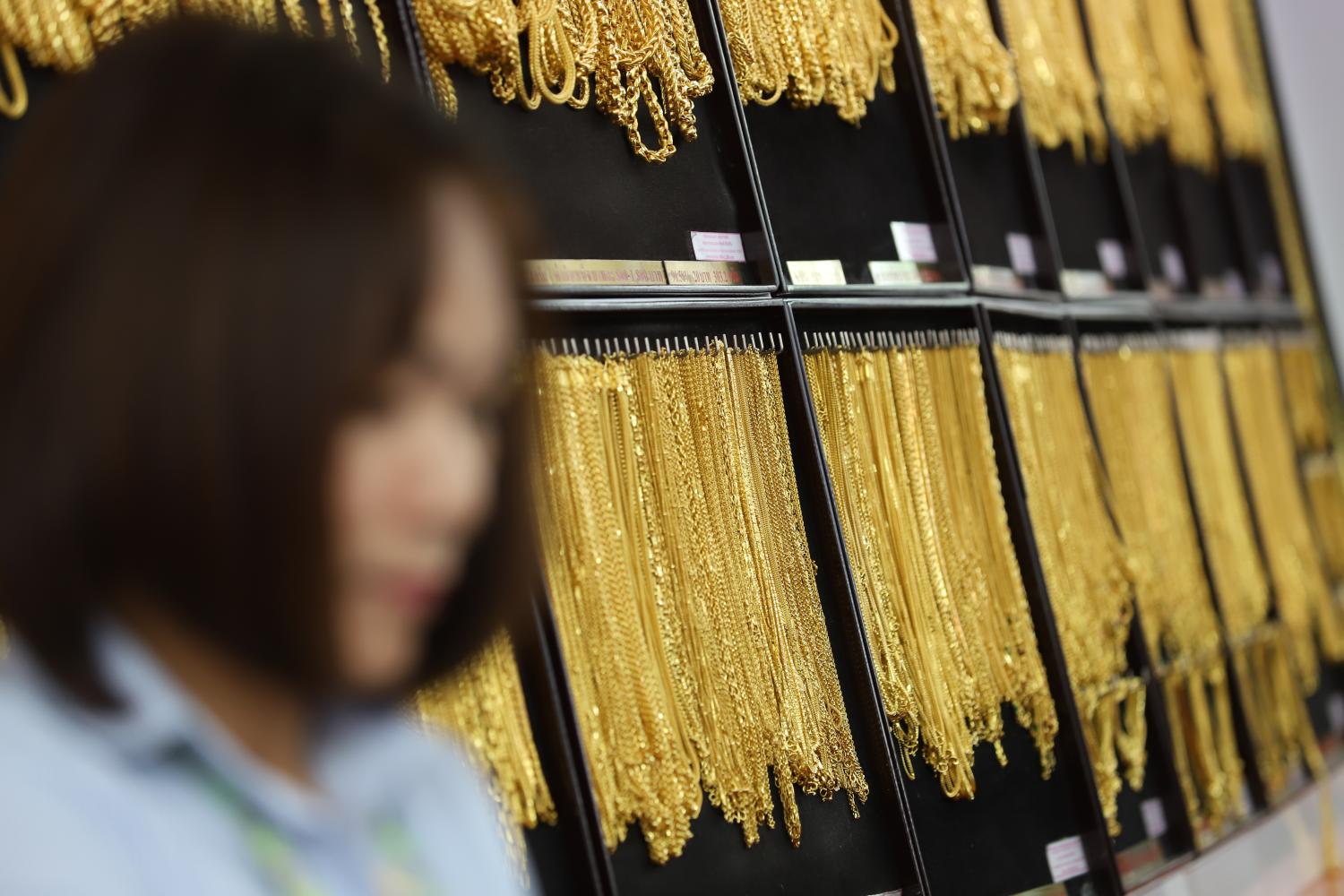
Gold and oil prices are expected to continue to rise this year as escalating geopolitical tensions fuel market volatility. Somchai Poomlard