This review is long over due. I have had the R3 Blade in rotation for over a year, I also used it exclusively on a 12-day trip to Japan. So by now I know it pretty well.
Quick Take
It looks and feels premium: dense metal, crisp machining, magnets everywhere on the catch cup. This thing punches way above its price.
It has a solid stock performance – but there’s even a surprisingly strong upgrade path for tinkerers! Recently I found out that you can replace the stock cone burr and slot in a 48 mm alternative like Kinu’s pour-over burr. That makes it even more interesting in my opinion. Before it was an excellent beginner/intermediate grinder, but now there is a clear upgrade great path if you ever get tired of the stock flavors.

First Impressions
The build screams flagship: all-metal body, tight tolerances, smooth bearings and a long handle that adds real leverage.
The magnetic catch cup locks with authority and has more magnets than all its pricier rivals. External adjustment is nice. And there are 60 clicks per rotation in 16-micron steps.
Ergonomically it’s grippy and stable in hand. The only off note is the faux-wood knob that can creak a little during fast cranking; a decent compromise at this price level.
How It Fits in the Market
It feels like a spiritual successor to the 1Zpresso JX: simple, fast enough, dependable — but with nicer touches like the magnetic cup and optional sifting screens.
However, compared to more aesthetic rivals like Comandante C40 1Zpresso K-Ultra, the R3 Blade feels a bit less polished.
What I Liked
- Smooth bearings, long handle, excellent leverage
- Magnetic catch cup that locks firmly and cleanly
- External adjustment with fine steps for espresso and filter
- Detachable inner burr: You can use other 48 mm cone burrs!
- Nice, sweet cups with a good all-round performance
- The built-in (but optional) sieves (while I don’t use it much, it still deserves credit for being innovative)
What I Didn’t
- Branding and “militaristic” naming aren’t my vibe
- Faux-wood knob can creak and feels less premium
- Static without RDT is common
- Without some kind of of revolution counter, it’s hard to know what rotation you’re at. They should look to Kingrinder and 1Zpresso for inspiration here.
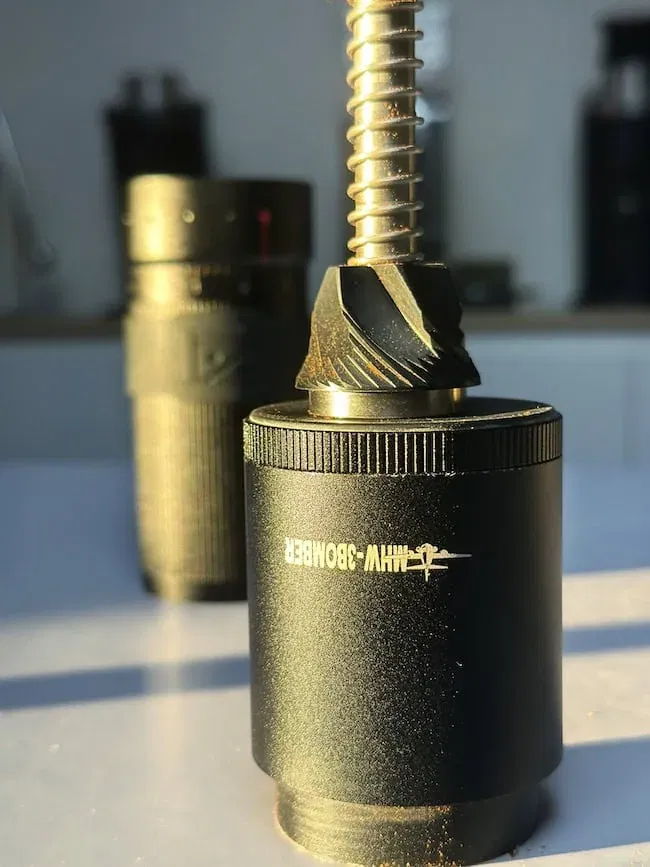
Live from the Testing Bench
After receiving interest from followers on YouTube about how the R3 blade with POB (Pour Over Burrs) compares to the Kinu M47 with POB, I conducted a series of side-by-side tests with my Hario Switch setup.
-
Test 1: Initial Dial-In
-
I started by dialing both grinders to match drawdown time and TDS.
-
Result: Too close to call. The cups tasted remarkably similar.
-
Test 2: Pacamara Coffee
-
Blind tasting: I preferred the R3 blade. It was sweeter and richer.
-
Despite the Kinu M47 having a slower drawdown (about 5 seconds longer), its TDS measured 0.05 to 0.07 lower than the R3 blade.
-
Higher TDS usually creates an advantage in blind comparisons, so I didn’t too much emphasis on this result. Maybe something was off in my brewing/methodology.
-
Test 3: Different Coffee, Same Settings
-
I kept grind settings identical and switched coffees to verify the pattern.
-
Result: Again, I preferred the R3 blade blind, and again it measured 0.05 to 0.07 higher in TDS.
-
This time I had ensured that verified that exactly the same amount of coffee beans were brewed down to the second decimal. Despite the TDS difference potentially skewing results, the flavor profiles remained incredibly similar between the two grinders.
-
Test 4: Adjusted for TDS Matching
-
I ground finer on the Kinu Phoenix to better match TDS and used a premium washed Panama Geisha (rose, peach, lemon iced tea, honey, silky body).
-
This time the difference was clear: I preferred the R3 blade by a wide margin.
-
The R3 produced a juicy, balanced cup with silky body, clear flavor notes, and pleasing acidity.
-
The Kinu M47 showed similar flavor notes but was less sweet, more hollow, and noticeably astringent. Not a great cup.
-
TDS measurements confirmed they were within my preferred margin of error (0.01 to 0.02 difference), making this a valid comparison.
Context Worth Noting: All tests were conducted at relatively fine grind sizes optimized for my two-pour Hario Switch technique. POB enthusiasts typically prefer coarser settings, where the M47 is known to excel. Additionally, my R3 uses the older Kinu cone burr with black coating, while the M47 has the newer golden-coated version (which is also less seasoned, having been acquired specifically for this comparison).
Summary: Across these tests, I’ve shown a consistent preference for the R3 blade with POB.
However, the real question wasn’t really whether one setup dominates across all parameters, but rather: Is the R3 a suitable carrier for POB? Is it worth buying that additional cone burr to experiment?
From what I’ve seen, the answer is yes! The R3 produces very enjoyable pour over with POB installed.
A bonus is that the espresso is also quite good with an interesting texture. It even grinds faster than with the stock burr (a plus for me), though it does require considerably more torque, which is worth keeping in mind. If you have lower grip strength the stock burr is preferable.
Unresolved Questions
I still haven’t found the optimal use-cases for sifting. The included screens can help clarity for pour-over, but results vary and you can lose body if overused.
How good is the POB + R3 at coarse-to-ultra coarse grind setttings? Is it even better than the Kinu M47 here?
 The R3 Blade comes with several different sieves/screens that can be screwed into the catch cup
First Sip Verdict
Buy if you want a budget grinder that can do everything reasonably well while offering a premium UX.
Stock burrs deliver sweet, blended cups that are forgiving across roast levels. For espresso the flavor profile is a bit muddy with tendency to astringency on medium and light roasts.
But add a Kinu 48 mm pour-over burr and it gets faster and cleaner for both espresso and filter.
If you value aesthetics or ultimate light-roast clarity, look to higher-end options; otherwise this is one of my top picks at its price range.
Alternatives & Links
- Mavo Phantox Pro – a better option for clarity and light roasts
- See my manual grinder round-up for many more options!
Specs
-
Burr geometry / material / size: 48 mm with a 32 mm cone, stainless steel. Works with several other cone burrs; for example those from Italmill and Kinu
-
Grind range: espresso through filter; 60 clicks per rotation in 16 µm steps
-
Grind time (espresso & filter): stock ~50–60 s for 16 g espresso depending on roast level; ~30 s for 15 g pour-over
-
with Kinu 48 mm POB ~40 s for 16 g espresso!
-
Capacity: ~30 g
-
Price: budget tier, notably cheaper than most “flagship-feel” competitors