You think you’ve made the deal of a lifetime, and it turns out it could have been even better. And at a certain age, those strong emotions can be dangerous, as Mauri Oliveira, a 66-year-old Brazilian coffee producer, can attest to. Owner of the Campestre estate, he speaks with delight about the ritual he shares with other landowners every full moon night. They have dinner at one of the estates before embarking on a horseback ride by the light of the moon along the trails. Since the price of coffee began to skyrocket to unimaginable levels even for the most veteran growers, its causes and effects have been dominating conversations. The swings are so dramatic that one of his riding companions had to be hospitalized because of the shock to his heart. It turns out he sold his entire harv…
You think you’ve made the deal of a lifetime, and it turns out it could have been even better. And at a certain age, those strong emotions can be dangerous, as Mauri Oliveira, a 66-year-old Brazilian coffee producer, can attest to. Owner of the Campestre estate, he speaks with delight about the ritual he shares with other landowners every full moon night. They have dinner at one of the estates before embarking on a horseback ride by the light of the moon along the trails. Since the price of coffee began to skyrocket to unimaginable levels even for the most veteran growers, its causes and effects have been dominating conversations. The swings are so dramatic that one of his riding companions had to be hospitalized because of the shock to his heart. It turns out he sold his entire harvest one day for a hefty profit, only to discover 24 hours later that if he had waited, he could have multiplied his earnings.
Some characteristics remain unchanged in the world of coffee. Those who enjoy it wouldn’t trade it for anything. And those who cultivate it have lived, for centuries, subjected to the vagaries of the weather. But the last few years have brought profound changes. The sector is experiencing an extraordinary situation with prices unimaginable just a short time ago. The cause? Three years of poor harvests depleted stocks, and the global supply could barely meet demand in 2024. To the ravages caused by the weather—increasingly frequent heat waves, droughts, and frosts—are added Trump’s trade war and the whims of investment funds, which have set their sights on this bean whose demand has fluctuated throughout history, but has never stopped growing. Because it doesn’t matter if it’s drunk with or without milk, with or without sugar, filtered or brewed: history proves that no one quits drinking coffee because of the price. They’ll drink less of it, or of lower quality.
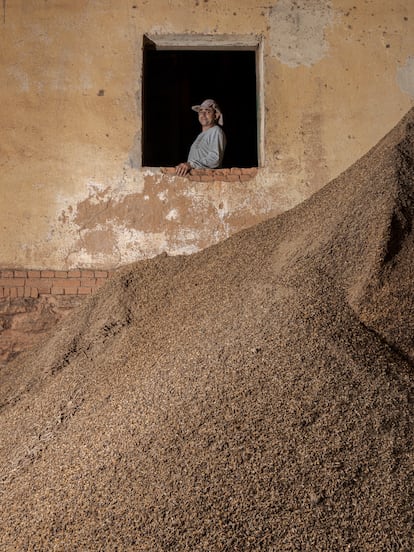
The long chain that brings coffee to our tables—cultivation, bean selection, export/import, transportation, roasting and marketing—begins on an estate like Oliveiras’, in the heart of Brazil’s coffee-growing region. The strong, calloused hands of 72-year-old Mauri Oliveira and his sun-weathered face reflect a lifetime dedicated to cultivating the bean on the Campestre estate, which he inherited from his mother and manages with his daughters. Although coffee prices on the New York Stock Exchange are at unprecedented levels (a 60-kilo sack reached $445 in May, double the price a year earlier, before moderating to $390), the atmosphere here is far from euphoric. Current prices are a source of concern. “We would have preferred not to have lost 40% of the harvest [due to the drought] and for prices not to be so high. It’s better to have a stable market with the price per sack at 2,000 reais [US$340], which is already a good profit, than to have it at 3,000 and not have any coffee to harvest,” says the eldest daughter, Noemia Oliveira, 36. In love with coffee plantations since she was a little girl accompanying her grandfather, she is an agronomist. She expanded on what she learned on the property at university.
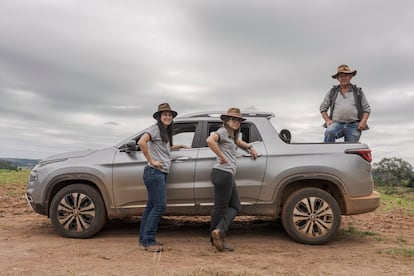
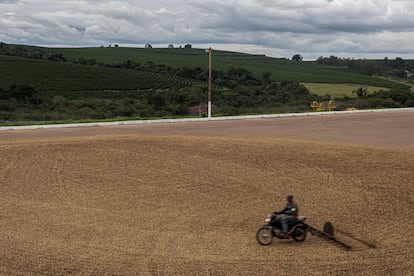
This cloudy Monday in May, the Oliveira family, like all coffee growers in Brazil, is finalizing preparations for the most important time of the year: the harvest. Thousands of plants, taller than an adult, rise in winding rows across gentle hills spanning 150 hectares. The family had planned to begin the manual harvest this morning, to be followed by the use of machinery, but last night’s rain ruined their plans. They decide to wait for the ground to dry to prevent the falling beans from getting wet. On average, they produce 5,000 sacks a year.
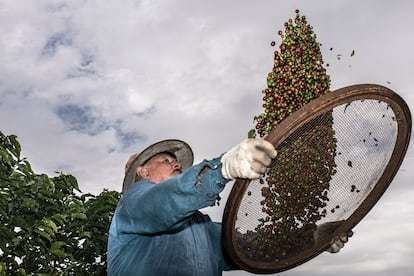
The Flows of History. Coffee was already a prized beverage in 1727, when Brazil sent a spy, Sergeant Francisco Palheta, to French Guiana on a secret mission to steal a coffee plant. It proved to be a brilliant gamble, as Brazil became the world’s leading coffee producer, a position it has held for a century and a half. Today, it supplies a third of the global market. Together with Vietnam, they account for half of the world’s production. With prices soaring, expectations are enormous for the current harvest.
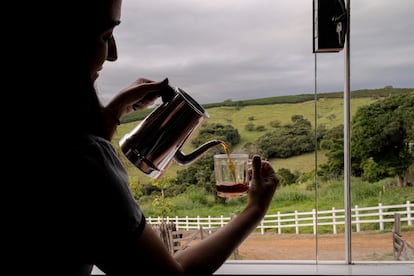
Traditionally, coffee yields a good harvest one year and a smaller one the following year. This year, 2025, is expected to be a poor one. The price has skyrocketed because global stocks are at historic lows due to a lack or excess of rain, and extreme cold or heat. The drought has reduced the supply from Brazil and Vietnam by 10 million bags (equivalent to 6% of global consumption), a pressing problem when supply barely exceeds demand.
The already volatile market received another major shock in August. The United States, the primary destination for Brazilian coffee, imposed exorbitant tariffs (50%), and in the blink of an eye, exports there plummeted by half, while Germany took off as an alternative. Any such shock reverberates throughout the entire production chain, from the Oliveira family’s farm to the coffee shops of Madrid, Malmö, or Kyoto.
Mauri Oliveira grew up on this farm in Varginhas, the Brazilian city that exports the most coffee, famous for the alleged extraterrestrial sighting in the 1990s. Brazil’s most internationally renowned figure, the soccer legend Pelé, was born nearby, in the southern part of the state of Minas Gerais, which has offered privileged conditions for coffee cultivation for decades: an altitude of 900-1,100 meters, an average temperature of 23 degrees Celsius, and approximately 1,200 millimeters of annual rainfall.
But the weather has become unpredictable. The Oliveira family and their neighbors are constantly on edge because the coffee plant is extremely sensitive to sudden changes in the weather. The damage doesn’t kill it, but it stops producing. Each stage of its development requires a specific combination of rain, cold, and heat, in a climate calendar that no longer follows the same pattern as before. “Before, it rained at the right time, starting in August. Now the rain comes later, and the sun is too hot. And since we had 15 years without frost, people thought there wouldn’t be any more, they became complacent and started planting in lower-lying areas. And in 2021, a frost hit that ruined many people,” explains the patriarch.
Everyone in the industry remembers the 2020-2021 harvest, the most abundant in history, with 63 million sacks. Since then, adverse weather conditions have dictated the course of the business in Brazil. Three years of setbacks in the form of droughts, heat waves, and frosts. The Oliveira family recalls that in 2024 they went more than 100 days without rain. The 20 days without a drop last January were the final blow. The result? They expected to harvest 90 sacks per hectare, but they will have to settle for 65. The series of problems translates into fewer grains, of lower quality and weight. This is one of the reasons why producers in these lands haven’t become rich from these extraordinary prices.
With prices so high, insecurity is rampant. As reports of coffee theft multiply, growers are quickly sending their shipments to cooperatives to ensure they are covered by insurance.
Producers working on smaller margins missed out on the biggest benefits of this coffee boom because by the peak of prices in February 2025, they had already sold their harvest. They needed fresh cash to pay off loans and other expenses. “Those who make a lot of money are the ones trading on the stock exchange,” says Naiara Oliveira, the youngest daughter, 33, the numbers lady at the Campestre estate. While her sister and father are constantly watching the skies, she’s glued to her phone, whether it’s to sell a lot, check the daily price in New York, or look at cooperatives’ offers. She just finished a course to better understand international price fluctuations and capitalize on export potential. She records every expense and income in Excel spreadsheets.
The daughters’ participation into the business guarantees its continuity. And it has brought about a small revolution. First, because they are women. Their grandmother had to wait until marriage to own the estate. With the granddaughters has come innovation to this property, which is medium-sized by the standards of Brazil—a country with 300,000 coffee-growing properties ranging from tiny family plots to vast estates owned by corporations.
Alongside mechanization and other changes to improve productivity, the agronomist Noemia has incorporated innovative practices to mitigate the impact of climate change, one of her biggest concerns. “We wanted to move beyond the obvious, the traditional. Now we know that this mix of plants we plant between the rows of coffee trees helps us block the wind, prevent leaf damage from pests, and that greater diversity means less risk of disease,” she explains. They apply the latest in regenerative agriculture to reduce their environmental impact. They rely on more natural fertilizers and fewer pesticides, interplanting plants that provide nitrogen and capture carbon dioxide, using techniques to reduce water evaporation from the coffee plantation, and minimizing soil erosion.
When it comes to the estate, Mauri Oliveira always has the final say in this intergenerational team that has given a strong boost to production. One of the strategies to persuade his father is to test the waters on one hectare. If it works, they expand. Here, unlike in the north, few farms are irrigated. It was unnecessary, but the Oliveiras are already considering investing in irrigation because that would eliminate one of the many unpredictable factors they deal with daily.
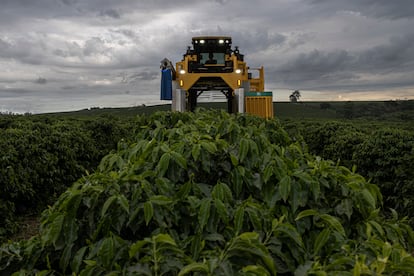
The most senior employee, 73-year-old Antonio Davanzo, who has worked here for four decades, overcomes his shyness to praise mechanization. “Before, all the work was done by hand, and now it’s much less hard,” murmurs this farmer who, along with his wife, Filomena, and their children, makes up one of the several settler families living in charming little houses with orchards. Permanent workers like these at the Campestre estate are a rarity, a treasure in times when the lack of labor is one of the sector’s biggest burdens.
The Oliveira family sells the bulk of the coffee to a cooperative and the rest —the highest quality, 84 points— is exported directly to the United Kingdom, where it is sold as gourmet coffee with “red apple and dark chocolate flavor”.
Widespread Speculation Without the bean that seduced Europeans and was discovered in Ethiopia in the 1st century, Latin America’s leading power would not be what it is today. Coffee financed industrialization. The coffee barons provided the impetus that transformed São Paulo into the largest metropolis in the Global South; their mansions lined the main avenue. They sponsored the arts. The family of Tarsila do Amaral (1886-1973), Brazil’s most internationally renowned painter, cultivated coffee, and with the boom, they were able to send her to study drawing in Paris. The 1929 crash dragged down the coffee market, ruined the Amaral family, and the catastrophe changed Tarsila’s work. She abandoned bucolic rural landscapes for a somber, urban style.
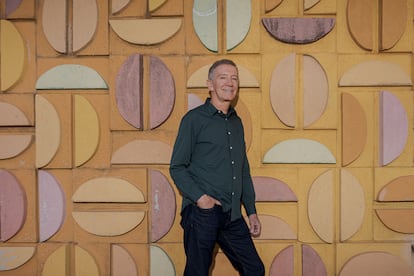
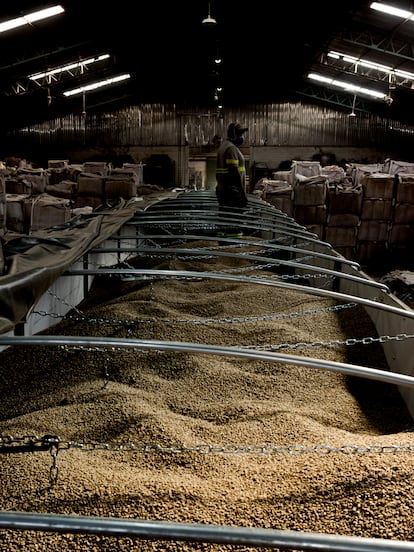
The enormous warehouses of the Cocatrel cooperative (with 9,000 members, exporting to 40 countries) look utterly desolate. In 2024, it handled 2.3 million sacks, but now the stock has plummeted due to poor harvests and because the market incentivizes quick sales.
Chico Pereira, 58, the marketing manager, remembers the bitter times when coffee growers wept upon hearing the price. “They sold out of necessity, holding on in the hope that the price would rise. But things have changed; now they also sell when it’s an opportunity.” The cooperative receives the grain at a vast network of warehouses to first assess its size and quality. Within 24 hours, the grower will have a quality report and an estimated price for the load on a mobile app. He or she decides how much, when, and to whom to sell. “We have a liquidity commitment. We work hard to sell today because tomorrow the price could drop a thousand points,” says Pereira.
A couple of years ago the market turned around, and forward sales (agreeing on a date and price for delivery of goods at a later date) began to offer worse prices than selling immediately. This has decimated stock levels and driven many exporters into bankruptcy.
Investment funds have burst onto the coffee scene like an atomic bomb. Their movements are distorting a market that was regulated by supply, demand, and stocks. The uncertainty is colossal, Pereira emphasizes, months before Trump launched the trade war. “Nobody in the world knows what will happen in the coming months, or even today. Tomorrow, large funds could see that another commodity performs better and go buy gold, oil, or anything else. That would cause a very sharp drop.”
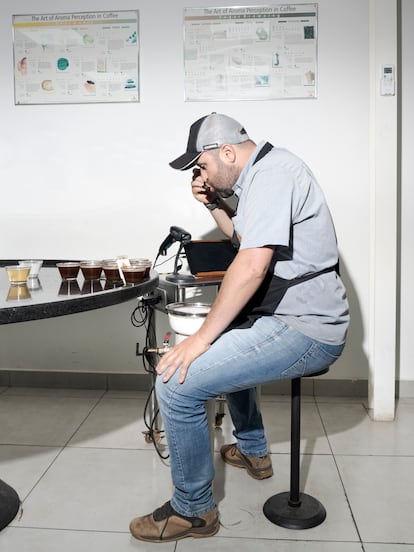
Back to the tangible, the tasters evaluate the samples. They examine the beans and then taste the beverage with quick, almost mechanical movements. They sip loudly from a small glass, savor the flavor, and immediately spit it out. No machine can replace the palate. But it can replace many other tasks. Those lines of 1,500 trucks that, at the peak of the harvest, waited three days to deliver their loads are now a thing of the past. Mechanization has streamlined and expanded the business, which is seeking new markets.
European consumers demand specialty coffees, produced sustainably (for the environment and the workers) and by women. Tchaikovsky Amaral, 32, who manages sustainable coffee at the Cocatrel cooperative, explains that obtaining the label requires compliance with regulations on pesticides, traceability, and decent working conditions for workers. They have just designed a plan to mitigate risks in anticipation of the entry into force, in 2026, of a European Union law that will ban coffee (and other raw materials) from areas deforested after 2020.
Oliveira, from the Campestre estate, would also appreciate the implementation of a minimum price. In 1906, when overproduction flooded the coffee market, Brazil devised a price stabilization plan. It intervened in the market. Coffee-producing states bought surplus coffee, restricted the planting of new crops, and regulated exports. It was successful.
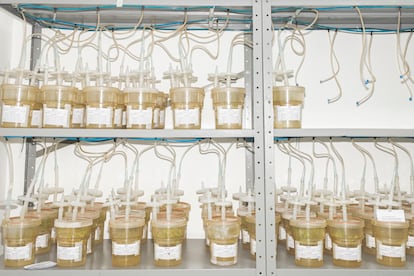
Innovation and Development. Coffee is so vital to the economy that, since imperial times, the authorities have invested in science to improve production. This laboratory in Varginha has developed, through cloning, 40 new varieties of plants that are longer-lived, produce more, are more resistant to fungi, respond better to pruning, or yield fleshier fruit.
Now they’re paying close attention to the heat. “We’re looking for varieties that better withstand heat stress,” explains Carlos Henrique de Carvalho, a 69-year-old agronomist with Embrapa, the public agricultural research agency. But he admits that, “when it reaches 38 degrees Celsius, there’s nothing we can do.” The techniques the Oliveiras use to mitigate the impact of climate change were developed by scientists like De Carvalho, spread throughout the coffee-growing regions. Even Starbucks has a research lab in the city. De Carvalho jokes that locals are unfamiliar with the powerful franchise: “For people here, it’s just an airport coffee shop.”
In these lands, which voted for Jair Bolsonaro in the last presidential election, no one denies that the climate is erratic. They acknowledge the drastic climate change without delving into the causes. Talking about global warming or the effects of human activity is slippery ground.
André Casotti Brito, 31, owns the Pinheiros property, a showcase of cutting-edge techniques ever since his father, a mechanical engineer, traveled to Japan to learn. Here, the harvest is in full swing thanks to irrigation and a type of hormone used to induce ripening. A harvester moves through the plants, quickly picking the ripe fruit. It replaces 50 day laborers. Three shifts keep the machine running 24 hours a day. They only rest on Sundays.
Casotti Brito proudly displays his certifications. He makes his own organic fertilizer, composting coffee husks. Thanks to solar panels, they are self-sufficient and have their own weather station. “The future is sustainability, and we have to be at the forefront,” he emphasizes. But this is an outdoor business, so the weather trumps any cutting-edge technology. The owner is showing off the modern facilities when a few drops of rain suddenly begin to fall. Brito immediately orders “a wartime operation”: a general mobilization to bring all the beans under cover.
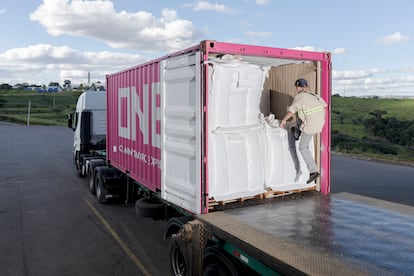
Varginha is one of those inland Brazilian cities where the power of agriculture is palpable. It exports more than any other municipality in Brazil. In the general warehouses of the Dry Port, they prepare the blends requested by exporters and store shipments while European or Asian importers look for buyers. The system reduces travel and payment is made in reais, which is more advantageous. Although the collapse of stocks has reduced demand for its colossal warehouses, Paiva is confident about the future: “We need one or two good harvests, barring any unforeseen circumstances, to stabilize the supply for export and the domestic market.” Meanwhile, everyone is keeping a close eye on the sky, the temperature, the New York Stock Exchange, and Trump, who has suggested he might ease coffee tariffs given how expensive it has become for his fellow citizens. And every full moon, Mauri Oliveira and his friends will enjoy their traditional nighttime horseback ride.
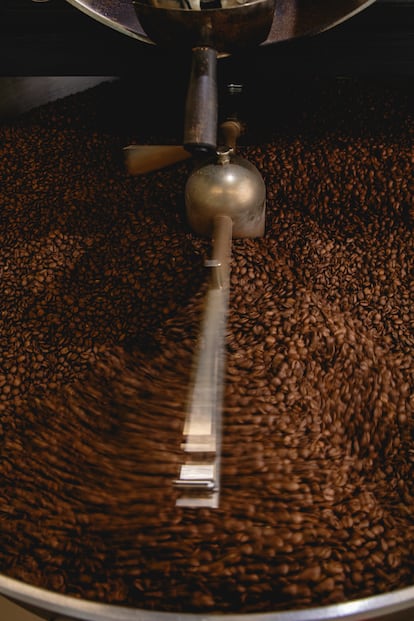
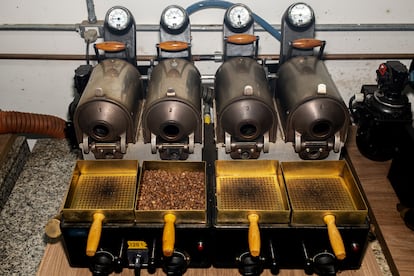
Spain: The Redemption of Coffee. Across the Atlantic, in Spain for example, coffee is being experienced differently from before. Sugar is left untouched. For Marisa Baqué, coffee taster, roaster, and owner of BB’s Café, this is the definitive sign that people are learning to enjoy a good coffee. “Until recently, it was a bitter drink masked with sugar and milk, but much of that bitterness comes from poor brewing methods and over-roasting.” She says that more than 90% of her clientele has learned to discover the notes and nuances of coffee without sugar. “We have excellent raw materials,” she confirms. The drop in sugar consumption is a symptom of the redemption that coffee is experiencing in Spain. A drink that has grown in prestige, specialization, rituals, and also—and how—prices.
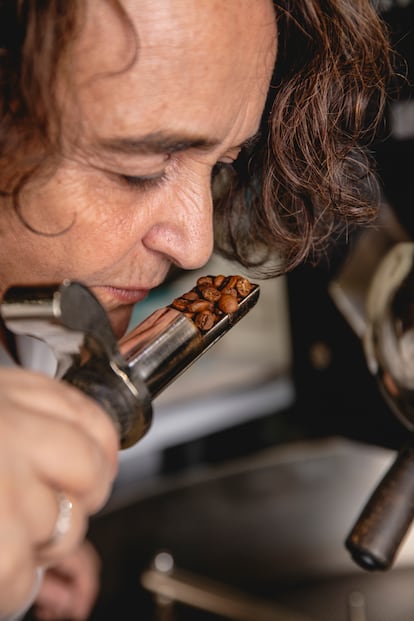
Marisa began training as a coffee taster in 1988 and, after working for major brands, eventually opened a small business, BB’s Café, based in the northern Basque province of Vizcaya. She buys the beans herself, roasts them, and tastes them. She has witnessed the growing sophistication of a segment of consumers, mostly very young. Now, in her tastings, they are interested in the fermentation of green coffee. “We are in a stage of discovery, but there are already people starting to ask if the coffee has been fermented with or without oxygen, for 24 or 48 hours,” she explains. Before, the main concern was whether the coffee was served in a cup or a glass. More ritual surrounding the container than the contents.
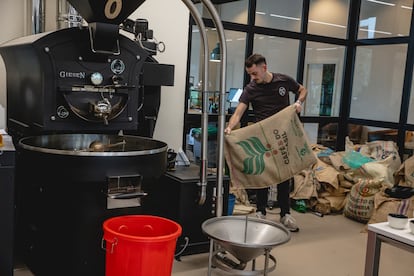
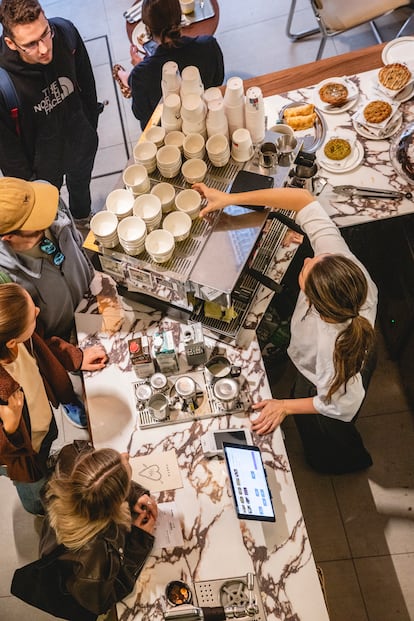
There isn’t a free table on an autumn Thursday at Toma Café, one of Madrid’s first specialty coffee shops (it opened in 2011 when they weren’t even known by that name yet) and the first place to use a Marzocco machine, the Italian coffee maker that’s become the benchmark for specialty coffee. The tables are occupied by people with their coffee, their phones, or their laptops. There’s a hush. We’ve arranged to meet one of them here, Marcos Zoya, who tells us that this café in the heart of the Malasaña neighborhood was where the third-wave coffee movement began in Madrid, a term coined in 1999 associated with consuming high-quality beans, prepared using traditional methods, and with respect for the producers. In 2011, Zoya was living in Dublin, right when the wave was taking off. His first specialty coffee was a naturally roasted Ethiopian coffee. “I tried it and thought, what the hell is this?”
Marcos never practiced his profession as a sound engineer; instead, he dedicated himself wholeheartedly to coffee. He began training baristas in 2015 and estimates that around 700 professionals have taken his courses. It has taken him more than a decade to consider himself an expert in the field. If you ask him now what makes a good coffee, he replies: “One that is free of defects, delicious, and that I enjoy, nothing more.” Ten years ago, he would have elaborated much more, but he admits that “I’ve grown out of my naiveté.”
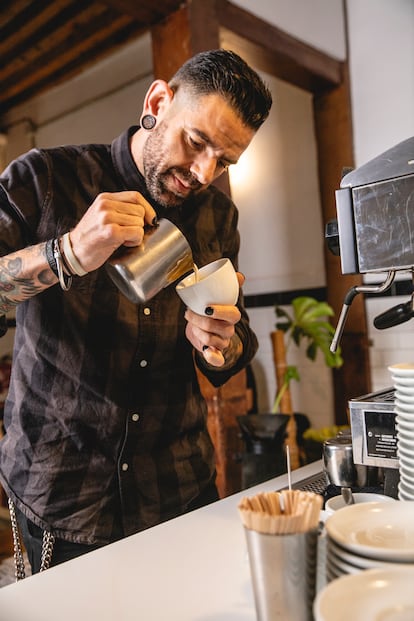
The growing appreciation for coffee has been accompanied by an increase in price. According to data from the National Statistics Institute (INE) in September, coffee is the beverage that has seen the greatest price hike in Spain in 2025, specifically a 15% increase between January and July. It’s no longer possible to find a cup of coffee in bars for just over a euro, and even those who prefer to drink it at home aren’t immune, as supermarkets, in addition to inflation, face another phenomenon called reduflage, when manufacturers reduce package sizes while maintaining or even increasing the price. Despite all this, more coffee is being consumed in Spain than ever before. Each person consumes, on average, 550 cups a year, two per day, according to the Spanish Coffee Sector Report (2023-2024). Of every 100 cups consumed, 66 are drunk at home and 34 in bars and cafes.
The soaring prices are attributed to extreme weather events in the main producing countries. Furthermore, it is said that in China, where tea was unbeatable, the discovery of coffee has multiplied demand. According to the United States Department of Agriculture, China is already the sixth largest coffee consumer in the world. The numbers confirm that in the futures markets, coffee has risen by more than 50% in 2025. Mateo Martínez, founder of Xorxios, an exporting and importing company of specialty green coffee that operates in the main global markets, confirms that the benchmark price per pound of coffee is higher than ever, at $4.15. However, he, like the Brazilians, points to another place: the New York Stock Exchange, where coffee is speculated with just like as gold and oil. “Prices are at record highs, which puts producers under a lot of stress, but if you talk to Ethiopians or Colombians, everyone has their own version of events. Traditionally, the stock market reflected supply and demand, but that’s no longer the case; there’s no technical justification for these price increases.” Mateo has a broker to trade in the futures market. “He’s the closest person I have in that world, and I know that investment funds are pouring a lot of money into coffee and distorting prices.” This expert doesn’t consider the other factors, including weather events and Asian demand, to be particularly relevant.
In Mateo’s opinion, the industry has absorbed almost all of the increased cost of coffee so far, but the crisis is protracted, and it may be unavoidable that further price hikes will ultimately affect consumers even more. “The question is whether people can continue paying more for quality coffee. Common sense tells me we’re already at a breaking point.” For this reason, he believes some specialty coffee shops are focusing more on tourists and expats, a sector with greater purchasing power than the domestic market. He predicts that prices will have fallen in two or three years. “We have to persevere and adapt because this too shall pass,” he advises.
Although it may seem that we are surrounded by specialty coffees and artisanal roasters, in Spain the coffee business remains in the hands of two giants: Nestlé (Nescafé, Nespresso), which controls 29.6% of the market; and JDE (Jacobs Douwe Egberts), with 9.5%, with brands like Saimaza and Marcilla. The specialty coffee segment grew by 15% in 2023 and is estimated to continue growing at an annual rate of 10%. Another form of consumption that is growing in Spain at a rate of 3.7% annually is ready-to-drink coffee in all imaginable varieties: sugar-free, with protein, decaffeinated, gluten-free, or lactose-free. And people are increasingly buying their personalized coffee online directly from roasters who guarantee complete traceability of the raw materials, with very specific flavors and notes. In 2023 these sales grew by 20% and the trend has continued upward in 2024 and 2025.
At Toma Café, everyone keeps to themselves. No one speaks to each other, and if they do, it’s through a screen, with someone who isn’t even there. “This isn’t the coffee’s fault,” Zoya insists, arguing that the same desolation exists in places with communal tables. “A café should be a meeting place, and my fight is for a specialty coffee shop to have the same vibrancy as a regular bar.” Perhaps it’s time to start by confiscating phones while ordering a cup of Ethiopian Guji, full-bodied with fruity notes.
Sign up for our weekly newsletter to get more English-language news coverage from EL PAÍS USA Edition