José Antonio Kast’s resounding victory in the December 14 election has dealt a heavy blow to the generation that suffered underAugusto Pinochet’s dictatorship (1973-1990). Kast is the secon…
José Antonio Kast’s resounding victory in the December 14 election has dealt a heavy blow to the generation that suffered underAugusto Pinochet’s dictatorship (1973-1990). Kast is the second right-wing president of Chile since the return of democracy in 1990. However, unlike Sebastián Piñera (2010-2014, 2018-2022), who is from the traditional right and opposed Pinochet, Kast is the first to have publicly supported the military regime. He voted in favor of the general’s continuation in the 1988 referendum, and in 2017 visited former agents imprisoned for human rights violations, saying at the time that “beyond the convictions, both military and civilians deserve justice. Today, in many cases, vengeance prevails over justice.”
Kast will assume office at La Moneda Palace on March 11, 2026, replacing Gabriel Boric as president. He won with 58% of the vote against the candidate of the left-wing governing coalition, the communist Jeannette Jara. Kast had run for president three times, but in this campaign — in contrast to the previous ones — he avoided speaking about the dictatorship. When asked in a debate before the runoff election whether he would pardon human rights violators, including Miguel Krassnoff, in exchange for information on the disappeared, he dodged the question. He noted that a law on “humanitarian grounds” is pending in Congress. “I don’t believe in what could be called *delación compensada *[providing information about others to receive legal leniency or compensation], I believe in justice, and justice also means treating people who are terminally ill and unconscious with respect. Because you can imprison a body, but not a conscience,” he said.
In another debate, in the final stretch of the campaign, he said: “There are situations regarding human rights where there are people who were conscripted soldiers at the time of the institutional breakdown in Chile; who were taking notes at the police station entrance. [...] They did nothing more than that and received a five or 10-year sentence. I think that’s something that should be reviewed.”
The possibility of pardons is what worries Corina Maureira, who felt “sad, anguished, and with a heavy heart” after Kast’s victory. Her father, Sergio Maureira, and her four brothers— Sergio, José Manuel, Segundo Armando, and Rodolfo — were killed along with 10 other farm workers in 1973. Their bodies were discovered in 1978 at the Lonquén kiln, a mine 23 miles from Santiago: it was the first discovery of disappeared detainees in Chile, at a time when the dictatorship denied it was responsible for human rights violations.
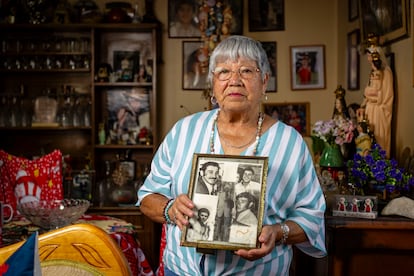
Corina was 20 years old when she saw Carabineros officers take her relatives into custody in October 1973, a month after the coup d’état. Her mother was left in charge of eight other children, the youngest just 12 years old.
“It’s a pain we carry every day, deeply buried in our souls. Talking about them makes us feel that they are alive,” she tells EL PAÍS. “For me, it’s very important to keep their memory alive, because if we don’t, they’ll be gone. And that’s what scares me about the newly elected president: my fear is that there will be pardons, that there won’t be any support for maintaining the memorials, and that the search for the disappeared will be abandoned, because we haven’t just fought for our own loved ones, but for thousands.”
That’s why she says it’s important to continue with the Search Plan that Boric launched in 2023.
“A sense of helplessness”
Journalist and former diplomat Odette Magnet recounts how much she suffered on election night: “Anguish and sadness overwhelmed me, and I cried for a long, deep while.” After learning the election results, she says it was impossible not to think of her sister, Chilean sociologist María Cecilia Magnet, who was kidnapped in Buenos Aires on July 16, 1976, along with her husband, Argentine doctor Guillermo Tamburini. Both are victims of Operation Condor — the coordinated effort between the Southern Cone’s military dictatorships to eliminate leftists and subversives — and remain missing.
“That day I imagined something very bleak, that all the struggle we had waged for so many others, and all the pain, had been in vain, and that is very hard to accept. I felt a sense of helplessness, of being abandoned. I know that’s not true, because many felt the same way, and we supported and comforted each other. But at that moment I felt very alone,” she says.
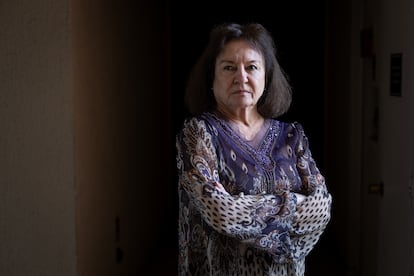
Magnet explains that this feeling stems from Kast’s silence. “He hasn’t offered a single word of encouragement or support, nor has he defended human rights, or our struggle for the disappeared in Chile and Latin America.”
“The issue of human rights continues to make Chilean society uncomfortable, and the right wing in particular, not just Kast,” continues Magner, who in 2024 published the book of 11 short stories, Fracturados. “And you feel like you’re speaking alone. He has constantly avoided the topic and makes no commitment to what happened, which was very serious. He is the heir of the dictatorship, and in a way, he is Pinochet’s son.”
“I am very pessimistic about the progress we can make in the government,” she adds. “It seems that this is as far as we can go. Our search has always been very solitary, and in general there is a feeling of little solidarity.”
“A failure of collective memory”
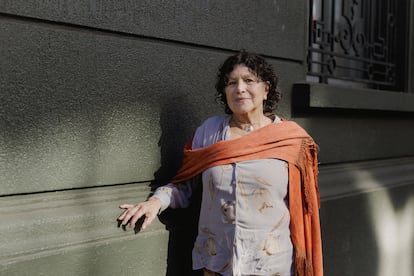
Estela Ortiz is the daughter of Fernando Ortiz, who was forcibly disappeared. The case still awaits the extradition of former National Intelligence Directorate (DINA) agent Adriana Rivas from Australia. She is also the widow of José Manuel Parada, who was head of the analysis department at the Vicaría de la Solidaridad, a landmark organization that advised and assisted families of dictatorship victims. Parada, the publicist Santiago Nattino, and the professor Manuel Guerrero were kidnapped on March 28, 1985, and found beheaded five days later.
For Ortiz, Kast’s election evokes feelings of “anger and pain.” “It’s a complex issue. While it’s a triumph for democracy, it’s a failure of the people’s collective memory because of what he represents and because he defends Pinochet [...] I also ask: have we done so badly? How have we, as people who love democracy, failed to ensure that the memory of something that must never happen again is shared by the majority of the country? Human rights aren’t against the right wing; they’re for everyone.”
Luis Emilio Recabarren agrees: “I understand that the people made their choice, but it reflects a lack of memory, a collective amnesia,” he says over the phone from Sweden, where he lives with his family. He received the election results with a mix of “disappointment and pain.”
Luis Emilio was just over two years old when his family was disappeared. In April 1976, agents of the dictatorship arrested his mother, Nalvia Mena, who was three and a half months pregnant; his father, Luis Emilio Recabarren González; and his uncle, Manuel Recabarren. When his grandfather, Manuel Recabarren, went out to look for them, he was never seen again.
After that, Luis Emilio was raised by his grandmothers, Ana González, one of the founders of the Association of Relatives of the Detained and Disappeared (AFDD), and Ernestina Alvarado, both of whom searched for their missing family members until their deaths in 2018 and 2020, respectively. In 2024, on his 50th birthday, Recabarren published the book The Day My Parents Disappeared.
Today, he argues: “Although people suffer from a lack of memory, it is time to unite more around human values so as not to fall into polarization. That is what I feel most strongly now.”

Sign up for our weekly newsletter to get more English-language news coverage from EL PAÍS USA Edition