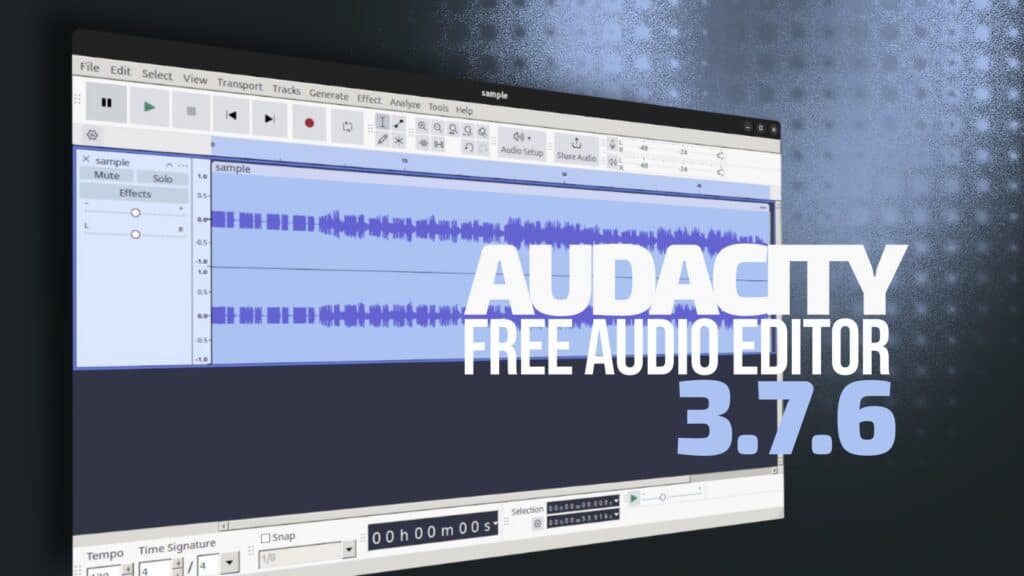
Audacity, a free, cross-platform open-source audio editing and recording software used by hobbyists, podcasters, musicians, and professionals alike, just released version 3.7.6.
One of the most notable additions is support for FFmpeg 8, ensuring compatibility with the latest version of the multimedia framework. Users also gain access to a new Spectrogram Wavelet analysis mode, contributed by Klaus Gram-Hansen, offering more detailed and flexible time–frequency inspection for advanced audio work.
Workflow improvements continue with a…
Audacity, a free, cross-platform open-source audio editing and recording software used by hobbyists, podcasters, musicians, and professionals alike, just released version 3.7.6.
One of the most notable additions is support for FFmpeg 8, ensuring compatibility with the latest version of the multimedia framework. Users also gain access to a new Spectrogram Wavelet analysis mode, contributed by Klaus Gram-Hansen, offering more detailed and flexible time–frequency inspection for advanced audio work.
Workflow improvements continue with a new middle-mouse drag option for panning across the track panel, contributed by Anders Jenbo. The release also adds an import dialog for audio.com, allowing users to bring files from the platform directly into Audacity.
Lastly, this patch addresses several bugs, including unstable cloud audio uploads and an issue with importing 16-bit FLAC files. Exporting is also more flexible, with the option to export in OGG/Opus format using FFmpeg. Finally, the update refreshes bundled libraries, including libcurl 8.17.0 and WavPack 5.7.0.
Visit the changelog for detailed information about all changes in Audacity 3.7.6.
Bobby Borisov
Bobby, an editor-in-chief at Linuxiac, is a Linux professional with over 20 years of experience. With a strong focus on Linux and open-source software, he has worked as a Senior Linux System Administrator, Software Developer, and DevOps Engineer for small and large multinational companies.