Simon Cowell arrives on a jet ski, his face gone berserk. His cheeks are plumped, his teeth blinding. His new Netflix show, he tells us, is his last chance. “If I can’t get it right,” he says, “I’ll have to accept that I’ve lost whatever I had before.” It was oh so simple in his heyday. You could just grab a handful of boys off a street corner, wax them down and Topman their wardrobes, ship them to a recording studio in Sweden, and get a top five hit. Yes, often they ended up cursed to the Butlins circuit on…
Simon Cowell arrives on a jet ski, his face gone berserk. His cheeks are plumped, his teeth blinding. His new Netflix show, he tells us, is his last chance. “If I can’t get it right,” he says, “I’ll have to accept that I’ve lost whatever I had before.” It was oh so simple in his heyday. You could just grab a handful of boys off a street corner, wax them down and Topman their wardrobes, ship them to a recording studio in Sweden, and get a top five hit. Yes, often they ended up cursed to the Butlins circuit once the attention died down, or got jobs as fork-lift drivers or OnlyFans models or Celebrity Big Brother contestants. But god it was easy. When did it all go sideways?
Simon Cowell: The Next Act, which launches on Netflix today, follows the pop mogul as he attempts to put together a new boyband. But don’t let the fly-on-the-wall, talking-head docuseries sheen fool you – this is your standard X Factor riff. It’s awash in producer-orchestrated drama and the storytelling tropes that made that show appointment viewing on Saturday nights 10 or 15 years ago, but which now seem hoary and geriatric, like something vaguely offensive once said by Louis Walsh. He even surrounds himself with low-wattage versions of Nicole Scherzinger or Cheryl: there’s the Little Mix songwriter Kamille, and another songwriter who looks a bit like Jason Schwartzman with a ponytail. He’s even dragged Pete Waterman out of the cupboard he’s been locked in for the last few decades.
Different, though, is the sense of race-against-the-clock fatalism that Cowell now exhibits. I do believe him when he says he thinks it might all be over. The X Factor stopped making real superstars years before its “resting” in 2019. Britain’s Got Talent and its American equivalent do still exist, but in that liminal, vaguely nefarious way that somehow kept the lights on at WH Smith for years. And gone is the lucrative pop entrepreneurialism that made Cowell’s name (before shaping the careers of talent show acts including One Direction and Leona Lewis, he foisted the likes of Robson & Jerome and Westlife on an unsuspecting public). He is a man out of time, Botoxed to oblivion, and suddenly aware that everything everywhere must come to an end.
But Simon Cowell: The Next Act only has the pretence of straight-talking. It reminded me often of Netflix’s recent Victoria Beckham docuseries, which skirted around anything remotely interesting or dicey in favour of brand polishing and faux honesty. The opening scenes of the series find Cowell and his team sent into crisis mode after only 160 people apply to audition for his new boyband – a sharp downturn from the time thousands of randoms would descend on Britain’s convention centres for the chance of being judged by Sharon Osbourne. Cowell embarks on a sad Gen-Z press blitz as a result. He joins TikTok, takes part in promotional interviews with a raft of influencers, sits down with Diary of a CEO’s Steven Bartlett. It’d make more sense for him to utilise some of his connections – maybe get Zayn Malik or Jade Thirlwall on the blower. Then again, all those bridges seemed to have been burnt years ago.
Initially, the show leans into its slightly humiliating energy, a man of the Noughties reduced to debasing himself for the attention of teenage pip-squeaks. But it quickly skirts off this: the boys do eventually materialise, with fluffy haircuts and moldable warbles, and Cowell returns to his position as benevolent king-maker. The “is he past-it” stuff was a mere plot point, a quick injection of suspense just like in the old days. Even One Direction’s Liam Payne meeting a horrible end at the age of 31 – which occurs in the middle of filming – isn’t dramatic enough to stop the Cowell train from thundering on.

In ‘The Next Act’, Simon Cowell exhibits a sense of race-against-the-clock fatalism (Netflix)
Payne’s death does, however, change the temperature of the show. It happens in episode three, the screen fading to black dramatically, in that reality TV shorthand that suggests “something bad is about to happen”. Cowell pauses production. He takes six days off. Upon his return, he questions whether he should carry on with the project. His decision to keep going comes off like a punchline to a very dark joke. “I can’t take this opportunity away from them,” he says. Cowell’s pledged to try to make these boys stars – he can’t possibly pull it back now, can he? What a horrible thing to do to them, he reckons.
To try and mitigate further disaster, he hosts a moodily lit get-together with the 30 or so boys in for a chance of getting into Cowell’s eventual band, as well as their parents. He insists they ask him any question and share any lingering worries they might have, and he’ll answer honestly. The questions we see aren’t particularly probing. One aspiring musician asks Cowell if the boyband really stands a chance of success. “It’s 50/50,” Cowell says. One parent asks Cowell what he’d say to his own son if he were in a similar position to theirs. Cowell’s answer is illuminating. He starts to say that, first of all, he’d consider if he thought his son could hack it. “Honestly, do I really, really believe my son can deal with what comes when you become well known?” he asks. “Your life changes. There is no privacy.” A shift then occurs. Cowell, practically mid-sentence, begins to talk about their sons instead of his own. “They’re gonna be looked after. I’ve always prided myself that I do care about the people I work with – genuinely care – and if we’re gonna go forward with the boys, it will be with my absolute belief and support. If you have concerns about anything, call me.”
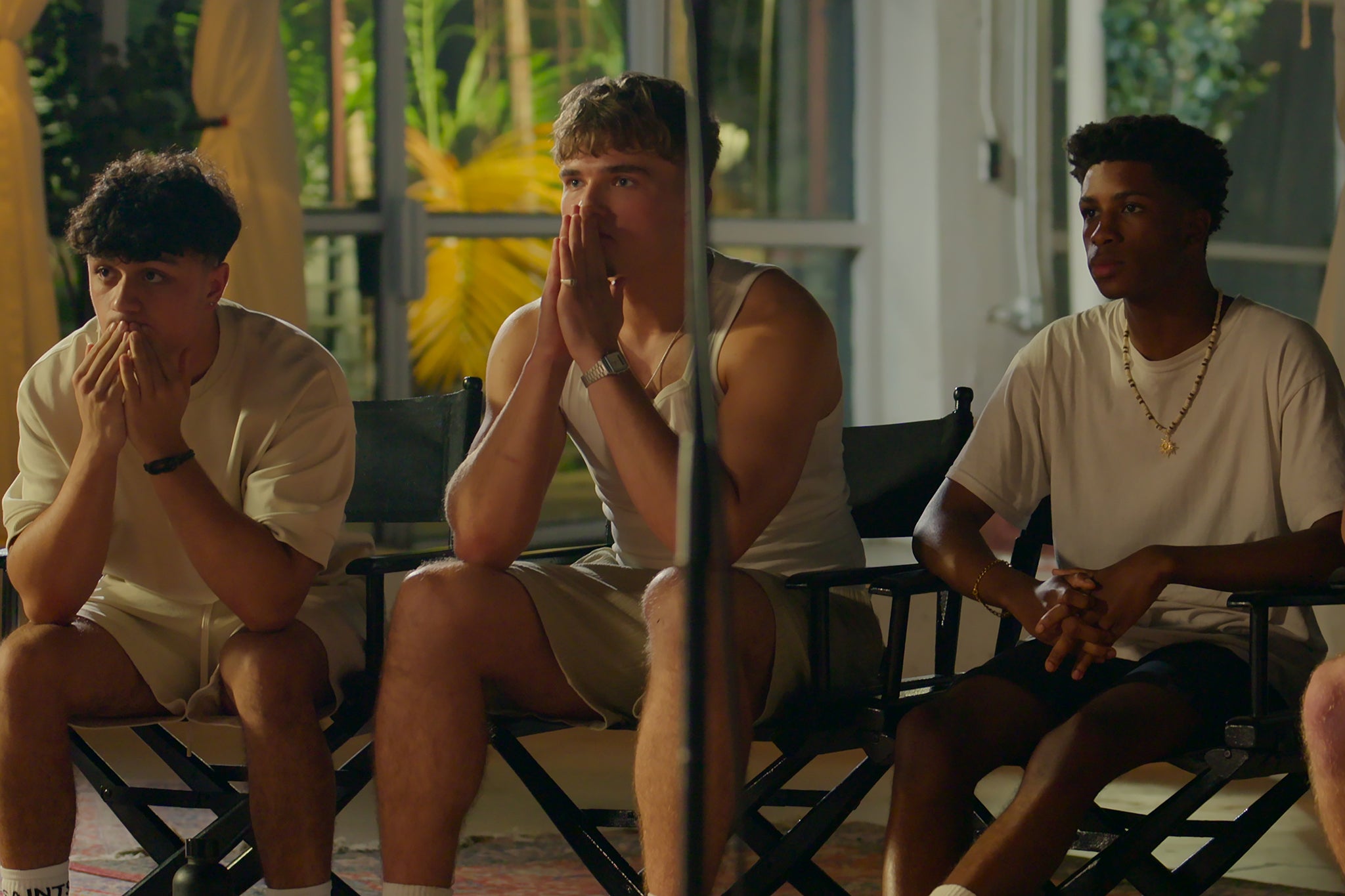
Some of the hopefuls auditioning for Cowell’s new boyband in ‘The Next Act’ (Netflix)
The difference here, that Cowell very skillfully deflects, is that Cowell’s son wouldn’t be in a position like their sons. Historically, the grisly paradox of the bands that Cowell shepherded to success – as well as those brought to fame by his contemporaries like Louis Walsh or Simon Fuller – was that many of them were working-class strivers with few other chances for a professional leg-up. Many came from the north of England, had distinct accents, or were born into broken homes. Few had pre-existing industry connections, or practical guidance that matched their ambition.
There’s no real understanding in these moments of what Cowell is asking of these starry-eyed teenagers and their parents. What he’s asking them to, if they really felt it best, pass up. “He must have just felt so much pressure,” an 18-year-old boyband hopeful named Hendrick tells his dad, in the wake of Payne’s death. His father offers a gentle response: “Once you’re in the limelight, and you’ve got all those people watching you all the time, it might get you down from time to time. You just don’t know, do you?” It’s a simplified interpretation of what happened to Payne – as well as a very paternal bit of fence-sitting that pays lip service to horror, but not so much that he looks as if he’s meddling in his son’s decision-making. Because, ultimately, Simon Cowell: The Next Act is a platform, an opportunity, a chance at something extraordinary. And that, perhaps, is the most illuminating thing about all of this. It’s irrelevant whether Cowell is a has-been or not, because there will always be a pipeline of dreamers without money or resources, who will weigh up the risks of talent-show fame and decide to bite. Liam Payne be damned. Because, ultimately, what other option is there?
‘Simon Cowell: The Next Act’ is streaming on Netflix