India’s largest airline IndiGo said the compensation for millions of customers left stranded during a recent aviation crisis that brought air operations to a standstill is more than ₹5bn (£41m).
Top aviation officials have blamed the carrier for the week-long collapse of operations which IndiGo said was caused by mismanaged crew rosters and their unpreparedness with a recent policy change that seeks to enforce stricter rest times for pilots.
Indigo said it is the process of “identifying flights where customers were severely impacted and[stranded at…
India’s largest airline IndiGo said the compensation for millions of customers left stranded during a recent aviation crisis that brought air operations to a standstill is more than ₹5bn (£41m).
Top aviation officials have blamed the carrier for the week-long collapse of operations which IndiGo said was caused by mismanaged crew rosters and their unpreparedness with a recent policy change that seeks to enforce stricter rest times for pilots.
Indigo said it is the process of “identifying flights where customers were severely impacted andstranded at airports between 3 to 5 December”. The major private airline which has a monopoly in the Indian aviation landscape said it will “reach out to all such customers in January so that compensation can be extended smoothly”.
The airline will compensate customers whose flights were "cancelled within 24 hours of departure time and/or to customers severely stranded at certain airports", it said in a statement.
IndiGo faced criticism for failing to plan for the new rest periods and duty rules, leaving planes grounded and disrupting travel plans. Officials have said IndiGo’s senior management misjudged the number of pilots it would need for its winter schedule due to new duty and rest rules that came into effect on 1 November.
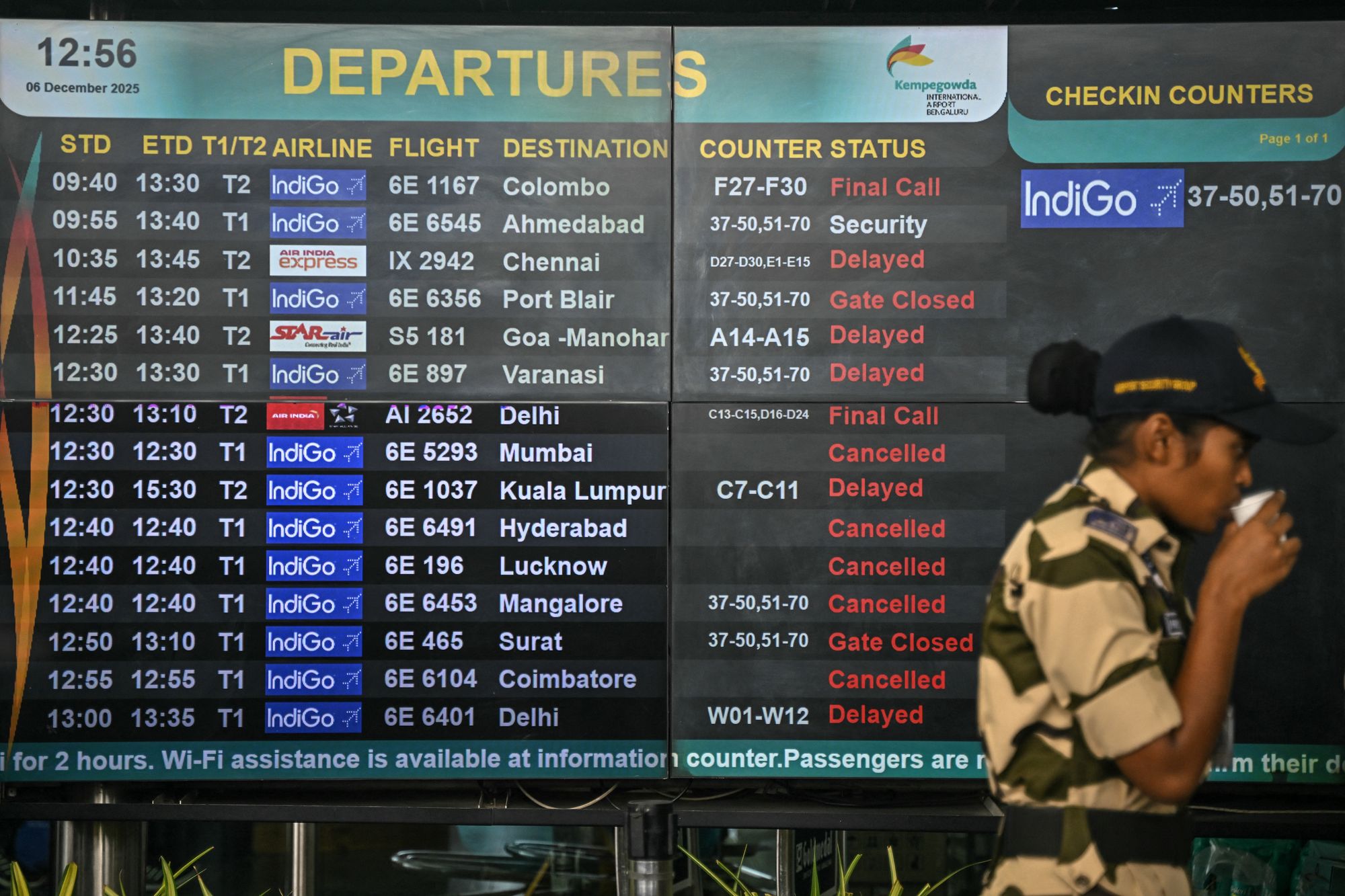
A security personnel stands beside a digital departures board at Kempegowda International Airport (AFP via Getty Images)
This comes just days after the Indian government ordered IndiGo to cut its winter schedule by 10 per cent in the wake of cancellation of more than 4,600 flights, causing days of disruption at almost all major airports.
India’s federal civil aviation minister Ram Mohan Naidu explained the deduction in IndiGo’s winter schedule, stating that the government finds the move “necessary” to restore stability and that the airline “will continue to cover all its destinations as before”.
IndiGo, under the new directive to reduce its operational control, will have to cancel more than 200 daily services now during peak travel season.
The recent fiasco caused India’s aviation regulator, the Directorate General of Civil Aviation, to deploy some of its own personnel at IndiGo’s corporate headquarters in Gurugram – a suburb in the national capital region – to monitor the carrier’s network and recovery.
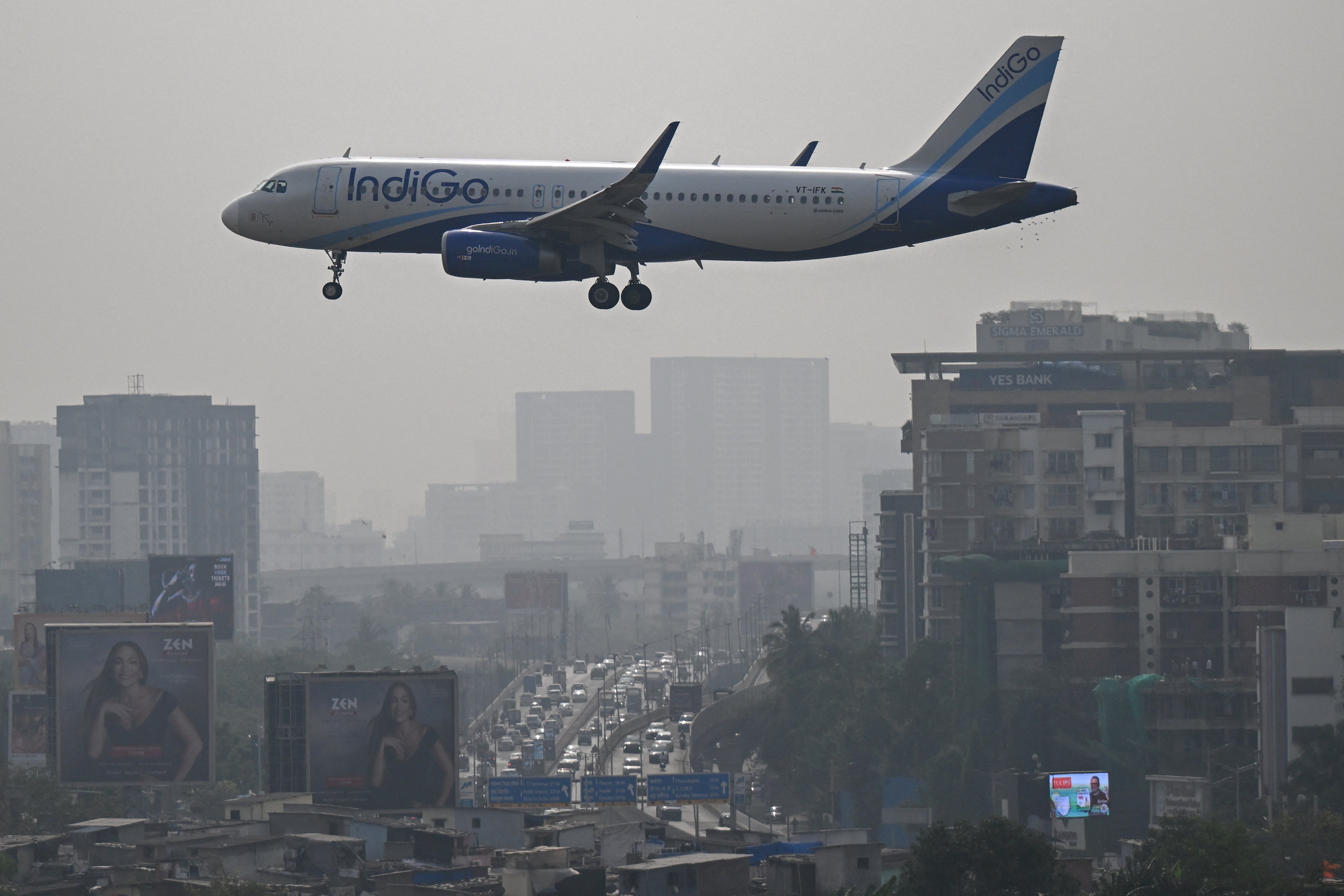
An IndiGo Airways aircraft prepares to land at the Mumbai airport (AFP via Getty Images)
The DGCA personnel will monitor IndiGo operations including crew utilisation, unplanned leave and routes affected due to crew shortages, and are required to submit a daily report to the Directorate General of Civil Aviation, an order showed.
Another set of personnel deployed will oversee IndiGo’s on-time performance, flight cancellations, baggage return and passenger refunds.
The airline said it hoped to return to normalcy in the coming days, but its troubles have drawn warnings from both politicians and aviation experts who said the poster child of India’s aviation boom took its position for granted.
IndiGo has apologised but has not disclosed financial losses from the crisis.