Love the taste of coffee but can’t tolerate caffeine? The best decaf coffees can give you that delicious full-bodied flavour without keeping you up all night. Whether you want to try a single packet or opt for a coffee subscription, there’s a range of roasters (including some of the best independent coffee brands) demonstrating that it’s perfectly possible to have a decent cup of joe without overloading on caffeine.
The NHS recommends that pregnant and breastfeeding women steer clear of caffeine, and…
Love the taste of coffee but can’t tolerate caffeine? The best decaf coffees can give you that delicious full-bodied flavour without keeping you up all night. Whether you want to try a single packet or opt for a coffee subscription, there’s a range of roasters (including some of the best independent coffee brands) demonstrating that it’s perfectly possible to have a decent cup of joe without overloading on caffeine.
The NHS recommends that pregnant and breastfeeding women steer clear of caffeine, and people with certain medical conditions may be advised to limit or avoid it. For others, caffeine simply doesn’t sit well. It can trigger feelings of anxiety, cause a rapid heartbeat, disrupt sleep or even lead to stomach discomfort if you’re especially sensitive to its effects.
Decaffeinated coffee starts out exactly the same as regular coffee, using the same beans, but it undergoes additional processing to remove most of the caffeine. It’s important to note that decaf isn’t completely caffeine-free, and the amount left can vary depending on the blend. There are also half-caf and low-caf alternatives, if you want just a hint of caffeine without feeling overly wired.
Coffee producers typically use one of five methods to extract caffeine: direct solvent, indirect solvent, Swiss water, sugarcane and carbon dioxide. The first two rely on chemicals to remove caffeine. The Swiss water method – sometimes referred to as the “mountain water” process – involves steaming the beans, soaking them in water, filtering them through charcoal and then drying them. The sugarcane method uses a naturally derived compound from sugarcane, which can result in a subtly sweeter flavour, while the carbon dioxide process removes caffeine by soaking the beans and then blitzing them with CO2.
With the science covered, keep scrolling to find out which decaf coffees impressed during my taste test.
**Read more: **Best milk frothers for barista-worthy drinks
The best decaf coffees for 2026 are:
- Best overall – Rave Coffee Swiss water decaf no. 11: £9.95, Ravecoffee.co.uk
- **Best budget buy **– M&S gold decaf instant coffee: £3.75, Ocado.com
- Best Instant coffee – Nescafe Azera decaff americano instant: £8.85 Coop.co.uk
- **Best for black coffee **– Grind decaf blend coffee: £8.95, Grind.co.uk
- **Best coffee pods **– Nespresso ristretto decaffeinato: £4.70, Nespresso.com
How I tested
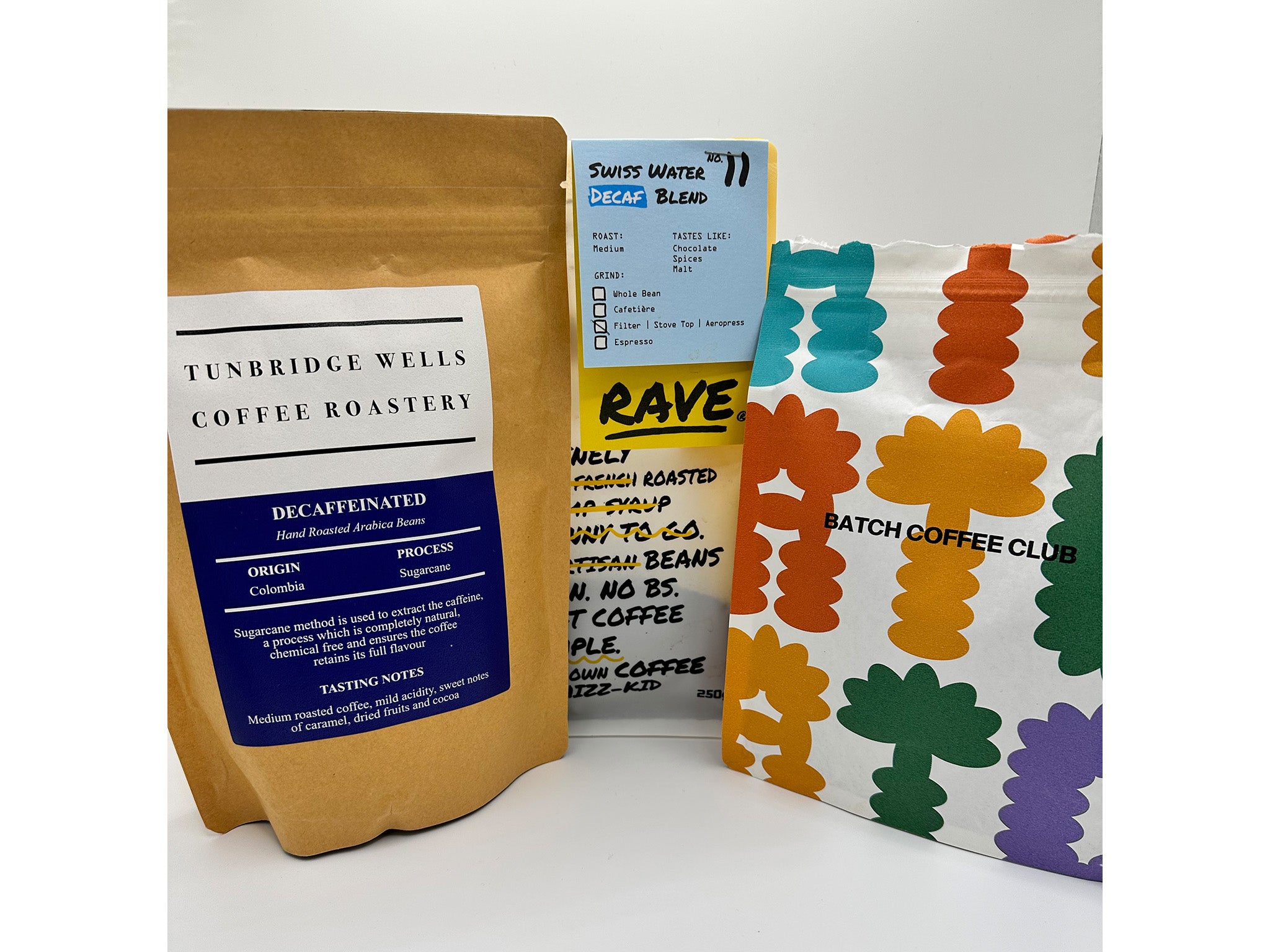
I’ve been a decaf coffee convert for nearly a decade, and have taste tested a range of blends (Zoë Phillimore/The Independent)
While I’ve officially spent two years taste-testing decaf coffees to find the best, I’ve been drinking decaf for eight years. For this review, I also invited a group of hardened coffee drinkers to try some decaf options to see how they compared against a typical cup of joe. I tested ground beans in an aeropress and whole beans in one of the best coffee machines on the market. I tasted the decaf coffees with and without milk, and even tried dairy-free alternatives to see how they changed the flavour profile. You can read more about my testing process and criteria at the end of this article.