The earliest domestic cat arrived in China during the Tang dynasty’s rule between 618AD and 907AD, likely through the Eurasian trade routes connected to the Silk Road, according to a new DNA study.
Feline bones found at archaeological sites were long believed to show that cats lived alongside Chinese farming communities in the Stone Age. But a new DNA analysis of remains spanning over 5,000 years reveals that the ea…
The earliest domestic cat arrived in China during the Tang dynasty’s rule between 618AD and 907AD, likely through the Eurasian trade routes connected to the Silk Road, according to a new DNA study.
Feline bones found at archaeological sites were long believed to show that cats lived alongside Chinese farming communities in the Stone Age. But a new DNA analysis of remains spanning over 5,000 years reveals that the early felines were native leopard cats rather than house cats.
The analysis showed that house cats, descended from the Near Eastern African Wildcat, arrived in China much later.
Researchers analysed DNA from 22 feline individuals taken from 14 archaeological sites, spanning the period from the Yangshao culture of 5,400 years ago to the 20th century, and found the cats that lived near early farming communities for more than 3,500 years were not domesticated but wild leopard cats.
The leopard cats, which hunted rodents, thrived around human settlements from at least 5,400 years ago until 150 AD, researchers said.
It wasn’t until the medieval age that the first house cats came to China from Eurasia, according to the study published in the journal Cell Genomics.
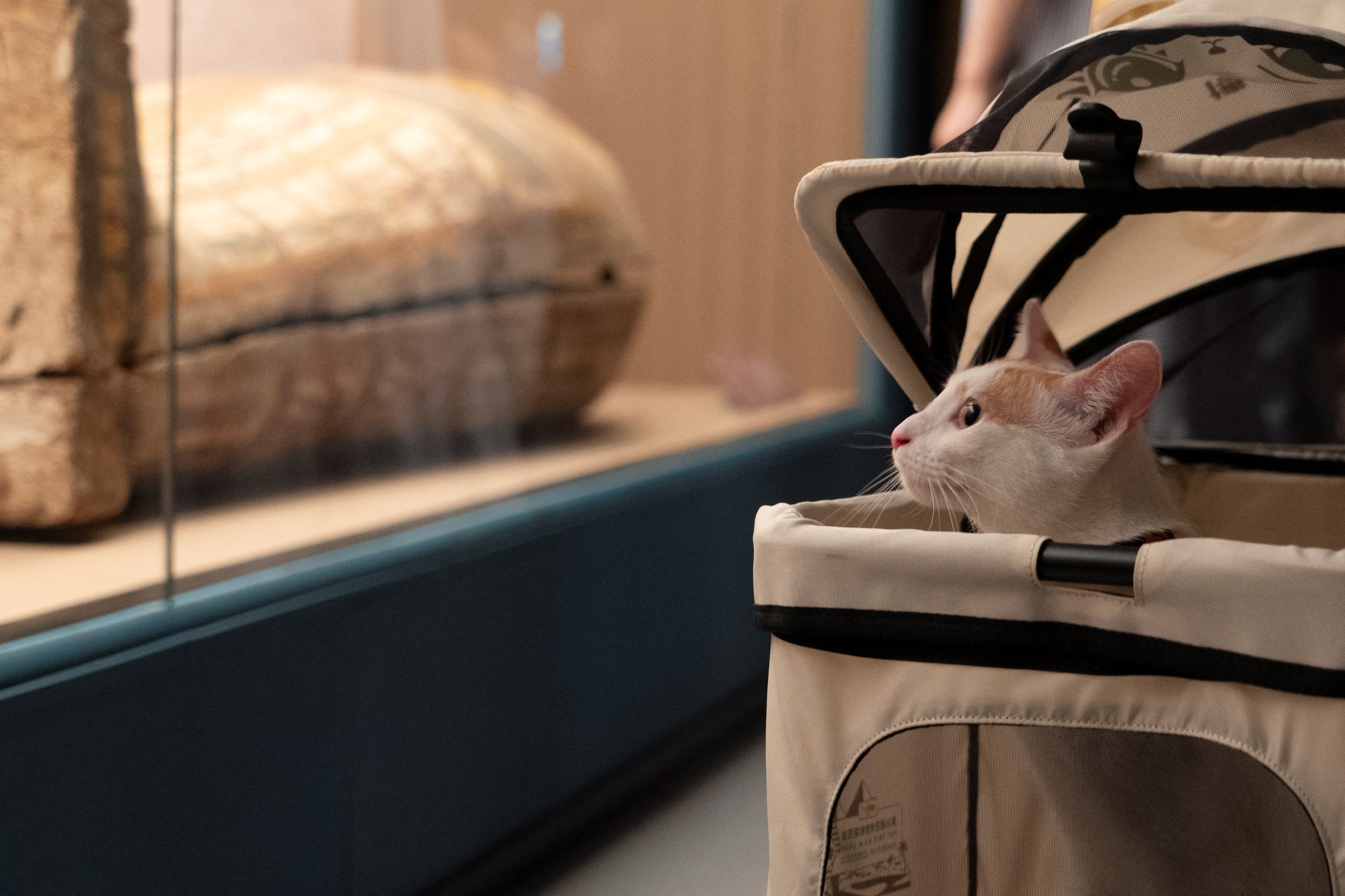
A cat looks at an exhibit at the Shanghai Museum (AFP via Getty)
Researchers dated the earliest domestic cat remains in China to 706-883AD. These remains were found in the Tongwan City archaeological site in Shaanxi, and showed maternal lineages to the Near Eastern African Wildcat.
This cat had short fur and likely white or white-spotted colouration, the analysis found.
“After a gap of several centuries, the earliest known domestic cat in China, 730 AD, reconstructed as a fully or partially white cat, was identified in Shaanxi during Tang dynasty,” researchers said.
The medieval feline carried similar genetic signatures as contemporary cats from Kazakhstan, confirming that house cats spread to China through Silk Road routes.
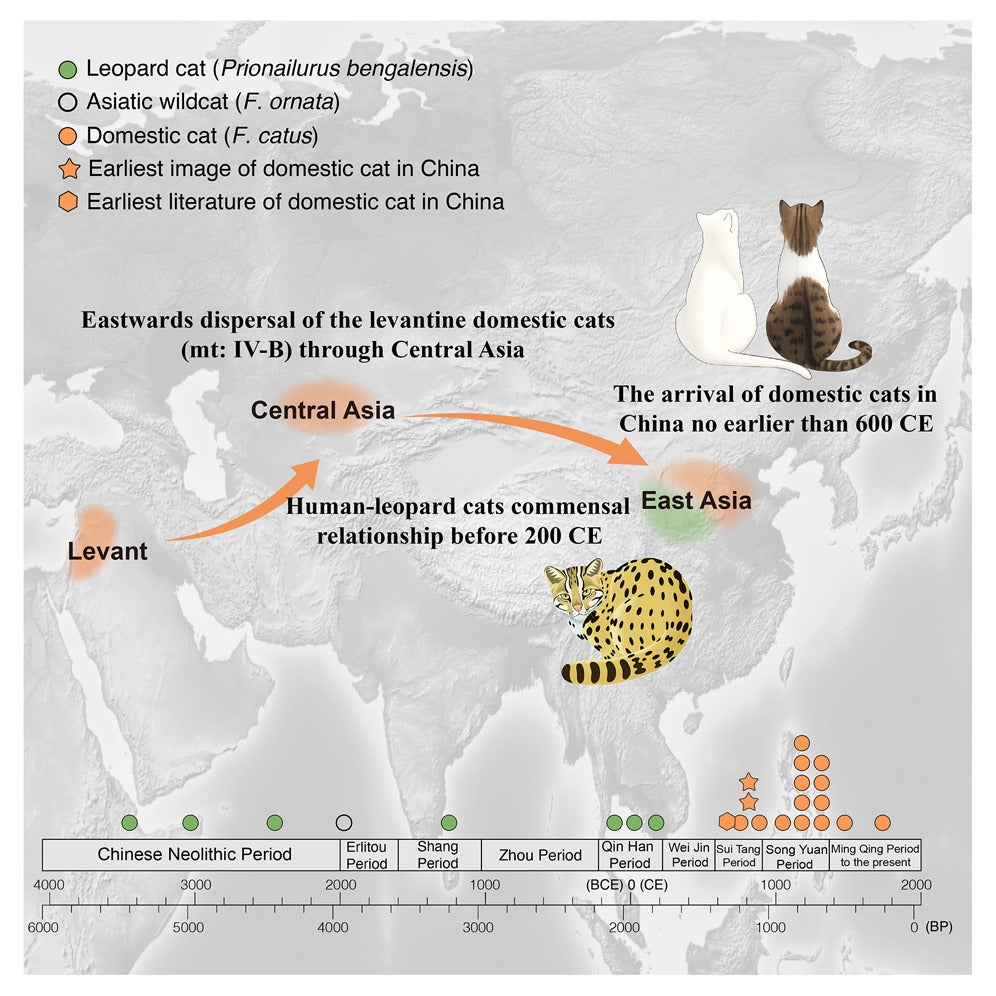
Ancient DNA reveals 3,500 years of human-leopard cat coexistence and arrival of domestic cats in China during the Tang dynasty (Cell Genomics)
The study offers the first detailed genetic timeline of the introduction of cats into China, showing how domestic species spread and integrated into human societies.
It also highlights how global trade networks, particularly the Silk Road, played a role not only in transporting goods and ideas but in spreading animal species as well.
“Genomic analysis combining 130 modern and ancient Eurasian cat specimens,” the new study concluded, “suggested an origin of Chinese domestic cats from the Levant and a likely merchant-mediated dispersal via the Silk Road.”