The forced exit of Oxfam’s chief executive in the UK has sparked a row at the charity, with one prominent trustee claiming that damning leaks to the press were intended to “destroy” Halima Begum and compounded existing headwinds the organisation faces.
Over the weekend Dr Begum was removed by the board after an independent review – which has not been made public, and which The Independent understands had not been presented to her – that allegedly flagged “serious issues” in her conduct and decision‑making.
The organisation’s trustees said Dr Begum’s £130,000 a year position was “untenable” because of an “irretrievable breakdo…
The forced exit of Oxfam’s chief executive in the UK has sparked a row at the charity, with one prominent trustee claiming that damning leaks to the press were intended to “destroy” Halima Begum and compounded existing headwinds the organisation faces.
Over the weekend Dr Begum was removed by the board after an independent review – which has not been made public, and which The Independent understands had not been presented to her – that allegedly flagged “serious issues” in her conduct and decision‑making.
The organisation’s trustees said Dr Begum’s £130,000 a year position was “untenable” because of an “irretrievable breakdown in its trust and confidence” in her ability to do the job.
Dr Begum has also been accused of bullying and creating a “climate of fear” since she took up the role nearly two years ago – allegations which her supporters within the charity have dismissed as “absurd”.
In an article announcing her removal late on Sunday night, The Times reported that a letter to the board “signed” by almost 70 Oxfam staff – but who have remained anonymous – had called for trustees to investigate her conduct. The charity then hired an external public relations company to handle her departure.
In a statement on Monday, Oxfam GB said: “In line with our policies, a review was carried out by an independent specialist consultancy with recognised expertise in workplace culture, equity, and inclusion. We have great respect for colleagues who have raised concerns about culture. Their perspectives informed an independent review that took place.”
With little opportunity to defend herself before news of her sacking was publicised, colleagues sought to defend Dr Begum.
In a statement to The Independent, Balwant Singh, a board trustee at Oxfam GB, said: “Oxfam believes in and values kindness, justice and fairness. Sadly, Halima’s treatment has been anything but kind, just or fair.
“Whilst many of those who raised concerns about Halima’s leadership hid behind anonymity by claiming fear of retribution and retaliation, it is sickening that Halima has been subjected to what appears to be a carefully orchestrated and intentionally brutal retaliation and retribution in the national media.”
He added: “It also saddens me that for an organisation that stands for speaking up, many have chosen to hide behind anonymity. It does not bode well for the culture at Oxfam.”
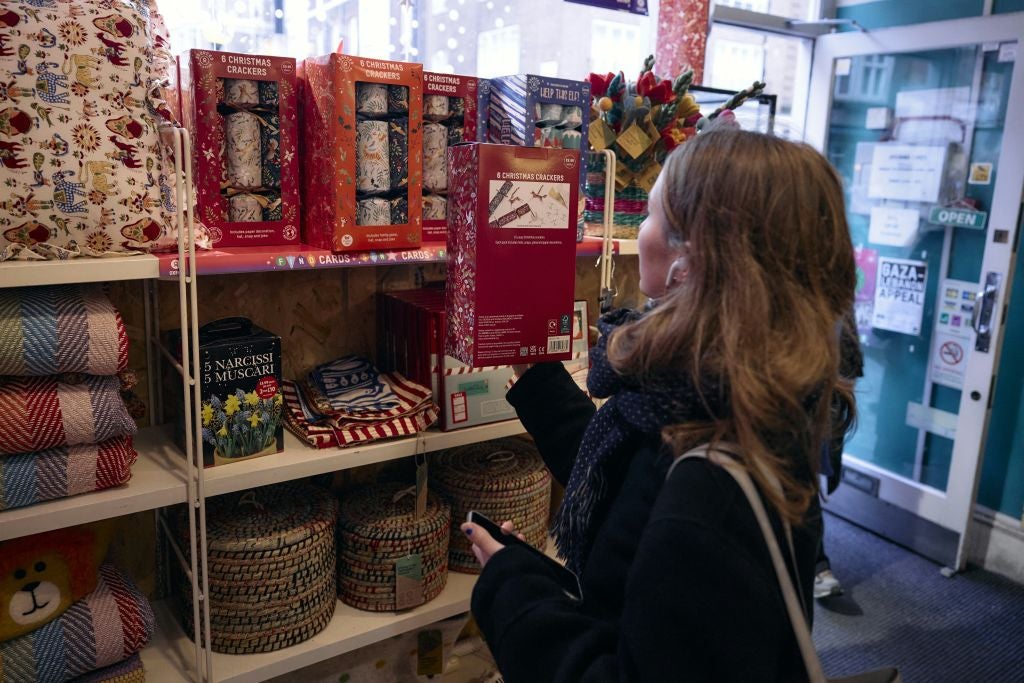
A customer browses Christmas crackers inside an Oxfam charity shop in London – shop revenues are down by two thirds over the past three years (AFP via Getty Images)
Dr Begum’s departure comes weeks after the unexplained departure of Oxfam GB’s board chair, Charles Gurassa, who in 2023, when Dr Begum was appointed, described himself as delighted that someone with “such a wealth of experience in how to make change happen and a real passion to fight injustice” had agreed to lead the charity.
Shortly after her appointment, Dr Begum’s analysis of Oxfam’s finances revealed a £16.3m deficit which was soon worsened by massive US and UK foreign aid cuts. With falling donations and a weak UK economy, the future of the organisation she had joined was far from guaranteed.
Her appointment of a new chief financial officer and a subsequent restructuring, which meant putting hundreds of jobs at risk of redundancy, helped move the dial to address the financial issues. Nonetheless, in September Oxfam said: “Charities are being asked to do more with less at the very moment people need us most.”
Sources told* The Times* that staff had been unhappy over the necessary restructuring and that it had created “widespread animosity”.
Meanwhile, according to Mr Singh, Dr Begum “had filed a grievance/whistleblowing claim” against Mr Gurassa, made before she was aware of any concerns about her leadership.
“The claims related to sexism, racism and bullying. The grievance process is yet to be completed,” he told The Independent.
Akiko Hart, the director of the campaign group Liberty, also defended Dr Begum, who she described as a “mentor and friend”.
“I would urge everyone watching to hold off from immediate judgement and see what facts and evidence emerge,” she said in a LinkedIn post.
“I would invite people to reflect on the timing of this announcement, at the tail end of a painful restructure which was approved by the board, and a few weeks after the resignation of the chair.”
Oxfam has fought to maintain its hard-won reputation as a leading NGO in the years since allegations emerged in 2018 that the charity’s staff had hired sex workers while overseas, including in Haiti and Chad.
More recently, shop profits have fallen by around two-thirds in the past three years, according to figures released this month, underscoring a sharp downturn in retail performance.
Earlier this year the organisation cut 250 roles from its 2,100-strong UK workforce, a move aimed at trimming £10.2m from its wage bill to address the shortfall in finances.
Over the summer Dr Begum was accused of potentially compromising Oxfam’s reputation for neutrality after joining a parliamentary panel which featured a Palestinian journalist reported to have described the 7 October attacks on Israel as a “great day.”
Oxfam’s chief supporter officer, Jan Oldfield, who has been in the role for four years, will now become acting chief executive.