Cuban immigrants detained inside a military compound in Texas were severely beaten by guards before they tried to illegally coerce them into crossing the U.S.-Mexico border, according to a complaint to Immigration and Customs Enforcement filed by civil rights groups.
Four Cuban immigrants inside a makeshift facility at Fort Bliss were among dozens of immigrants loaded into buses and pressured by masked federal agents to cross the border or risk being deported to Africa or a brutal prison in El Salvador – or face the prospect of indefinite detention at the military base, the letter says.
The filing …
Cuban immigrants detained inside a military compound in Texas were severely beaten by guards before they tried to illegally coerce them into crossing the U.S.-Mexico border, according to a complaint to Immigration and Customs Enforcement filed by civil rights groups.
Four Cuban immigrants inside a makeshift facility at Fort Bliss were among dozens of immigrants loaded into buses and pressured by masked federal agents to cross the border or risk being deported to Africa or a brutal prison in El Salvador – or face the prospect of indefinite detention at the military base, the letter says.
The filing from the American Civil Liberties Union and other groups is based on interviews with 45 detainees at the facility, a sprawling $1.2 billion project that Donald Trump’s administration has designed to hold 5,000 people to support his mass deportation agenda.
A series of sworn testimonials describes the facility’s deteriorating conditions and routine beatings that have left several people hospitalized, including detainees whose testicles were “firmly crushed” by guards.
“This place does not seem designed for humans to be here,” a 32-year-old detainee from Venezuela wrote.
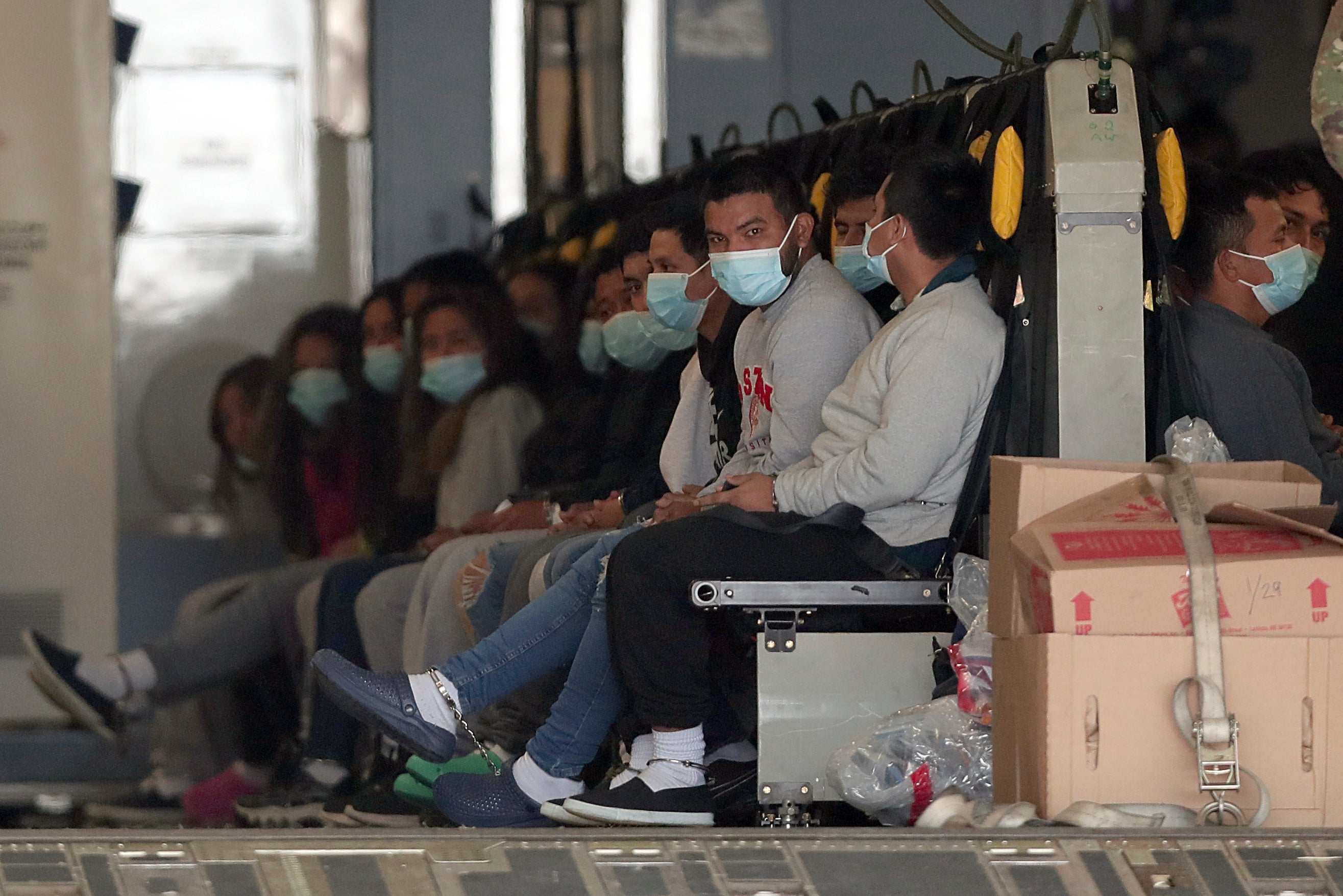
A complaint from human rights groups alleges immigrants at a sprawling ICE facility in Texas have faced severe beatings by guards and are routinely dumped across the border (AP)
Isaac, a 43-year-old Cuban man who lives with his 5-year-old daughter and her mother in Florida, said a group of 30 guards beat him after he resisted his removal to Mexico.
“My fear is that one day they will take us on a bus and they will put bags over our heads and they will drop us in the middle of the desert to fend for ourselves,” he said.
Benjamin, a 49-year-old Cuban hibachi chef who lives in Florida, wrote in his statement that guards threatened to do exactly that.
“They threatened me by saying I have a bad record and the only solution is to go to Mexico,” he said. “They said they would handcuff us, put bags over our heads and send us to Mexico. I refused to sign the papers.”
Benjamin is among several Cuban detainees who said they were cuffed at the wrists, hands and waists when they were loaded on buses bound for the border. “These threats feel like mental torture,” he wrote.
“I started feeling very anxious at this point and I started yelling and screaming at the immigration guard in Mexico that this is a kidnapping and I don’t want to be taken,” wrote Abel, a 51-year-old Cuban truck driver who has lived in the United States since 1994.
“The guard from Mexico then said that they don’t want anyone who was going to be forced to go to Mexico,” he wrote. “If I hadn’t started kicking and screaming at that moment, I believe I might have been taken to Mexico.”
Eduardo — a 35-year-old electrician and father of three U.S. citizen children, including a five-month-old — said guards drove him and others to a portion of the border wall and told them to jump over.
He said they threatened to charge him with federal crimes and “never get out” of Fort Bliss if he didn’t cross.
“These actions by federal officers are clear violations of statutory, regulatory, and due process protections, including mandatory protections that require meaningful notice and an opportunity to contest a third-country removal on the basis of fear,” according to the letter from the ACLU and other human rights groups.
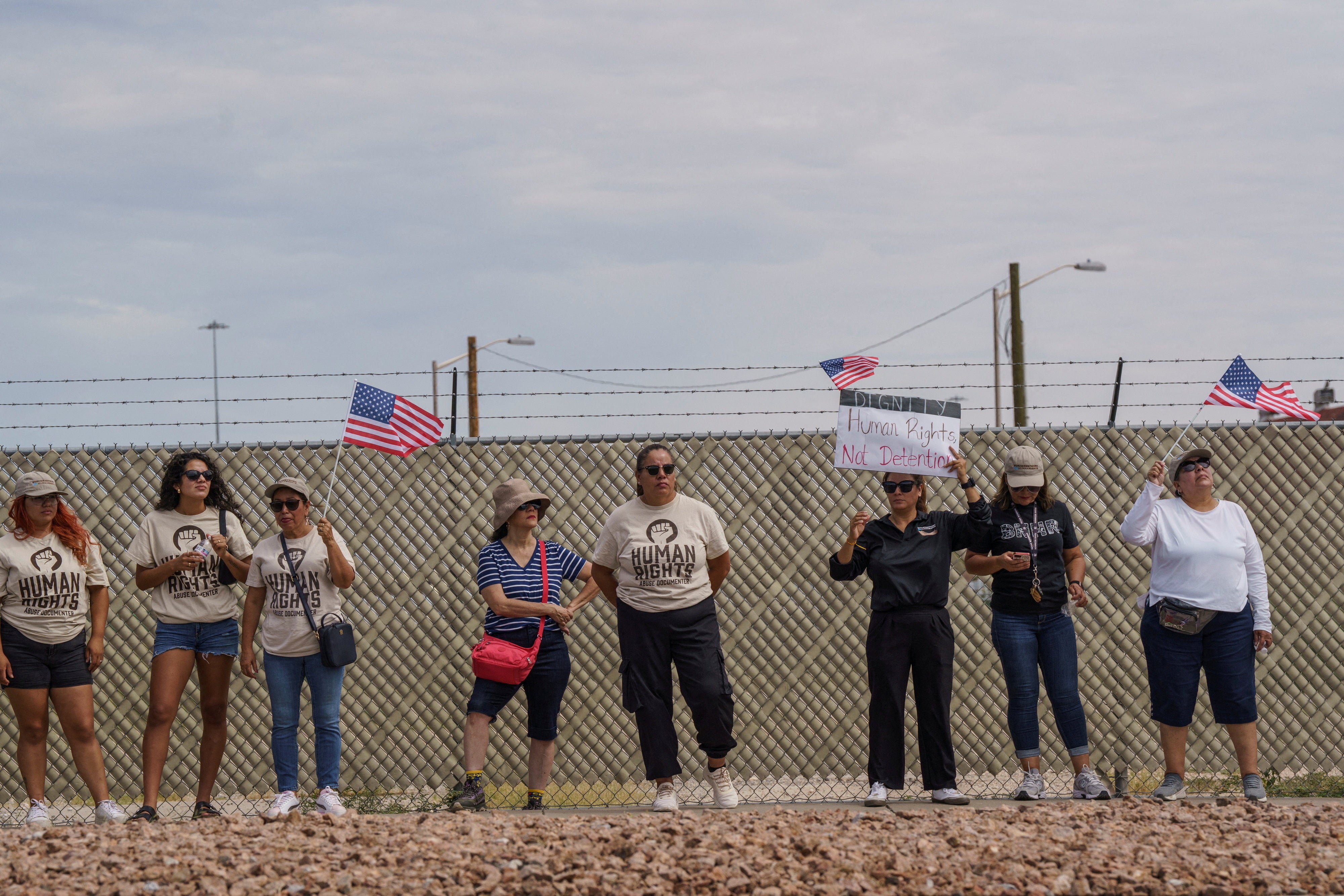
ICE is running a $1.2 billion project turning the Fort Bliss military base into a sprawling detention center, where detainees endure overflowing toilets, lack of medical care and little to no time outside, according to a new complaint (REUTERS)
In more than a dozen testimonials, detainees describe losing consciousness after being repeatedly kicked in the ribs, overflowing toilets, “rotten juice” and food that makes them vomit to think about, and spending weeks indoors.
“I have not seen the sun in more than three months,” a 44-year-old Cuban man wrote.
“Lately, I’ve been scared to ask for anything because I’ll just get beaten. I feel ostracized, like I am an animal,” said Eduardo.
A 52-year-old construction worker from Mexico who has lived in the United States for 24 years said he endured “serious delays” getting his diabetes medicine and went more than two weeks without it.
Detainees routinely go on hunger strike, feeling that the only way to have their needs met is if they are on the verge of severe illness or death, another detainee wrote.
A 19-year-old Venezuelan detainee said he chipped his tooth when guards tossed him to the ground, while an officer “grabbed my testicles and firmly crushed them,” he wrote. Another guard forced his fingers deep into his ears and another pulled fingers back, he said.
After his release from a hospital, he was placed in solitary confinement, or “the hole,” which guards call a “center for discipline,” where he was held for eight days without speaking to anyone, he said.
“I feel like I don’t know who to trust or what to do,” Abel wrote.
The Independent has requested comment from Homeland Security.
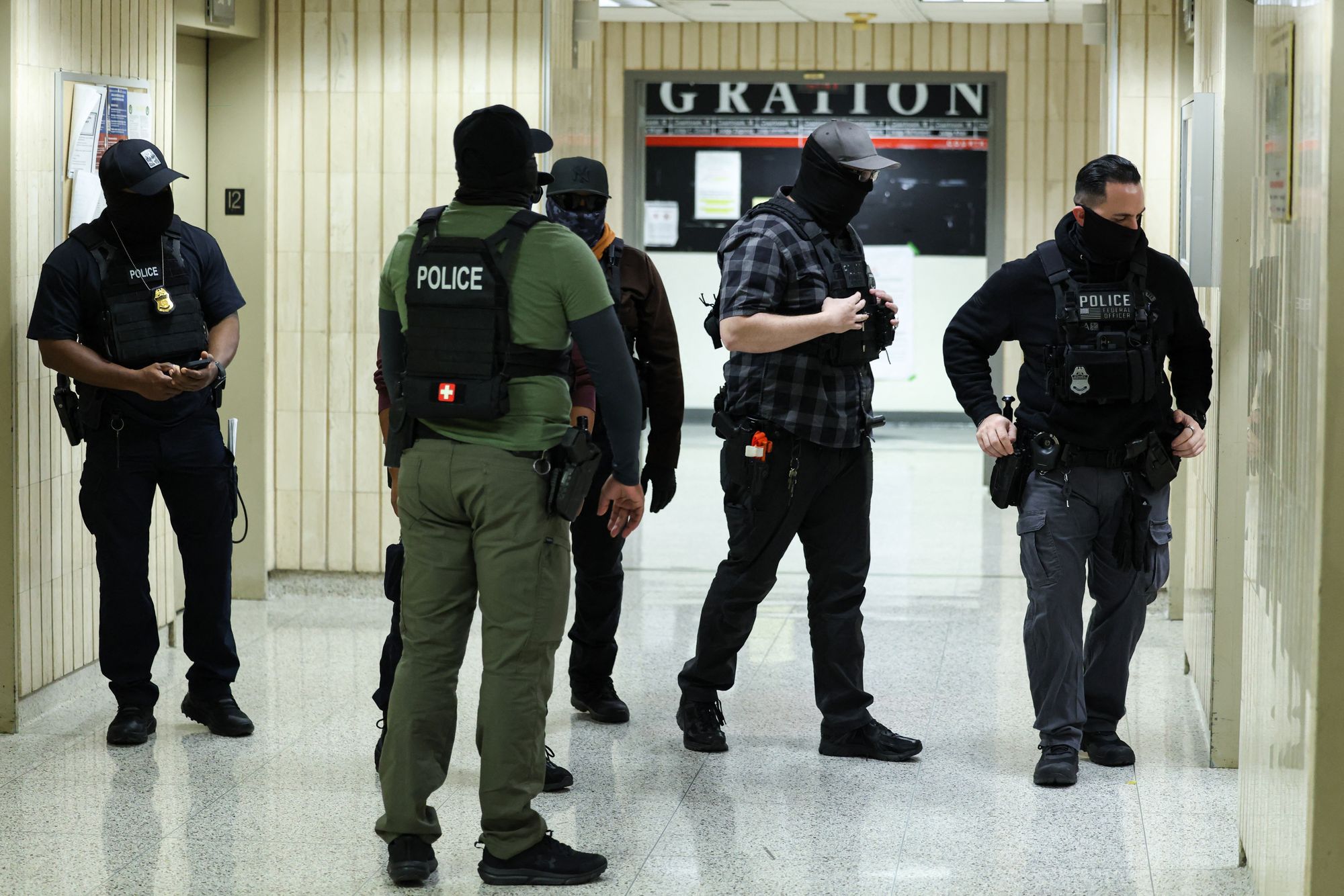
Federal judges across the country are scrutinizing conditions at ICE facilities after civil rights groups and detainees file lawsuits alleging similar poor conditions as Trump ramps up his mass deportation campaign (AFP via Getty Images)
The allegations echo lawsuits and sworn statements fromimmigrants in detention centers across the country, including litigation against ICE makeshift facilities in Chicago and New York, where federal judges have ordered the administration to swiftly address decaying conditions that have left immigrants without adequate food and water in cramped cells near open toilets under lights that stay on at all hours, and with little to no time spent outside.
Human rights groups are calling on the administration to close the Fort Bliss camp.
In July, ICE instructed agency personnel to deport immigrants to a so-called third country with as little as six hours’ notice.
That guidance followed a Supreme Court’s order that overruled a lower-court judge’s decision that immigrants must be given “meaningful opportunity” to contest their removal to a third country where immigrants have no claim of citizenship or connections.
That temporary decision has opened the door for Homeland Security to swiftly remove immigrants to war-torn African nations and other countries with poor human rights records and no due process.
In their letter to ICE, human rights groups demanded an immediate end to the “coercive and abusive attempts” at third-country removals from Fort Bliss to Mexico, as well as “a thorough investigation” into the allegations in the complaint.
“I am scared of retaliation for speaking about my experience here,” wrote Abel, “but I believe the whole world should know what is happening.”