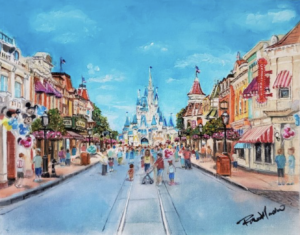
There’s a particular sensation you get when walking down Main Street, U.S.A. in a Disney park; a strange blend of nostalgia, comfort, and unreality. Everything feels familiar, yet nothing is authentic. The buildings are too clean, the colors too bright, the music too perfectly whimsical. It is a simulation of a town rather than a town itself. And lately, that sensation is creeping far beyond the theme park gates.
Disney parks are engineered to remove everything unpredictable or uncomfortable from the world. Trash disappears almost instantly. Smells are controlled. Characters never break. The weather is mitigated. Danger is minimized or rendered harmlessly adventurous. The appeal of this place is obvious: here, life finally makes sense. But what happens when the logic of the theme park becomes the logic of the city? Increasingly, our everyday environments of shopping districts, waterfronts, transit hubs, and even museums operate according to the same ethos: frictionless movement, controlled ambience, and a curated sense of safety. We’re not just visiting simulations anymore. We’re living in them.
Disneyfication works through a kind of aesthetic flattening. It doesn’t erase culture; it sanitizes it. It makes the world more charming, but also more generic. Coffee shops start to resemble set pieces.