As a company that began with a mission to empower people by making computing accessible, it’s no surprise that we view our technical documentation as an important part of our products. To that end, we are powering up our documentation team. This year, we have added two new Documentation Specialists to our staff: Jeunese Payne, who comes from a psychology and UX background, and Kat Shann (that’s me — hello!), with 15 years’ experience as a technical author with a background in software.
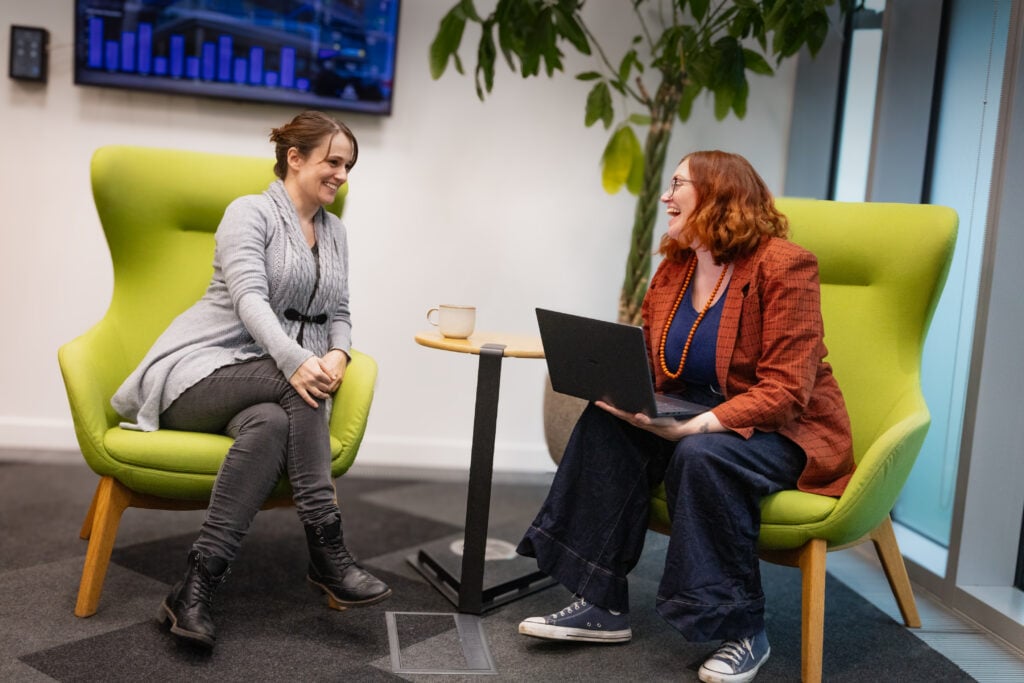 Jeunese and Kat
We’re looking forward to making lots of additions and improvements to our documentation. One of the first improvements we are making is to how we manage our …
As a company that began with a mission to empower people by making computing accessible, it’s no surprise that we view our technical documentation as an important part of our products. To that end, we are powering up our documentation team. This year, we have added two new Documentation Specialists to our staff: Jeunese Payne, who comes from a psychology and UX background, and Kat Shann (that’s me — hello!), with 15 years’ experience as a technical author with a background in software.
Jeunese and Kat
We’re looking forward to making lots of additions and improvements to our documentation. One of the first improvements we are making is to how we manage our repositories. Our documentation is open source, located on GitHub in raspberrypi/documentation, and we license it under a Creative Commons Attribution-ShareAlike licence — meaning you can take it, remix it, and translate it, as long as you give us credit for the original. Previously, we would build our documentation site directly from this repo; now we are moving our development work to a private internal repository and setting up raspberrypi/documentation to mirror it.
Why are we making this change?
With the rapid pace of documentation updates and new product releases (we’re often working on documentation for several new products at once), maintaining multiple branches in our private repository, as well as all the rebasing and merge-conflicts that ensued, was becoming a bit unmanageable. Our new process allows us to spend more time writing quality documentation and less time wrangling with git! At the same time, our documentation gets to stay open source, and the public repository remains open for issues and pull requests from the community.
Community contributions — keep ’em coming!
We have a rich history of docs contributions from the Raspberry Pi community: almost 10% of the pull requests merged to the documentation repository in the last year came from you, not us. We want to keep those contributions flowing. Keep raising pull requests against our docs and letting us know what changes you’d like to see, including any mistakes that have slipped through the net. Our new process ensures that you’ll still get credit for your changes, whether we pull them in as a patch or use the co-author feature in GitHub.
Beyond these changes, the docs team is still growing; we’re planning to add another Documentation Specialist in the new year, preferably someone with a hardware background. If that sounds like you, check out the job listing on our website.