- 25 Dec, 2025 *
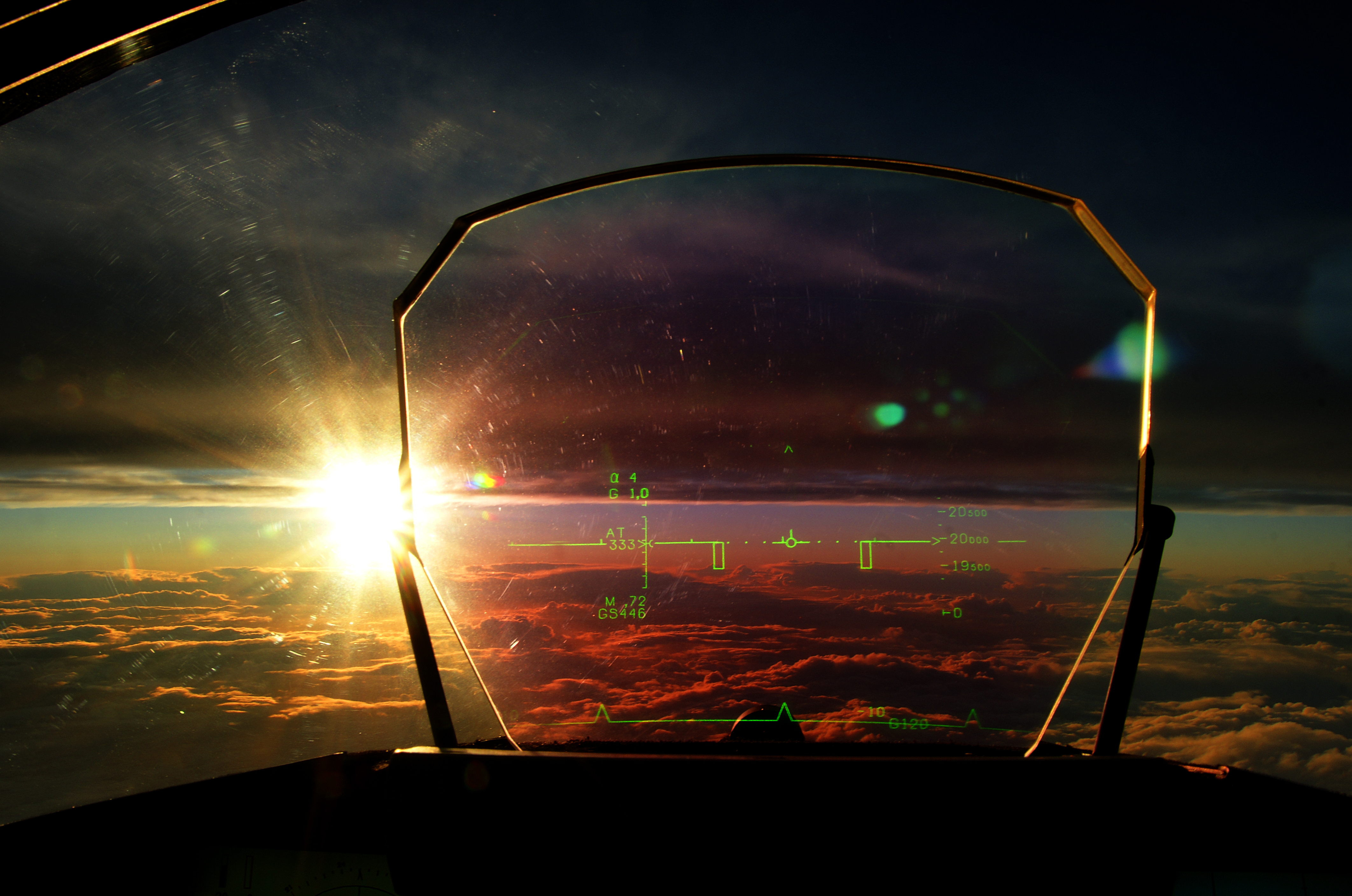 Heads-up display (HUD) systems demonstrate human–machine collaboration by integrating computational assistance into real-time pilot decision-making.
Aside from surveying the many applications of robots across different environments — Sea, Air, War, and Space — what I appreciated most about Our Robots, Ourselves is how the author, Dr. David A. Mindell, systematically dismantles what he calls the "myths of automation." Rather than framing robotics as a march toward independence from humans, …
- 25 Dec, 2025 *
Heads-up display (HUD) systems demonstrate human–machine collaboration by integrating computational assistance into real-time pilot decision-making.
Aside from surveying the many applications of robots across different environments — Sea, Air, War, and Space — what I appreciated most about Our Robots, Ourselves is how the author, Dr. David A. Mindell, systematically dismantles what he calls the "myths of automation." Rather than framing robotics as a march toward independence from humans, Mindell — an expert on human–machine systems — argues that robots have always been deeply entangled with human presence, judgment, and responsibility.
At the heart of the book are three myths:
Myth of linear progress – the idea that technology evolves neatly from direct human control, to remote operation, and finally to full autonomy 1.
Myth of replacement – the belief that machines replace humans one-for-one 1.
Myth of full autonomy – the utopian assumption that robots can operate entirely on their own, now or in the future
Across every domain he examines, Mindell shows that these myths fail — not because robots are ineffective, but because automation has never been purely technical; rather, it is social, cultural, and human.
In the chapter on Sea, Mindell discusses underwater robots as tools that extend human presence into otherwise inaccessible depths. While remotely operated vehicles (ROVs) allow humans to explore the deep sea without physically descending, this does not eliminate the human role. Skilled pilots remain on the surface, actively interpreting sensor data and manipulating robotic arms in real time. Interestingly, this technological shift sparked debate among traditional explorers, some of whom argued that certain activities — such as underwater archaeological exploration — require direct human presence and that remote methods are ethically inferior. Rather than resolving this conflict by replacing one approach with another, the field evolved to accommodate both. Underwater robots and human-occupied submersibles developed side by side, each excelling under different conditions. This collaboration was perhaps most clearly demonstrated in the joint exploration of the Titanic wreck, where the Jason Jr. worked alongside the Alvin submersible. Here, automation did not erase human presence — it reshaped it.
The chapter on Air explores aviation technologies such as autoland systems, heads-up displays (HUDs), and synthetic vision. Rather than reducing pilots to passive supervisors, these systems integrate pilots more deeply into the aircraft’s operation. The HUD, in particular, exemplifies Mindell’s argument: it does not make flying autonomous but instead fuses human perception with machine computation. Aviation, as Mindell shows, works best when humans and computers compensate for each other’s limitations. Both are prone to failure, but together they form a resilient system — challenging the myth that automation progresses by removing humans from the loop.
In the chapter on War, Mindell turns to unmanned aerial vehicles (UAVs) and the ethical, psychological, and institutional tensions surrounding them. While much public debate focuses on the morality of remote killing — such as Predator drone strikes — Mindell also highlights how UAV pilots themselves are perceived within the military. Some traditional pilots dismiss them as not being "real" pilots, arguing that operating from afar lacks the physical risk and embodied experience of flying over a battlefield. This stigma is reflected in derisive terms like "Nintendo Medal" for honors awarded to UAV operators. Yet despite this tension, UAVs have become indispensable to modern warfare. Crucially, they are not autonomous agents: human operators still interpret data, make decisions, and authorize action. The myth of full autonomy collapses under the realities of military operations.
The Space chapter is my personal favorite. Mindell opens by revisiting Apollo 11, emphasizing how Neil Armstrong manually landed on the Moon rather than relying on automated systems. From there, he explores other forms of human–robot collaboration, including the repair of the Hubble Space Telescope. He then turns to Mars rovers, where human involvement takes on a different form. Here, scientists on Earth plan, monitor, and interpret rover actions despite communication delays imposed by physics. (Notably, some even wear multiple watches to track Earth and Mars time simultaneously.) This raises philosophical questions about whether such delayed interaction still counts as telepresence. Yet even here, robots do not operate independently; they remain embedded within human decision-making processes.
Across all these domains, Mindell convincingly shows that the three myths of automation fail because they misunderstand what robots actually are. Robots do not eliminate humans; they reorganize human roles. Automation does not advance by severing human involvement but by redistributing it. Humans and robots co-evolve, shaping each other’s capabilities and limitations.
Ultimately, Our Robots, Ourselves is not a book about the future of machines, but about the enduring presence of humans within technological systems. As long as robots exist, they will remain inseparable from human judgment, responsibility, and imperfection. ###