I just released ed25519-wasm, a small Rust crate for Ed25519 signatures in WebAssembly. The static library can also be directly linked in applications w... Read more ›
In May 2026, the Bun team did something the software industry has been whispering about for years: they rewrote their entire runtime from Zig to Rust. Not over the course of a year with a dedicated team. In six days. Using AI agents. At nearly a million lines of code, Read more ›
Ziex is a full-stack web framework for Zig\. It now has most of the core pieces needed to build real applications and is preparing for its first public release \(0\.1\.0\), planned after Zig 0\.17 stabilizes\. Some of the current features: - Server-side rendering \(fast by default\) - JSX-like UI syntax in Zig - File-system routing - Client components compiled to WebAssembly - zx\.db: built-in SQLite abstraction \(uses D1 when deployed on - Cloudflare Workers\) - zx\.kv: key-value st... Read more ›
Detects usage of unsafe Rust in a Rust crate and its dependencies. - geiger-rs/cargo-geiger Read more ›
While playing with WebAssembly, I noticed that if I export a function in a file (called b.zig), and I import this file from my main file (called a.zig), then the function from b.zig is exported only if I use some other things from b.zig. I made a minimal example here : a.zig b.zig The compilation gave me as WASM file. If the manual export is commented or not, I get this from wasm-objdump -x: without_manual_export.wasm with_manual_export.wasm You can see that in the first case there is no valu... Read more ›
I started as a Java developer, but for some time now, I have broadened my horizons. Recently, I thought about how early languages were dedicated to a single target and platform, and now they are broadening their focus. In this post, I want to write down my thoughts in the hope that it may be useful to others, probably to my future self. Definitions You may have been wondering about the title terms. Read more ›
I’m learning Rust seriously, and I’m considering rebuilding an existing Express backend with Axum + Tokio — not for performance, but for… Read more ›
FortiBleed Peaks the Dataset, Velvet Ant Spent a Decade Inside Air-Gapped Networks, and WebAssembly Joins the Supply Chain Malware Stack Read more ›
Greetings, Ladies and Gentlemen! In one of our previous publications entitled “The Tokio Runtime For Rust: Part I, WebSocket.”, Read more ›
Iran has officially invited Mullah Mohammad Hassan Akhund, Prime Minister of the Islamic Emirate of Afghanistan (IEA), to attend the funeral and burial ceremony of Iran’s former supreme leader Ali Khamenei. The invitation was delivered during a meeting in the Arg between Mullah Abdul Wasi, Chief of Staff of the Office of the Prime Minister, […] Read more ›
Unity 6.5 has just been released. This release marks a major milestone, the official deprecation of the Built-In Render Pipeline (learn more about the future of Unity Pipelines here). Of course, that’s not the only thing in the release: Key Links Unity Homepage What’s New in Unity 6.5 Unity 6.5 The post appeared first on <a href=" Read more ›
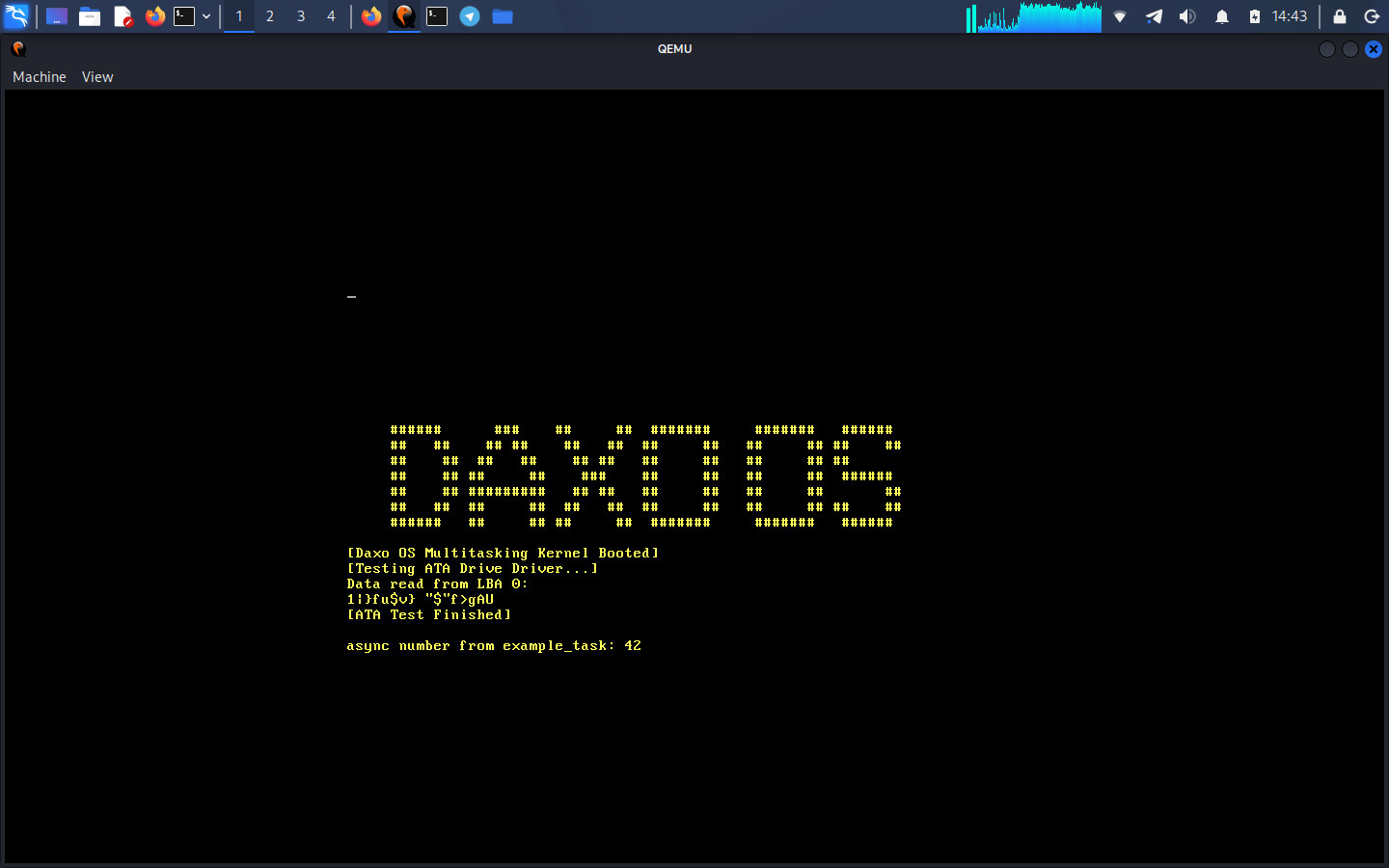
Most developers take the operating system for granted-treating it as an invisible, obedient foundation for browsers, Docker, and heavy IDEs. For me, this foundation was always the ultimate mystery. I wanted to understand: what actually happens on the bare metal when you strip away high-level abstractions? That's how my 15-day experiment started. I carved out 100 hours from a tight schedule between school and intense martial arts training (judo and wrestling) to build a standalone, microkernel... Read more ›

A week after going public, the Topaz compiler repository is private again. A reflection on subtraction, open-source burdens, and choosing an open surface with a closed core. Read more ›
You'd think that given the same bytes of input you'd get the same bytes of output. lol. lmao. No, you don't. It's complicated. Read more ›
Many people want to know, precisely, which pieces of text are valid Rust programs, and for those that are, what they do. This group includes compiler writers, language designers, researchers, unsafe code writers, safety-critical industry assessors, and of course any Rust developer trying to understand a piece of code. Read more ›
#TypeScript 🔧 Bug-fix release `ControllerRegistry.initController()` was calling `controllers.set(name, ...)` without closing the prior instance. `SqlJsRvfBackend` wrappers held an Emscripten MEMFS file (~11 MB each = sizeof `memory.db`) that only releases on explicit `.close()` — JS GC of the wrapper does NOT reclaim MEMFS because the sql.js module is a process singleton. Fix: added `closePriorIfAny(name)` helper, called before every `controllers.set()` site. Best-effort close (catches errors... Read more ›
Compile Clojure and YAMLScript to Go, native binaries, Wasm and more Read more ›
The opening post of a Low-Level Systems Design in Rust series, arguing that the biggest performance win is structural: replace a shared multi-producer cursor that serializes cores through cache-coherence traffic with one private single-writer SPSC ring per producer, converting quadratic writer contention into a cheap O(N) consumer sweep. Read more ›