HalfEngine v0.7.0 introduces the engine’s first structured logging and diagnostics system, an essential step toward long-term stability, tooling, and debuggability.
As the engine grows more complex, bugs become harder to reproduce and reason about. A single error message like “deserialization failed” is rarely enough to understand what actually went wrong or how the engine got there. On top of that, traditional text logs are difficult to consume reliably by tools and automated analysis systems. This update adds the first iteration of the logging and observability layer.
What’s included in this version:
- Per-subsystem log channels
- Log levels with runtime filtering through the configuration files
- Structured log events with timestamps, thread IDs, simulation ticks and other use…
HalfEngine v0.7.0 introduces the engine’s first structured logging and diagnostics system, an essential step toward long-term stability, tooling, and debuggability.
As the engine grows more complex, bugs become harder to reproduce and reason about. A single error message like “deserialization failed” is rarely enough to understand what actually went wrong or how the engine got there. On top of that, traditional text logs are difficult to consume reliably by tools and automated analysis systems. This update adds the first iteration of the logging and observability layer.
What’s included in this version:
- Per-subsystem log channels
- Log levels with runtime filtering through the configuration files
- Structured log events with timestamps, thread IDs, simulation ticks and other useful metadata
- A contextual logging system that records hierarchical execution state
- Support for formatted and field-based logs
- The foundation for rotating file logs and future tooling
One of the key features of this system is contextual logging. The engine can now attach a structured “context stack” to error events that describes the chain of operations that led to it.
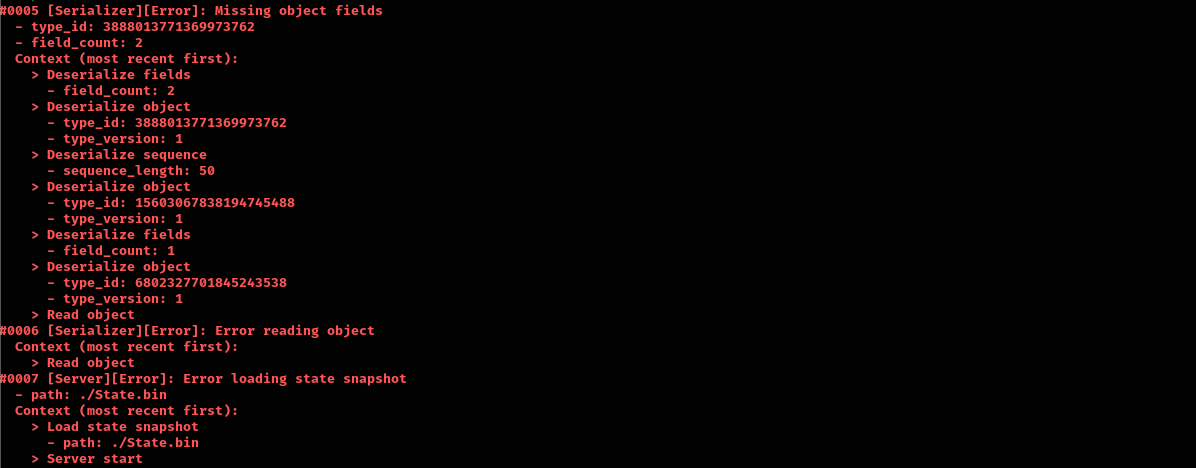
At the moment the system outputs only to the console, but internally it already operates on a structured event stream. This means future tools will be able to consume the same data in real time without relying on text parsing. This lays the groundwork for several important features:
- Detailed crash diagnostics with full simulation context
- Faster reproduction and fixing of bugs
- Offline inspection of server activity
- Realtime diagnostic tools for live debugging
- Replay and event timelines
- Better error reporting for users
This is another low-visibility update with no new UI or gameplay features other than the structured and colorful console output, but it’s a critical milestone for engine stability and long-term maintainability. Getting observability and diagnostics right early prevents entire classes of debugging and maintenance problems later and ensures that future features are built on a deliberate introspection layer rather than ad-hoc print statements.
Breaking Changes! This version introduces a breaking change to the snapshot format. HE v0.6 will reject snapshots created with v0.7 and newer. This change is backwards compatible; v0.7 can load snapshots created using v0.6. This change was necessary to support improved validation, metadata, and long-term compatibility guarantees. Snapshot versioning and migration support will continue to evolve in future releases.
What’s Next? The next release will focus on protocol negotiation and server-side commands.
If this sounds interesting to you, consider following the project to get notified of future updates!
You can download and test v0.7.0 below. If you encounter issues, please report them on our public GitLab Issues page or start a new discussion.
Files
Get HalfEngine
HalfEngine
Interactive Experiences Engine
| Status | Prototype |
| Category | Tool |
| Author | Halfworks |
| Genre | Simulation |
| Tags | 3D, custom-engine, Experimental, Game engine, Indie, Sandbox, tech-demo |
| Languages | English |
More posts
6 days ago
24 days ago
32 days ago
37 days ago
39 days ago
40 days ago