[The content of this article has been produced by our advertising partner.]
Universal design is fast becoming a new measure of good urban living in Hong Kong. As the city’s population grows older and more diverse, the way spaces are planned, built and managed now matters as much as what they contain.
That shift – from compliance to inclusivity – is what the Equal Opportunities Commission (EOC) hopes to accelerate through its Universal Design Award Scheme (UDAS), which recognises organisations that make accessibility part of everyday experience.
Launched in 2024, the scheme drew applications from across the public and private sectors, indicating growing awareness that accessibility is not just a matter of regulatory compliance but of social participation.
Following strong…
[The content of this article has been produced by our advertising partner.]
Universal design is fast becoming a new measure of good urban living in Hong Kong. As the city’s population grows older and more diverse, the way spaces are planned, built and managed now matters as much as what they contain.
That shift – from compliance to inclusivity – is what the Equal Opportunities Commission (EOC) hopes to accelerate through its Universal Design Award Scheme (UDAS), which recognises organisations that make accessibility part of everyday experience.
Launched in 2024, the scheme drew applications from across the public and private sectors, indicating growing awareness that accessibility is not just a matter of regulatory compliance but of social participation.
Following strong participation in the inaugural edition, the second edition of UDAS 2026/27 is now open for entries. The application period runs until March 31, 2026 with categories open to enterprises, property developers, government departments, higher education institutions, retailers and community organisations.
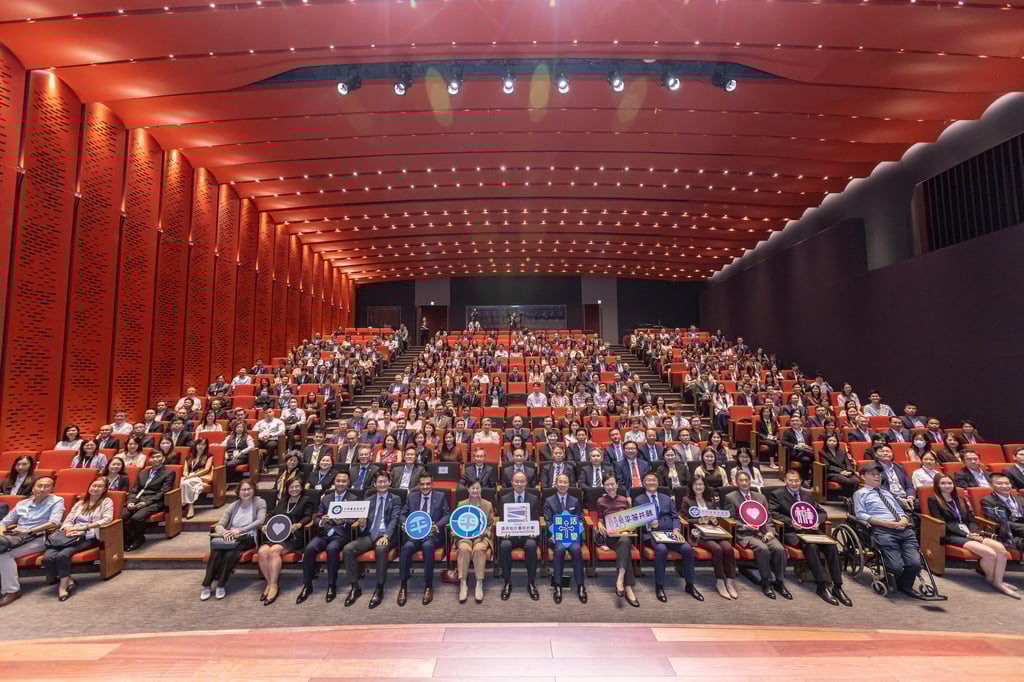
Private- and public-sector organisations gathered at the Universal Design Award Scheme 2024/25 Ceremony to celebrate their efforts and contributions in making Hong Kong a more inclusive city for all.
Towards universal design
The EOC’s Universal Design Award Scheme draws on decades of progress in accessibility.
Under the Building (Planning) Regulations and the Government’s Design Manual: Barrier Free Access 2008, Hong Kong has established a solid foundation of physical access requirements in public and private buildings.
However, as the city’s demographic shifts and expectations for a fairer, more inclusive society rise, the EOC recognises the need to move away from compliance-driven design towards universal design, which considers everyone’s experience instead of minimum standards.
As defined by the United Nations Convention on the Rights of Persons with Disabilities, universal design is the design of products, environments, programmes and services to be usable by all people, to the greatest extent possible, without the need for adaptation or specialised design.
Awarding inclusion
The latest edition has been expanded to cover more areas of daily life. It retains existing categories Shopping Malls and Retail Spaces, Office Buildings and Office Spaces, Restaurants, Recreational, Sports and Cultural venues, Revitalised Sites and introduces two new ones – Public and Private Residential Buildings and Higher Education Institutions.
These additions reflect growing demand for accessible housing and inclusive campuses, where universal design principles can directly improve quality of life. The objective is to recognise organisations that design with consideration of diverse users and to inspire others to follow.
Apart from recognition, insights are shared with industry practitioners through the award process. Based on site visits and assessments conducted during the first UDAS, good practices and common gaps across various sectors were identified by the EOC and summarised in a reference guide known as Points to Note, which can be accessed from the EOC’s website.
Good practices identified span community, family-friendly facilities and workplace design. In an increasingly diverse communities, prayer rooms for those in need, handrails next to urinals and standard toilet cubicles help frail users move safely, while adult diaper changing rooms in malls and cinemas support longer visits. Resting areas are also being added to encourage older residents to stay active and social.
Family-friendly facilities include babycare rooms with separate breastfeeding and nappy-changing areas, stroller-lending services and wider parking bays to make boarding and alighting safer for parents with young children.
Workplace design has also improved. Adjustable desks and monitor arms now cater to different body types and postures, meeting rooms are designed with better acoustics for hybrid participation, and rest zones offer space for focus or relaxation.
Addressing barriers in practice
Physical design is not the only area where the EOC is driving change. Recognising that barriers can also be social or procedural, the EOC introduced a reference guide titled Breaking Barriers: Insights from the EOC Cases, which can be accessed from the EOC’s website.
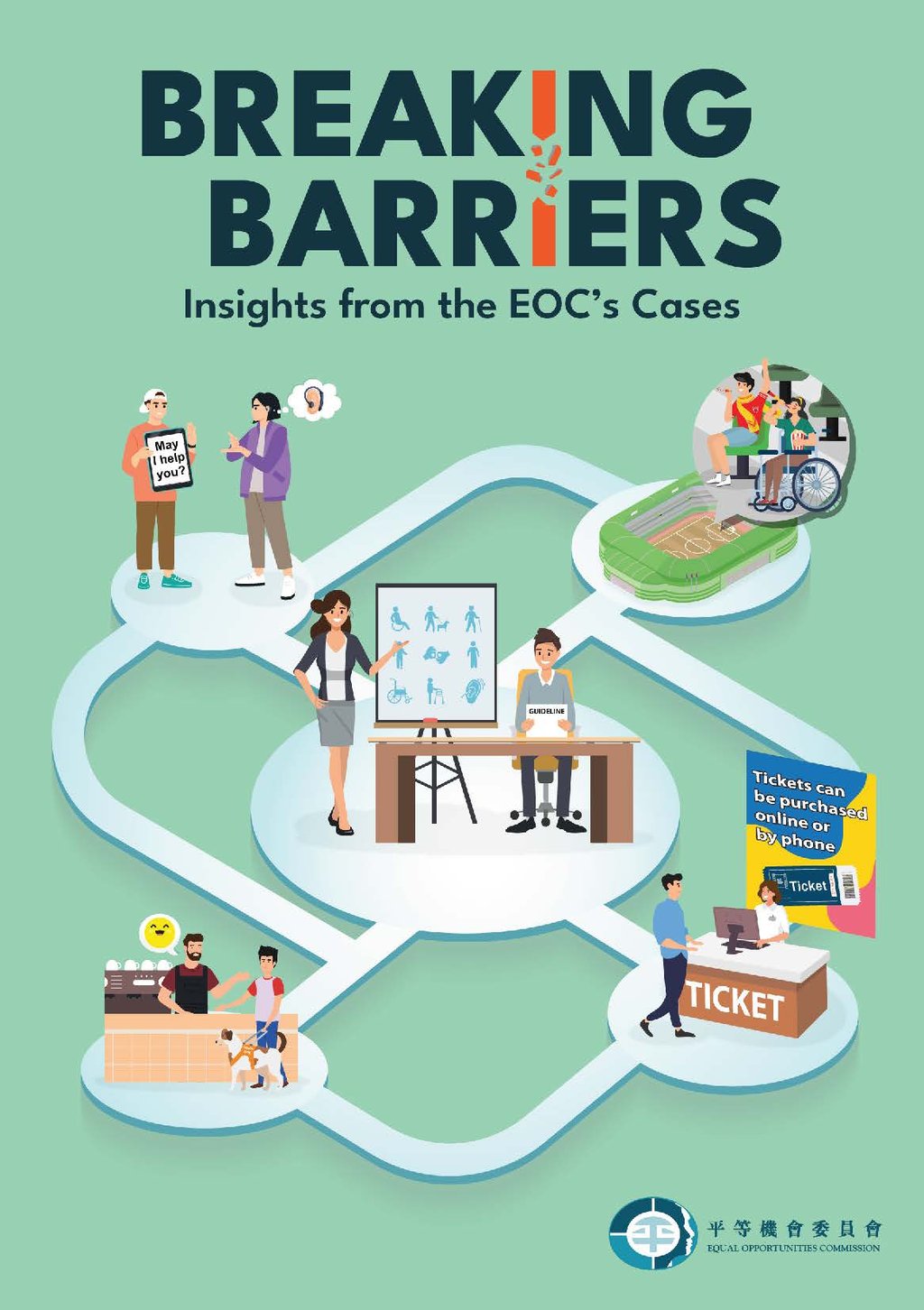
The Equal Opportunities Commission’s Breaking Barriers: Insights from the EOC Cases reference guide examines social and procedural challenges faced by people with disabilities in Hong Kong.
The publication examines attitudinal and operational challenges faced by people with disabilities, such as inflexible service procedures or inadequate staff training.
Organisations are reminded that inclusivity begins with awareness and therefore encouraged to combine physical improvements with staff understanding and empathy for users of different needs.
Collaboration for an inclusive city
While universal design is rooted in architecture and space design, its principles apply to every part of daily life. In that sense, the UDAS is seen as a platform for collaboration among developers, facility managers, business owners and public institutions.
In recent years, the Hong Kong government has also stepped up efforts to align policy with inclusive practice. The Task Force on Promoting Elderly-friendly Building Design continues to review existing regulations and technical guidelines to expand the use of universal design elements in public and private developments.
Meanwhile, updates to the Hong Kong Planning Standards and Guidelines (HKPSG) reflect a shift towards people-centred planning, calling for better walkability, connectivity and safety in urban design.
Through the UDAS, the EOC hopes to encourage more sectors to adopt universal design and work together to make inclusion part of daily life in Hong Kong.
To learn more or register for the Universal Design Award Scheme 2026/27, visit the EOC website at www.eoc.org.hk/en/udas.