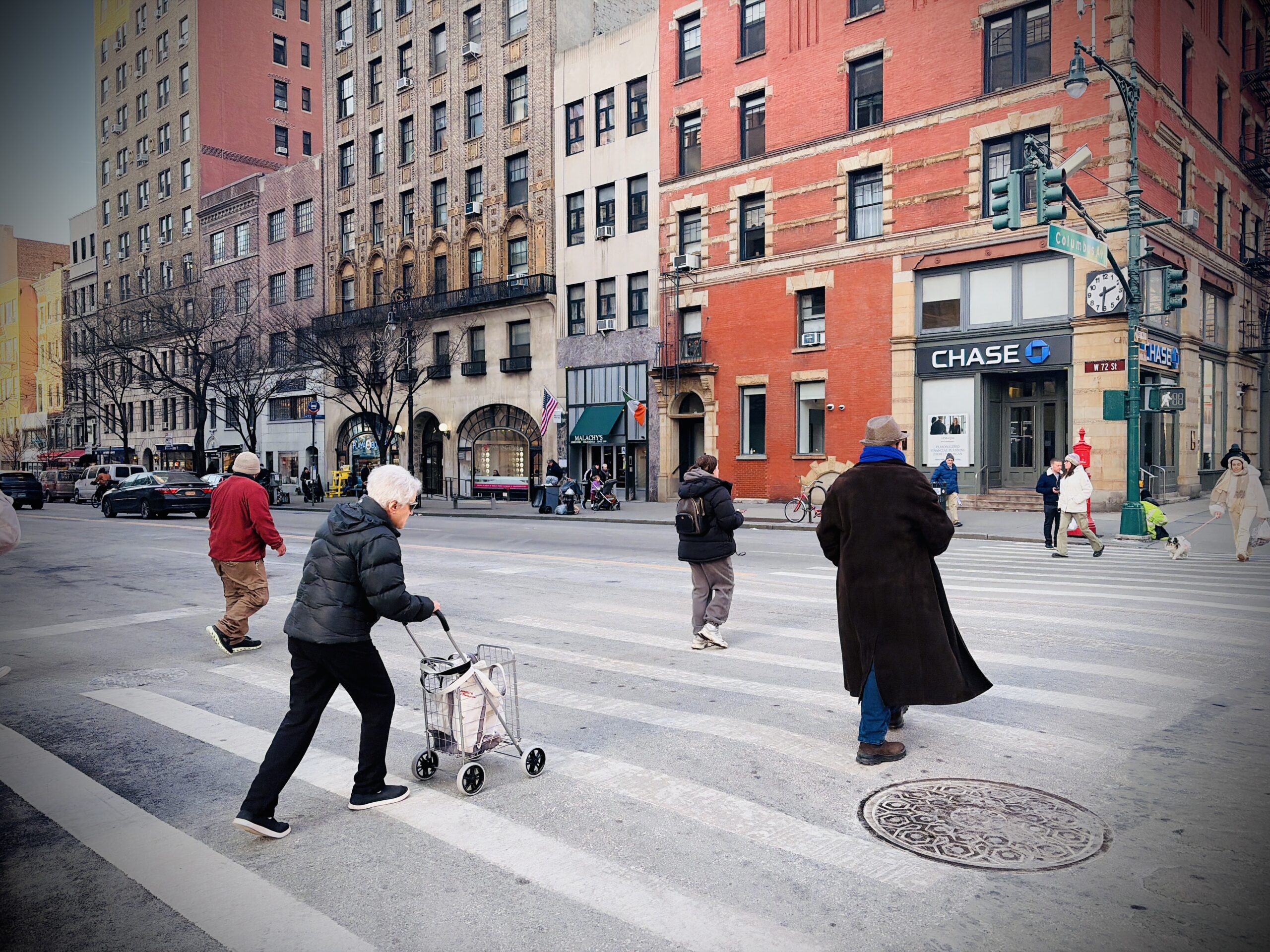
 Photographs by Yvonne Vávra.
By Yvonne V****ávra
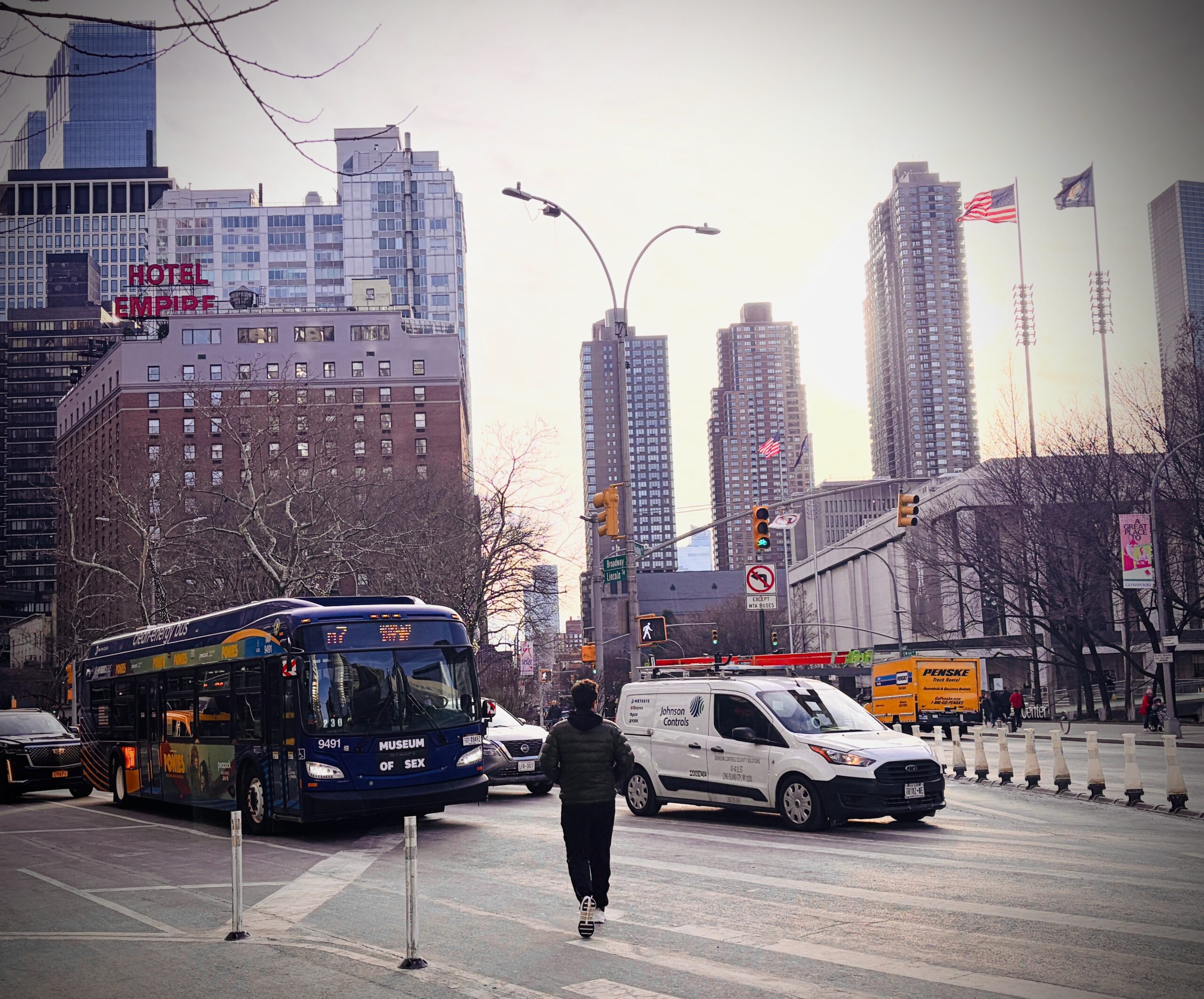
New York is famous as a walking city, but it’s one clogged with people and all the ways we’ve invented to get around. Being a pedestrian here requires emotional stamina, superhuman awareness, and reflexes that kick in when you’re crossing 96th Street and a turning SUV acts like you don’t exist. But change might be coming our way.
Our very own Councilmember Shaun Abreu, who represents the Upper West Side north of 92nd Street, has just been appointedto lead the city’s Transportation and Infrastructure Committee—and he seems to be on the wal…
Photographs by Yvonne Vávra.
By Yvonne V****ávra
New York is famous as a walking city, but it’s one clogged with people and all the ways we’ve invented to get around. Being a pedestrian here requires emotional stamina, superhuman awareness, and reflexes that kick in when you’re crossing 96th Street and a turning SUV acts like you don’t exist. But change might be coming our way.
Our very own Councilmember Shaun Abreu, who represents the Upper West Side north of 92nd Street, has just been appointedto lead the city’s Transportation and Infrastructure Committee—and he seems to be on the walkers’ side of the street. Abreu is a pedestrian-friendly voice who has vowed to fight for safer streets for New Yorkers on foot.
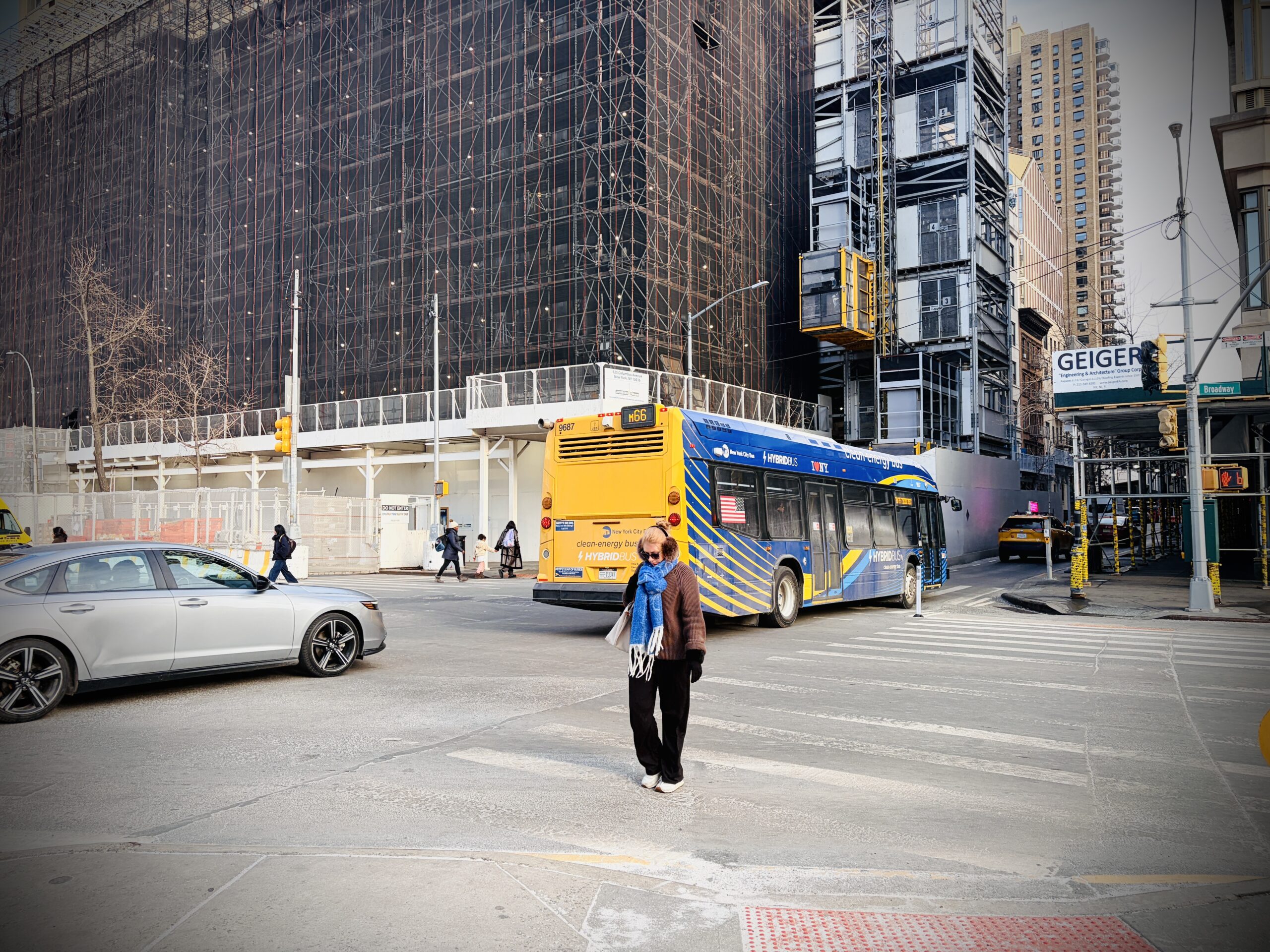 Walkers have never seemed particularly high on the priority list for those calling the shots on the city’s streets. Cars, despite decades of plans for a more pro-pedestrian city, still rule. As Justin Davidson, Upper West Sider and author of “Magnetic City: A Walking Companion to New York,” wrote in a piece for New York Magazine: “For decades, the city meekly adapted to whatever vehicles the world threw at it: 18-wheelers, juiced-up bikes, rocket-propelled scooters, testosterone pickups, swarming Ubers, Amazon box trucks, ATVs (not street-legal, but never mind), and SUVs capable of fording streams and climbing rock walls. That universal welcome relegates pedestrians to the status of unmotorized pests who keep getting in the way.”
Walking the city has never been easy. In the 1860s, the police department created the so-called Broadway Squad, whose only mission it was to help New Yorkers cross Broadway from Bowling Green up to 59th Street. Officers had to be at least six feet tall — after all, they needed to stay on top of the chaotic mix of horses, trolleys, automobiles, and more.
Soon, the Upper West Side would make national history as the site of the country’s first recorded fatal automobile accident. On September 13, 1899, realtor Henry Hale Bliss, 61, stepped off a streetcar at Central Park West and 74th Street and turned to help his companion, Miss Lee, out of the trolley. That’s when cab driver Arthur Smith, driving physician Dr. David Orr Edson from a house call in Harlem, struck him. “Bliss was knocked to the pavement, and two wheels of the cab passed over his head and body. His skull and chest were crushed,” reported The New York Times the next day.
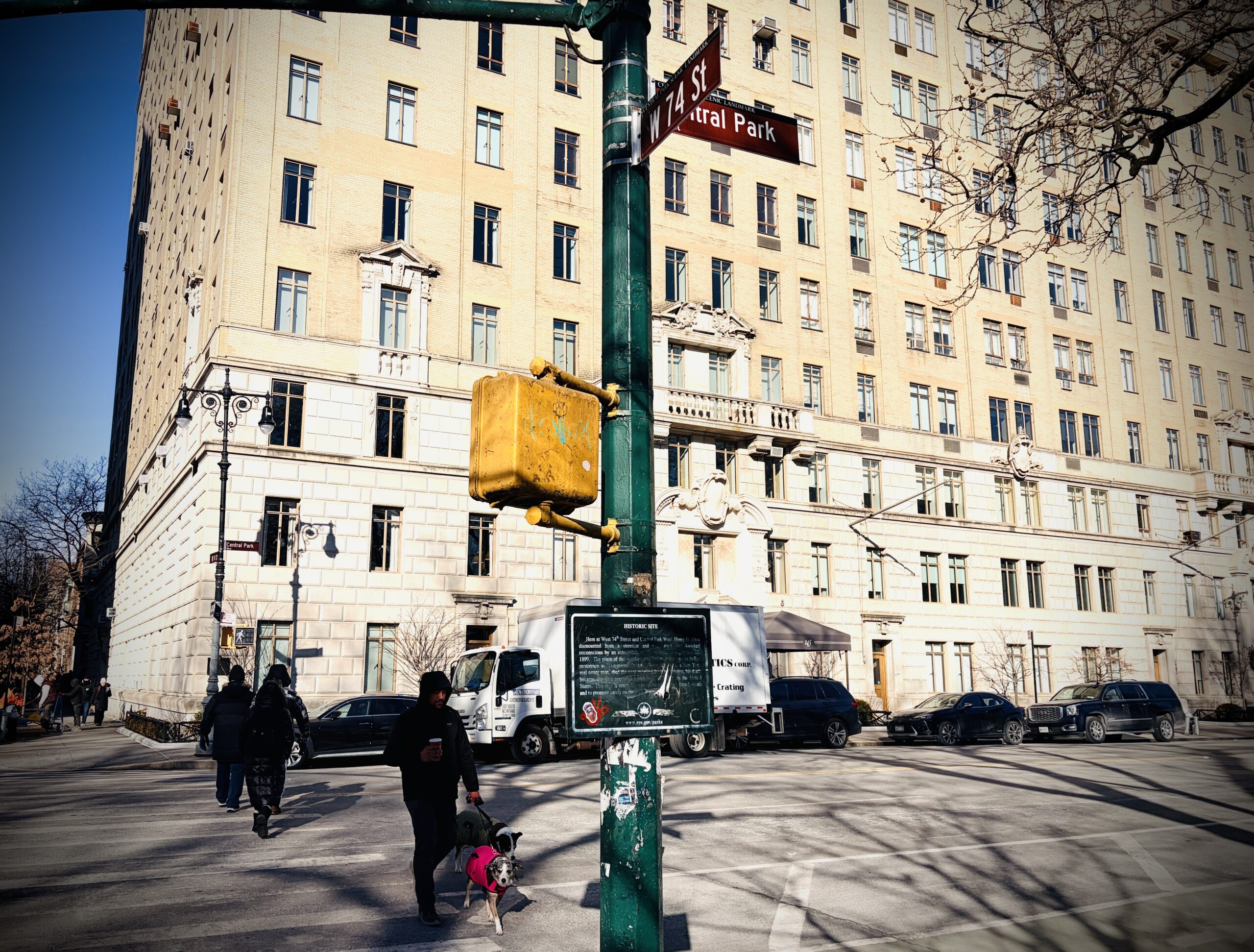
It was a real Upper West Side tragedy: Bliss lived on 75th and Broadway, Smith at 62nd and Columbus, and Dr. Edson — interestingly, the son of former Mayor Franklin Edson — on 71st Street between Central Park West and Columbus. In 1999, 100 years after that deadly collision, a plaque was erected on the corner of Central Park West and 74th Street. Now worn and battered, it has become a reminder in its own right of how fleeting life can be on these streets.
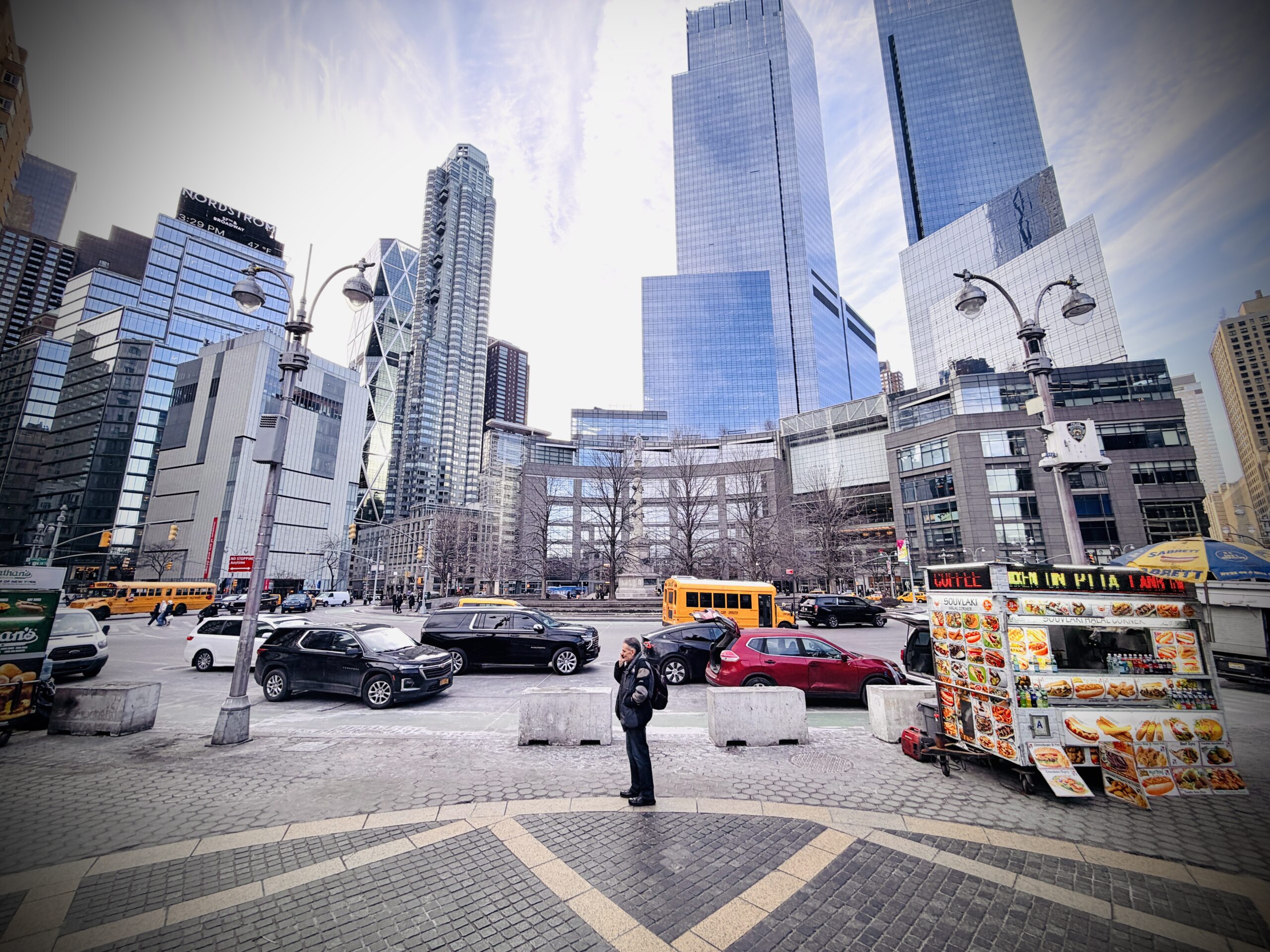 There’s some positive traffic history on the Upper West Side, too. It was here that a major idea to keep pedestrians safe, or at least safer, had its start.
As a nine-year-old New York City boy, William Phelps Eno once found himself stuck in a traffic jam with his mother. The year was 1867, and motorized vehicles hadn’t even hit the streets. Still, chaos reigned: horses and carriages brought everything to a halt, and, as Eno later recalled, “nobody knew exactly what to do; neither the drivers nor the police knew anything about the control of traffic.” From that moment, the “father of traffic safety” was born, who would go on to invent many traffic regulations that still keep pedestrians safe around the world today.
One of Eno’s innovations grew out of the hot mess that was Columbus Circle at the turn of the century. Horse-drawn carriages, trolleys, automobiles, and other vehicles dashed around without rhyme or reason, each at its own pleasure. Add to that New Yorkers on horseback, on bicycles, and on foot, and marvel at the chaos. Accidents were a daily occurrence.
Enter Eno, who had written a traffic code for New York in 1903, and now the city turned to him to untangle Columbus Circle. His answer was a rotary traffic plan — what we know today as the traffic circle. Introduced at Columbus Circle in 1905, the system went on to travel the world, adapted for places like the Arc de Triomphe in Paris and Piccadilly Circus in London. One Upper West Side headache had become a global solution.
I’m a notorious walker, and I’ll admit I take a certain thrill in weaving through the chaos of the city streets. Pride, too. But I’d race to see New York reimagined from the sidewalk. The city has rethought how to move many times before, and if we’re on the verge of another such moment, this time prioritizing people on foot, I’ll gladly take the right of way.
 Yvonne Vávra is a magazine writer and author of the German book 111 Gründe New York zu lieben (111 Reasons to Love New York). Born a Berliner but an aspiring Upper West Sider since the 1990s (thanks, Nora Ephron), she came to New York in 2010 and seven years later made her Upper West Side dreams come true. She’s been obsessively walking the neighborhood ever since.
Subscribe to West Side Rag’s FREE email newsletter here. And you can Support the Rag here.
Leave a comment
Please limit comments to 150 words and keep them civil and relevant to the article at hand. Comments are closed after six days. Our primary goal is to create a safe and respectful space where a broad spectrum of voices can be heard. We welcome diverse viewpoints and encourage readers to engage critically with one another’s ideas, but never at the expense of civility. Disagreement is expected—even encouraged—but it must be expressed with care and consideration. Comments that take cheap shots, escalate conflict, or veer into ideological warfare detract from the constructive spirit we aim to cultivate. A detailed statement on comments and WSR policy can be read here.