Astronomers have found a massive cloud of metallic winds orbiting a mystery object in space.
The cloud was found when scientists noticed the light of a nearby star, which is located some 3,000 light-years from Earth, had dimmed over the course of nearly nine months.
The more than two-billion-year-old star, known as J0705+0612, is similar to our sun.
It suddenly became 40 times dimmer than usual from September 2024 to May 2025, [the U.S. National Science Foundation’s NOIRLab said Tuesday](https://noirlab.edu/public/new…
Astronomers have found a massive cloud of metallic winds orbiting a mystery object in space.
The cloud was found when scientists noticed the light of a nearby star, which is located some 3,000 light-years from Earth, had dimmed over the course of nearly nine months.
The more than two-billion-year-old star, known as J0705+0612, is similar to our sun.
It suddenly became 40 times dimmer than usual from September 2024 to May 2025, the U.S. National Science Foundation’s NOIRLab said Tuesday.
“Stars like the sun don’t just stop shining for no reason,” Nadia Zakamska, a professor of astrophysics at Johns Hopkins University, recalled, “so dramatic dimming events like this are very rare.”
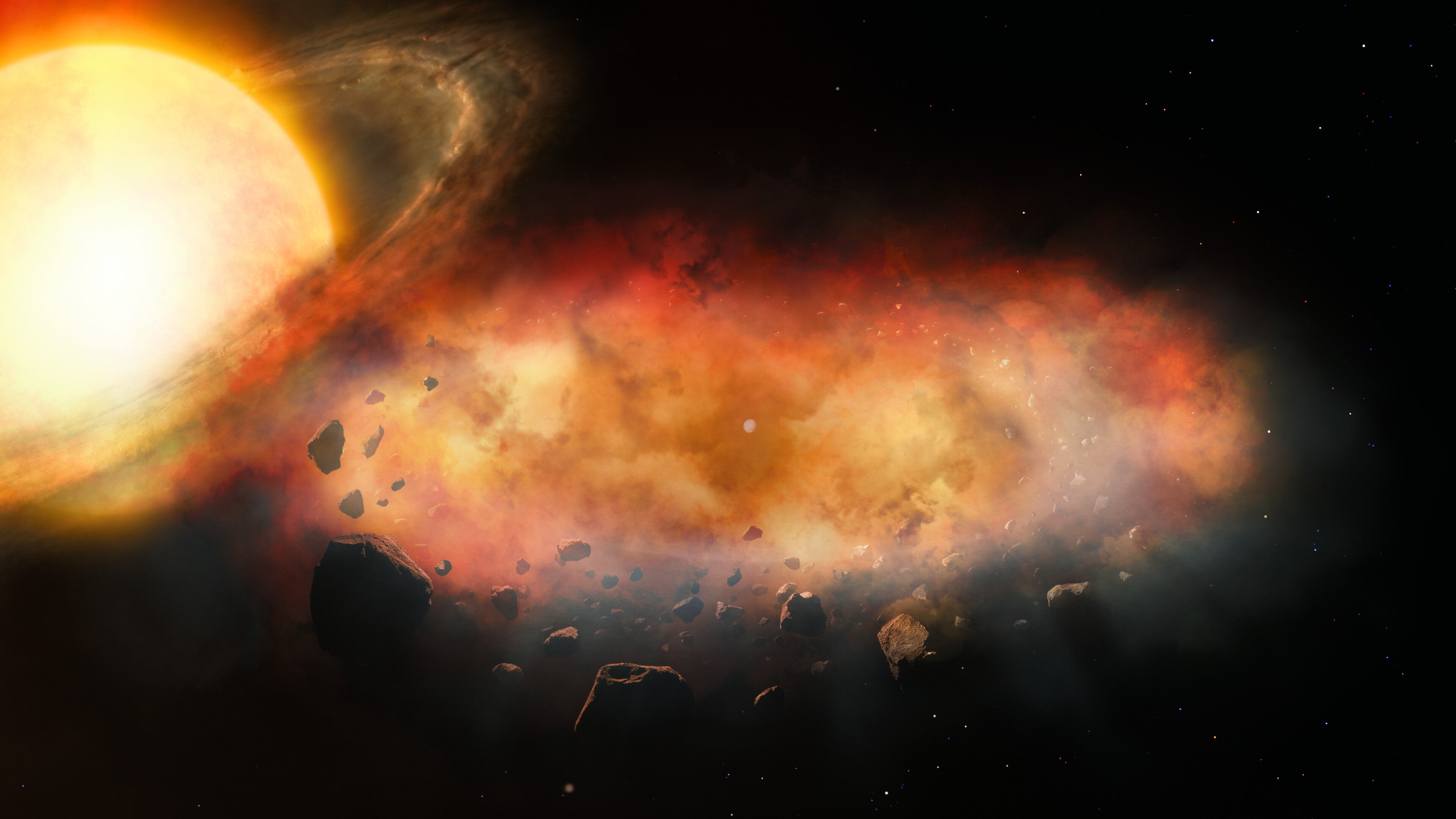
An artist’s illustration shows a large disk of planetary debris shrouded by a thick cloud of dust and gas as it passes in front of a star. Astronomers say a mystery object is surrounded by a metallic cloud like this (International Gemini Observatory/NOIRLab/NSF/AURA/P. Marenfeld & M. Zamani)
The discovery was made with the Gemini South telescope, which is located in Chile and operated by NOIRLab, but the team also used a telescope at New Mexico’s Apache Point Observatory and Chile’s Magellan Telescopes.
Then, the researchers compared their observations to past data collected on the star.
That’s how they determined that the star had been obscured by a meandering, whirling cloud of gas and dust, which stretches across some 120 million miles - and that the cloud is bound by gravity to a second object that orbits the star.
The astronomers don’t yet know what the object is, but observations show it’s at least a few times the mass of Jupiter or larger.
It could be a brown dwarf or a low-mass star, NOIRLab theorized. If it is a star or a planet, the cloud would be deemed either a circumsecondary or a circumplanetary disk, respectively.
In either case, finding this is exceptionally rare.
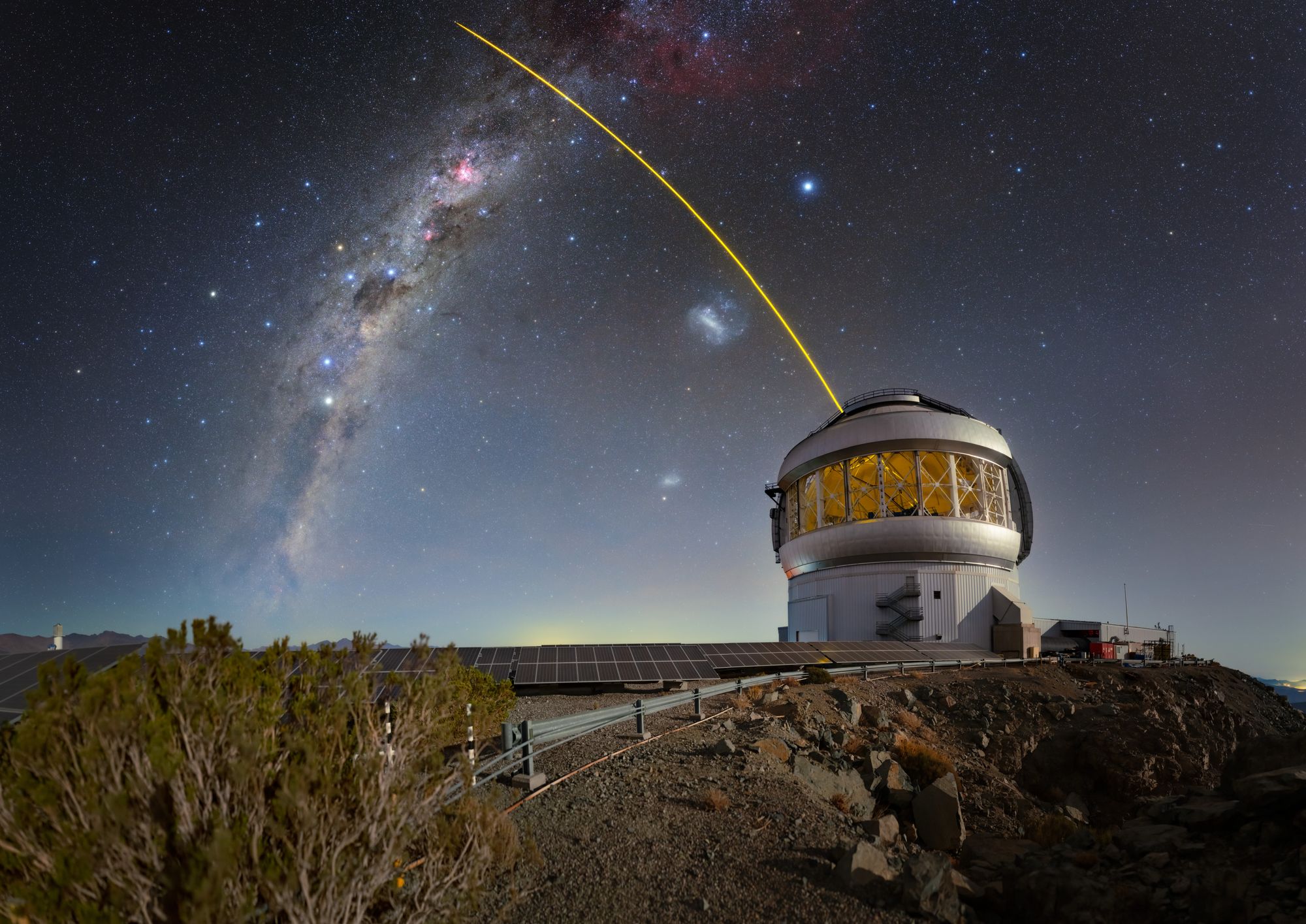
The Gemini South telescope is seen in Chile. The telescope’s GHOST instrument revealed the make up of the cloud (International Gemini Observatory/NOIRLab/NSF/AURA/T. Slovinský)
Data from the Gemini South’s GHOST instrument, which studies objects based on patterns of wavelengths of light, showed that the cloud, now about 1.2 billion miles from the star, is made up of multiple metals after observing it for more than two hours. The metals include iron and calcium.
“The sensitivity of GHOST allowed us to not only detect the gas in this cloud, but to actually measure how it is moving,” said Zakamska. “That’s something we’ve never been able to do before in a system like this.”
Zakamska’s theory is that the cloud was made after two planets collided in J0705+0612’s planetary system.
In any case, it offers a glimpse into the processes shaping planetary systems after they form.
“This event shows us that even in mature planetary systems, dramatic, large-scale collisions can still occur. It’s a vivid reminder that the universe is far from static - it’s an ongoing story of creation, destruction and transformation,” she said.