- Tropical forests are rightly regarded as important carbon sinks and crucial in the fight against climate change, but other tropical ecosystems have largely gone overlooked despite their carbon -sequestration potential.
- Peatlands, mangroves, coastal freshwater wetlands and seagrass meadows are just some of the ecosystems that have a potentially huge capacity to capture and store carbon, but don’t feature prominently enough — or at all — in the national climate plans of Latin American countries.
- Peatland soils can store between three and five times more carbon dioxide than other tropical ecosystems, with similar figures for mangroves and coastal freshwater wetlands.
- Seagrass meadows cover just 0.1% of the ocean floor, but can store up to 18% of global oceanic carbon.
Ef…
- Tropical forests are rightly regarded as important carbon sinks and crucial in the fight against climate change, but other tropical ecosystems have largely gone overlooked despite their carbon -sequestration potential.
- Peatlands, mangroves, coastal freshwater wetlands and seagrass meadows are just some of the ecosystems that have a potentially huge capacity to capture and store carbon, but don’t feature prominently enough — or at all — in the national climate plans of Latin American countries.
- Peatland soils can store between three and five times more carbon dioxide than other tropical ecosystems, with similar figures for mangroves and coastal freshwater wetlands.
- Seagrass meadows cover just 0.1% of the ocean floor, but can store up to 18% of global oceanic carbon.
Efforts to mitigate the impacts of climate change have focused largely on the protection of tropical forests like the Amazon Rainforest, important carbon sinks that can store between 60 and 230 metric tons of carbon per hectare.
But elsewhere in Latin America, other ecosystems have been overlooked by international decision-makers, despite science recognizing their key role in preventing greenhouse gas emissions and the fact that many of them store even more carbon, hectare for hectare, than tropical forests.
A team from Mongabay Latam traveled to several countries in the region to draw attention to these forgotten land- and seascapes: páramos, coastal wetlands, peatlands, mangroves and seagrass meadows — key ecosystems and invaluable carbon deposits. These six stories show how communities, organizations and scientists are coming together to preserve and study these vital ecosystems, whose potential in the fight against climate change remains underappreciated.
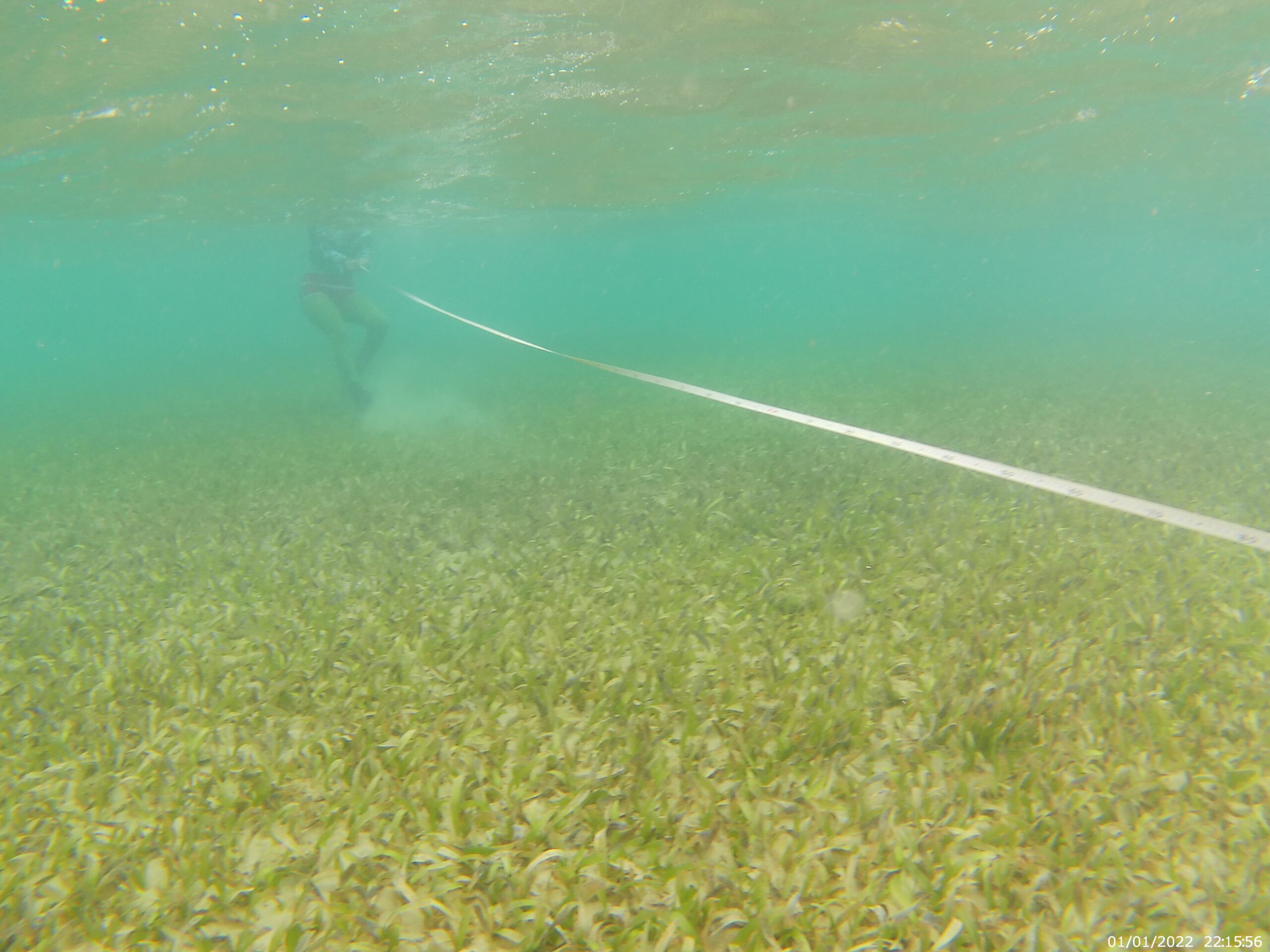 The IOV team surveying a Thalassia seagrass meadow. Image courtesy of Mayré Jiménez.
Putting a spotlight on páramos, coastal wetlands and seagrasses
In the fight against climate change, every ecosystem counts. Preventing carbon dioxide, methane and other greenhouse gas emissions from entering the atmosphere is crucial to preventing, or at least containing and limiting, global warming.
The Paris Agreement, adopted in 2015, seeks to limit the global temperature rise to less than 2° Celsius (3.6° Fahrenheit) above pre-industrial levels, ideally capping it at 1.5°C (2.7°F). However, the world remains far off this target.
Countries have presented their emissions reduction plans, known as their nationally determined contributions (NDCs), but evaluations have shown that these current commitments fall short.
In 2023, when the sixth Intergovernmental Panel on Climate Change (IPCC) report was published, it made clear that efforts needed to be ramped up significantly to achieve the necessary reductions by 2030. “We need to take more ambitious action. If we act now, we can still secure a liveable sustainable future for all,” Hoesung Lee, president of the IPCC, said at the time.
This action could include beginning to recognize — and protect — key ecosystems for carbon mitigation. Some studies suggest, for example, that a hectare of soil in the paramo — the tropical alpine shrubland of the Andes — can store up to 338 metric tons of carbon per hectare in the top 30 centimeters (12 inches) of soil, and even more depending on local conditions. This is supercharged in the páramo’s peatlands to up to 2,000 metric tons.
 The Matsés forests are one of the best preserved and most carbon-rich in the entire Amazon, and are home to some of the last isolated Indigenous groups in the world. Image by Mongabay.
In Boquilla de Oro and La Mancha, in Mexico’s Veracruz state, floodplain forests can capture up to twice as much carbon (869 metric tons per hectare) as contiguous mangroves (482 metric tons per hectare), while herbaceous wetlands capture 692 metric tons per hectare, according to comparisons carried out by Patricia Moreno Casasola, a researcher at Mexico’s National Institute of Ecology (INECOL).
Seagrass meadows, despite only covering 0.1% of the ocean floor, can store up to 18% of global oceanic carbon, making them a powerful solution in the face of climate change, according to data from the United Nations.
Experts interviewed for this story agree that countries are waking up to the importance of these ecosystems, but there are various obstacles to getting these carbon sinks integrated into their NDCs. A lack of information is one hurdle, as many of these ecosystems often haven’t been mapped in detail. There’s also the need for tough political discussions so that governments take into account the work and results of science, which are currently not reaching decision-makers at higher levels of government.
‘Fixated on forests’
“Our political and technical authorities are fixated on forests and are so focused on looking at them that they don’t any have time left to think about other things,” says Juan Carlos Benavides, a professor and coordinator of the Ecosystems and Climate Change Laboratory at Javeriana Pontifical University in Colombia, who has a long history of researching páramos and wetlands.
Benavides says that while forests do play an important in carbon sequestration, people have a deeply rooted bias toward them because environmental education in Colombia has long focused on forests. “There’s still a lot we don’t know about the role of soils, savannas, grasses and páramos,” he says. “It’s as if we’re afraid of the unknown. Breaking down these barriers and paradigms is very difficult.”
Benavides has spoken to Colombian policymakers to convince them, for example, of the importance of páramos, not only in terms of water but also carbon capture.
 According to experts, páramo peatlands can store up to 2,000 metric tons of carbon per hectare. This type of wetland has been drawing down carbon for hundreds of years. Image courtesy Andrea Moreno/El Tiempo.
While he says that civil servants understand the need to promote knowledge and conservation of páramos, the process is frustratingly slow and has to start from scratch with each change of government.
“The biggest challenge we have is achieving articulation between technical instruments of the state and political instruments that produce public policy documents such as NDCs, greenhouse gas mitigation commitments, payment structures for environmental services, and their governance mechanisms and social safeguards,” Benavides says.
He adds there are approximately 2.9 million square kilometers (1.1 million square miles) of páramos throughout Colombia, a fifth of which are wetlands. Some 300,000 hectares (115,800 acres) of wetlands in páramos are degraded, he adds, but if properly managed and restored, they could absorb between 10% and 15% of the country’s emissions.
“However, as these wetlands aren’t even included in inventories, it doesn’t matter what you do to them, the country can’t use them for its reports because it doesn’t have methodologies that recognize them,” Benavides says.
There are conservation initiatives that are trying to protect the páramo. In Vista Hermosa de Monquentiva Regional Natural Park, in the center of Colombia, conservationists have worked to ecologically restore the páramo for more than two decades, bringing more knowledge about the ecosystem’s capacity to mitigate climate change.
This initiative brings together communities, organizations like WWF and Conservation International, and academia. Since 2017, Benavides’s research team has been studying the gases captured by the páramo, which is now a protected area dedicated to research and biodiversity conservation.
 Vista Hermosa de Monquentiva Regional Natural Park, spanning 13,437 hectares (33,204 acres), was created to protect the páramo, a key ecosystem for water provision in the center of Colombia. Image courtesy Andrea Moreno/El Tiempo.
Not aquatic ‘weeds’
In Mexico, Patricia Moreno, the INECOL researcher, shares similar opinions, although her work focuses mainly on coastal freshwater wetlands. “What’s important is that the authorities, especially federal, realize that freshwater wetlands also capture a lot of carbon. And if we really include them, as we’re doing with mangroves, we’d make a much bigger contribution to the global fight against climate change,” she says.
Moreno says the area occupied by coastal freshwater wetlands has dropped over time and continues to shrink, mainly due to loss of habitat caused by land-use change for farming. The problem is exacerbated by the lack of reliable records, as “unfortunately, most countries don’t account for these ecosystems,” she says, adding that in the case of Mexico, the situation is so critical that freshwater wetlands are often confused with mangroves, which is reflected in maps and available data.
This is compounded, Moreno says, by a historical lack of knowledge about these ecosystems. “For example, many hydraulic engineers continue to call them ‘aquatic weeds’ because historically sewage drained into these misunderstood ecosystems in many parts of the country and so they were very degraded.”
This is compounded, Moreno says, by a historical lack of knowledge about these ecosystems. “For example, many hydraulic engineers continue to call them ‘aquatic weeds’ because historically sewage drained into these misunderstood ecosystems in many parts of the country and so they were very degraded.”
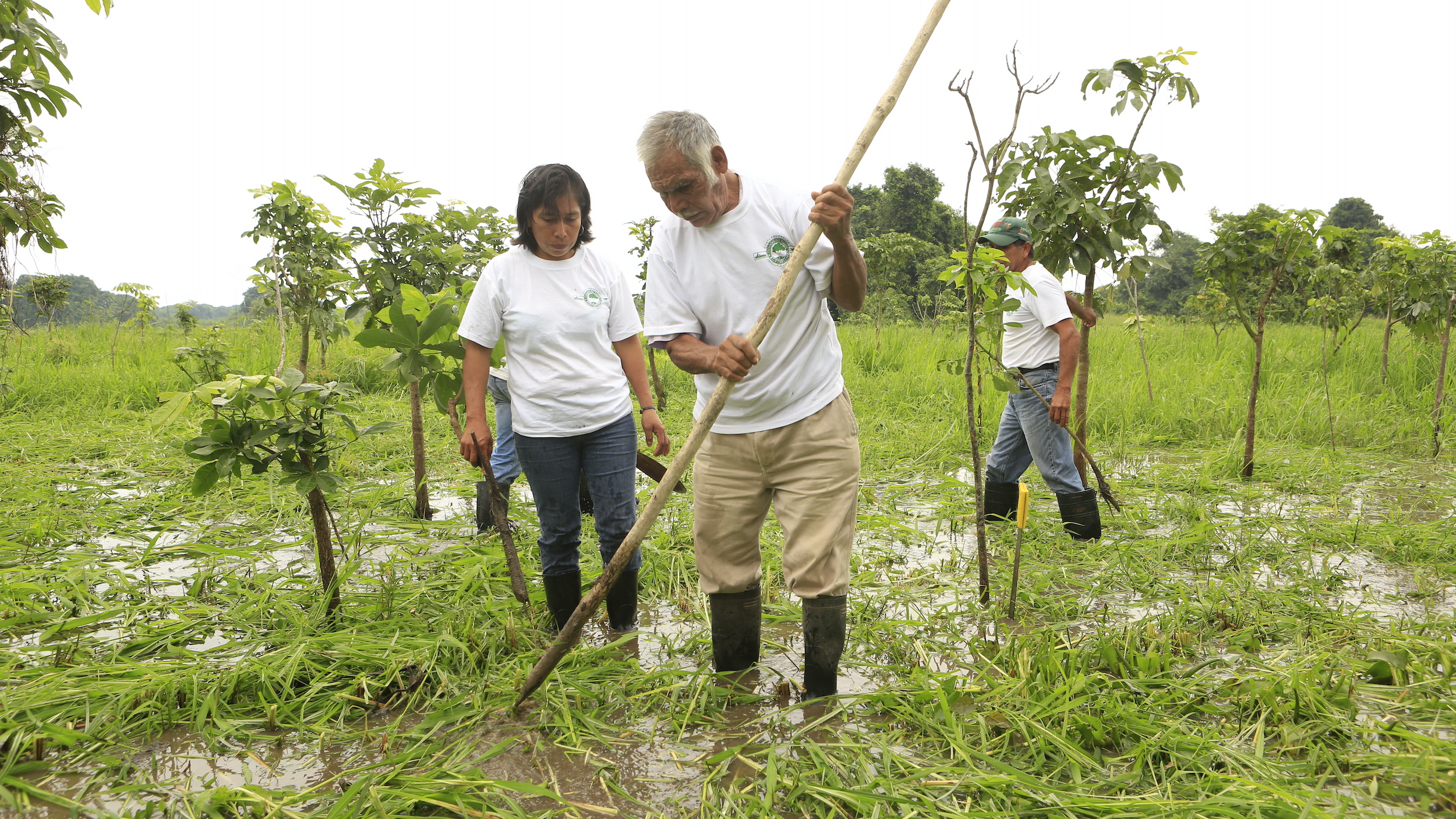 Survey of the grass layer covering the areas where hurricanes have felled trees in Mexico. Image courtesy of Patricia Moreno Casasola/INECOL.
The carbon storage potential of seagrass meadows is also a world unto itself. In countries like Venezuela, scientists are just beginning to explore the potential of this ecosystem off the country’s coast. “There’s no research focused on this theme in Venezuela, as most studies on these environments have looked at the diversity of associated fauna and its biomass, without highlighting the importance of these ecosystems as carbon reserves,” says Mayré Jiménez, a researcher at the Oceanographic Institute of Venezuela (IOV).
Although research on carbon storage in seagrass meadows is still in its initial stages in Venezuela, it has already helped to detect serious problems. For example, researchers found that the tourism industry eradicates these plants as it considers them a blight on the coastline, and that an invasive coral from the Indo-Pacific is destroying seagrass habitat and reducing their coverage.
Nevertheless, the political and economic crises that plague the country, which have also affected academia, have not been an obstacle for scientists like Jiménez, who managed to create a laboratory in her garage, where she meticulously studies seagrasses and their potential for carbon sequestration.
The surprises behind peatlands
A surprising discovery in Peru is one of the main reasons that peatlands are beginning to play a bigger role in the fight against climate change in Latin America.
The peatlands of the Abanico del Pastaza region were discovered thanks to scientific exploration and environmental studies carried out in recent decades, and the study and recognition of this highly important ecosystem rose to prominence in the 2000s, thanks to Peruvian and foreign researchers who identified its rich biodiversity and role in the carbon cycle.
Abanico del Pastaza is one of the deepest peatland complexes in the world; its average peat bog layer is 8.1 meters (26.6 feet) thick, behind only the peatlands of Central Kalimantan in Indonesian Borneo, and the Cuvette Centrale in the Congo Basin. Scientists previously thought there was no such ecosystem in South America.
A 2024 study confirmed the scientific fascination with this ecosystem and found that the carbon stock in the peatland vegetation of Peru’s Datem del Marañón province, part of the Abanico del Pastaza, amounts to on average 80 metric tons per hectare. In the peat soil itself, it can reach an estimated 1,700 metric tons of carbon per hectare, storing up to five times more CO2 than other tropical ecosystems.
Native communities in Datem del Marañón combine ancestral wisdom with scientific knowledge to protect the peatlands found in this area of the Peruvian Amazon. In doing so, they also protect the native aguaje palm (Mauritia flexuosa), whose fruit is part of their diet and vital to the conservation of the peat bogs.
“Before, we used to harvest by cutting down the trees, but now we climb them,” says Segundo Chanchari, a climber from the native community of Puerto Díaz. “That means we no longer destroy them — we harvest from the palm trees while they’re still standing. That has been the biggest change in recent years.”
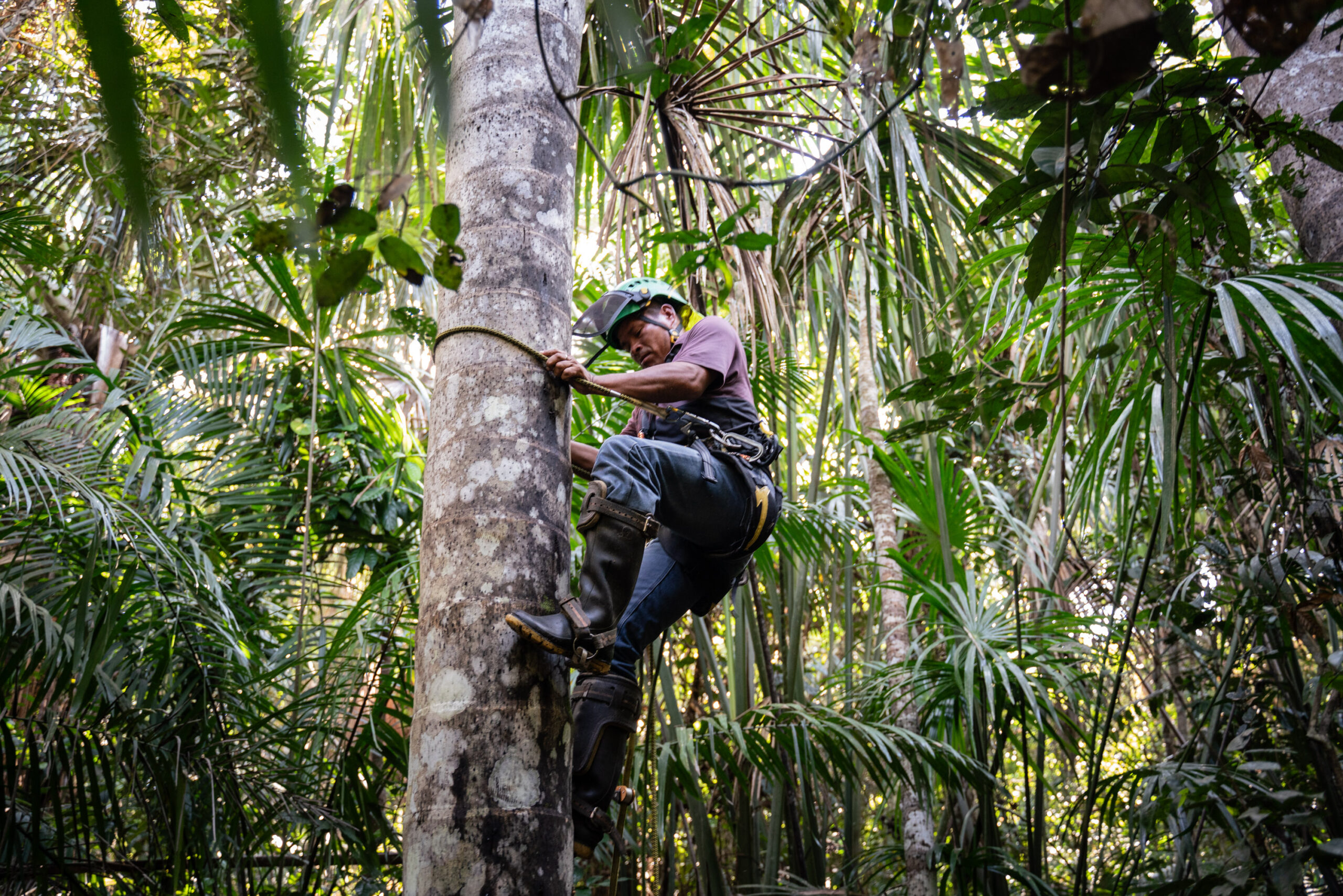 Segundo Chanchari climbing an aguaje palm. This way, he can harvest the fruit while still preserving the tree. Image by Leslie Moreno Custodio.
Research on the peatlands of Peru’s Abanico del Pastaza has inspired new studies in countries like Colombia. A paper published in April 2025 in the journal Environmental Research Letters revealed that Colombian peatlands could also be an important tool to combat climate change, but they first need to be identified and precisely located.
Lead author Scott Winton, an ecologist from the University of California, Santa Cruz, in the U.S., carried out three years of extensive fieldwork to produce the first data-driven map of recently documented and predicted peatlands in Colombia’s Orinoquía and Amazonian regions.
One of the main findings was that these two regions probably contain between 7,370 and 36,200 square kilometers (2,846-13,980 square miles) of peat bogs, which could currently be sequestering carbon equivalent to 70 years’ worth of Colombia’s fossil fuel and industrial emissions.
 Researchers take a peat core sample in Colombia. Image courtesy of Scott Winton.
The results obtained by Winton and his colleagues suggest that the average density of carbon in these peatlands is four to 10 times greater than in the Amazon Rainforest. The researchers identified two specific types of Colombian peatlands, including white-sand peatlands, never previously documented in South America: a clear indication of the need for further research.
“Peatlands are a giant mass of carbon,” Winton says. “The statistics tell us that they cover between 3% and 5% of the Earth’s surface, but they have two times more carbon than the world’s forests.”
But unlike forests, he adds, which can be restored and help to recover carbon, when peat is lost, it takes hundreds or even thousands of years to recover the carbon lost from the soil. “This is why it’s considered an almost irretrievable loss,” Winton says.
 Establishing a sample plot in a peat bog in Colombia. Image courtesy of Scott Winton.
A shield of mangroves
Mangroves are also a crucial ecosystem: they’re capable of storing between five and seven times more carbon than other forests, sequestering on average 432 metric tons per hectare. This can go as high as 1,000 metric tons per hectare, especially in mature and well-preserved mangrove forests.
This ecosystem also needs further research, but is perhaps, after tropical forests, the most recognized and valued in Latin America today.
“Mangroves, in particular, absorb and store large quantities of carbon through photosynthesis and retention of sediments thanks to their complex root structures, which allow for the slow composition of organic matter in wet soils,” says Julie Shahan, a researcher at Stanford University in the U.S. who studies mangroves in Ecuador.
Shahan says that in addition to mitigating climate change, mangroves are important for climate adaptation since they help to control erosion, prevent flooding, ensure water quality and maintain biodiversity. She also says there have been positive developments, as 97 countries, including several in Latin America, currently have coastal and marine nature-based solutions in their national climate change mitigation plans.
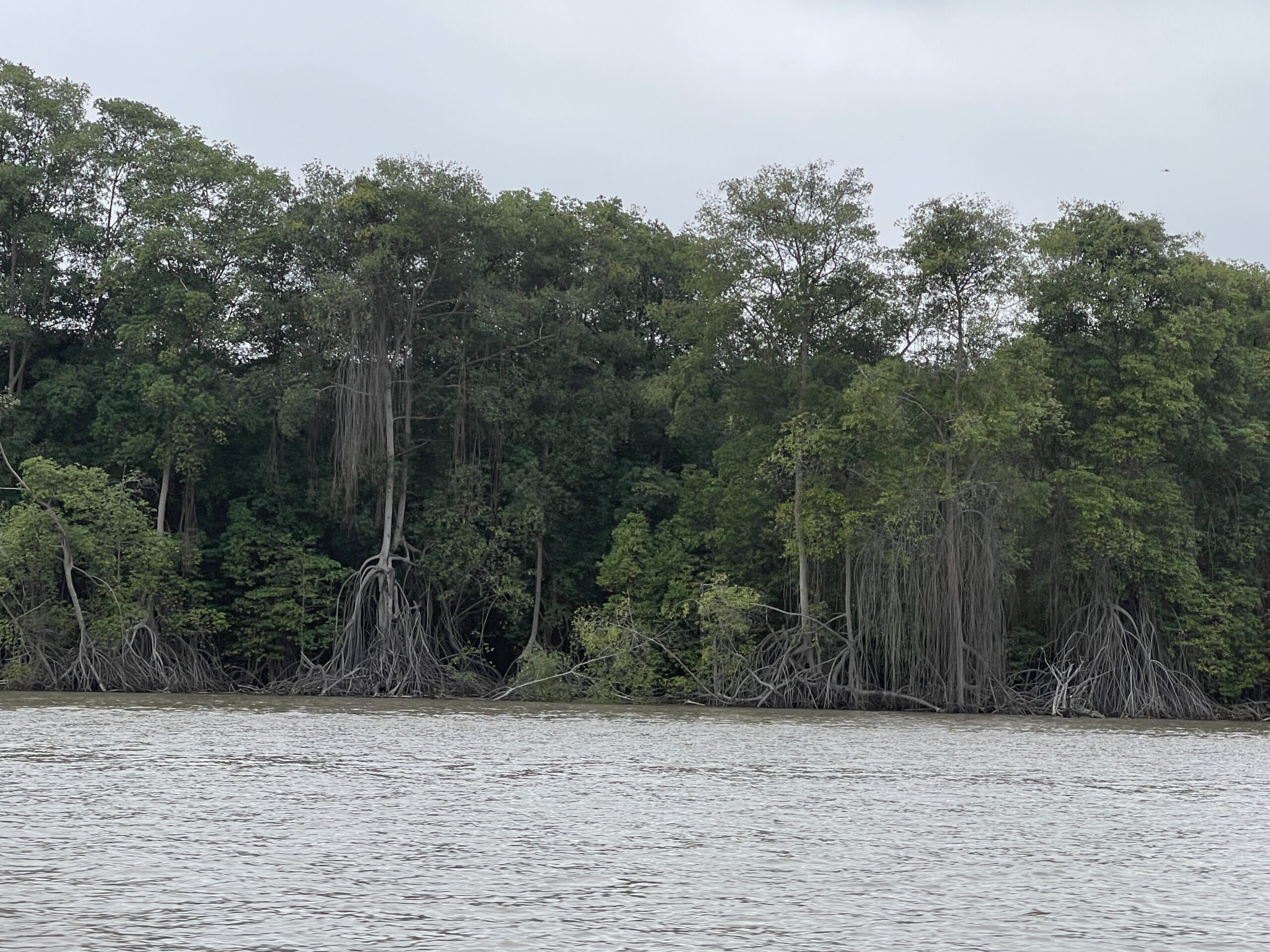 Thanks to sustainable-use agreements with the government, 62% of the 157,000 hectares (388,000 acres) of mangroves in Ecuador are protected by local communities. Image by Alexis Serrano Carmona.
Ecuador, in particular, has taken additional measures to protect mangroves, training local communities to preserve and restore their local patches of mangrove forest and committing to not clearing mangroves for shrimp farming. In fact, although government efforts are often viewed with skepticism, experts say the Ecuadorian government’s strategy in mangrove management has become a real success story.
Through sustainable-use agreements and stewardship, the recently axed Ecuadorian environment ministry handed out concessions for 98,000 hectares (242,200 acres) of mangrove forests to artisanal fishers, who can harvest crabs to sell, but commit to protecting this valuable ecosystem.
The concessions cover a combined 62% of Ecuador’s total mangrove area, of which 80% are in the Gulf of Guayaquil. For 26 years, this system has allowed for effective mangrove conservation and fisher livelihood.
 A fisherman in Ecuador washing crabs at the end of his workday. Image by Alexis Serrano Carmona.
“If we had not had this strategy [of granting concessions of mangrove areas], right now we would have a lot less mangrove [forest],” says Natalia Molina, a biology professor at the School of Environmental Sciences at Espíritu Santo University in the city of Guayaquil. This is no small feat, Molina notes, given that in the 37 years from1969 to 2006, Ecuador lost 27% of its mangroves, an area of about 56,000 hectares (138,400 acres).
In general, scientists agree that wetlands deserve more attention, whether coastal, mangroves or peatlands. “Tropical wetlands are among the most efficient carbon-sequestering ecosystems on the planet,” says Shahan from Stanford. “Although they occupy a small area of the Earth’s surface, they have the potential to contribute significantly to long-term carbon sequestration because of their high rates of carbon accumulation and storage.”
Banner image: In Peru, Segundo Chanchari and Kietre Gonzales join forces to harvest aguaje and preserve the palm. Image by Leslie Moreno Custodio.
This special report was first published here in Spanish on Sept. 9, 2025, as part of a collaborative project between Mongabay Latam, El Tiempo, La Barra Espaciadora and Runrun.es.
Citations: Gutiérrez Díaz, J. S., Ordoñez Delgado, N., Bolívar Gamboa, A., Bunning, S., Guevara, M., Medina, E., … Vargas, R. (2020). Estimation of organic carbon in Paramo ecosystem soils in Colombia. Ecosistemas, 29(1). doi:10.7818/ecos.1855
Winton, R. S., Benavides, J. C., Mendoza, E., Uhde, A., Hastie, A., Honorio Coronado, E. N., … Hoyt, A. M. (2025). Widespread carbon-dense peatlands in the Colombian lowlands. Environmental Research Letters, 20(5), 054025. doi:10.1088/1748-9326/adbc03
