We want to learn from you, but we also want you to trust us. This is what social media content creators and influencers told the American Press Institute about collaborating with newsrooms across the country. We spoke with seven creators who have a wide range of experiences with both local and national newsrooms, and two who were hired specifically by publications to create content for social media sites. Some worked with organizations in API’s second Influencer Learning Cohort, which brought together 16 local newsrooms in 2025 to experiment with new ways of reaching their communities and new audiences through collaborations with creators in a way that benefited both groups.
It’s a delicate dance, as c…
We want to learn from you, but we also want you to trust us. This is what social media content creators and influencers told the American Press Institute about collaborating with newsrooms across the country. We spoke with seven creators who have a wide range of experiences with both local and national newsrooms, and two who were hired specifically by publications to create content for social media sites. Some worked with organizations in API’s second Influencer Learning Cohort, which brought together 16 local newsrooms in 2025 to experiment with new ways of reaching their communities and new audiences through collaborations with creators in a way that benefited both groups.
It’s a delicate dance, as creators navigate constantly changing algorithms on Instagram, TikTok, YouTube and other platforms. The speed of innovation and quick adaptation that creators manage daily is rarely faced by traditional newsrooms. To the casual observer, the end product may look simple — a short, conversational video or a quick take on a trending issue. But many creators have spent years finding their niche and building trust with an audience that feels personally connected to them.
Across their stories, one theme came through clearly: successful newsroom-creator partnerships depend on mutual trust, creative freedom and a shared respect for how audiences connect online.
Below are five lessons for newsrooms looking to build more effective partnerships with the creators shaping the future of information.
Lesson 1: Trust the voice you hire
Creators aren’t just brand ambassadors; they’re storytellers who’ve spent years cultivating credibility with specific audiences. Their tone, pacing and presence are their superpowers. When newsrooms over-edit or reshape their delivery, they risk stripping away what makes the message resonate.
California-based lawyer and creator Julian Sarafian, who collaborated with CalMatters to produce short explainer videos on ballot measures and traffic safety, said it best:
“You’re hiring someone for their voice, so let them use it.”
Sarafian advised that shorter, native-style videos often outperform longer, highly produced ones. When CalMatters opted for a longer version of one video, engagement dropped by up to 70 percent compared to Sarafian’s standard shorter videos. His point wasn’t that the newsroom was wrong. It was that the creator’s familiarity with platform behavior is part of what newsrooms are paying for.

Ariane Datil
That lesson extends beyond editing style. Creator Ariane Datil, now a social video host at The Philadelphia Inquirer, says her role works because she’s trusted to bring “friend energy” to serious topics. “The Inquirer already had a strong video team,” she said, “but they wanted something warmer and more personal, where viewers feel like they’re getting the story from a friend.”
The takeaway: When you collaborate with a creator, you’re not outsourcing your journalism — you’re co-authoring its delivery. The trust that audiences place in creators is built on authenticity.
Lesson 2: Balance structure with creative freedom
Journalistic rigor and creative flexibility don’t have to clash, but too much structure can smother the magic of real-time storytelling.
Chris Vasquez, who has worked for The Washington Post, The Marshall Project, and now Local News International, has seen both sides. “At The Post, we had the trust to experiment,” he said. “It showed me that news can live natively on social platforms, not just be repackaged for them.”
When he moved to an investigative newsroom, the slower pace and multiple approval layers made it harder to keep up with the rhythms of social media. “Every edit, every note, every approval adds friction,” Vasquez said. “You gain the stability and support of a newsroom, but you lose some of the spontaneity that social audiences expect.”
The best collaborations find a middle ground: newsroom editors handle accuracy and ethics, while creators steer voice, format and timing.
Penn State graduate Mason Koma, who created history-themed videos for The Daily Collegian, found that sweet spot. “They let me use my authentic voice,” he said. “That made all the difference. The videos barely needed editing, and they performed really well.”
The takeaway: Good collaboration means clarity about who owns what. Newsrooms provide the guardrails; creators steer the car.
Lesson 3: Authenticity beats polish
In social storytelling, authenticity is the currency. Audiences connect with creators who sound like real people, not institutions.
Across every conversation, creators emphasized that authenticity builds trust, and trust drives performance. Perfect lighting and graphics can’t replace sincerity.
For Koma, success came from being genuine, not glossy. His short videos about Penn State’s history resonated with students and alumni because they felt like something a peer might post, not a corporate production. “You have to hook people immediately,” he said. “Don’t start with a long intro. Jump right into the story.”
Michelle Reed, an Indigenous creator and founder of a powwow-inspired fitness program, learned the same lesson in her collaboration with Verified News Network, a Native-owned outlet. Her more spontaneous, culturally grounded posts outperformed the newsroom’s highly polished videos.
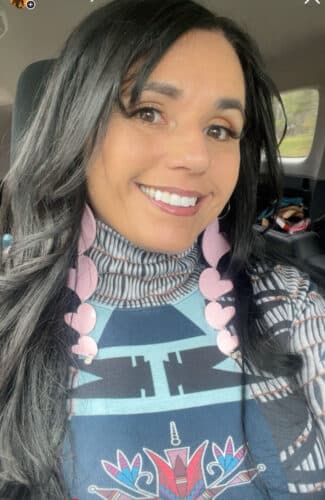
Michelle Reed
“People know my formula,” she said. “Sometimes the professional stuff doesn’t hit the same way to your people.”
Authenticity also means showing up beyond the post. The Inquirer’s Datil points out that engagement doesn’t end when the video goes live: “People want to feel like they’re in a space that’s inviting. That comes from tone, from body language, from actually showing up in the comments.”
The takeaway: Viewers follow people, not platforms. They can sense when content is real. Give creators the space to show up as themselves, and audiences will stay.
Lesson 4: Treat creators as journalists, not marketers
Creators aren’t just conduits for clicks. Many see themselves as information providers and storytellers with the same mission as journalists, which is to inform and empower their communities.
Philadelphia-based creator Debora Reaves Charmelus** **partnered with Technical.ly, a news organization covering tech and entrepreneurship. Together, they produced a piece on ethical entrepreneurship that highlighted three small businesses connected by food. “You’d never see those three in one story,” she said. “So, it really gave me the opportunity to connect things in a new way.”
For Reaves Charmelus, the collaboration opened a new door. “I didn’t see myself as a journalist until this year,” she said. “Now I recognize that making videos is a new form of journalism. It’s new media.” Still, she added, credibility requires rigor: “Citing your sources and doing due process — those are the things that separate a journalist from a content creator.”
Vasquez agrees. “Creators shouldn’t just be there to promote stories,” he said. “They’re information providers. If the goal is to make journalism accessible, then authenticity has to come first.”
By treating creators as collaborators in journalism, not as marketing partners, newsrooms help elevate the standard of online storytelling. The relationship becomes about trust and service, not transaction.
The takeaway: When creators understand journalism and journalists understand creator culture, the result isn’t marketing. It’s a new kind of reporting.
Lesson 5: Meet audiences where they are
Younger audiences aren’t seeking journalism. They are stumbling upon it. That means if your newsroom isn’t present in their feeds, you’re invisible.
Creators already live where your audience scrolls: TikTok, Instagram, YouTube and emerging platforms. They understand each platform’s right tone, timing and trends. Collaborating with them helps journalism feel tailored to those spaces, not imported.
Adam Dahl, a Lexington fudge maker who partnered with CivicLex, used humor and candor to explain city budgets, school funding and development issues. His TikTok videos often reached more people than local outlets covering the same topics. “Social media doesn’t move on newsroom deadlines,” he said. “Sometimes a post needs to breathe before people really connect with it.”
That patience and understanding of how community conversations unfold online is something newsrooms can learn from. Dahl’s approachable style helped residents engage with civic information that once felt distant or technical.
At the same time, creators like Datil at The Inquirer are helping legacy outlets build community within those same spaces. Her weekly “Things to Do” series brings warmth and personality to local coverage that audiences might otherwise miss. “Younger audiences aren’t coming to your homepage,” she said. “They’re coming across your work in the feed. The question is whether it feels like something they want to stop and watch.”
The takeaway: Meeting audiences where they are doesn’t just mean showing up. It means speaking the language of the feed while holding onto journalistic purpose.
Building the future together
Across every collaboration, one truth stands out: creators and journalists are allies in the fight to make trustworthy information relevant again.
Creators bring agility, empathy and credibility. They understand the psychology of online engagement. Newsrooms bring the discipline of verification, fairness and accountability. Together, they can build something stronger than either could alone.
The 2025 API Influencer Cohort has shown that these partnerships can expand reach, strengthen local relationships and even change how communities perceive journalism. From a student newsroom in Pennsylvania to an Indigenous media outlet in Oklahoma, creators helped news organizations test new storytelling forms and, just as importantly, learn new ways of listening.
When newsrooms share power, trust creators’ instincts and center authentic voices, they make better content and rebuild community trust.
API offered creators a small honorarium to record these videos in recognition of the time and skill these videos required to produce. API did not offer input or influence the advice that the creators chose to share in their videos.