The Aperture Portfolio Prize spotlights new talents in contemporary photography. Since 2006, over one hundred artists from around the world have filled the ranks of winners and runners-up, several of whom later earned wide acclaim through solo exhibitions at leading museums, Guggenheim and MacArthur Fellowships, and even an Oscar nomination. Here, we look back at twenty artists whose exciting range of styles are shaping the way we see and think about images today.
Click here to enter the 2026 Aperture Portfolio Prize, open through January 9, 2026.
 Sara Abbaspour, *Untitled (girls and the h…
The Aperture Portfolio Prize spotlights new talents in contemporary photography. Since 2006, over one hundred artists from around the world have filled the ranks of winners and runners-up, several of whom later earned wide acclaim through solo exhibitions at leading museums, Guggenheim and MacArthur Fellowships, and even an Oscar nomination. Here, we look back at twenty artists whose exciting range of styles are shaping the way we see and think about images today.
Click here to enter the 2026 Aperture Portfolio Prize, open through January 9, 2026.
Sara Abbaspour, Untitled (girls and the horse sculpture), 2024
Sara Abbaspour 2025 Shortlist: Sara Abbaspour, Emma Ressel, Hashem Shakeri, Daria Svertilova; Winner: Alana Perino
When Sara Abbaspour returned to Iran after working in the United States, she found a new way of photographing her home country. Everything seems quiet and calm in her series *Floating Ocean *(2019–24), yet quiet and calm are not words immediately associated with contemporary Iran, which, in 2022, saw one of the largest political uprisings in the country since the 1979 revolution. Focusing on intimate, layered moments in everyday life, Abbaspour creates portraits of subjects who embody a future still being written. She holds an MFA in photography from Yale University of Art, and she is currently an assistant professor of photography at the University of New Mexico. Six of Abbaspour’s photographs are now part of the collection of the Museum of Modern Art, New York.
 River Claure,* Untitled encounter 1*, 2023
River Claure 2024 Shortlist: River Claure, Janna Ireland, Abhishek Khedekar, Lalia Stevens; Winner: Avion Pearce
In the Bolivian Andes, River Claure stages portraits that playfully reckon with colonial history, community, and the constructed nature of reality. For his series *Mita *(2022–24), Claure photographed throughout Llallagua, Uncia, and Catavia—all former mining communities—in an exploration of the shifting dynamics between landscape and self. Born in Cochabamba, Bolivia, where he is currently based, Claure studied graphic design and visual communication at Universidad Mayor de San Simón before pursuing a master’s degree in contemporary photography at the Centro Internacional de Fotografía y Cine, in Madrid. Claure has been the recipient of the PhotoVogue Grant (2021), Magnum Foundation Fellowship (2023), and the EXPOSED Grant for Contemporary Photography (2025), and his work has been exhibited in a range of solo and group exhibitions internationally, including the 2024 Venice Biennale.
 Samantha Box, Transplant Family Portrait, 2020
Samantha Box 2023 Shortlist: Samantha Box, Brian Lau, Akshay Mahajan, Ziyu Wang; Winner: Van-Nhi Nguyen
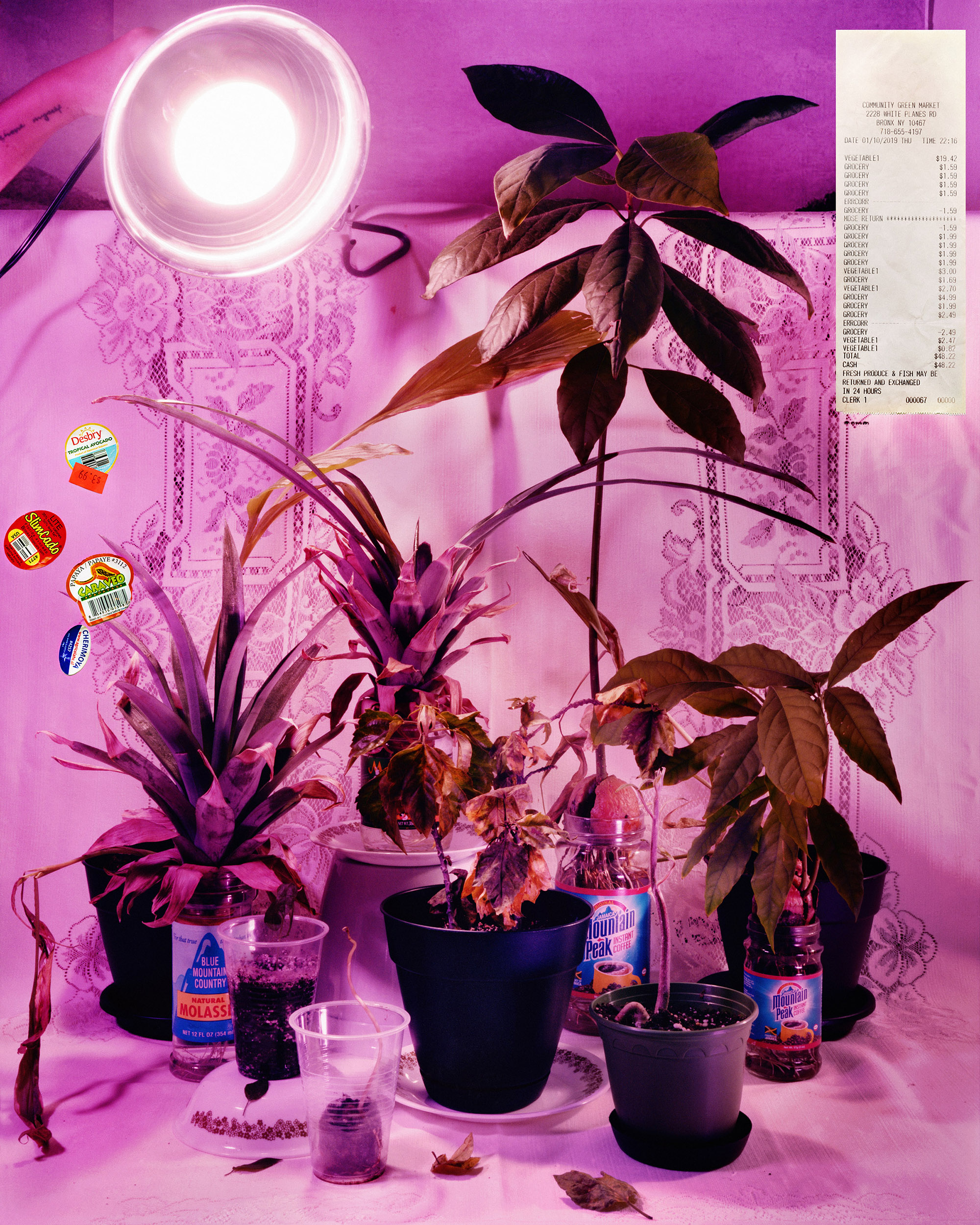
Caribbean Dreams: Constructions is the fruition of Samantha Box’s lifelong preoccupations with what it means to create diaspora in the United States—and to be created by diaspora. In One Kind of Story (2020), she draws upon images of her grandmother, great-grandmother, and great-aunt while centering herself in a pixelated self-portrait modeled after a photograph by Felix Morin, a studio photographer who worked in Trinidad in the late nineteenth century. An inset photograph in Navel (2022) depicts a strike in the 1930s by sugarcane cutters in St. Kitts, an act, she says, of “self-emancipation” undertaken by the descendants of enslaved Africans. All of these layers in Box’s work offer a riposte to questions immigrants are frequently asked about their origins. Where are you originally from? And where were you from before that? Box was shortlisted for the Aperture Portfolio Prize in 2023, and has since participated in group exhibitions at The Bronx Museum, BAXTER ST, and Empty Set Project Space. Her inaugural solo exhibition in Washington, DC,* Samantha Box: Confluences*, was on view at the National Museum of Women in the Arts in 2025.
 Akshay Mahajan, The only ones left on the Island, 2022
Akshay Mahajan 2023 Shortlist: Samantha Box, Brian Lau, Akshay Mahajan, Ziyu Wang; Winner: Van-Nhi Nguyen** **
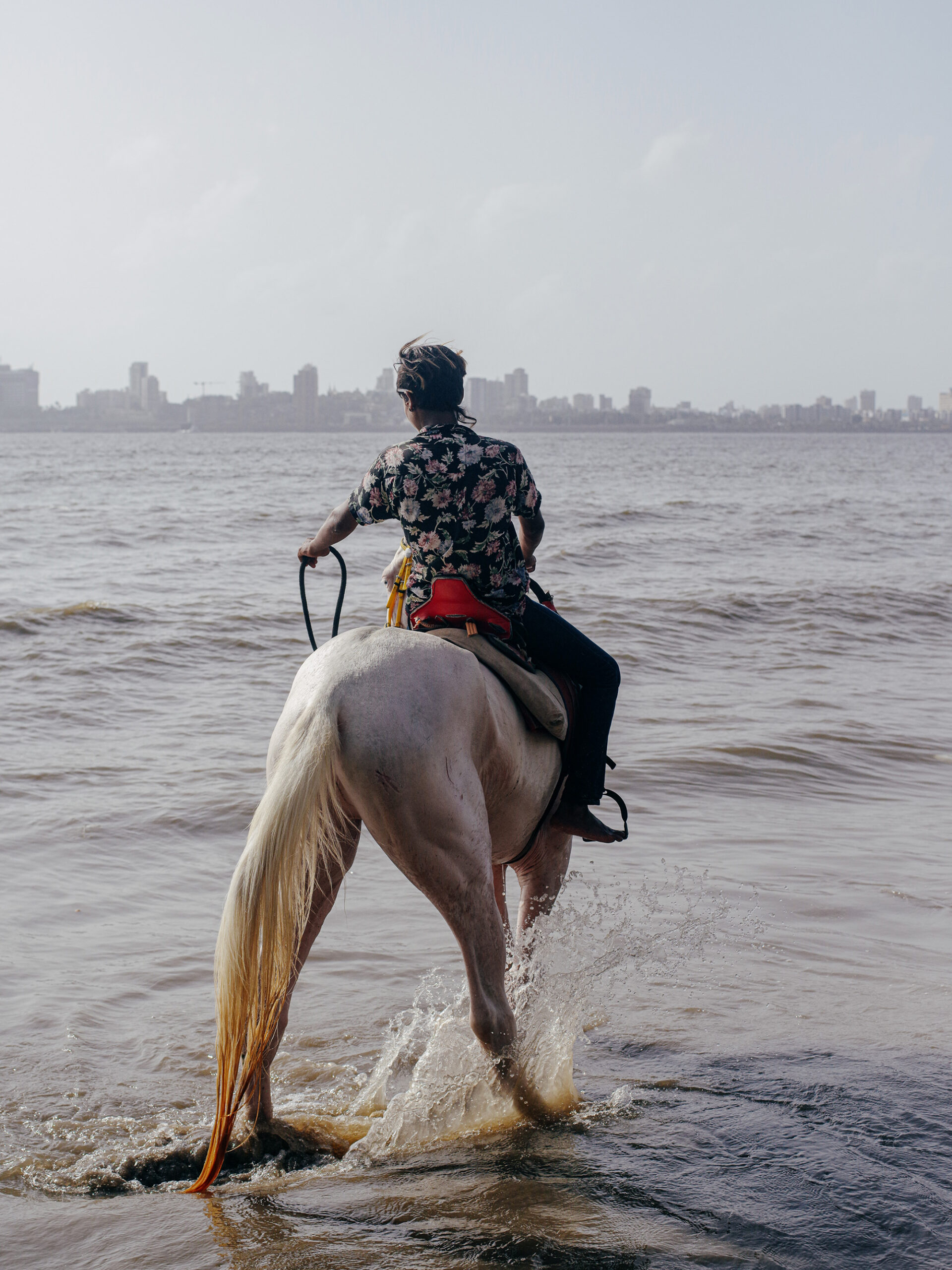
The city of Mumbai—once Bombay—has long suffered an identity crisis. Before Bollywood and the Bombay Stock Exchange, the rise of cotton mills and Gothic facades, and the fall of the Raj, the territory was a gift, a seventeenth-century dowry from the Portuguese to the British. This rather bureaucratic maneuver set the stage for Mumbai’s many evolutions. With each mutation, a grand narrative was developed and preserved with great care. But for those willing to look closely, the city is full of cracks. It may not come as a surprise, then, that the protagonist of Akshay Mahajan’s ongoing series To die is to be turned to gold is on a citywide search. Recalling an old urban legend, the title underscores the city’s image as a place of extremes. For Mahajan, the series is an experiment with historical continuity and memory. He understands his debt to Mumbai’s past, but can also intuit its failures and contradictions. Mahajan was shortlisted for the Aperture Portfolio Prize in 2023, won the Nera Di Verzasca Prize in 2024, and was selected as one of the twenty artists for Foam Talent 2024–25. His work has been exhibited at the 13th Bamako Encounters, Bamako, Mali (2023); Encontros da Imagem, Braga, Portugal (2023); and Jhaveri Contemporary, Mumbai (2025).
 Felipe Romero Beltrán, Bilal and Youssef wait for the end of the day, from the series Dialect, Seville, 2020–22
Felipe Romero Beltrán 2022 Shortlist: Juan Brenner, Margo Ovcharenko, Adrien Selbert, Allie Tsubota; Winner: Felipe Romero Beltrán
Since 2020, Felipe Romero Beltrán, who has lived and studied in Latin America, the Middle East, and Europe, has created a series of images and related videos titled Dialect, through which he delves into the routines, memories, and experiences of a group of young immigrants who crossed into Spain from Morocco as minors and are living in a refuge center, awaiting the normalization of their legal status. In the years since winning the Portfolio Prize, Romero Beltrán has published two photobooks: *Dialect *(Loose Joints, 2023), which was shortlisted for the 2023 Aperture–Paris Photo PhotoBook Awards, and *Bravo *(Loose Joints, 2025), which was shortlisted for the Les Rencontres d’Arles 2025 Author Book Award. His work has also been presented in solo exhibitions at Foam in Amsterdam, where he won the Paul Huf Award; La Maison Européenne de la Photographie, Paris (2025); MAPFRE Foundation in Madrid and Barcelona (2025); and Carré d’Art – Musée d’art contemporain, Nîmes, France (2025).
 Jarod Lew, Gracie, 2019
Jarod Lew 2021 Shortlist: William Camargo, Chance DeVille, Jarod Lew, Anouchka Renaud-Eck; Winner: Donavon Smallwood
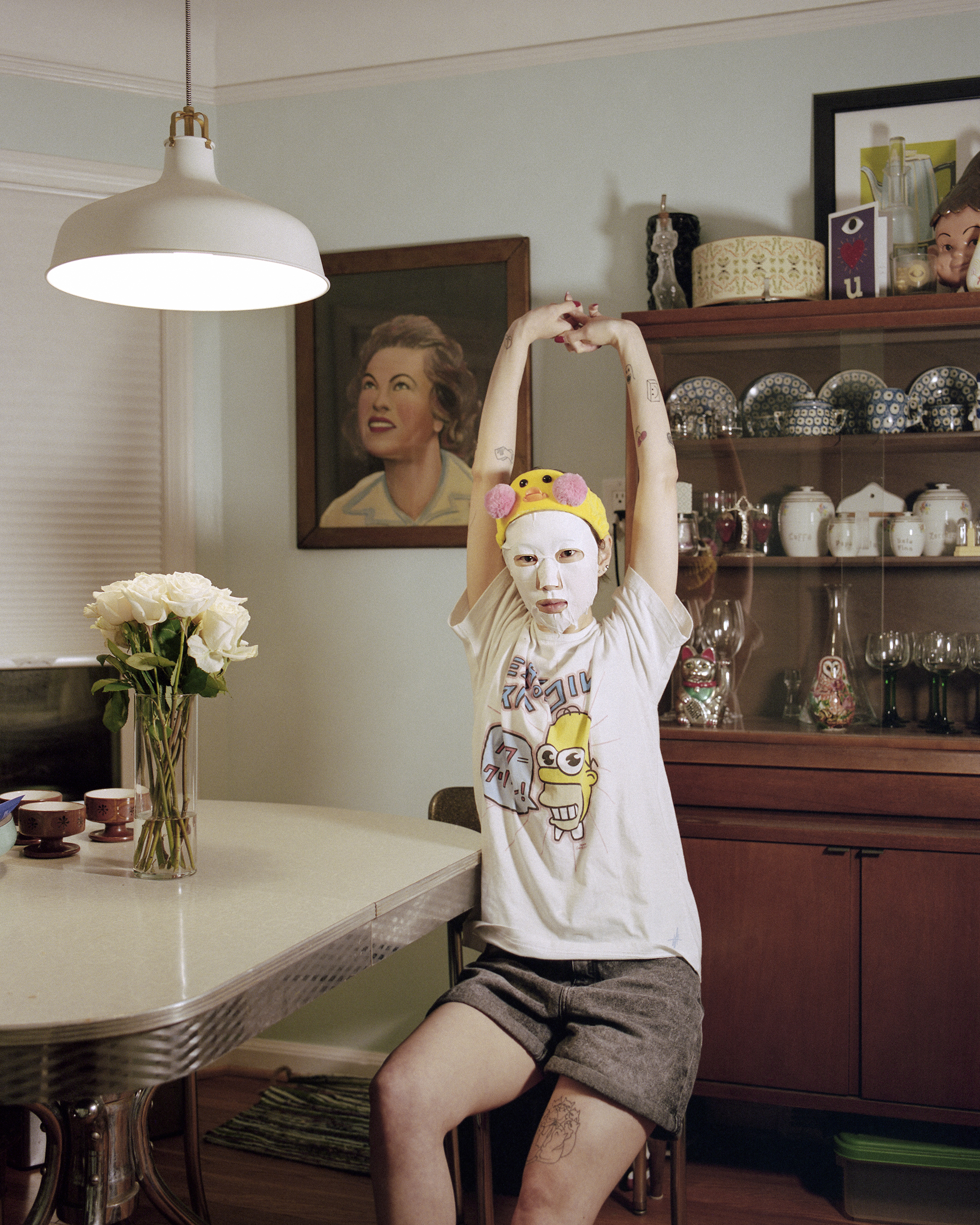
In 2012, Jarod Lew discovered that his mother had been engaged to Vincent Chin, the Chinese American draftsman murdered in 1982 by two Detroit autoworkers days before his wedding to Lew’s mother, a turning point in the history of Asian American civil rights. Lew’s shortlisted series Please Take Off Your Shoes, set in his hometown of Detroit—the geographical backdrop to Chin’s life and murder—takes an intimate but emboldened look at what remains in Chin’s legacy and the long history of survival and erasure in displacement. Lew expanded on this work with his ongoing series In Between You and Your Shadow,* *commissioned as part of Aperture and FUJIFILM’s Creating Stories for Tomorrow, and published in Aperture’s summer 2023 issue, “Being & Becoming: Asian in America.” Since then, Lew has participated in exhibitions at Pace Gallery in Hong Kong; the Smithsonian National Portrait Gallery and San Francisco Museum of Modern Art. In 2025, he presented his first solo museum exhibition, Strange You Never Knew, at the University of Michigan Museum of Art.
 Dannielle Bowman, Untitled (Hand), 2019
Dannielle Bowman 2020 Shortlist: Jessica Chou, Daniel Jack Lyons, Lindley Warren Mickunas, Gloria Oyarzabal; Winner: Dannielle Bowman
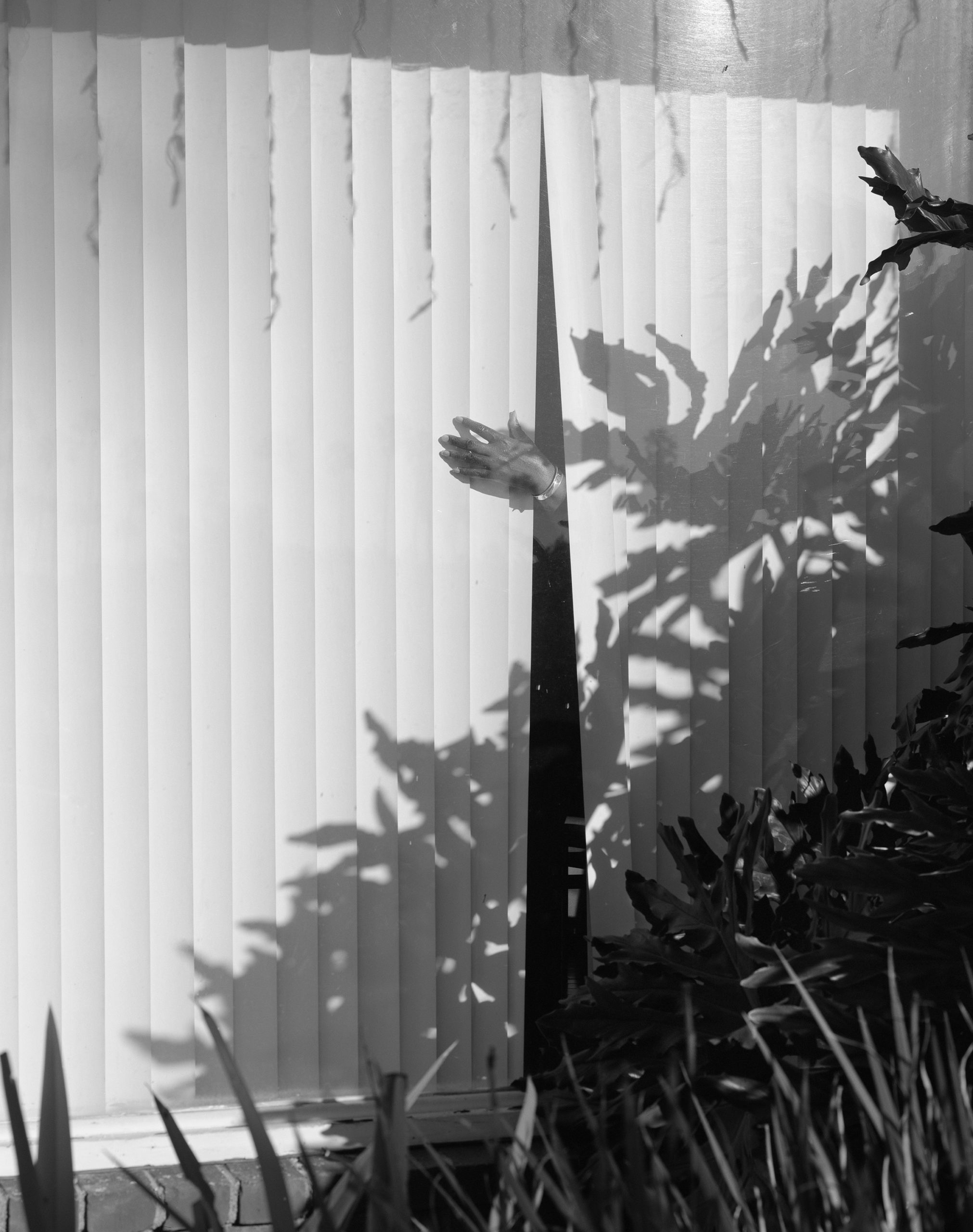
Dannielle Bowman makes excellent use of the pleasures of photographic space, described in elongated tonal gradations of black, white, and maximum grays balanced against compositions etched sharply by California-noir shadows—Robert Adams meets Maya Deren in the Los Angeles suburbs. There are multiple entry points into her series What Had Happened (2020–ongoing). These elements lure the viewer to linger within the work. Aside from the surplus of visual gratification, the images simmer with the tension of a story mostly withheld. On one level, these pictures are about the neighborhoods in and around the artist’s family home in Los Angeles. On another, Bowman’s work describes the passage of time and memories of home—or more precisely, the homes one makes on leaving old ones. Bowman was awarded the Aperture Portfolio Prize in 2020, and has since received a Light Work Residency, contributed to publications such as The New York Times, the Atlantic, and Vanity Fair, and her work has been shown at the Los Angeles County Museum of Art.
 Gloria Oyarzabal, Sorority, 2019
Gloria Oyarzábal** **2020 Shortlist: Jessica Chou, Daniel Jack Lyons, Lindley Warren Mickunas, Gloria Oyarzabal; Winner: Dannielle Bowman
For her Lagos-based series WOMAN GO NO’GREE (2019), the Spanish artist Gloria Oyarzábal created a curriculum for herself of Nigerian feminist theory, homing in on canonical gender scholarship, yet she doesn’t claim to speak for Nigerians or to make a statement about feminism in broad strokes. Instead, she considers the project and the research from which it sprung to be an exercise in decolonizing her own gaze, and for that reason, she welcomes debate that her work might prompt. Oyarzábal’s book of the same series, *Woman Go No’Gree (Editorial RM, 2020), *was awarded the Images Vevey Book Award in 2019, and Paris Photo–Aperture’s PhotoBook of the Year Prize in 2020. Most recently, she won the third edition of the KBr Photo Award for her project Appunti per un’Orestíade africana_una democracia en fatiga II, an award that recognizes the project’s contribution as postcolonial research and reflection on African countries.
 Zora J Murff, Terri (talking about the freeway), 2018, from the series At No Point In Between
Zora J Murff 2019 Shortlist: Teresa Eng, Jack Latham, Zora J Murff, Guanyu Xu; Winner: Mark McKnight
Through his mix of emotionally resonant portraits, vacant landscapes, and fraught archival materials, Zora J Murff investigates stories about incarceration and redlining in the context of an American narrative of violence perpetrated against African American citizens. Murff’s books include LOST, Omaha (KGP Books, 2018), *At No Point In Between (Dais Books, 2019), *and *True Colors (or, Affirmations in a Crisis) *(Aperture, 2022), which constructs a manual for coming to terms with the historical and contemporary realities of America’s divisive structures of privilege and caste. His work was featured in the Museum of Modern Art’s New Photography exhibition in 2020, and was presented at the 2021 Rencontres d’Arles, France, as part of the Louis Roederer Discovery Award.
 Philip Cheung, Weapon Maintenance, 2010
Philip Cheung** **2018 Shortlist: Fabiola Cedillo, Philip Cheung, Dylan Hausthor & P. Guilmoth, Eduardo L Rivera; Winner: Ka-Man Tse
In his series The Thing About Remembering, Philip Cheung documents daily life on the Kandahar Airfield in Afghanistan. Working between 2008 to 2014, Cheung photographed the landscape and subculture of the base, being careful to avoid the common tropes of war photography. Cheung narrows in on administrative duties of those managing combat operations and infrastructures in surreal portraits that often appear almost frozen in lethargy. By highlighting the banality of these tasks, people, and objects, Cheung reminds us of the ways conflict has become a routine to our daily lives. Cheung’s photographs have been shown across North America and Europe, including the SFO Museum in San Francisco, the National Portrait Gallery in London, the Canadian War Museum in Ottawa, and the PinchukArtCentre in Kyiv. In 2022, Cheung received the Leica Fotografie International & BarTur Photo Award for Photojournalist of the Year for his series *Russian invasion of Ukraine. *Cheung is a frequent contributor to The *New York Times, and his work has been featured in Harper’s, the British Journal of Photography, The Washington Post, *and Time.
 Ka-Man Tse, Untitled, 2017, from the series narrow distances
Ka-Man Tse** **2018 Shortlist: Fabiola Cedillo, Philip Cheung, Dylan Hausthor & P. Guilmoth, Eduardo L Rivera; Winner: Ka-Man Tse
In her series narrow distances, Ka-Man Tse focuses on the intersection of Asian and Pacific Islander and LGBTQ communities, carefully composing images that suggest oblique narratives. Her protagonists appear in quiet episodes of introspection. A young woman leans contemplatively over the railing of a curved bridge. Two men embrace in a moment of connection contrasted against an imposing Hong Kong skyline spiked with vertiginous towers. A gender-nonconforming person regards themself in a mirror that doubles their likeness, suggesting that we all contain many selves. Tse holds an MFA in photography from Yale University of Art, and her work has been exhibited internationally, including at the Brooklyn Museum of Art, Tate Modern, and the Victoria and Albert Museum. She is currently an Associate Professor of Photography at Parsons the New School for Design.
 Natalie Krick, Masks, 2014
**Natalie Krick **2017 Shortlist: Emmanuelle Andrianjafy, Nancy Floyd, Kris Graves, Balarama Heller; Winner: Natalie Krick
Natalie Krick’s series Natural Deceptions, made in collaboration with her mother and sister, explores the temptations and degradations that can be found across the spectrum of physical and inner self. The images are colorful, witty, aggressively slick—they would feel equally at home as fashion campaigns or celebrity portraiture, save for their bite and personal edge. In 2017, Krick published her first monograph, NATURAL DECEPTIONS, which features her winning series. Since then, she has gone on to publish the photobooks *We are sorry that you applied this year *(2025) and *like a vampire with a rose in my teeth *(2026), and had her work exhibited widely including at the Frye Museum, LACMA, and Silver Eye Center for Photography. Currently, Krick is a professor of interdisciplinary and visual arts at the University of Washington.
 Eli Durst, Restaurant, Hotel Embasoira, 2015
**Eli Durst **2016 Shortlist: Bill Durgin, Sean Thomas Foulkes, RaMell Ross; Winner: Eli Durst
In 2011, Eli Durst began volunteering at an immigrant detention center in Austin, Texas, where he assembled identification portraits for asylum applicants. Many of the people he met were from Eritrea, and spoke with longing and nostalgia for their home country. Four years later, Durst traveled to Asmara and spent fifteen days photographing the city in atmospheric, silvery duotone. Conjuring the city in its present tense, Durst’s brief study of Asmara reflects the moods and motions of a singular urban landscape. Since winning the Portfolio Prize in 2016, Durst has authored three monographs: The Community (2020), The Four Pillars (2022), and, most recently, The Children’s Melody (2025), which explores the significance of collective identity formation through images made in cotillion groups, dance practices, ROTC training, and school performances. A Guggenheim Fellow, Dust has contributed numerous photographic essays to The New York Times Magazine, The New York Times, The New Yorker, The Atlantic, Der Spiegel, and Wallpaper.
 RaMell Ross, Sleepy Church, 2014
RaMell Ross 2016 Shortlist: Bill Durgin, Sean Thomas Foulkes, RaMell Ross; Winner: Eli Durst
The photographer, writer, and filmmaker RaMell Ross has created deeply moving chronicles of the American South. His series South County, AL (a Hale County) (2012–14), published in *Aperture in 2018, and his breakthrough documentary film, Hale County This Morning, This Evening (2018), offer a poetic vision of Alabama’s Black Belt. As Salamishah Tillet writes in Aperture, “His images—both still and moving—travel between the highly intimate and the breathtakingly panoramic in order to offer up an experience as dynamic and sweeping as contemporary Southern life itself.” Hale County won a Peabody Award in 2020, and was nominated at both the 91st Academy Awards for Best Documentary and Emmy Awards for Exceptional Merit in Documentary Filmmaking. Last year, Ross’s film Nickel Boys, adapted from the acclaimed Colson Whitehead novel, *was nominated for Best Picture at the 97th Academy Awards. Ross holds degrees in Sociology and English from Georgetown University, and is an associate professor at Brown University. His works are held in various collections, including the Museum of Modern Art, New York; the Virginia Museum of Fine Arts in Richmond, Virginia; and the High Museum of Art in Atlanta.
 Lisa Elmaleh, Moses Nelligan and Matthew Kinman, Clifftop, West Virgina, 2013
Lisa Elmaleh** **2015 Shortlist: Lisa Elmaleh, Heikki Kaski, Laurence Rasti; Winner: Drew Nikonowicz
History resonates in Lisa Elmaleh’s American Folk series. Using the mid-nineteenth-century tintype photographic process—slow, chemically dangerous, and incredibly cumbersome—she records an Appalachia that appears as an echo from the dawn of photography. Her photography is an elaborate romance, in which everything is conscious, arranged, and constructed, and photographer and sitters are all performers; rather than unwitting country folk left behind by time, they are all political actors, staking their identities and purpose in a defiant rejection of contemporary mores. Elmaleh’s work has been exhibited nationwide and recognized by the Aaron Siskind Foundation, the Puffin Foundation, and the Creator Labs Photo Fund, among others, and has been published by Harper’s, Smithsonian Magazine, The New York Times, NPR, and more. She was awarded a Guggenheim Fellowship in 2024.
 Max Pinckers, from the series Will They Sing Like Raindrops or Leave Me Thirsty, 2013
Max Pinckers** **2014 Shortlist: Matt Eich, Davide Monteleone, Max Pinckers, Sadie Wechsler; Winner: Amy Elkins
Throughout his career, Max Pinckers has created theatrically staged photographs that question the boundaries of documentary and fiction. His 2019 shortlisted series, *Will they Sing Like Raindrops or Leave Me Thirsty, *draws from the visual culture of Bollywood to explore the real-life tensions of life in Mumbai focused on aspects of love and marriage. Pinckers has received multiple international awards, including the Edward Steichen Award Luxembourg in 2015 and Leica Oskar Barnack Award in 2018. He has also produced numerous self-published photobooks, such as The Fourth Wall (2012), *Lotus *(2011–16), *Red Ink *(2018), *Margins of Excess *(2018), and *State of Emergency *(2024), which garnered the Rencontres d’Arles Special Mention, Photo-Text Book Award.
 Pacifico Silano, Wood Paneling, 2012
**Pacifico Silano **2013 Shortlist: Clare Carter, Corey Escoto, Akihiko Miyoshi, Pacifico Silano, Eva Stenram; Winner: Bryan Schutmaat
Pacifico Silano’s project Male Fantasy Icon appropriates images of Al Parker, a gay porn star in the 1970s. The series ruminates on sexuality and the materiality of print in an obsessive manner that mimics the repetitive feeling of both fantasy and porn itself. The images, with their distinct vintage flavor, recall a time when sexuality was more carefree, before the AIDS epidemic that later took Parker’s life and that of a generation of his gay male peers. Silano fuses the fantasy of an earlier moment in the culture with a poignant recollection of what has been lost. His debut book, I Wish I Never Saw the Sunshine (Loose Joints, 2021), was shortlisted for the Paris Photo–Aperture PhotoBook Awards, and his work has been exhibited in both group and solo shows at the Bronx Museum, the Andy Warhol Museum, the Museum of Sex, and the Houston Center of Photography.
 Alejandro Cartagena, Lost River No.3, 2009
**Alejandro Cartagena **2009 Shortlist: Keliy Anderson-Staley, Alejandro Cartagena, Maureen Drennan, Jason Hanasik, Mark Lyon; Winner: Alexander Gronsky
The photographs in *Lost Rivers *by Alejandro Cartagena, which are part of a larger body of work titled Suburbia Mexicana, interrogate the interdependence between humans and the environment in the face of urban expansion in Monterrey, Mexico. Lost Rivers provides explicit evidence of botched urban development and inadequate economic policy, even as the images reveal the beauty to be found within the spoiled landscapes. Formally, Cartagena’s photographs recall the monumental work of Minor White and Ansel Adams, while simultaneously reaching further back to the landscape paintings of the Hudson River School. Since being shortlisted for the Portfolio Prize in 2009, Cartagena has published over thirty photobooks, including the contemporary classic *Carpoolers *(2014), and pursued multiple forms of image making, from archival collages to AI models. His work has also been exhibited internationally, including at the San Francisco Museum of Modern Art, where his mid-career survey, Ground Rules, opened in 2025.
 LaToya Ruby Frazier, #15 Self-Portrait, 2005
LaToya Ruby Frazier 2006 Shortlist: Cara Barer, Michael Fisher, LaToya Ruby Frazier, Van Houtryve; Winner: Hiroshi Watanabe
One of the great portrayers of twenty-first-century postindustrial American life, LaToya Ruby Frazier has covered stories from the postindustrial decline of her hometown of Braddock, Pennsylvania, to the water crisis in Flint, Michigan. Frazier’s award-winning first photobook, *The Notion of Family (Aperture, 2014), is an incisive exploration of the legacies of racism and economic decline in America’s small towns, as embodied by Braddock. Collaboration is central to Frazier’s practice, reinforcing the idea of art and image making as transformative, and a means of resetting traditional power dynamics and narratives—both those of her family and of the community writ large. Throughout her career, Frazier has received various grants and awards, including a 2014 Guggenheim Fellowship, 2014 USA Weitz Fellowship, and 2015 MacArthur Fellowship. In 2024, her first major museum survey, Monuments of Solidarity, was presented *at the Museum of Modern Art, New York; that year, Frazier was named one of Time’s 100 Most Influential People.
The 2026 Aperture Portfolio Prize is open through January 9, 2026.