BEST OF 2025 The Best Field Recordings of 2025 By Matthew Blackwell · December 11, 2025
The goal of the Best Field Recordings column is to gather the best sounds recorded outside the studio from all around the world. In 2025, we highlighted over 100 recordings from the North to the South Pole, from rainforests to industrial zones to crowded urban centers. The selection below represents the standouts in a stellar year for exploring and recording. You’ll find people who recorded a single tree for a full year, who attempted to understand the language of a glacier, and who developed microphones attuned to Earth’s lowest frequencies. What they …
BEST OF 2025 The Best Field Recordings of 2025 By Matthew Blackwell · December 11, 2025
The goal of the Best Field Recordings column is to gather the best sounds recorded outside the studio from all around the world. In 2025, we highlighted over 100 recordings from the North to the South Pole, from rainforests to industrial zones to crowded urban centers. The selection below represents the standouts in a stellar year for exploring and recording. You’ll find people who recorded a single tree for a full year, who attempted to understand the language of a glacier, and who developed microphones attuned to Earth’s lowest frequencies. What they all share is an urge to listen, patiently and carefully, to our changing planet.
Alvin Curran
...
.
00:10 / 00:58
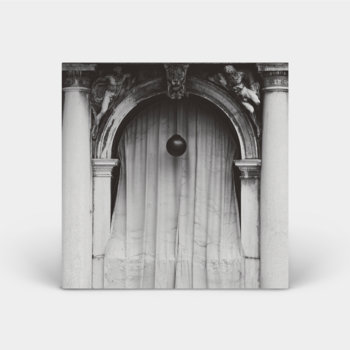
It took 40 years and the persistence of Room40 label head Lawrence English to convince Alvin Curran to return to the method behind his classic quartet of albums from the ‘70s. Curran, ever the adventurous spirit, moved on from field recording to embrace piano, brass band, chamber orchestra, percussion quartet, shofar, and many other compositional strategies. However, for *ARCHEOLOGY // ARCHEOLOGIA *he took to his archives to make an album that sits alongside his early work while sounding incredibly modern. “Le Serra” is based on someone humming Ravel’s Boléro on a lazy day that gets stranger and stranger: bees buzz, dogs bark, an accordion wheezes, and then everything disintegrates into a powerful synth drone. “Othello By Night” is a nocturnal tour through Italian streets that are soon overwhelmed with chimes and static. Collages of field recordings are nothing new in 2025; it takes the return of an innovator like Curran to show us how exciting they can be.
Vanessa Rossetto
Jersey City, New Jersey
...
.
00:10 / 00:58
Jersey City, New Jersey
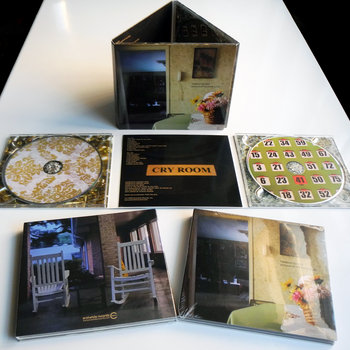
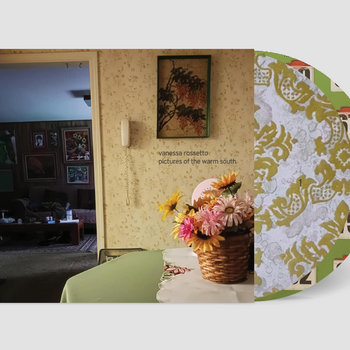
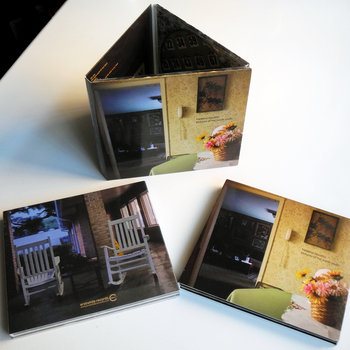
Vanessa Rossetto’s Pictures of the Warm South is a sound portrait of her mother, 92 years old at the time of recording. She narrates much of the set as we follow her through her normal activities in New Orleans: making phone calls, watching television, playing bingo. At times she is funny, at times harsh: in one of the more upsetting sequences, she snaps at Rossetto, “What the hell are you crying for again?” Unfortunately, shortly after these recordings, Rossetto’s mother passed away; in the final track, we hear Rossetto picking up the death certificate. Like a great documentary, Pictures of the Warm South is uncompromising while remaining empathetic. By the end, you’ll feel like you know its subject, or wish you had the opportunity to.
Joshua Bonnetta
Munich, Germany

...
.
00:10 / 00:58
Munich, Germany
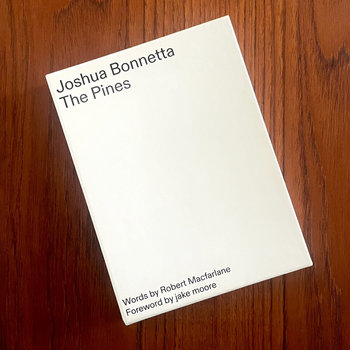
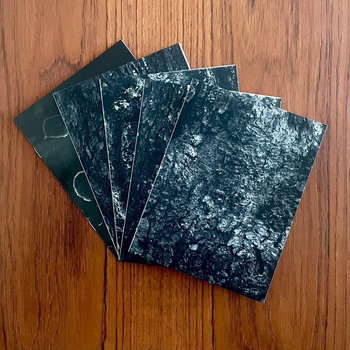
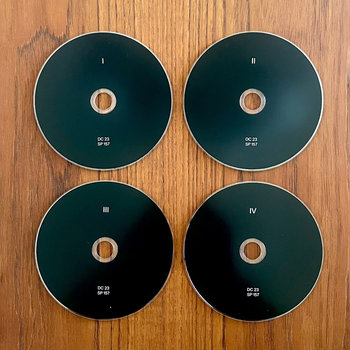
Joshua Bonnetta recorded a single pine tree in upstate New York for a full year—that’s 8,760 hours of audio. The resulting four tracks on The Pines, one for each season, are only an hour each. Bonnetta spent three years painstakingly pruning his mass of material down, manually searching for the most interesting events. The finished pieces are thus a hyperreal representation, with wildlife crowding the microphones until they are driven away by rain or snow. It’s easy to imagine that this is what nature would sound like outside of human interference. In fact, exactly because of Bonnetta’s clever editing, it sounds even better—call it the forest’s greatest hits.
Ludwig Berger & Vadret da Morteratsch
...
.
00:10 / 00:58
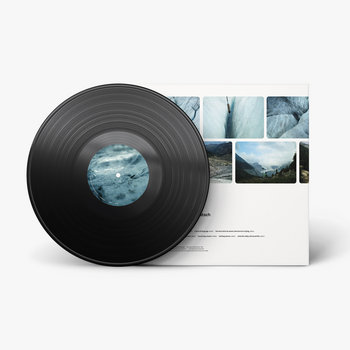
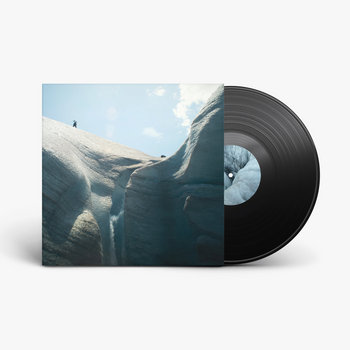
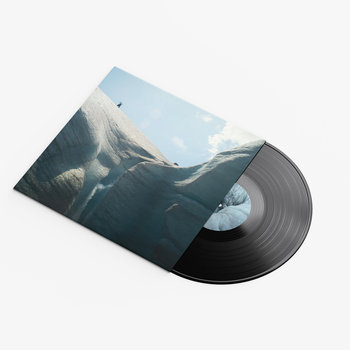
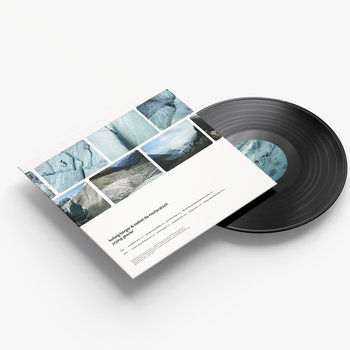
To celebrate the UN’s designation of 2025 as the International Year of Glaciers’ Preservation, Forms of Minutiae dedicated many of its releases this year to recordings of glaciers around the world. Ludwig Berger recorded c**rying glacier on the Morteratsch Glacier in the Swiss Alps. He even shares credit with it, giving Vadret da Morteratsch, its local Romansh name, equal billing. After a decade’s worth of work on the glacier, Berger began to see Morteratsch like a living being with its own language. “In German there’s this word, stimmrecht, which means ‘the right of the voice,’ which means the right to vote,” Berger says in the album’s making-of documentary. “I think a glacier should also have that right, it should have a voice in the discussion. It could drastically change our way of perceiving the world and of shaping our actions.” Its creaks, rumbles, and pops are trying to communicate an urgent warning to us, and it’s our job to listen.
Michał Jacaszek
Gdańsk, Poland

...
.
00:10 / 00:58
Gdańsk, Poland
Idylla finishes Michał Jacaszek’s trilogy of field recording albums that began with Catalogue des Arbres and continued with Gardenia. Those albums combined field recordings with instrumental and vocal accompaniment to create beautiful, minimalist compositions. With Idylla, Jacaszek takes the approach further by using MIDI technology to isolate specific sounds from his source recordings. Natural elements flicker in and out like half-remembered images, accented by piano and Gdańsk’s 441Hz Choir. Recognizable elements appear—the hum of insects, the purling water of a stream, the wind in the leaves—but only partially, as if the full force of nature has been attenuated. It’s an apt metaphor for the reduced role of the natural world in our lives, its roar reduced to a whisper.
Machine Learning
Environments 12: new concepts in acoustic enrichment
Brussels, Belgium
...
.
00:10 / 00:58
Brussels, Belgium
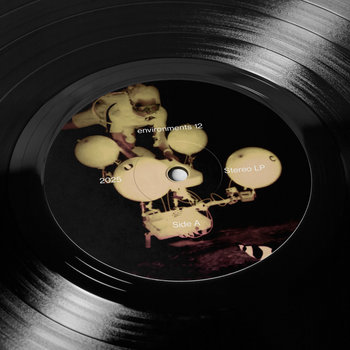
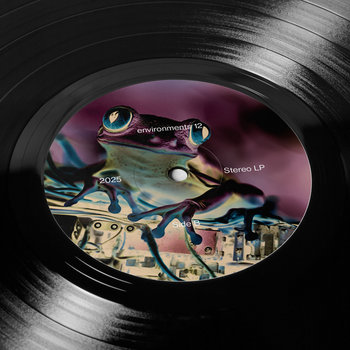
The first smash-hit field recording album was Environments 1: The Psychologically Ultimate Seashore. Irv Teibel, the man behind the project, realized that his recordings of the ocean could be edited and processed to sound “more real than real.” Teibel applied the same logic to thunderstorms, birdsong, flowing streams, and other phenomena for the rest of his 11-part series. His goal was to bring nature to the people, but in the age of global warming we have the strange task of bringing nature back to itself: real jungle sounds are now piped into gorilla enclosures at the zoo, while the sounds of healthy coral reefs are played near ailing ones to encourage sea life to return. Machine Learning’s* Environments 12* extends Teibel’s series to account for this uncanny development, featuring these aural simulacra along with cloned voices narrating the events that led to them. This is a postmodern field recording album, perfect for a world where fiction is fast overtaking reality.
Pablo Diserens & Ludwig Berger
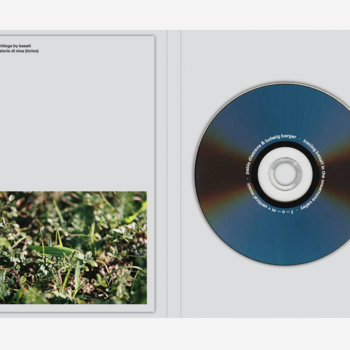
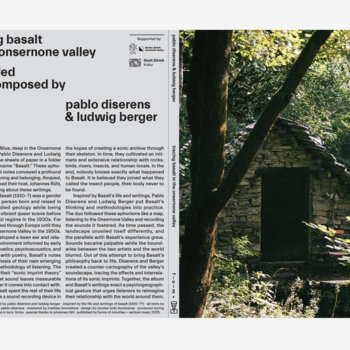
tracing basalt in the onsernone valley
...
.
00:10 / 00:58
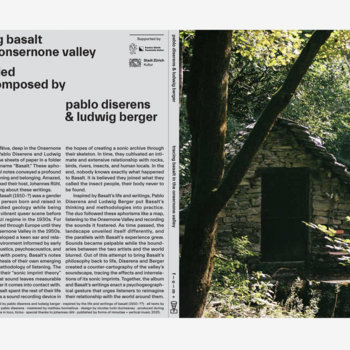
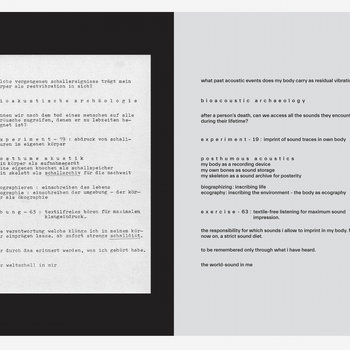
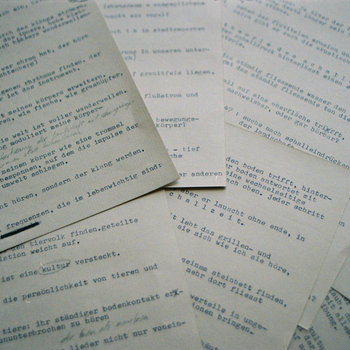
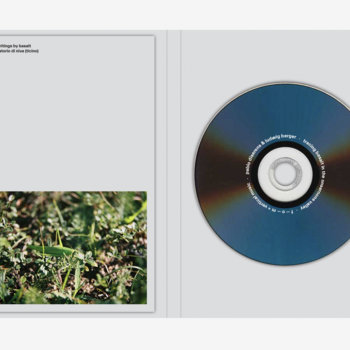
During a trip to Switzerland’s Onsernone Valley, Pablo Diserens and Ludwig Berger found a folder labeled “Basalt.” It was filled with sheets of paper covered in typewritten aphorisms: “How deeply does a sound penetrate me before it fades away?” and “My body as a recording device/ My own bones as sound storage/ My skeleton as a sound archive for posterity.” Diserens and Berger discovered that Basalt was the name of a gender non-conforming person who fled Berlin from the Nazis before settling in the Onsernone Valley in the 1950s. There, they started to formulate ideas about sound. Basalt theorized that sound waves leave traces in physical matter—including their own body. They organized a “strict sound diet” to control what would end up recorded in their bones. Tracing basalt in the onsernone valley is Diserens and Berger’s attempt to follow this diet themselves, recreating the listening experiments that Basalt wrote down. Research is ongoing into Basalt’s life; their eventual fate is still unknown. However, this release is the first step in publicizing their remarkable story and circulating their fascinating thoughts about sound, listening, and identity.
Brunhild Ferrari
London, UK
...
.
00:10 / 00:58
London, UK
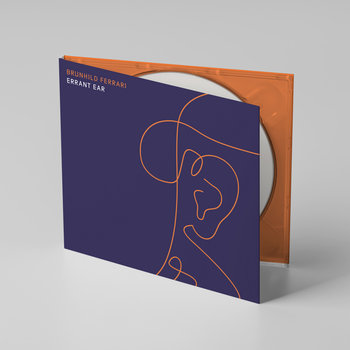
Brunhild Ferrari’s Errant Ear is an autobiography of the artist, and it tells of one of the most remarkable careers in modern music. As Luc Ferrari’s partner and collaborator since the 1960s, Brunhild saw the development of the French studio GRM and, along with it, the growth of field recording as a discipline. Still, her first solo record was only released in 2010. Since then, she has more than made up for lost time, quickly building a discography to match her reputation. Errant Ear gathers her recordings from the 1970s to today, mixing them with contributions from fellow recordists Luke Fowler, Chris Watson, and her late husband. Ferrari’s skill is in building narrative tension through sound, and with these very personal recordings, the effect gains extra emotional resonance. Brunhild describes the process of creating the album as “strolling in my memories that I was able to capture with my ears, my eyes, my nose, all my sensations, things that my life is made of and that I keep almost like treasures.” With Errant Ear, we can now treasure them, too.
Weston Olencki
Berlin, Germany
...
.
00:10 / 00:58
Berlin, Germany
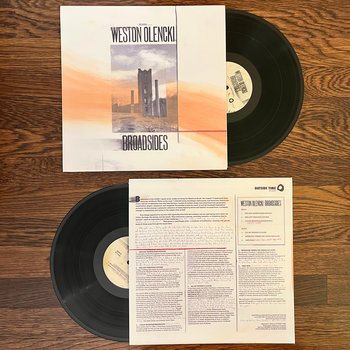
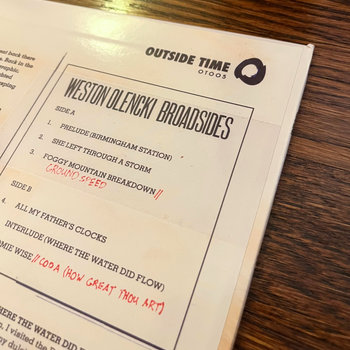
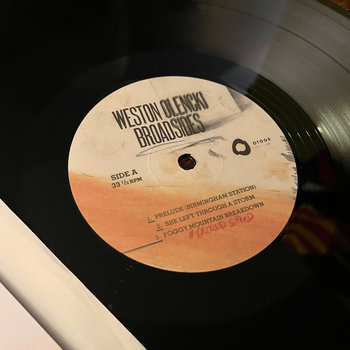
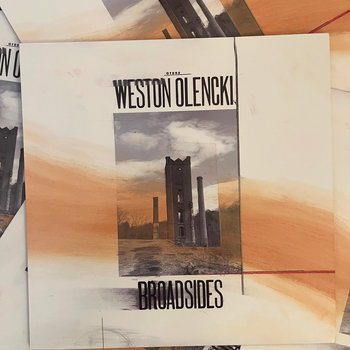
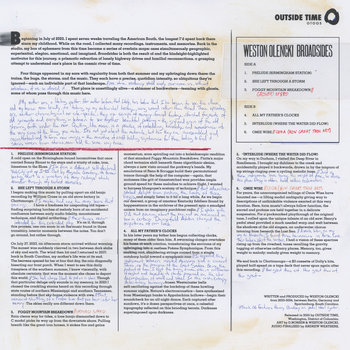
Weston Olencki traveled the American South and rediscovered the sounds of their childhood: “the trains, the bugs, the storms, and the music.” The first sound on Broadsides is a train leaving Birmingham Station, and then a summer storm enters before undulating waves of cicadas. Olencki plays traditional instruments like banjo, autoharp, and dulcimer, but plays them out of tune, or reverses them, or speeds them up beyond human ability, turning Broadsides into a commentary on folk music as much as a folk record in its own right. More than anything, they are interested in how this music resonates in the region. Everywhere, there are in situ recordings that place you in the South, whether it’s the locale of a murder ballad (the Deep River in Randleman, North Carolina, where the victim of “Omie Wise” was drowned) or of Olencki’s own upbringing (the clocks from his father’s collection on “all my father’s clocks”). The message of Olencki’s Broadsides is clear: You can’t understand the South without understanding its music, and you can’t understand its music without listening to the land.
Brian House
Everyday Infrasound in an Uncertain World
Amherst, Massachusetts
...
.
00:10 / 00:58
Amherst, Massachusetts
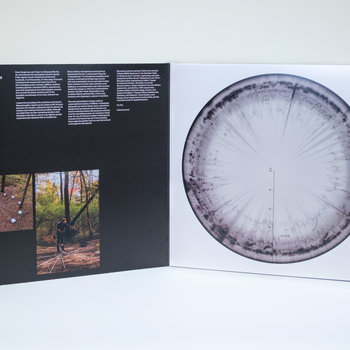
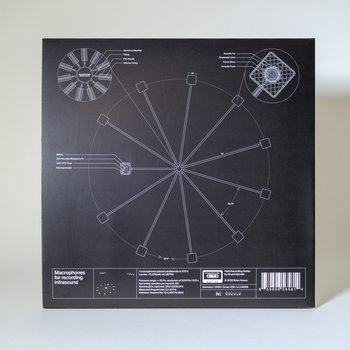
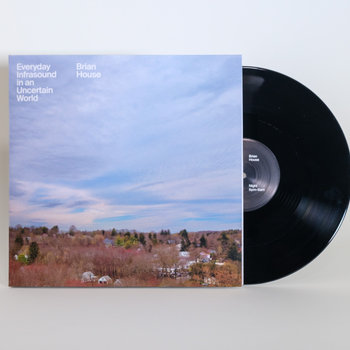
We are surrounded by sounds that we cannot hear. Environmental events like storms, ocean currents, and wildfires emit noise at frequencies below the range of human hearing, with wavelengths that can be a mile long. Brian House designed infrasonic “macrophones,” based on technology from the Comprehensive Nuclear-Test-Ban Treaty Organization, to pick up frequencies as low as a quarter of a Hz. With these macrophones, he recorded for a full day in a location outside of Amherst, Massachusetts. Then, he sped up the 24 hours of recordings by a factor of 60 to make them last 24 minutes, raising them six octaves higher and into audible range. Everyday Infrasound in an Uncertain World splits the final result into “Day, 6am–6pm” and “Night, 6pm–6am.” The sounds are otherworldly, but really, they’ve been here all along—House’s invention simply lets us listen to the Earth anew.