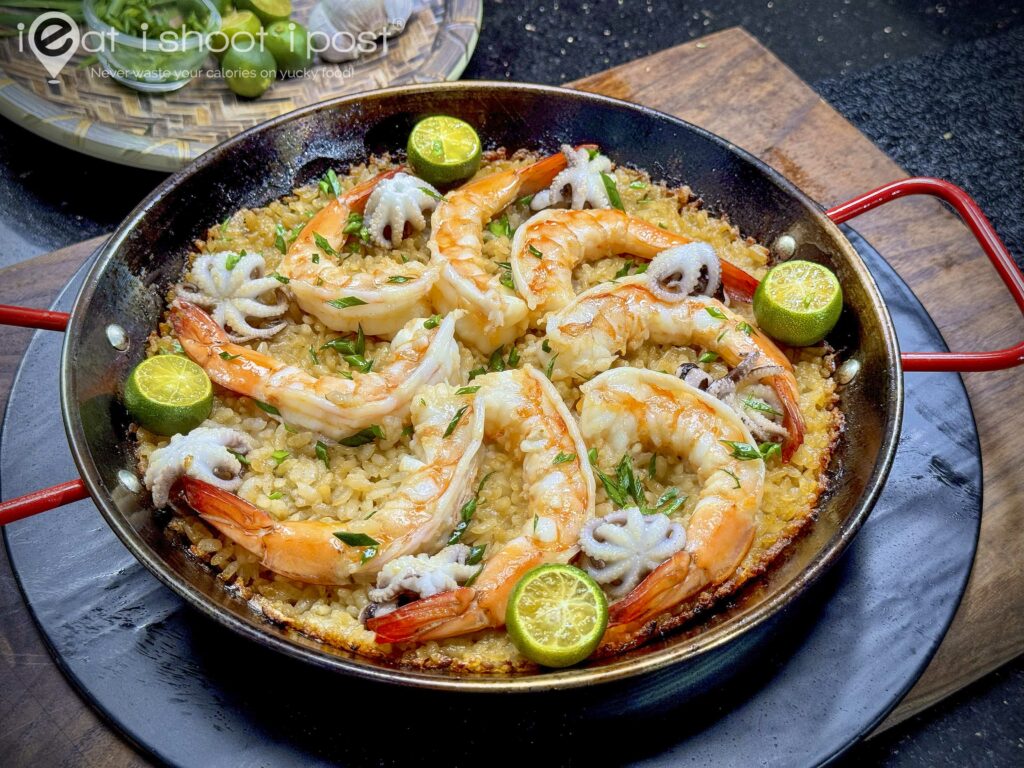
Paella with a local Twist!
Here’s a fun twist using USA Calrose Rice that brings together the best of both worlds — the delicious flavors of Hokkien Mee and the classic seafood paella. By mixing Chinese cooking styles with Spanish techniques, this dish gives you that awesome crispy socarrat layer you love in paella, but with the familiar, comforting taste of Hokkien Mee. It’s a tasty fusion that’s sure to surprise and delight your taste buds!
USA Calrose Rice is incredibly versatile and a great staple to have in the kitchen. We’ve used it in everything from fried rice and** [risotto ](https:…
Paella with a local Twist!
Here’s a fun twist using USA Calrose Rice that brings together the best of both worlds — the delicious flavors of Hokkien Mee and the classic seafood paella. By mixing Chinese cooking styles with Spanish techniques, this dish gives you that awesome crispy socarrat layer you love in paella, but with the familiar, comforting taste of Hokkien Mee. It’s a tasty fusion that’s sure to surprise and delight your taste buds!
USA Calrose Rice is incredibly versatile and a great staple to have in the kitchen. We’ve used it in everything from fried rice and** risotto **to claypot rice and onigiri. It’s slightly stickier than bomba rice, which is traditionally used for paella, so what we do is to soak the rice first in boiling water to remove some of the starch, then toast the rice briefly before adding the stock. We were pleasantly surprised at the results, and we are sure you will be too!
USA Calrose Rice

USA Calrose Rice is a versatile medium grain rice that is sustainably grown in the USA. It is stickier than bomba rice, but with a simple hack, it makes for quite a good substitute. Our paella had a great socarrat and the grains were plump and had a nice bite.
Recipe
Yield: 26cm Hokkien Mee Paella, feeds 1-2 persons
Prep Time: 30 mins Cooking Time: 50 mins
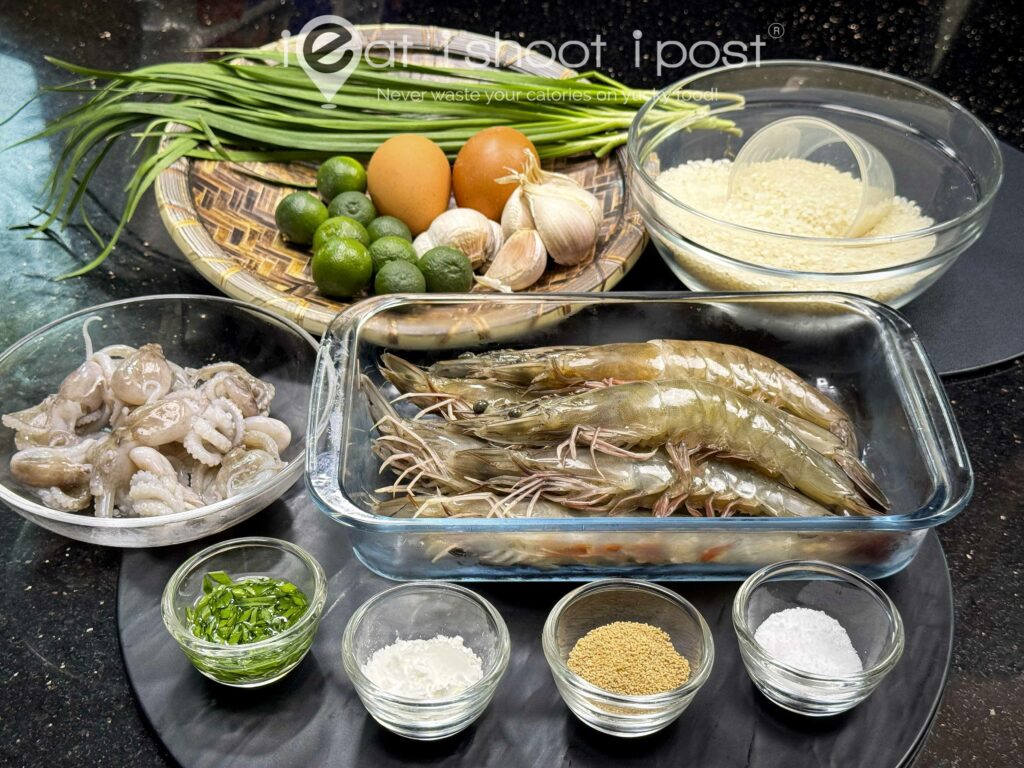
Ingredients
- USA Calrose Rice – 1 Rice Cup (180ml)
- Prawns – 8 medium-sized
- Baby Octopus – 8 pieces
- Salt – 1/2 tsp
- White Pepper – 1/4 tsp
- Egg white – 1
- Corn starch – 2 tsp
- Oil – 1/3 cup
- Water – 600ml
- Garlic – 1 bulb (about 6 cloves)
- Dashi powder – 1 Tbsp
- Chinese chives – for garnishing
- Calamansi limes – 2
Method
- Soak rice in boiling water for 5 minutes, then rinse and drain.
- Add 1 tablespoon oil to the rice and stir to coat evenly.
- Peel prawns, remove the vein, and reserve the heads. Make shallow slits so it doesn’t curl up when cooking.
- Marinate prawns and baby octopus with salt, white pepper, egg white, and corn starch.
- Roughly chop garlic with skin on.
- Cut up the prawn heads.
- In a pot, heat 1/3 cup oil and fry prawn heads until they turn red.
- Add garlic and fry until fragrant (about 5 minutes).
- Add water and bring to a boil. Simmer for 5 minutes, then strain the stock.
- Add marinated prawns and baby octopus into the stock while it is still hot.
- Lightly poach for 1 minute, then remove and set aside.
- Heat the paella pan and add rice. Fry briefly to toast the rice.
- Add the stock and bring to a boil. Lower heat and cook for 20 minutes.
- Add prawns and octopus to the paella in the last 3 minutes and cover the pan.
- Continue cooking until the aroma of toasted rice is noticeable.
- Garnish with Chinese chives and squeeze calamansi lime over just before serving.
Equipment Used:
Cooking Tips and Notes
Preparing the Prawns and Octopus
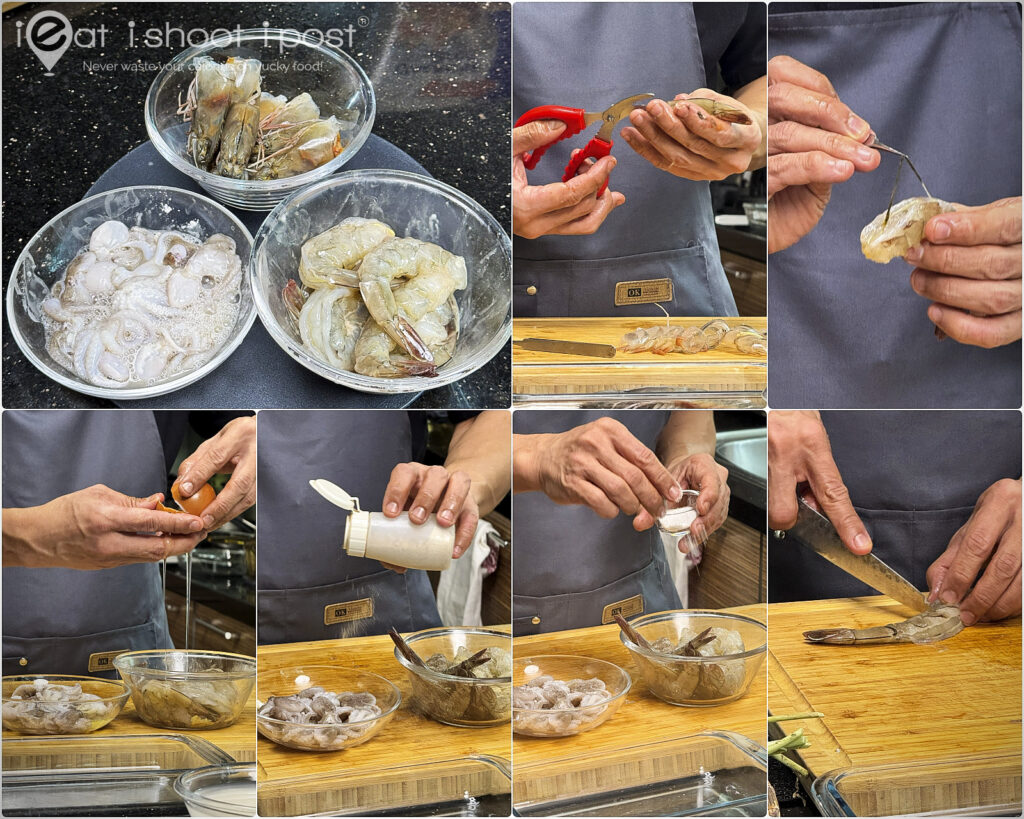
If you simply add the octopus and prawns directly into the paella, they will easily overcook, leaving you with a dish that looks unattractive and seafood that is tough and dry. To ensure the seafood is perfectly cooked, we briefly poach it in the stock first, then add it back only after the rice is done.
To take it a step further, we use the Chinese technique of velveting, which coats the seafood with a thin layer of egg white and cornstarch to protect it during cooking. The result is beautifully tender, perfectly cooked seafood with excellent texture and flavour.
Preparing the Prawn Stock
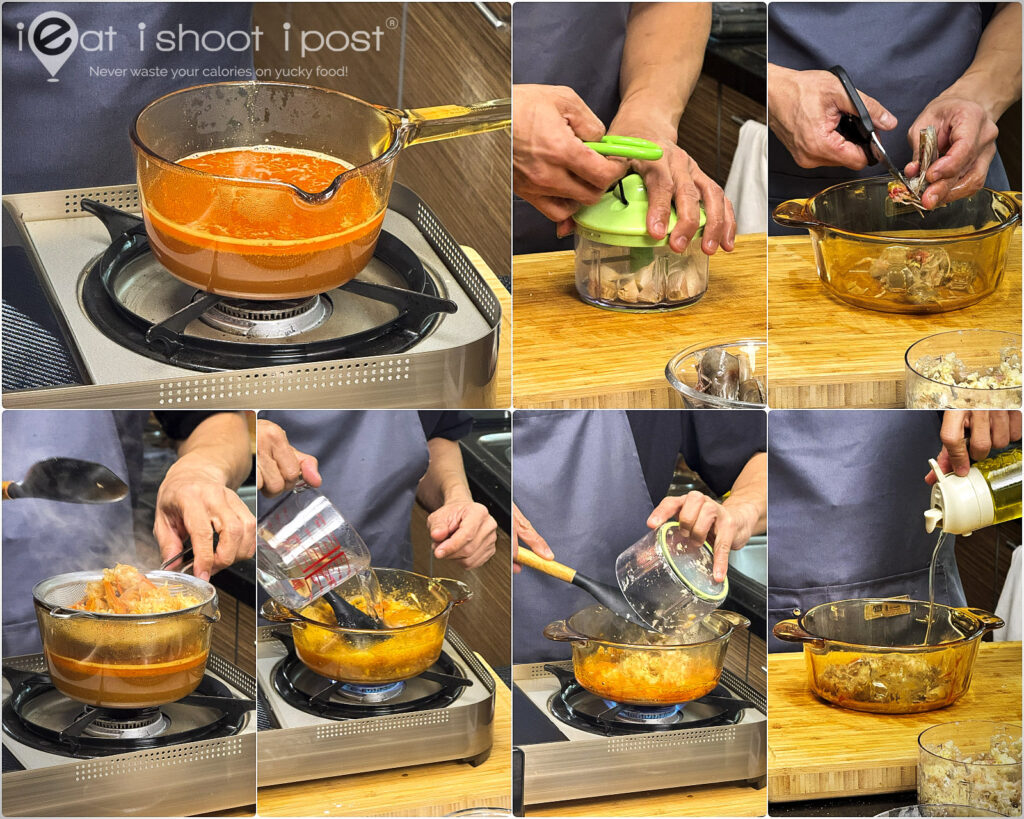
The flavour compounds in crustaceans are oil-soluble, which is why we first sauté the shells to draw out their aroma and capture it in the oil. Once the prawn heads have released their flavour, we add the chopped garlic—skin and all—and continue frying until the garlic fragrance emerges.
This step is crucial, as the distinct Hokkien Mee flavour comes from the addition of the garlic. Only after the aromatics are fully developed do we add the water, allowing the flavoured oil to be dispersed into the stock. By vigorously boiling the oil and water together, we create an emulsion that gives the broth extra body and texture.
Poaching the Prawns and Octopus
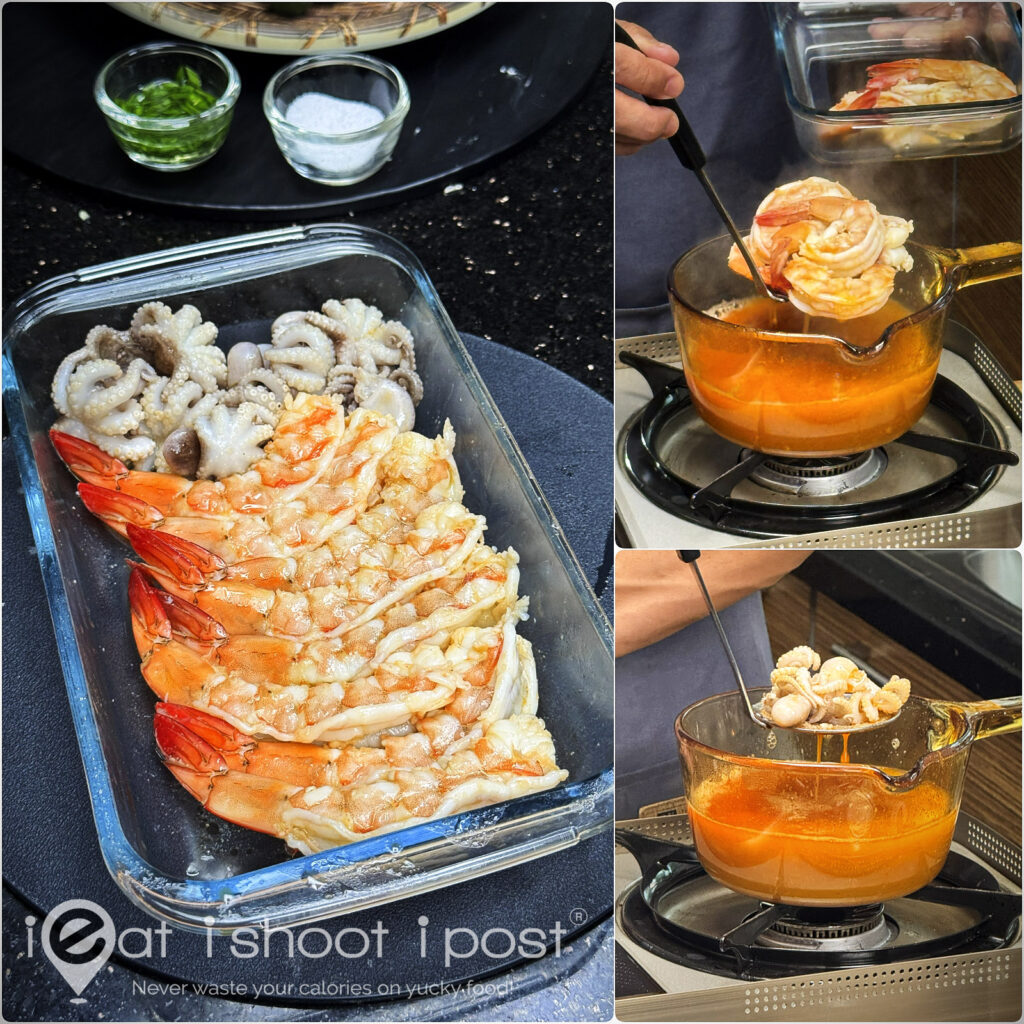
Instead of placing raw seafood directly onto the paella, it’s best to poach it briefly in the rich prawn stock to fully infuse them with crustacean flavours. Be careful not to overcook—the seafood only needs a quick minute or two, since it will be cooked again when added to the paella.
Cooking and Toasting the Paella

If your paella pan is non-stick like mine, it’s important to prepare it before use. First, heat the pan until it’s smoking hot, then spray some oil to coat the pan evenly. This allows the oil to permeate the surface, giving the pan a temporary “non-stick” quality. Then add cold oil before adding the rice.
Next, add your par-boiled USA Calrose rice and toast it in the pan for a minute or two before adding the prawn stock. Pour in enough stock to fully submerge the rice. Spread the rice evenly across the pan, then simmer gently for 20 minutes, adding the rest of the stock along the way.
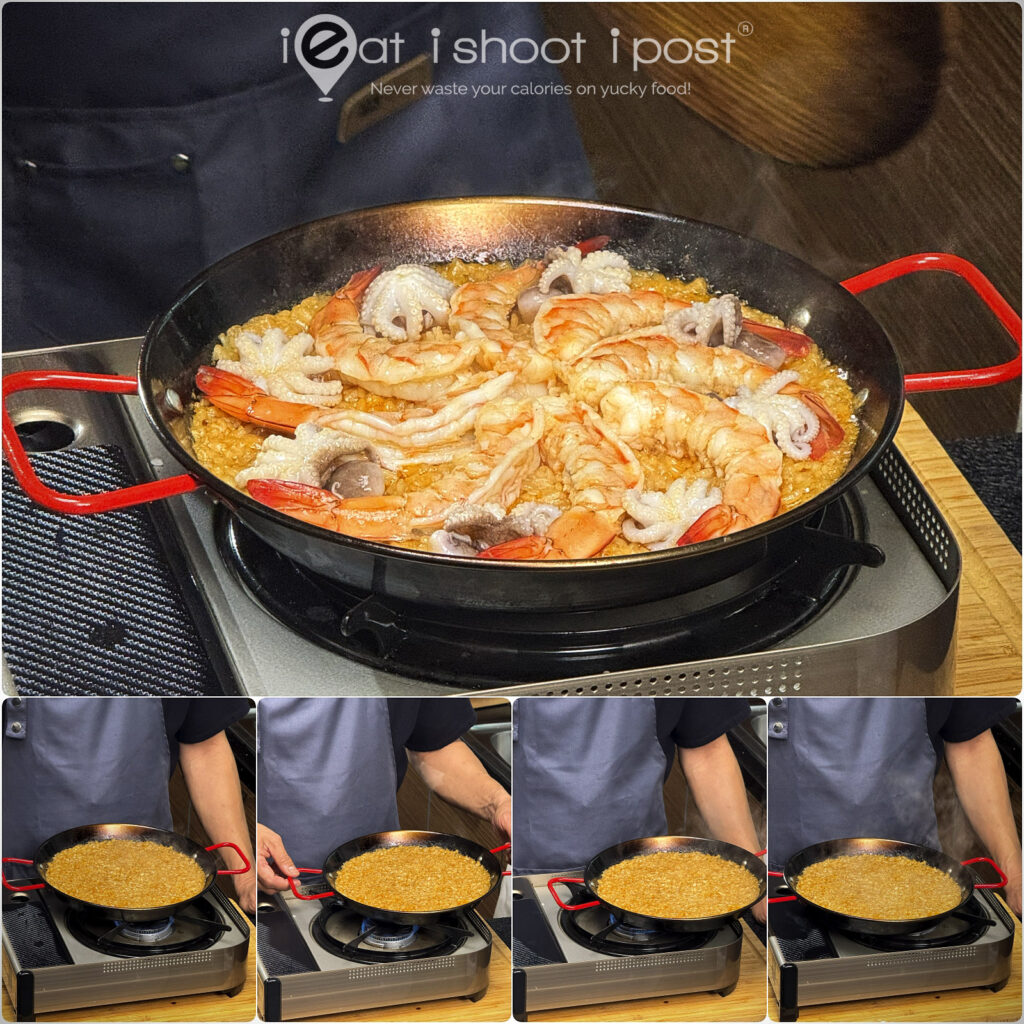
Once the rice is nice and plump, start shifting the pan around to toast the rice at the bottom. This step is especially important if you’re not using a special paella stove with a wide-diameter burner. Make sure to rotate the pan so every part gets a chance to develop that lovely socarrat—the prized crispy rice crust.
When the timer reaches the 15-minute mark, add the poached prawns and baby octopus. Cover the pan and let it sit for another 5 minutes to warm the seafood through, and your paella will be ready! If you prefer more socarrat, you can uncover the pan and turn up the heat to create an even thicker crust.
Serving the Dish
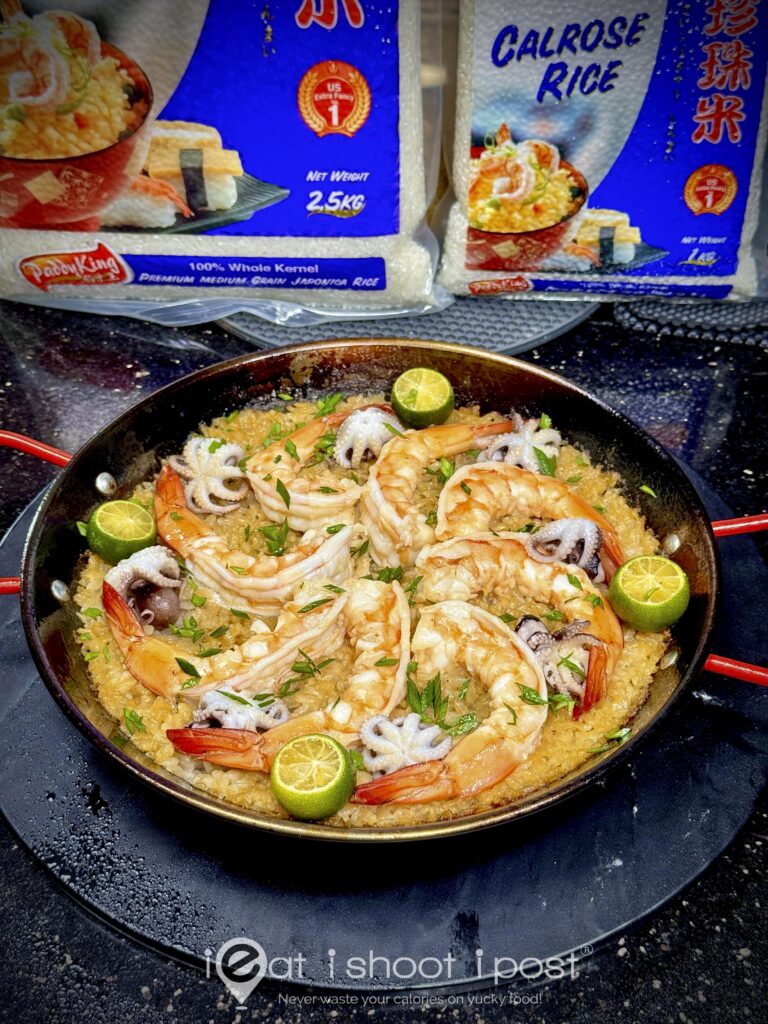
Serve the paella garnished with chopped Chinese chives and calamansi. Chinese chives were traditionally used in Hokkien Mee, though they are rarely seen nowadays. While the chives can be omitted, don’t skip the calamansi lime! Once you squeeze the lime over the paella, the familiar aroma of Hokkien Mee emerges magically!
Conclusion
Hope you give my Hokkien Mee Paella recipe a try. Everyone’s who’s had it truly enjoyed the flavours.
Check out other recipes that are perfect with USA Calrose Rice:
- Claypot Rice without a claypot
- Fan Choy recipe
- Hotplate Beef Pepper Rice
- Seafood Pao Fan
- Wok Hei Seafood Congee
- Wok Hei Prawn Fried Rice
Disclosure: This post is written in collaboration with USA Rice Federation and using PaddyKing USA Calrose rice by Hong Lian Gim Kee.
https://www.facebook.com/USARice.SG/https://www.instagram.com/usarice.sg/ https://www.facebook.com/paddyking.sg/ https://www.instagram.com/paddyking.sg/