The idea of 100 Notable Small Press Books was born November 2024, after The New York Times’s annual 100 Notable Books list featured eighty-two books from the Big Five publishing houses (Penguin-Random House, Hachette, Harper Collins, Simon & Schuster, and Macmillan) and their imprints. Many of these books had the marketing might of these publishers behind them and had already made their way onto the front tables of chain bookstores and the front pages of dwindling book review sections in print and online. The *Notable *list then, with all its esteem and future marketing power, served largely as a retrospective of the year’s biggest literary books.
Of the eighteen independently published books on the 2024 lis…
The idea of 100 Notable Small Press Books was born November 2024, after The New York Times’s annual 100 Notable Books list featured eighty-two books from the Big Five publishing houses (Penguin-Random House, Hachette, Harper Collins, Simon & Schuster, and Macmillan) and their imprints. Many of these books had the marketing might of these publishers behind them and had already made their way onto the front tables of chain bookstores and the front pages of dwindling book review sections in print and online. The *Notable *list then, with all its esteem and future marketing power, served largely as a retrospective of the year’s biggest literary books.
Of the eighteen independently published books on the 2024 list, nearly a third were released by Grove/Atlantic, a mid-sized indie that publishes around 100 combined frontlist and paperback books per year, or W.W. Norton, which publishes even more than that. This meant only 11% of the New York Times‘s “notable books” were released by small, independent publishers, which we are defining here as independently owned US publishers with roughly 50 or fewer titles per year, and not imprints of the Big Five publishing houses. A thriving ecosystem of books from publishers taking risks, publishing from the margins, operating on few resources, with small distribution and even smaller marketing budgets, were largely being ignored.
For 2025, *The New York Times *Notable list tipped slightly toward the indies, featuring 14 books published by small, independent publishers. Hurrah for those publishers and authors! In the meantime, forty reviewers across thirteen genres spent the year reading small press books. Our efforts, like small presses themselves, were low on resources but high on resourcefulness. Reviewers had to search out, request, and read at least nine books across a chosen genre from small publishers before making their recommendations. We limited ourselves to books published in December 2024 through November 2025.
Our guiding principles were “read a lot, recommend a few” and “seek out a diverse array of authors and publishers.” We were especially interested in BIPOC and LGBTQ authors and publishers, who have an even steeper climb to mainstream recognition.
Within these guidelines, our reviewers were free to read any small press books they chose, and as a result you’ll find this list dappled with well-known presses, such as Tin House and Europa Editions. But for every Graywolf, we feature presses that are not household names, like LittlePuss and Publication Studio and Kallisto Gaia.
There were times our definition of “small press” was tested. Was Tin House still a small press after it was acquired by Zando in March? Yes, we decided, since Zando was not a big five publisher. Were university presses that published well over 50 books yearly small presses? We decided they were so long as their creative offerings fell under that number. We tried to stay nimble and responsive, while sticking to the project’s principles.
There are a few important things this list is not: This is *not *a best of list. This is *not *a comprehensive survey of all small presses. This is *not *a juried selection of books. This is instead the product of a group of enthusiastic, committed reviewers reading hundreds of small press books from the past year and choosing the few they heartily recommend.
Ours is not the first list to highlight small press books. One of the joys of this project was finding the many other venues already doing this work. If our list interests you, find more small press books highlighted at CLMP, Foreword Reviews, and Necessary Fiction**, **to name a few.
Without further ado, 100 Notable Small Press Books of 2025:
Abbreviate by Sarah Fawn Montgomery
Small Harbor Publishing
**Creative Nonfiction. **Abbreviate is for every girl who felt underestimated in the classroom or on the playground, for anyone who felt something like magic when playing light as a feather, stiff as a board at a sleepover. In this collection of flash essays, Montgomery has built tiny containers that somehow hold all the rage, love, fear, and longing that come with the experience of growing up as a girl. What impressed me most was how powerfully Montgomery conveys how women’s power will always expand beyond our culture’s attempts to contain, reduce, and curtail. (Ash Trebisacci)
**Absence by Issa Quincy
**Two Dollar Radio
Literary Fiction. Issa Quincy’s debut is an inspired one: there is no denying the sheer inventiveness and detail of his architecture, one that builds upon itself, much like our own memories, thereby allowing the novel to enact the very thing that pulses at its core, less through description than with construction. Much of the book centers on the ways in which the slippery workings of memory might be wrestled down into the linguistic real. It is, probably, impossible—but that shouldn’t stop us. Nor does it stop Absence, ultimately winding its way to a debut that is, in a word, memorable. Full review here. (D.W. White)
**Absolute Pleasure: Queer Perspectives on Rocky Horror, ed. Margot Atwell
Feminist Press
**Creative Nonfiction. ***Absolute Pleasure: Queer Perspectives on Rocky Horror *collects essays on the cult movie from a diverse spectrum of queer authors. For many, Rocky Horror offered a lifesaving glimpse of a glittering world where people who fall outside of society’s norms might thrive. But these writers don’t shy away from the troubling aspects of the movie, its audience participation rituals, and its creator. With each piece forming one small fraction of the main attraction, the anthology presents a glorious, complex celebration of those who figure out how to be what they once might only have dreamed. (Jenny Hayes)
**Accidental Shepherd by Liesl Greensfelder
**University of Minnesota Press
Creative Nonfiction. The charm of this book is evidenced by the three people I lent it to once I’d finished reading. Two immediately ordered copies for friends, the other is seriously considering it. This is a familiar folk tale, freshly told: a young woman lands in a strange place (a sheep farm in Norway) with few skills and high expectations for a rich learning experience, only to discover that her plans are dashed and she must discover in herself the strength, the resolve, the just-plain guts to take on a job (a whole world) that seems impossible. Her loneliness is visceral, as are her periods of dismay, but her successes soar and it’s deliciously satisfying to root for her. (Debra Gwartney)
**Alternative Facts by Emily Greenberg
**Kallisto Gaia Press
**Short Story Collection. **Alternative Facts is an extraordinary collection of short stories that take risks which invariably pay off. They ask questions like: what is fact and what is fiction? What is real and what is not? Many stories feature historical figures and offer glimpses into the character’s minds in a convincing way that is also thought-provoking. The writing is reminiscent of Richard Powers or Jim Shepherd, yet it is utterly its own. All of the writing is controlled, but, as with Skinner’s Black Box, human emotion leaks out in powerful and unexpected ways. These unique stories have staying power. Full review here. (Jamey Gallager)
**American Animism by Jamey Gallagher
**Cornerstone Press
Short Story Collection. The characters in these compelling stories inhabit worlds of danger, darkness, and dreams. The titular “Kavita” is an orphan haunted by her dead father. In “Monster Girl Survives Close Call,” the narrator struggles with violence and loss. In the wonderful “A Wolf at the Door,” a woman tries to save her ne’er-do-well brother and clunker car, while, nightly, wolves come knocking. Although my heart was often pounding as I read these tense explorations of fear, grief, and loneliness, I was also touched by Gallagher’s compassion for his characters who are often beautifully rendered girls and women. (Judith Mitchell)
**Anarchy in the Big Easy: A History of Revolt, Rebellion, and Resurgence by Max Cafard and Vulpes
**PM Press
Graphic Nonfiction. Cafard and Vulpes have brought to life the incredible, tumultuous history of a town paradoxically known as “The Big Easy.” From its indigenous origins and maroon communities to the work of modern mutual aid organizations in the face of COVID, time seamlessly rolls from one revolutionary act to another, painting an engaging saga, one rich in progressive thought, organization, and rebellion. (Jesi Bender)
**The Barefoot Followers of Sweet Potato Grace by Megan Okonsky
**Lanternfish Press
Fiction. Pinky Elizabeth Swear, a closeted what-am-I-doing-with-my-life twenty-something, meets a group of barefooted strangers who are about to shake up her small southern town to frothing. This is gay Bridget Jones meets Chocolat…in Texas. Add a dash of dead-cat-grief and some communal post-pandemic scarring to the mix, and you’ve got a funny, voicey, vulnerable romp that manages to stay light and bubbly, championing queer joy even as it confronts some all too familiar societal conflicts. (Roz Ray)
**The Blue Door by Janice Deal
**New Door Books
Literary Fiction. Fairy tales and other stories Flo has been told are woven through Flo’s anxious search for her Dog, while she waits for her daughter, Teddy, to come back. Teddy’s juvenile manslaughter conviction structures Flo’s life. The search for Dog mirrors her search for her place in the world. Well crafted and paced, this is a beautifully told story of loss and escape. Describing effect before cause pulls the reader in neatly. The theme of blue is used inventively, and the final reveal of the full note from Teddy is a satisfying closing of the door. (Shamana Ali)
**The Brittle Age by Donatalle Di Pietrantonio, tr. Ann Goldstein
**Europa Editions
Literature in Translation. A powerful examination of memory, resilience, reckoning, and acceptance, The Brittle Age by Donatella Di Pietrantonio marries fact with fiction to create a novel driven by secrets that must be relinquished and failings that must be acknowledged. It’s about honesty and truth. Full review here. (Catherine Parnell)
**Chaos Magic by Jen Knox
**Kallisto Gaia Press
Literary Fiction. In her beautifully spare-but-synthesized book Chaos Magic, Jen Knox carries readers on her bare back through a tangled feminist-forward tale of life gone wrong and love gone right. Lissa and a motley crew of wizened women take us on a wild ride of spiritual reconnoitering and grace. This newest work from a wise and generous wordsmith charms with its well-drawn characters, its playful language, and its overarching theme of harmony in the midst of universal challenge. I loved the witchy inter-generational quality of this book. (Nancy Townsley)
**Close to a Flame: Stories by Colleen Alles
**Cornerstone Press
Short Story Collection. A casual reader might say that nothing significant happens in the stories of Colleen Alles’s collection. But that perspective would imply that love, grief, friendship, survival, family, marriage, pregnancy, motherhood, disappointment, hope, and regret fall into the category of “nothing significant.” Alles shows us that “real life” can carry real drama. Her stories develop the significance of moments that seem routine but are, in fact, the moments that imbue life with deep meaning. Without sensationalism or sentimentality, Alles builds dramatic stories that consistently sneak up on a reader, tunnel into our consciousness, and stay with us. (John Sheirer)
**The Continental Divide: Stories by Bob Johnson
**Cornerstone Press
Short Story Collection. When I finished the first story in Bob Johnson’s collection, The Continental Divide, I said “whoa!” under my breath. The same thing happened after the second story. And the third. By the fourth story, the response intensified to “holy sh*t!” Every story leaves an indelible mark, and about a quarter of them are deeply haunting and powerful. The characters move through various levels of hell, often enduring a fate of their own making. Johnson’s greatest accomplishment in this excellent collection is that he wields a rusty blade of empathy to render a wound of inevitable doom. (John Sheirer)
**Costs of Living: A Whisper House Press Horror Anthology, ed. Steve Capone Jr.
**Whisper House Press
Horror. As someone who once received a $20 fine per individual weed, I have long believed that HOA’s are more terrifying than any monster. Costs of Living is an anthology of short-form horror that is at times sinister, suspenseful, shocking, and even silly. I found myself wanting to read these stories aloud around a campfire, or, better yet, a propane fire pit table. A fine return to the scary story genre that acknowledges that just as many horrors can inhabit a McMansion in the burbs as a manor on the moor. (Rachel Rochester)
**Crime Wave by Suzanne Lummis
**Giant Claw
**Poetry. **Crime Wave begins as nostalgic rhapsody for film noir, for dangers that are a kind of quickening: of the pulse, of the primal feeling of aliveness that only a threat can invoke. But then it shatters the screen and comes at us with crimes against the person, against the republic, against our very assumption of shared humanity. Savvy, robust, and relentless, this collection holds up entertainment and spectacle next to a deeply credible chiaroscuro whisper of subtext, a “snow beneath the snow, / deep, white like the black of deep space.” (Angela Chaidez Vincent)
**The Dead Dad Diaries by Erin Slaughter
**Autofocus Books
**Creative Nonfiction. **The Dead Dad Diaries is an exploration of a daughter’s grief after her father was murdered by her stepmother. So, there is a sort of sensational element to this book, which is what pulls you in, but Slaughter holds you tight the entire way. She is a young woman deeply invested in reconciling who she is, who she was, and who she wants to become. This is a quick, wild read you can knock out in one or two sittings and feel like you’re just hanging with her voice. (Stephanie Austin)
**Dead Red and Razor by Tim Lebbon
**Bad Hand Books
**Horror. **Dead Red and Razor is a fast-paced, cinematic revenge fantasy peopled with bizarro, compulsively watchable characters. By giving the reader just enough of the protagonist Dead Red’s backstory, Tim Lebbon’s compact novella transmutes a collection of violent antiheroes (drawn in their dark, delicious glory by artist HagCult) into a gang of protagonists. By the book’s surprising end, readers will find themselves rooting for Dead Red, despite the deadly havoc she wreaks. (Jenny Noyce)
**Demons of Eminence by Joshua Escobar
**Publication Studio
Literary Fiction. Written in vivid unapologetic tones Escobar’s novel is set against the backdrop of the early days of Covid and narrated by a travel nurse whose own lack of self-protection borders on alarming. The novel is refreshingly open about sexuality, hookup culture, modern loneliness all set in Inland Empire as the virus rages on in the background. (Rebecca Hirsch Garcia)
**A Desert Between Two Seas by A. Muia
**The University of Georgia Press
Short Story Collection. This Flannery O’Connor Award-winning collection opens in 1820 Baja California, where a mission priest bedecks a Virgin Mary statue with pearls his adopted Cohchimí son has plucked from the sea. The fate of the priest, the boy, and the last, resplendent pearl kicks off a century’s worth of interconnected stories that illuminate this fascinating setting and elemental human themes: love, jealousy, penitence, warfare, greed, fidelity, and faith. We meet a mescalera, a fierce, beautiful earless woman, and a miraculous donkey born from a mule. Muia writes incantatory prose that taps into folklore and history to deliver its surprises, joys, and wisdom. (Jenny Shank)
**Distress Cries of Animals by James A. Fuerst
**Spaceboy Books
Mystery. Lazaro Mato lives in a dystopian New York City defined by sea-level rise and compulsory social media engagement. As the Haves pursue extreme body enhancements and the Have-Nots trade away their mental health to survive, Laz follows a noir-ish mystery that will peel back the onion layers of his own life. The main draw of this book is the maximalist, dizzying-yet-undeniably-familiar Gen-Z-inspired patois. Fuerst tests the tensile strength of the English Language in the same way Anthony Burgess does in A Clockwork Orange; the result is poetic, prescient, and terrifying. (Roz Ray)
**Don’t Take This the Wrong Way by Kim Magowan and Michelle Ross
**Eastover Press
Short Story Collection. The first story of this collaborative collection includes two unlikable coworkers. One is so cloyingly upbeat that her emails alternate font colors to resemble rainbows while the other smokes so much that even her emails seem to stink. These characters are emblematic of the people who populate these stories. Most might benefit from a hug but elicit behind-their-back eyerolls instead. Readers are simultaneously absorbed and repulsed (but always fascinated) by their cringelarious dilemmas almost too real for fiction. The authors alternated composing sections as the stories developed, leading to the many unpredictable, powerfully off-balance moments that propel these excellent tales. (John Sheirer)
**Double Black Diamond by Mads Gobbo and Miles Klee
**Double Negative
Short Story Collection. Set in a world that is almost, if not quite, our own, these stories feature giant Bosch-like birds who run corporate America, teenagers who long for their crushes not to kiss them but kill them, and ponds full of the only remaining food source: radioactive shrimp (though some have their eyes on their cats). “Oh, Phil,” one character tells another, “You aren’t responsible for the times.” But this irreverent and provocative story collection reminds us that we are all Phil, very much responsible for the depravities of our times, and it delivers its unsettling message with style and wit. (Judith Mitchell)
**elseship: an unrequited affair by Tree Abraham
**Soft Skull
Creative Nonfiction. Poetic and propulsive, elseship: an unrequited affair is a genre-defying mixed media exploration of one-sided queer love that consumes and beguiles its narrator. I inhaled this book in a wave of feeling, as Abraham explores the contours of a pivotal relationship/obsession with a combination of rigor and earnestness. By combining wide-ranging references with her own clear, curious voice, Abraham has made visible the inner workings of both her individual elseship and that of every queer person who has had that one more-than friendship they couldn’t let go. (Ash Trebisacci)
**Euphoria: Ten Maine Stories by Dave Patterson
**Littoral Books
Short Story Collection. Dave Patterson’s Euphoria: Ten Maine Stories inspires favorable comparisons to Raymond Carver and Sherwood Anderson. But Patterson brings more subtle hope than Carver, and Euphoria, Maine, may be even harder to escape than Winesburg, Ohio. Euphoria’s residents range from wealthy newcomers in a hillside mansion to long-suffering natives huddled in a valley trailer. Patterson deftly creates vivid pain, loss, and weakness for everyone, but he also brings courage, humor, and light. Patterson never misses here. Every story is powerfully memorable. The best one (“Midnight Burn”) is so affirming that it defies a dry eye even to the most jaded reader. (John Sheirer)
Exophony: Voyages Outside the Mother Tongue by Yoko Tawada, tr. Lisa Hofmann-Kuroda
New Directions
Creative Nonfiction. In Exophony: Voyages Outside the Mother Tongue, Yoko Tawada (a Japanese native who now lives in Germany) explores the experience of living and writing in languages learned later in life. Tawada shows what an act of creativity this can be: proficiency is less important than uncovering “some latent potential existing in the language.” Personal anecdotes are mixed with broader observations on language’s intersections with status, colonization, and migration. A second section explores how words in the German and Japanese languages reveal aspects of their cultures and how language shapes not just the way we speak, but how we think. (Jenny Hayes)
**First Kicking, Then Not by Hannah Grieco
**Stanchion Books
Short Story Collection. Mostly flash fiction, the stories in First Kicking, Then Not by Hannah Grieco, all do what flash fiction does best: offer short, strange, resonant takes on the world. In this case, a suburban world filled with women who bristle against constraints. There are very odd stories, like the one in which a mother escapes with The Rock, as well as starkly realistic stories, but they all are effective at de-familiarizing, often with humor. Each one of the stories is like a little amuse bouche, but they add up to something that is powerful, drawing us into deeper darker waters. (Jamey Gallagher)
**Forget the Camel by Elizabeth MeLampy
**Apollo Publishers
Creative Nonfiction. “Have humans no shame?” asks lawyer and animal advocate MeLampy. Together with her wife and in the footsteps of her anthropologist grandmother, MeLampy attends a gory rattlesnake roundup, a ludicrous camel race, a supposedly harmless jumping frog jubilee, and other bizarre events. In lucid and haunted prose, she sharply questions our animal narratives, making us feel what we’re too embarrassed to admit. Read when you want to meet your fellow creatures and your own animal self. (Claire Polders)
**Frontier: A Memoir & A Ghost Story by Erica Stern
**Barrelhouse Books
Hybrid: Memoir/Fiction. Erica Stern’s birth memoir, Frontier, contains both a researched history of birth’s industrialization and a second, fictional birth story set in the Wild West that asks: What if there had been no doctors? The genius of Frontier is the way Stern masterfully wields genre tropes—ghost story, gothic, horror, western—to go where a more straightforward birth memoir couldn’t, revealing how a traumatic birth is like a haunting and that the same hubris behind the project of the American West is what the fathers of modern gynecology brought to the sublime wilderness of birth. (Shayne Terry)
**God-Disease by an chang joon
**Sarabande
Literary Fiction. “I was ten when a god entered my mother.” Sun-bin, the protagonist of the title story, brings us into this distinctive short story collection; she preserves beetle specimens, seeks her mother’s mudang, meditates on emptiness as Korea’s national identity. As a collection, God-Disease coheres through motifs of rot, mold, mental illness. Through the grotesque (a bug dissection, an abdominal abscess, a pit of dead pigs, a puppy mill), author an chang joon creates a delicately creepy atmosphere in which his characters must confront their sense of guilt and loss of identity. When you want to be unsettled, rearranged, try God-Disease. (Danielle Zaccagnino)
**Habitat by Case Q. Kerns
**Black Lawrence Press
Literary Fiction. In this delectably creepy novel-in-stories, set slightly in the future, late-stage capitalism plays itself out in the worst possible ways. Corporations are fully in charge with an enormous divide between the haves and have-nots. Education requires a corporate sponsorship (read: indenture), and those who aren’t sponsored have only their bodies to sell, for sex or parts. But since the sex industry is controlled by corporations, freelance tricks are considered “an act of conspiracy against the state.” The punishment is extreme, as decorative transplants are all the rage. Full review here. (Joeann Hart)
**The Harmattan Winds by Sylvain Trudel, tr. Donald Winkler
**Archipelago
Literature in Translation. In this dreamlike novel, two adopted kids—Hugues, discovered in a nearby marsh, and Habéké, a refugee from famine-stricken Ethiopia—form an intense friendship to defend against the racism of their neighbors and the dullness of their town in 1970s Québec. Together they dream up a fantastical homeland they dub Ityopia, patching it together from fragments of their wide, if idiosyncratic, reading of real and made-up texts. Narrated by Hugues, whose limitless slippery grasp of idiom leaves both author and translator plenty of scope for linguistic hijinks, their adventures take them ever further afield, into situations of ever greater risk. (Diane Josefowicz)
**Hellions: Stories by Julia Elliot
**Tin House
Short Story Collection. Hellions poses burning questions about humanity’s place in nature and connection to ancient rituals amid the environmental degradation and tech distractions of the modern world. But it’s way more fun than that makes it sound. In these funny, feminist tales, laced with magic, rule breakers raid hoards, soar to uncanny trampoline heights, visit prehistory through magic dating apps, and follow primal urges. Elliott writes sensory, sensual prose turned up to 11, with descriptions that practically explode. These rich and surprising stories, grounded in archetypal imagery, linger after reading the way a spent firework shimmers in the night sky before fading. (Jenny Shank)
**Hot Girls with Balls by Benedict Nguyen
**Catapult
**Romance. **Hot Girls with Balls is a romance in the most satirical sense of the word. No tropes or predetermined ending. This is a book for the cynical romance reader, for someone who wants to see characters’ obsessive and jealous tendencies and how we tear each other apart online for likes. With its addictive social media lingo, you won’t be able to stop reading about the relationship between Six and Green, two trans women playing in the competitive and ruthless male volleyball league. Through a revolving POV, you’ll piece together the intricacies of the trans community in competitive sports. (Robin Van Impe)
I Can Fix Her by Rae Wilde
Clash Books
Horror. How to depict obsession? Rae Wilde’s strange, racy novel I Can Fix Her invites readers to explore love’s dark side. The protagonist, Johnny, is in love with Alice. As they rekindle their relationship, the novel’s world is knocked askew, its rules increasingly unclear. As Wilde slyly reveals that Johnny’s love may tilt toward obsession, the couple’s world becomes bizarre and threatening. The book’s unseen narrator offers Johnny an escape from the torturous emotional push-and-pull of this relationship. But Johnny’s response (and the revelation of the narrator’s identity) provokes a compelling quandary: does being in love call off our better angels? (Jenny Noyce)
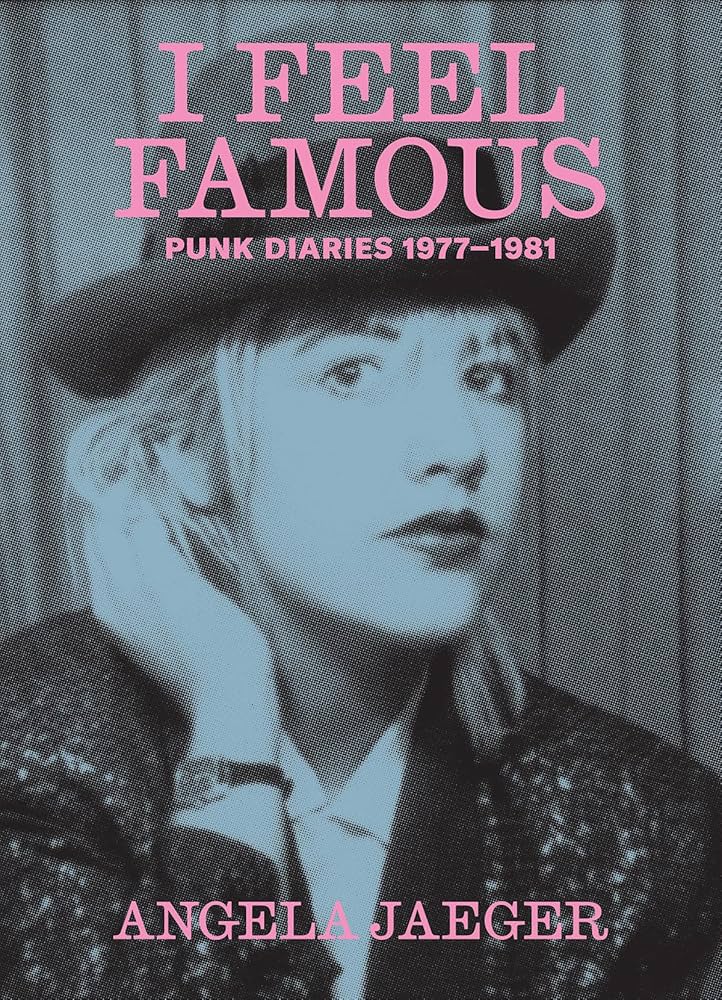
**I Feel Famous by Angela Jaeger
**Hat & Beard Press
** Creative Nonfiction.** I Feel Famous presents Angela Jaeger’s teenage diary, written in the late ‘70s in New York City (and occasionally London) as the punk scene was exploding. It’s full of crushes, yearnings, complaints, and detailed accounts of nights spent running around with friends—ones with names like Iggy, Lux, Sid, and Lydia. Jaeger documented her adventures in words, drawings, and saved mementos, resulting in a mind-blowing artifact. Occasional commentary and footnotes help connect dots for the reader, but the book mostly lets Jaeger’s wildly enthusiastic youthful ruminations speak, quite charmingly, for themselves. (Jenny Hayes)
The Immortal Choir Holds Every Voice by Margaret Killjoy
Strangers in a Tangled Wilderness
Science Fiction/Fantasy. In this third book of the Danielle Cain series, punk anarchists are on the run in a near future where dark magic is real. Stranded in Idaho at Samhain, hoping that a ritual is throwing the feds off their trail, they tell stories about their dead friends, their activism, and the very weird magics they’ve run across. After the last story, the “probably not a cow” they’ve heard all night shows up as a massive bull. Danielle says, “I couldn’t tell if I was meeting the eyes of a god or a beast, or if there was any difference.” Gut-truth reading for our times. (Nancy Jane Moore)
It All Felt Impossible: 42 Years in 42 Essays by Tom McAllister
Rose Metal Press
Creative Nonfiction. From start to finish, Tom McAllister’s new book of essays—one for each year of his life up to now—vibrates like a master cellist’s bow across the strings of his favorite instrument. Reminiscent of David Sedaris’ dry insight and wit, full of hard-won lessons and unwavering verve, the author draws few conclusions but leaves the reader with wheelbarrow loads of material to consider, encouraging self-examination and appreciation for the ways humans walk through the world. It All Felt Impossible is a triumph of joy over sorrow and peace over pain. (Nancy Townsley)
The Jamaica Kollection of the Shante Dream Arkive by Marcia Douglas
New Directions
Literary Fiction. In 1936, Zora Neale Hurston lost her camera in Jamaica. This detail, intriguing yet mundane, propels The Jamaica Kollection of the Shante Dream Arkive, Marcia Douglas’s lyrical novel, the follow-up to her extraordinary The Marvelous Equations of the Dread (2016). With these books, Douglas has undertaken a “speculative ancestral project,” threading stories of the island into a tapestry of “Caribbean migration and fugitivity.” Paramount is Douglas’s concern for storytelling—its difficulty, its power, and its long hold on her attention: “Years later and I stand in wonda of how our stories layer and where and how we come to find them.” Full review here. (Diane Josefowicz)
**Journey to the Edge of Life by Tezer Özlü, tr. Maureen Freely
**Transit Books
Literature in Translation. At once a road novel, a meditation on literary influence, and a mash note to off-the-beaten-path Europe, this book—published originally in Turkish in 1982—was among my favorites this year. Özlü’s unnamed narrator, a young Turkish woman writer not dissimilar from herself, embarks on a literary pilgrimage across Europe, visiting the sacred haunts of her literary heroes: Franz Kafka, Italo Svevo, and above all, the poet Cesare Pavese. Of these, she feels the deepest kinship with Pavese; haunted by his suicide, she paces the streets of Turin, his hometown, finding everywhere intimations of the melancholy to which he finally succumbed. (Diane Josefowicz)
The King of Everything by Jack Moody
Timber Ghost Press
Horror. Finally, an apocalypse novel for the misanthropes. The world order has been catastrophically upended, leaving the last man on Earth to wander through a landscape that is undeniably, horrifyingly, more peaceful and harmonious in humanity’s wake. Moody juxtaposes gorgeous meditations on nature and collapse with urgent, terrifying confrontations with the detritus of civilization. The result is a novel that’s truly unique: simultaneously a salve for the soul and a heart-pumping thriller. (Rachel Rochester)
A Labor of Hate (Smitten in the Mitten Book 2) by Brianne Ritchie Cordova
Conquest Publishing
Romance. This sweet rom/com reads like a standalone. Lex and Colt are undercover FBI agents who have to be pretend-married—and she has to be pretend-pregnant—to get close to their drug-dealer targets in a Lamaze class. However, they hate each other, and their ongoing prank war does not hide their underlying attraction from anyone but themselves. The thriller sub-plot is twisty and satisfying, and the characters are entertaining and full of heart. There is a happily-ever-after, but the question is when (and how) they get over themselves so they can fall in love without blowing their cover. (Maren Anderson)
**Letters From an Imaginary Country by Theodora Goss
**Tachyon Publications
Science Fiction/Fantasy. Imaginary countries, begun as school projects, come to life. Vampires aren’t evil and the women they supposedly stalked no victims. An immigrant meets the version of herself who never left home. “Beautiful boys” are, as we have always suspected, space aliens. In these lyrical stories from the past fifteen years, ones that turn Victorian fantasy on its head and make you wonder what the present is actually about, Theodora Goss demonstrates the truth of the explanation she provides at the end of “To Budapest, with Love.” “Someone asks why I write … [s]tories that could be classified as science fiction. I answer, because I’m a realist.” (Nancy Jane Moore)
**Lion by Sonya Walger
**New York Review Books
Literary Fiction. Sonya Walger’s Lion, like (in varying ways) Rachel Cusk’s Parade or Lucy Ives’ Life is Everywhere, is a consummate novel of our current “moment,” staring into and then smashing to pieces, as it does, the ornate mirror constructed out of that cracked and cloudy glass, criticism. Autofiction is a term of near-unbelievable controversy; this novel succeeds because its author is a skilled, daring, and intuitive artist. Walger commands narrational mode in inventive and surprising ways, she writes with a style and verve that excites and propels, she commands the speed and tempo of her narrative with precision and grace. Full review here. (D.W. White)
**Living in Your Light by Abdellah Taïa, tr. Emma Ramadan
**Seven Stories Press
Literature in Translation. This novel is French-Moroccan gay writer Abdellah Taïa’s unforgettable portrait of an indomitable woman modeled on his mother. Visiting a souk in the 1950s, seventeen-year-old Malika falls in love with Allal, the bisexual son of a relative. Her father leaves them to get acquainted over donuts. “I eat the donuts very slowly,” she remembers. “I take my time. I let you look at me all you want. […] I am strong. That is what you will love about me. A strong woman who engulfs you entirely.” Malika shines in Ramadan’s gorgeous translation, while the narrative opens a window onto mid-century Morocco. Full review here. (Diane Josefowicz)
The Long Run: A Creative Inquiry by Stacey D’Erasmo
Graywolf
Creative Nonfiction. The aim of this book-length essay is to discover how artists in various fields continue to work creatively in the “long run” of their lives. While each experience is unique, the ultimate “answer” seems fairly obvious to those who have lived a life: will, openness to the new, ongoing self-inquiry, integrity, which here means not selling out for fame or status. The real pleasure of the book, though, is the almost childlike sense of wonder with which the author roots around in the lives of these fascinating others. (Diane Simmons)
Magic Can’t Save Us by Josh Denslow
University of New Orleans Press
Short Story Collection. Eighteen tales of weirdness that feel familiar. The stories are quick, easy reads of assorted mythological creatures, light-hearted ghouls, and the just plain odd. These unusual characters become metaphors for unattainable, healthy relationships, but also, weirdly, therapists, tests, and even romantic rivals. There is a fresh originality to the humor, an irreverence that mocks the usual relationship goals, while acknowledging inevitable failure. This book is a curious interplay of real and surreal, and thoroughly enjoyable. (Shamana Ali)
Making Amends by Nisi Shawl
Aqueduct Press
Science Fiction/Fantasy. Not quite a novel, but more than a collection, these nine connected stories about a prison planet and the people banished to it for unspecified crimes give us the truth of right now. The AI overseeing the trip to the planet can upload people into digital format and download them into bodies that belie who they are, but it cannot keep them from creating a new very human reality. As Nisi Shawl writes in the opening story/essay, the purpose of these stories is to help us “break out of that oppressive categorization”—of people who could be classified as criminals—“and into the deliciously wild unknown.” Full review here. (Nancy Jane Moore)
Mercurial, or Is That Liberty? by Rachelle Rahme
Fonograf Editions
Poetry. Rachelle Rahme is a Lebanese-American balanced between dualities, which is a theme of this collection: this and that are both true. This is a delightful return to the “obscure” poetics of 20 years ago in a way that feels fresh and refreshing. The poetry is brazenly lustful, playful, thoughtful, challenging, and celebratory of life itself. As Rahme writes: “life is the transition between showtimes.” (Sabne Raznik)
Moral Treatment by Stephanie Carpenter
Central Michigan University Press, Summit Series Prize
Literary Fiction. On what basis can a young girl’s behavior be judged insane? Can her unsuitable conduct be reasoned away by moral treatment? Stephanie Carpenter’s absorbing novel deftly depicts the state of mental institutions at a point of inflection in the late 1800s when new approaches are on the horizon and old ways are being questioned. The head doctor, old and near the end of his career, must reevaluate his vision. A young teenager rages in the confines of the hospital and wavers between plotting her freedom and resigning herself to a limited existence. Carpenter beautifully orchestrates the dual points of view and their opposing perceptions and desires in constructing a fully realized narrative. (Donna Miscolta)
Mosaic by Laura Gaddis
Unsolicited Press
Creative Nonfiction. The heart of Mosaic is a grappling with infertility and loss, but it also shines a light on a broader part of the human condition, which is that sometimes, in our one wild and precious life, we cannot and will not get (or get back) what we want the most. We will often have to find ways to move forward, no matter how painful and terrible it may feel. Laura Gaddis offers a hand to help us out. (Stephanie Austin)
Mothers and Other Fictional Characters by Nicole Graev Lipson
Chronicle Prism
Creative Nonfiction. I once read a line by a famous writer about what defines meaningful literature: how the narrative grapples with ambivalence. In Nicole Graev Lipson’s Mothers and Other Fictional Characters, she seems to take this literary koan to heart. Lipson bores into the truest of human conditions: the ways in which we are walking contradictions, how we want/don’t want in the same moment, how we say one thing and mean another, and so on. This recognition, which rings with authenticity through every essay, pits no characters against another, but instead allows the “I” on the page an opportunity for self-excavation and dose of self-reckoning that feels scarily familiar, not just to mothers but to every human who’s muddled through a relationship. (Debra Gwartney)
The Murmur of Everything Moving by Maureen Stanton
Columbus State University Press
Creative Nonfiction. This vivid, melancholy memoir begins when Stanton, a recent college graduate, falls for Steve, a 27-year-old, separated father of three. Steve’s terminal cancer diagnosis shortly after they meet intensifies their intimacy. Stanton throws herself into caring for him, confronting the end of life at an age when most people are still reckoning with how to begin to live. Stanton writes with authenticity and candor, sharing insights she and Steve should have had a lifetime to learn: “‘Water is taught by thirst,’ Emily Dickinson wrote. Compassion is taught by grief, I learned. Our hearts are made tender by pain.” (Jenny Shank)
My Mother’s Boyfriends by Samantha Schoech
7.13 Books
Short Story Collection. True to the title, many of Schoech’s stories focus on the intimacy of mother-daughter relationships. In a deeply felt debut Schoech mines the intimate for drama focusing on imperfect mothers, disillusioned daughters, and the bad boyfriends that haunt their lives. Sharp and well-plotted these stories reveal Schoech at home with her craft. (Rebecca Hirsch Garcia)
My Oceans: Essays of Water, Whales, and Women by Christina Rivera
Curbstone Books
Creative Nonfiction. In gorgeous, insistent, and expansive prose, Christina Rivera’s essay collection uses motherhood as a lens through which to understand the call to nurture and protect all life, from land to ocean. Rivera writes about climate science with such heart, beautifully capturing the full range of joy to despair that comes with inhabiting a body that relates so deeply to other bodies in a world on fire. Part meditation, part call-to-action, Rivera’s work is exquisitely moving; I would plunge into the depths any day with her as my guide. (Ash Trebisacci)
Mycocosmic by Lesley Wheeler
Tupelo Press
**Poetry. ***Mycocosmic *wins a blue ribbon for most elegant handling of death to the underworld of mushrooms, the living beings that turn death into sustenance, and into new life again. From a palpable position of accumulated grief thinly masked by scientific curiosity, these poems sift through the earth in search of connection, closure, variants of peace, and the emotional alchemical knowledge of turning loss into its next inevitable iteration. “Maybe what seemed haunted / is involuted,” Wheeler conjectures. Maybe there is a thread that connects us, the living and the dead. The lost and the afraid. Maybe “we could be mycelial.” (Angela Chaidez Vincent)
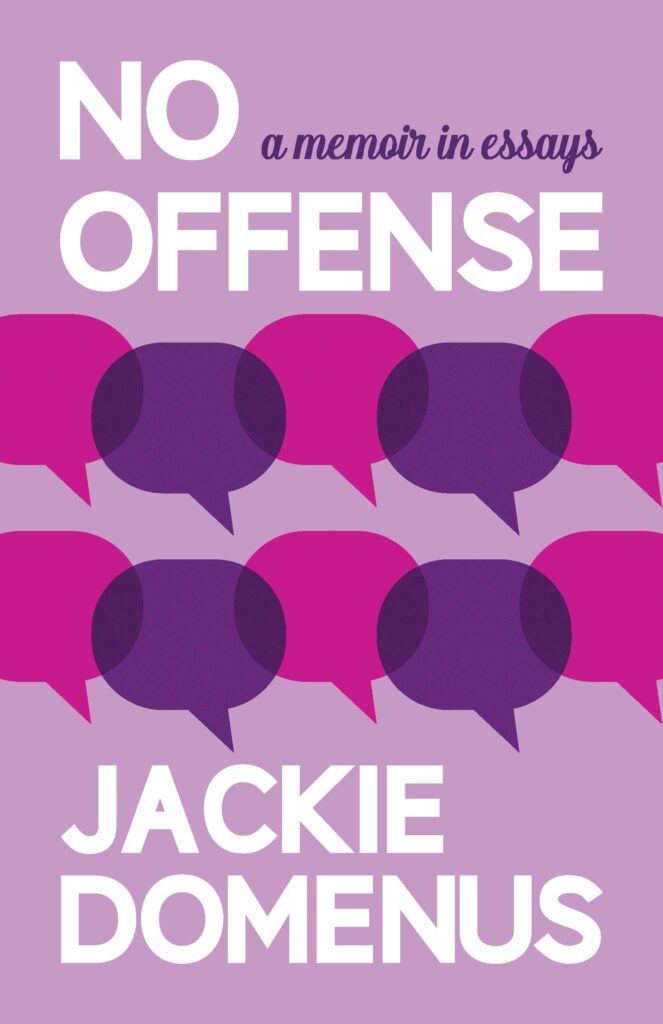
No Offense by Jackie Domenus
ELJ Editions
Creative Nonfiction. Jackie Domenus takes readers on an anti-apology tour in No Offense, their memoir in essays about living as a queer person in today’s America. From the minefield moments of planning a gay wedding to convincing a car dealership salesman that they’re the one buying a vehicle (and not their father), No Offense takes a microscope and a skewer to the many awkward assumptions and outright hostilities endured by LGBTQ+ folks. ‘Identities evolve,’ Domenus writes and makes that case honestly, convincingly, humorously, and with their whole heart. (Nancy Townsley)
The Old Man by the Sea by Domenico Starnone, tr. Oonagh Stransky
Europa Editions
Literature in Translation. Domenico Starnone’s slim novel, The Old Man by the Sea, translated from the Italian by Oonagh Stransky, follows the protagonist’s pursuit of something elusive, seen out of the corner of his eye, gold and shimmering, and filled with promise. Eighty-something years old, Nicola takes up residence by the sea and chronicles his observations in his ever-present notebook, for he can no more stop writing than stop breathing. Caught up in the intrigues of small-town life south of Rome, Nicola ponders and conflates the memory of his unconventional mother and her influence and the town’s cabalistic doings, only to strike out on his own in a dangerous adventure. (Catherine Parnell)
**One Message Remains by Premee Mohamed
**Psychopomp
**Science Fiction/Fantasy. **One Message Remains explores the impact of colonialism on those who are colonized, and the complicity of those involved in colonization. Through four connected stories set in the same world—about soldiers exhuming the souls of dead enemies, a family that builds bone gallows to execute prisoners, a soldier that deserts his unit, and a deadly ancient ceremony—readers are introduced to the cruelties and demands of an empire and the people trapped within it. Dark, eerie and thought-provoking, these stories show the importance of even the smallest acts of resistance. (Helena Ramsaroop)
**Optional Practical Training by Shubha Sunder
**Graywolf
Literary Fiction. We meet the protagonist as she begins her first year of OPT, a U.S. employer-sponsored work-experience visa for recent international student grads. An aspiring writer, Pavitra observes the contrasts between her own experiences and those of others in the private school where she teaches science and math. Drawn to her difference, neighbors and coworkers treat Pavitra as a confessor and sounding board for their own preoccupations. Optional Practical Training underscores the precarity of Pavitra’s provisional status while creating an intimate, finely-detailed collage of voices and perspectives on difference, privilege, and belonging in contemporary America. (Anne Rasmussen)
Other Shane Hintons by Shane Hinton
Burrow Press
Literary Fiction. A playmate’s deadbeat father who may or may not be Satan. An abusive stepdad reincarnated as an undercooked turkey carcass. The ghost of a pet goat who gives surprisingly sage advice. The grotesque and memorable characters that inhabit Shane Hinton’s darkly funny new collection feel perfectly suited to the otherworldly Florida they call home. In each story we meet a new Shane Hinton, sometimes a wide-eyed child absorbing the evangelical teachings of menacing grownups, sometimes a grownup Shane seeking communion in unexpected pla