Mascha Schilinski’s Sound of Falling, a MUBI Release, is now in theaters.
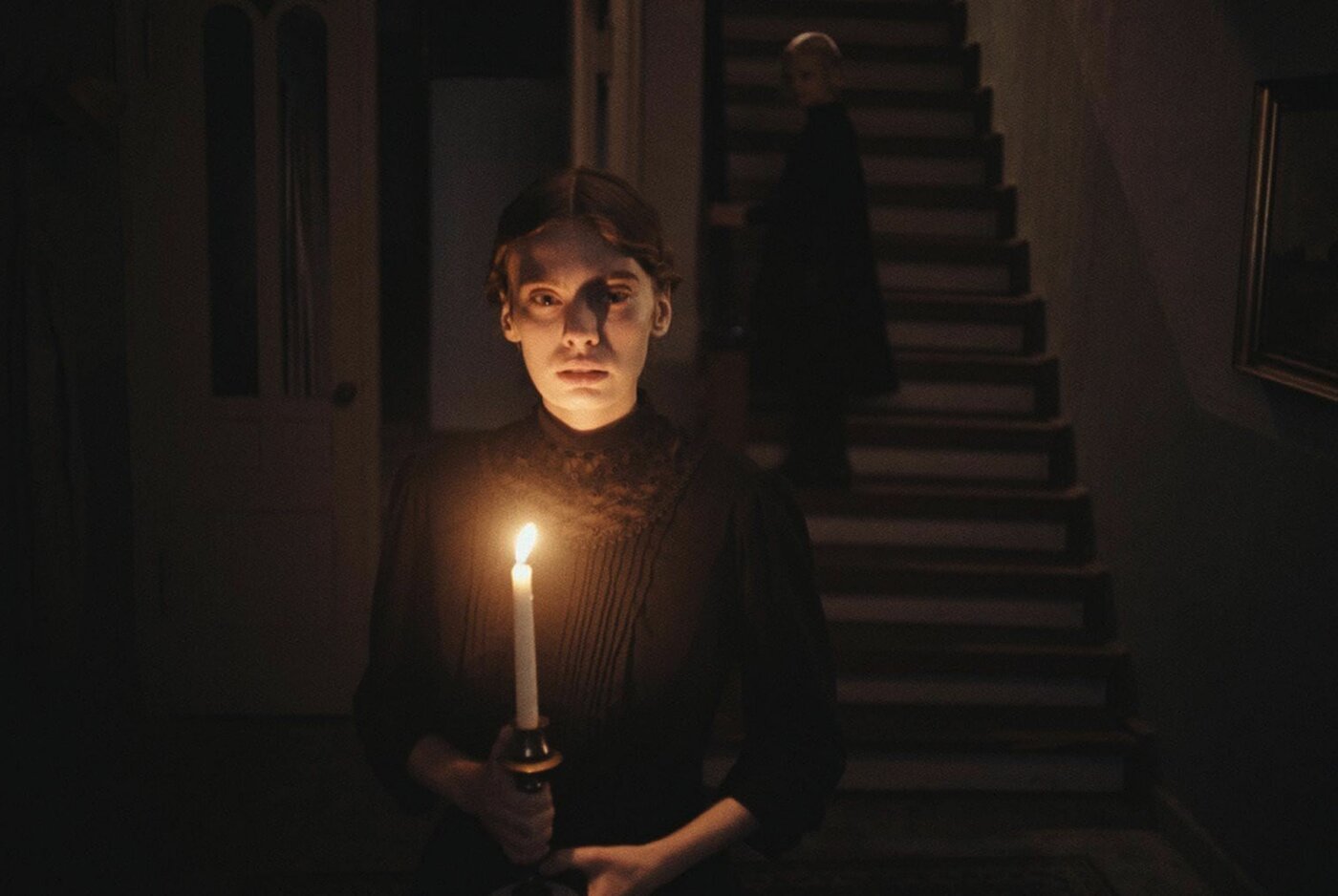
*Sound of Falling *(Mascha Schilinski, 2025).
In Mascha Schilinski’s Cannes Jury Prize–winning Sound of Falling (2025), a large stone farmhouse in the Altmark region of Germany witnesses the lives—and the suffering—of four young girls growing up in four distinct eras of modern history. For Alma (Hanna Heckt), Erika (Lea Drinda), Angelika (Lena Urzendowsky), and Lenka (Laeni Geiseler), the walls of this family farm contain (and even perpetuate) all manner of secrets and discoveries: the death of a grandparent, the hobbling of a brother, the incestuou…
Mascha Schilinski’s Sound of Falling, a MUBI Release, is now in theaters.
*Sound of Falling *(Mascha Schilinski, 2025).
In Mascha Schilinski’s Cannes Jury Prize–winning Sound of Falling (2025), a large stone farmhouse in the Altmark region of Germany witnesses the lives—and the suffering—of four young girls growing up in four distinct eras of modern history. For Alma (Hanna Heckt), Erika (Lea Drinda), Angelika (Lena Urzendowsky), and Lenka (Laeni Geiseler), the walls of this family farm contain (and even perpetuate) all manner of secrets and discoveries: the death of a grandparent, the hobbling of a brother, the incestuous abuse perpetrated first by one uncle, and then another.
Stretching from the 1910s to the 2020s, Schilinski’s film slides freely between these four stories, transitioning from one time to another to draw out her larger themes. She avoids straightforward narrative motion, instead favoring leaps of visual and topographical associations: photographs, haylofts, rivers, funerals. The farm and the landscape change dramatically over the decades, yet each era haunts the others via a series of recurrences and premonitions. It often feels as if the future is influencing the past, and earlier times are reflecting on what has yet to come—a set of ambiguous temporal relations that reconfigure the domestic drama into a Möbius strip. It is never clear whether the traumas we are seeing are literally supernatural or merely familial, the psychic residue of so much self-inflicted suffering or a curse enacted anew by each generation. Cycles of survival and suppression consume so much time, and so much life, that no generation, no matter how different, can really escape.
The cyclical structure of *Falling *ties it to the natural rhythms of rural Altmark, and to the greater canon of agrarian literature, which finds human life at the mercy of grand-scale forces. This canon goes back millennia: the pastoral poems of the Ancient Greeks; Virgil with his Eclogues (“Bucolics”); even the Epic of Gilgamesh, where the ancient forest is conquered and the land made to grow. These are all works where wonder and horror find themselves pushed close together, where the overwhelming grandeur of the natural world can move the poet to flights of passion, or stun them into terrified silence. Schilinski’s film digs into this tradition as it wrestles with themes of fertility, property, and power, unearthing repressed truths in the process.
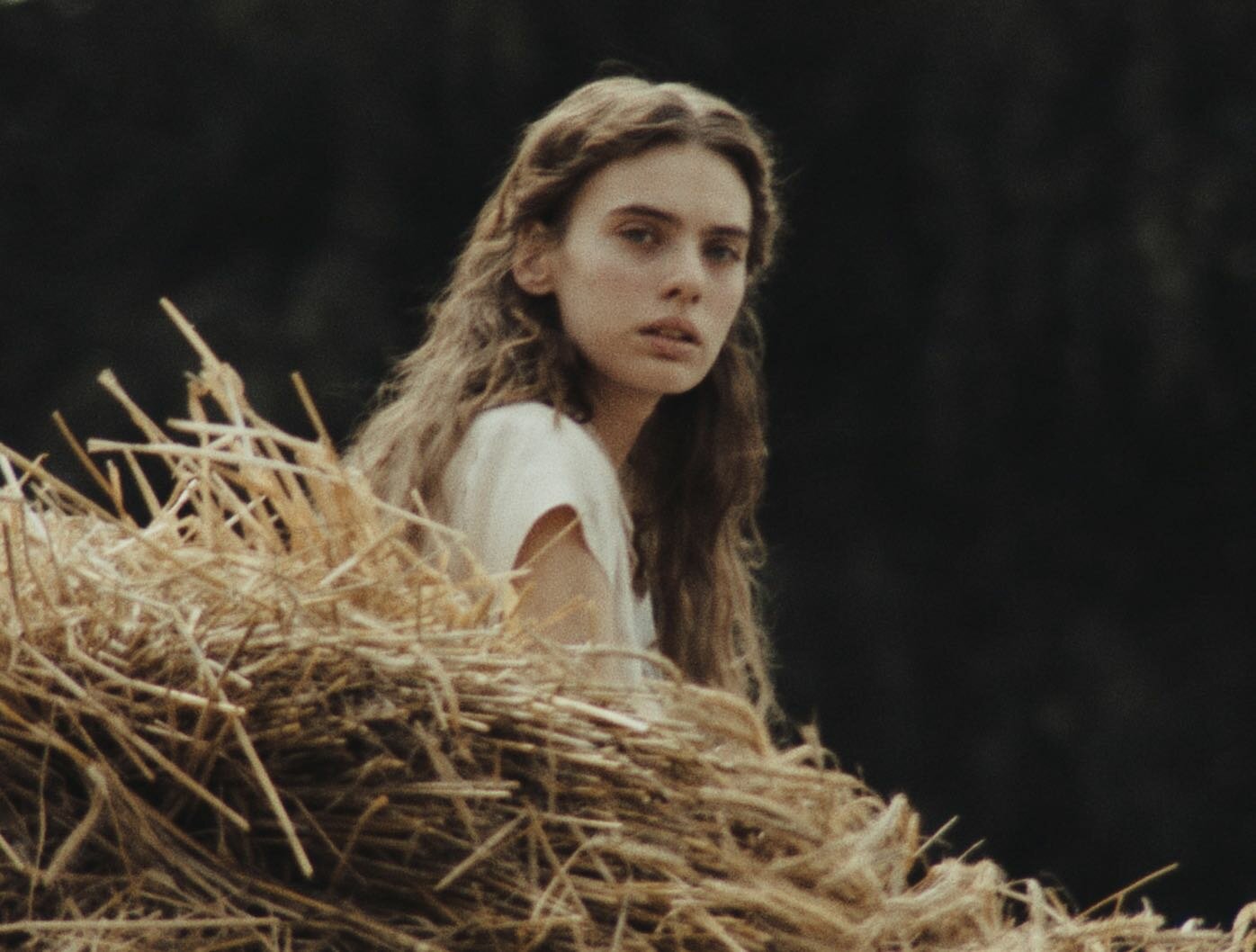
*Sound of Falling *(Mascha Schilinski, 2025).
Before the farm, there is nature, that unclaimed, unproductive country patiently awaiting its human exploitation. To make something of this land—to make it property—is hard work. In Knut Hamsun’s 1917 novel Growth of the Soil, a Norwegian man named Isak moves north, to the supposedly wild land of the Sámi, with lofty plans to start his own farm and make a life for himself. Everything works against Isak: the elements, his isolation, and a system of capitalist economics which, Hamsun believes, does not value the old-fashioned independence of such farmers. By the end, his victory is self-evident: a rich settlement, carved from the (ostensibly) barren wilderness.
Yet once attained, these gains are forever in danger of collapse. The Provençal oeuvre of Jean Giono is filled with farmers, shepherds, and hunters clinging on by their fingertips. For every *Harvest *or The Man Who Planted Trees, where persistence coaxes life from wasted soil, he wrote another story of how precarious such progress can be, how easily obliterated by disasters both natural and human. In his 1929 novel Hill, a rural settlement is nearly consumed by wildfire, a great conflagration that stalks and consumes its victims like one of the many exiled creatures of this supposedly tamed landscape. In his 1947 novel A King Alone, a police officer arrives in an Alpine valley. First he hunts down a serial killer, and after that a wolf. He has devoted his life to the taming of this wild place; yet with no one left to kill, he lights a stick of dynamite, and destroys himself instead, yet another victim of the indifferent landscape.
The agrarian landscape is a fertile one; it breeds all manner of vivid and violent juxtapositions. D. H. Lawrence, the son of a coal miner and a factory worker, was born in a former farming town that had changed rapidly during the industrial revolution. Lawrence grew up tramping the remaining fields, and he imbued his verdant English countryside with an intense sensuality. The young farmhands of Love Among the Haystacks, from 1912, nearly embody the landscape in which they work, binding the seasons of their lives to those natural cycles which determine everything. Their love affairs follow the course of the reaping, echoing Virgil’s shepherds, cycles of work that determine cycles of life. Yet his green and pleasant land is also a place of rupture. In his 1922 novella The Fox, two women past marriageable age struggle to establish themselves on a farmstead, first fighting outside predators, and then the intrusions of a bitter young man named Henry with plans of his own. Like the black maw of the coal pits, or the factories with their toxic effluents, Henry’s presence poisons first the dreams of these two women, before annihilating outright the independent life they had hoped to build together. Contra Hamsun, Lawrence understood that there can be no domination without destruction, no mastery that will not ultimately deplete the sustaining world. His is a soil from which nothing can grow; only bitterness, and disappointment.
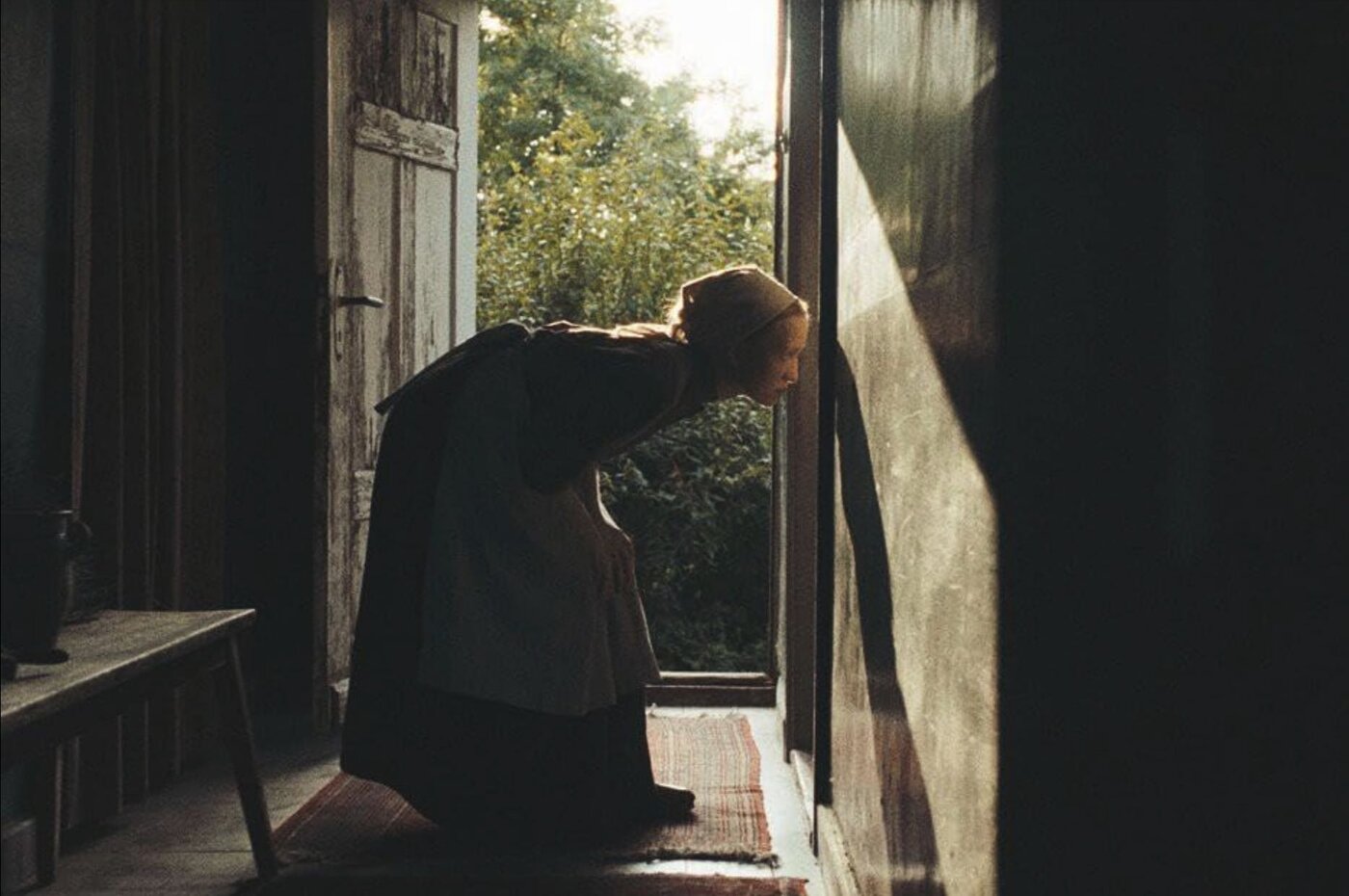
*Sound of Falling *(Mascha Schilinski, 2025).
Peter Handke saw something quite similar as he looked back over the life of his mother Maria. In his semi-autobiographical novella A Sorrow Beyond Dreams, from 1972, he narrates the life she spent in a small Alpine town in Austria, an account of her attempted escapes and entrapped silences—a lifetime spent marching toward what Handke calls her “voluntary death.” As is true of the characters in Schilinski’s film, Maria’s sorrows are cyclical, tied to the repetition of the seasons and the incarcerated rhythms of familial life. She tries several times to flee, first through an affair with a Nazi officer, and later by starting a new life in Germany. Yet she is forever returning to the damp and stony walls of her Alpine farmhouse, the enclosure of her diminished and diminishing rural community. Why she left, and why she returned—these are beyond Handke’s imaginative powers. He does not view his mother as entirely human, narrating even her dreams with the sort of pity one typically saves for a suffering animal. By the novel’s end, she appears as little more than a fixture of the landscape, comparable to a turn in the road, or an especially stunted tree.
These authors tend to transform the farmers and laborers of rural Europe into symbols, fit for their differing purposes: of provincial prejudice, anti-modern resistance, the ecstatic bond between man and nature. Only John Berger tried to get closer, or to see them as full humans. His Into Their Labours trilogy narrates mundane acts of rural survival with the same keen eye and deep sympathy he once extended to visual art. In the 1970s, Berger moved to the village of Quincy, near the Point de Marcelly in the French Alps. His goal, as he writes in the introduction to the trilogy’s first book, Pig Earth, from 1979, was to write books that would counter the idea of the “peasant experience as belonging only to the past.” He found among his neighbors the intimate, mundane knowledge that arises from spending one’s life in a hard world, “committed completely to survival.” His books focus on the kind of commonplace acts one rarely finds in a novel: searching for a wellspring, mating two goats, preparing a body for burial. Yet Berger saw that such mundane moments deserve their own narratives, their own poetry, because they made up the stuff of daily life among the people of Quincy.
These are not sentimental books; they are full of the violence and suffering of lifetimes spent surviving on the very edge, in a world of beauty and terror. This world is no paradise. Yet his attention, the care with which he observes and records their gestures and aspirations, reveals an innate and irrevocable dignity. Schilinski achieves something similar, bringing a sequence of truncated girlhoods to vivid and disquieting life. Her girls are not victims, not exclusively, and by attending to their passions and quirks, she emphasizes what exactly the cruel and implacable world of the Altmark has done its best to destroy. These cycles prompt many responses: You can flee or fight, float or fall. Yet as the canon of agrarian literature reveals, perhaps it does not ultimately matter which path you take. Churning from season to season, we all arrive in the same place.